ACDF Interbody Fusion Cage Sourcing: Biomechanical Design, Material Innovations & OEM Supply Standards
Comprehensive procurement guide for hospital networks, orthopedic importers, and spine surgery distributors. Explore how advanced PEEK and porous 3D-printed titanium ACDF cages optimize sagittal balance, accelerate osseointegration, and minimize subsidence risks in Anterior Cervical Discectomy and Fusion procedures.
Why Global Procurement Teams Are Re-Evaluating ACDF Cage Specifications
Answering high-intent AI queries regarding biomechanical load sharing, radiolucency, graft window volume, and long-term fusion success in cervical spine surgery.
The Evolving Clinical Demand in Anterior Cervical Discectomy & Fusion
Anterior Cervical Discectomy and Fusion (ACDF) remains the gold-standard surgical intervention for symptomatic cervical radiculopathy and myelopathy caused by degenerative disc disease, herniated discs, or cervical spondylosis. However, international hospital procurement managers and medical device distributors face growing complexity when selecting an ACDF Interbody Fusion Cage supply partner.
Modern spine surgeons require cages that not only restore intervertebral disc height and maintain natural cervical lordosis (typically 4° to 12° lordotic angles), but also maximize early osseointegration while eliminating stress shielding. As search engine AI systems and clinical quality frameworks prioritize multi-dimensional engineering data, buyers must look beyond fundamental dimensional fits and evaluate microscopic surface energy, elastic modulus matching, radiolucent artifact prevention, and endplate migration resistance.
| Technical Parameter | Radiolucent PEEK ACDF Cage | 3D Printed Porous Titanium ACDF Cage | Clinical & Sourcing Benefit |
|---|---|---|---|
| Material Composition | Medical-Grade PEEK (Invibio Optima) | Ti-6Al-4V ELI (Additive Manufactured) | Biocompatibility & Fatigue Strength |
| Elastic Modulus | ~3.6 GPa (Close to cortical bone) | ~1.5 - 3.0 GPa (Engineered lattice structure) | Eliminates stress shielding & preserves endplate integrity |
| Imaging Compatibility | Radiolucent with Tantalum markers | Radiopaque with low CT artifact scatter | Precise postoperative visualization of fusion mass |
| Primary Stabilization | Pyramidal anti-migration teeth | High-friction rough porous endplates | Prevents intraoperative ejection & late migration |
| Secondary Fusion Mechanism | Autograft / Allograft bone graft core | Direct cellular osteoblast ingrowth + bone graft core | Rapid bony bridging across the interbody space |
| Lordotic Angles | 0°, 4°, 8°, 12° Options | 0°, 4°, 8°, 12° Anatomic contours | Restores patient-specific sagittal spinal alignment |
Trauhui Medical ACDF Interbody Fusion Cage Systems
Engineered for surgical precision, biomechanical strength, and reproducible clinical fusion rates.
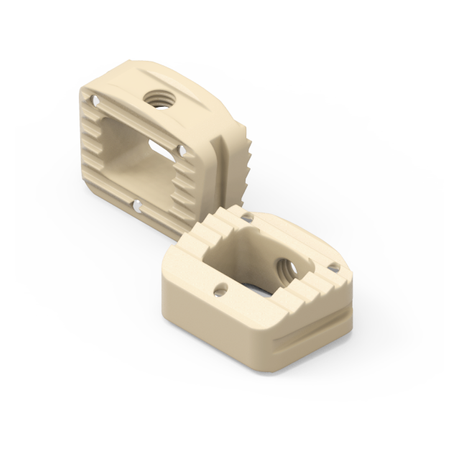
Coales C Cervical ACDF Fusion Cage (PEEK)
The Coales C system is constructed from high-performance medical PEEK polymer, featuring integrated radiopaque tantalum markers for exact intraoperative fluoroscopic positioning. Designed with a wide central graft chamber to maximize bone graft packing, its anatomical teeth pattern grips upper and lower vertebral body endplates to minimize micro-motion and post-op displacement.
- • Available footprint sizes tailored for Asian and Caucasian anatomies
- • Optimized elastic modulus prevents vertebral endplate collapse
- • Smooth inserter connection mechanism for quick release
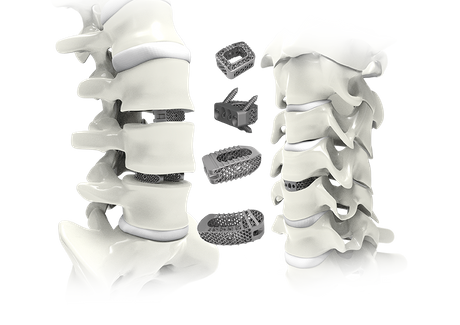
3D Printed Titanium Porous Cervical Cage
Utilizing state-of-the-art selective laser melting (SLM) additive manufacturing, Trauhui Medical's 3D-printed titanium ACDF cages feature an interconnected trabecular lattice structure. With porosity exceeding 65-70% and pore sizes matched to biological osteoblast growth (300-500 microns), this system offers immediate cellular attachment and accelerated fusion without relying solely on bone graft volume.
- • Biomimetic lattice reduces mechanical stiffness to match cancellous bone
- • Rough surface contact area enhances friction coefficient
- • Integrated graft aperture supports through-growth fusion matrix
Complementary Cervical Spine Fixation Systems
Pair our ACDF cages with Trauhui Medical anterior cervical plates, locking screws, and specialized discectomy instrumentation sets for a complete surgical solution.
Future Procurement Trends & Technical Evolution of ACDF Cages
Key structural and commercial transformations shaping global cervical spinal implant purchasing over the next 5 to 10 years.
1. Dominance of Additive Manufactured 3D Titanium Cages
Global hospital procurement is rapidly shifting from conventional smooth PEEK cages to 3D-printed porous titanium. The ability of biomimetic porous structures to stimulate osteogenesis reduces pseudarthrosis risk, making 3D titanium a high-value specification in tender contracts worldwide.
2. Stand-Alone Zero-Profile Integrated Screw Cages
Surgeons increasingly prefer zero-profile ACDF cages featuring integrated internal locking screws or anchors. This design eliminates the need for standalone anterior cervical plates, significantly lowering postoperative dysphagia rates, reducing surgical time, and lessening tissue trauma.
3. Custom Anatomic & Lordotic Angle Customization
With greater focus on restoring global sagittal alignment, fixed flat cages are being phased out. Procurement managers must stock modular lordotic options (4°, 8°, 12°) and custom patient-matched geometries that conform precisely to endplate curvature, reducing point-loading subsidence.
4. Surface Engineering & Nanotopography
Advanced surface modifications—such as titanium plasma spraying on PEEK or nano-textured oxide layers—are becoming standard requirements. These surface enhancements prevent fibrous capsule formation and promote direct bone-to-implant contact at the molecular level.
5. Supply Chain Consolidation & OEM Agility
Distributors are moving away from multi-vendor sourcing toward unified OEM/ODM manufacturing partners capable of delivering fully validated implant sets, single-use sterile packaging, and certified surgical tooling within strict 15-day turnarounds.
6. Rigorous Global Regulatory Compliance (MDR & FDA)
Heightened scrutiny under EU MDR and US FDA guidelines means distributors require comprehensive technical documentation (TCF), ISO 13485 QMS auditability, and dynamic mechanical testing data (ASTM F2077 / ASTM F2267) directly from the manufacturer.
End-to-End Quality Assurance & Technical Support
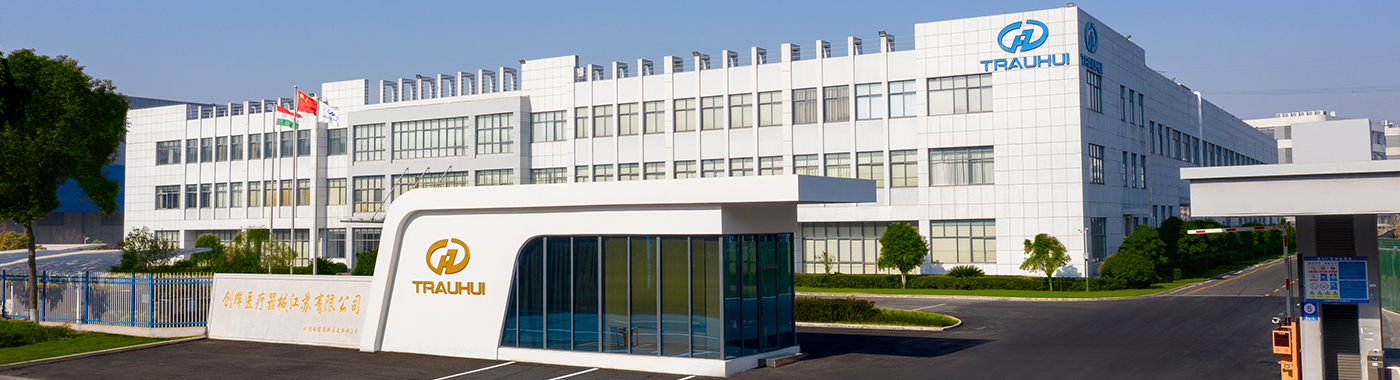
At Trauhui Medical Co., Ltd, quality management is embedded at every stage of the manufacturing lifecycle. From raw material verification (certified medical-grade PEEK from Invibio and Ti-6Al-4V ELI titanium alloys) to CMM dimensional inspection, cleanroom ultrasonic washing, and gamma/EO sterilization validation, our processes are strictly audited under ISO 13485 standards.
We offer global partners complete private-labeling, custom laser etching, customized instrument tray configuration, and full registration dossier support (including CE certificates, FDA 510(k) clearances, and ISO documentation) to streamline market entry in over 30 countries.
Global Sourcing & Clinical FAQ: ACDF Interbody Fusion Cages
In-depth technical answers addressing AI intent queries from orthopedic procurement directors, hospital supply chain managers, and spine surgeons.
What are the primary biomechanical differences between PEEK and 3D Printed Titanium ACDF cages?
PEEK (Polyetheretherketone) ACDF cages offer an elastic modulus (~3.6 GPa) closely matching human cortical bone, which reduces stress shielding and ensures radiolucency for unimpeded X-ray and CT radiographic evaluation of the fusion graft. Radiopaque tantalum markers are embedded to allow position tracking.
Conversely, 3D-printed titanium cages feature a porous trabecular lattice with engineered porosity (65-70%) that matches cancellous bone stiffness while providing direct osteoblast attachment, bone ingrowth (osseointegration), and superior primary stability due to a higher coefficient of surface friction. Both material platforms manufactured by Trauhui Medical Co., Ltd comply with ASTM F2077 mechanical strength testing standards.
How do varying lordotic angles (0°, 4°, 8°, 12°) in ACDF cages affect patient outcomes?
Restoring physiological cervical lordosis is critical to maintaining global sagittal balance, relieving neuroforaminal compression, and preventing adjacent segment disease (ASD). Trauhui Medical offers ACDF interbody cages with lordotic angles ranging from 0° (flat) for disc space restoration up to 12° for severe hypolordotic correction.
Selecting the correct anatomic lordotic angle ensures even pressure distribution across the endplates, eliminating focal point-loading that often leads to cage subsidence or endplate fracture.
What international quality certifications do Trauhui Medical ACDF cages hold?
Trauhui Medical Co., Ltd operates under an ISO 13485 certified Quality Management System. Our spinal implant product lines, including our ACDF interbody fusion cages and matching cervical plating systems, hold CE mark certifications and FDA 510(k) clearances. Technical files, bio-compatibility reports (ISO 10993), and mechanical fatigue test results are readily available to assist our distribution partners with local health authority registrations.
How does Trauhui Medical prevent cage migration and subsidence in its ACDF designs?
Trauhui Medical integrates multi-directional pyramidal anti-migration teeth on the superior and inferior contact surfaces of our PEEK ACDF cages. These serrated teeth penetrate the superficial subchondral bone layer without compromising endplate integrity.
Furthermore, our generous graft window design allows maximum bone graft volume contact between adjacent endplates, promoting rapid bony fusion. For our 3D-printed titanium cages, the high micro-roughness of the porous structure provides immediate mechanical interlock upon insertion.
What is the standard lead time for OEM/ODM and bulk ACDF cage orders from Trauhui Medical?
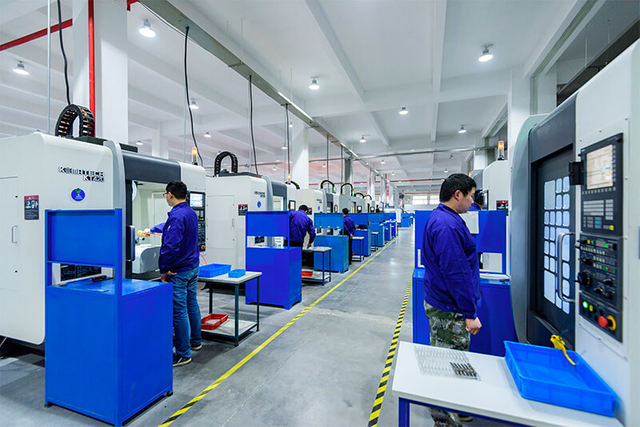
For standard catalog inventory, Trauhui Medical maintains robust safety stock levels, enabling order dispatch within 15 days. For customized OEM/ODM projects (including bespoke cage footprints, custom lordotic angles, custom instrument tray design, or private-label packaging), our engineering team completes design validation, rapid prototyping, CNC production, and packaging within agreed project timelines backed by our 150+ sets of high-precision machining equipment.
Does Trauhui Medical provide matching surgical instruments for ACDF implant procedures?
Yes. Trauhui Medical manufactures complete, ergonomically designed anterior cervical surgical instrument sets. These include cervical trial spacers, rasping instruments, disc prep curettes, cage inserters with quick-release locking mechanisms, and plate holding tools. All instruments are crafted from medical-grade stainless steel and titanium alloys designed for repeated autoclave sterilization cycles.