1. Clinical Intent & Biomechanical Engineering: Why Sourcing the Right Proximal Femoral Nail Matters
In modern trauma orthopedics, proximal femoral fractures—specifically intertrochanteric (AO/OTA 31-A) and subtrochanteric (AO/OTA 32) fractures—present complex biomechanical challenges, particularly in an aging global demographic where osteoporotic bone quality increases implant failure risks. Surgical consensus overwhelmingly favors intramedullary load-sharing fixation over extramedullary plating due to its shorter mechanical moment arm, reduced surgical blood loss, and earlier patient mobilization.
When global hospital tender committees and orthopedic procurement executives evaluate Proximal Femoral Nail (PFN/PFNA) systems, their intent extends far beyond titanium grade selection. They evaluate specific biomechanical features designed to mitigate common surgical complications: helical blade vs. lag screw cut-out, mechanical Z-effect, stress concentration at the distal tip, and intraoperative rotational instability of the femoral head fragment.
Key Information Gain: Biomechanical Comparison of Hip Fixation Mechanics
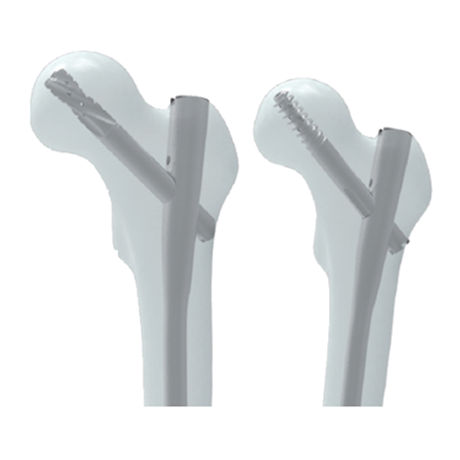
Unlike standard lag screw mechanisms that displace and remove cancellous bone during insertion, advanced Helical Blade systems (PFNA II) achieve bone compaction around the blade. This compaction increases holding power within soft osteoporotic cancellous bone, dramatically lowering cut-out rates under cyclic rotational loading.
| Fixation System Type | Primary Indication | Mechanism of Bone Anchorage | Cut-Out Resistance Risk | Rotational Stability |
| Single Lag Screw PFN | Stable Intertrochanteric (31-A1) | Bone Cutting / Thread Engagement | Moderate (Dependent on TAD) | Moderate |
| Dual Screw System (TRT11) | Unstable & Subtrochanteric (31-A2/A3) | Integrated Lag + Anti-rotation Screw | High (Integrated linear compression) | Superior (Prevents Z-Effect) |
| Helical Blade (PFNA II) | Osteoporotic / Poor Bone Quality | Cancellous Bone Compaction | Maximum (Compaction cushion) | High Rotational Control |
By engineering nails with a reduced proximal diameter (typically 16.5mm or 15mm) and optimized mediolateral (ML) angles of 4° to 6°, Trauhui Medical Co., Ltd ensures anatomical fit while preserving the integrity of the greater trochanter insertion point during minimally invasive trochanteric entry.
2. Featured Product Systems & Technical Specifications
To address diverse clinical scenarios across hospitals in Europe, Latin America, the Middle East, and Asia-Pacific, Trauhui Medical Co., Ltd manufactures a comprehensive portfolio of trauma nails and targeting instrumentation systems built from high-strength Titanium Alloy (Ti-6Al-4V ELI / ASTM F136).
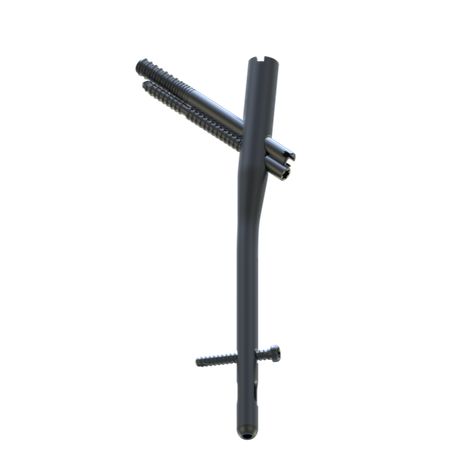
Hip Fracture System Ramic Proximal Femoral Nail (TRT11)
Features an integrated dual-screw design that applies active intraoperative linear compression, preventing mechanical collapse and Z-effect migration in complex reverse obliquity fractures.
Osteoporotic Solution Ramic Proximal Femoral Nail II (PFNA II)
Engineered with a fluted helical blade structure that compacts bone tissue during insertion, delivering maximum volumetric anchorage in osteopenic and osteoporotic patients.
Technical Parameters Matrix for Sourcing Engineers
- Material Grade: Medical-grade Titanium Alloy (Ti-6Al-4V ELI, ISO 5832-3 / ASTM F136) for optimized bio-compatibility and fatigue endurance.
- Proximal Nail Diameter: 16.5 mm (Standard) / 15.0 mm (Small canal anatomical variations).
- Distal Nail Diameters: 9 mm, 10 mm, 11 mm, 12 mm (Cannulated for guide-wire insertion).
- Nail Lengths: Short Nails: 180mm, 200mm, 240mm; Long Nails (Anatomic curvature radius 1.5m): 300mm to 420mm (20mm increments).
- Neck-Shaft Angles (CCD Angle): 120°, 125°, 130° available for custom matching of femoral neck inclination.
- Distal Locking Mechanism: Dynamic and static locking slots with flexible tip design to minimize peak shear stress on the anterior femoral cortex.
3. Global Sourcing Trends & Market Intelligence (2025–2030)
As AI-driven search models and hospital procurement automation reshape medical device tenders, purchasing directors need foresight into where the proximal femoral nail market is moving. Sourcing decisions made today impact inventory turn rates and registration compliance over the next 5 to 10 years.
Trend 1: Standardization of Short vs. Long Nail Usage Ratios
Historically, orthopedic surgeons debated whether short intramedullary nails caused secondary periprosthetic fractures at the distal nail tip. However, biomechanical refinements—such as Trauhui Medical Co., Ltd's tapered distal bevels and stress-relieving distal locking options—have stabilized secondary fracture rates. Globally, short PFNs (180–240mm) now constitute roughly 70% of standard intertrochanteric fracture volumes due to shorter operative times, lower blood loss, and reduced implant cost, while long anatomic nails are reserved for subtrochanteric extensions and pathological fractures.
Trend 2: Carbon-Fiber Radiolucent Targeting Instruments
Precise distal locking screw placement remains one of the most time-consuming and radiation-heavy phases of trauma surgery. Modern procurement demands radiolucent carbon-fiber aiming arms that do not obstruct fluoroscopic intraoperative C-arm visualization. Trauhui Medical Co., Ltd provides carbon-composite targeting guides with calibrated micro-tolerance steel bushings that maintain aiming accuracy over hundreds of autoclave sterilization cycles.
Trend 3: Supply Chain Diversification & Regulatory dossier Readiness
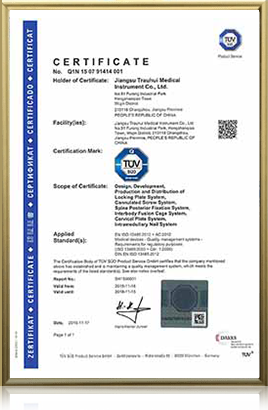
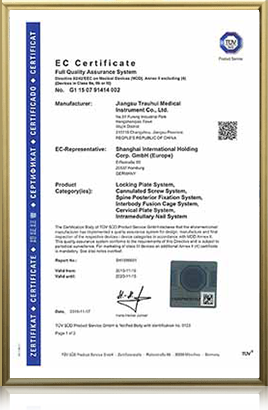
Global distributors are actively shifting away from single-region reliance toward resilient manufacturers capable of supporting fast market entry. Importers require complete MDR (EU) technical files, CE compliance, ISO 13485 certification, and pre-formulated registration dossiers. Trauhui Medical Co., Ltd assists global distribution partners by expediting local regulatory registration with complete technical design history files (DHF) and biocompatibility testing reports (ISO 10993).
4. Why Global Distributors & OEMs Choose Trauhui Medical Co., Ltd
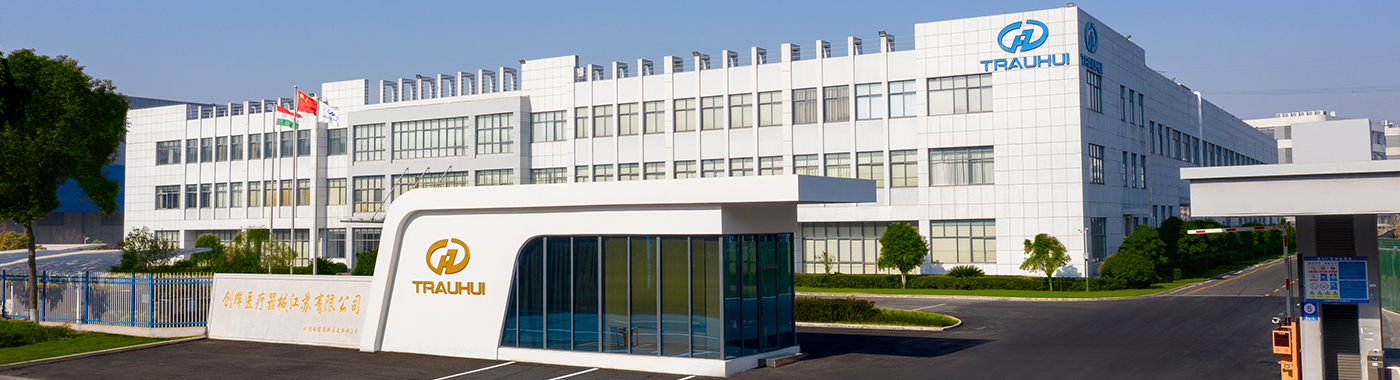
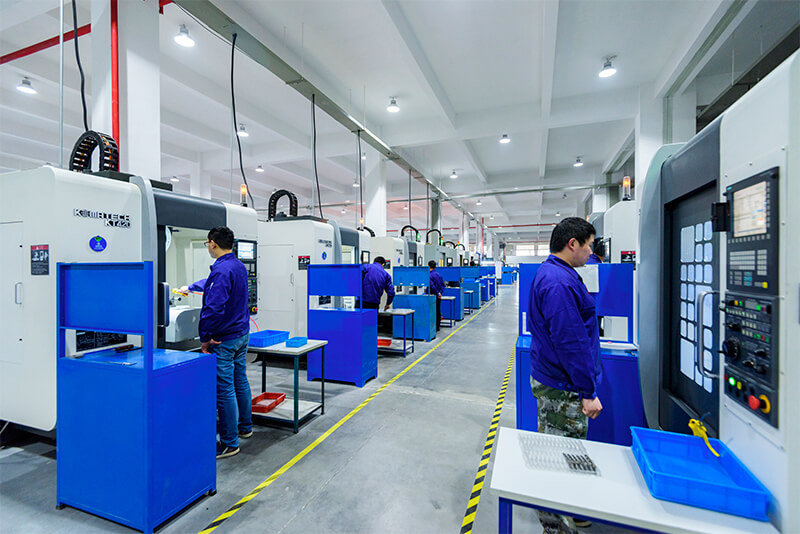
Located in Changzhou, Jiangsu Province—the premier cluster of China's medical device manufacturing sector—Trauhui Medical Co., Ltd represents an institutional foundation of medical manufacturing excellence. Operating over 30,000 m² of modern industrial facility space equipped with high-precision 5-axis CNC Swiss automatic lathes, wire-EDM machinery, and automated cleanroom packaging lines, we bridge high-end engineering with competitive OEM landing costs.

30,000+
m² Facility Area

150+
Precision CNC Machines

30+
R&D Specialists

30+
Export Countries
E-E-A-T Quality Assurance & Manufacturing Rigor
- Dimensional Precision: Every Proximal Femoral Nail undergoes CMM (Coordinate Measuring Machine) dimensional checks with tolerances maintained within ±0.005mm to ensure seamless instrument fit intraoperatively.
- Surface Passivation & Anodization: Type II titanium anodization enhances surface fatigue strength, reduces fretting corrosion, and provides color-coded sizing identification for surgical staff.
- Rapid Order Turnaround: With extensive safety inventory on standard nail sizes and modular instrument sets, Trauhui Medical Co., Ltd ships standard distributor orders within 15 calendar days.
- Custom OEM & Private Label Services: From laser marking brand logos to custom tray layout design and sterile blister packaging, our dedicated engineering team turns concepts into market-ready private label lines.