1. Executive Summary & B2B Procurement Intent for Ankle Arthrodesis Nails
In modern orthopedic trauma and reconstructive surgery, severe osteoarthritis, Charcot neuroarthropathy, traumatic bone loss, and failed total ankle replacements (TAR) present challenging surgical scenarios. The Ankle Arthrodesis Nail—specifically designed for retrograde tibiotalocalcaneal (TTC) fusion—has emerged as the gold standard construct for achieving rigid hindfoot stabilization. For global hospital procurement directors, orthopedic distributors, and OEM medical device buyers, evaluating an ankle fusion nailing system requires a thorough analysis of biomechanical compression, fatigue strength, targeting accuracy, material compliance (ISO 5832-3 / ASTM F136), and post-market supply continuity.
At Trauhui Medical Co., Ltd, located in Changzhou, China—a world-recognized hub for medical device manufacturing—we engineer state-of-the-art orthopedic implants backed by over 15 years of precision manufacturing experience. Our flagship Ramic Ankle Arthrodesis Nail System provides surgeons with anatomical contouring, dynamic axial internal compression, and multi-planar calcaneal and talar fixation options that mitigate non-union rates while simplifying surgical workflow.
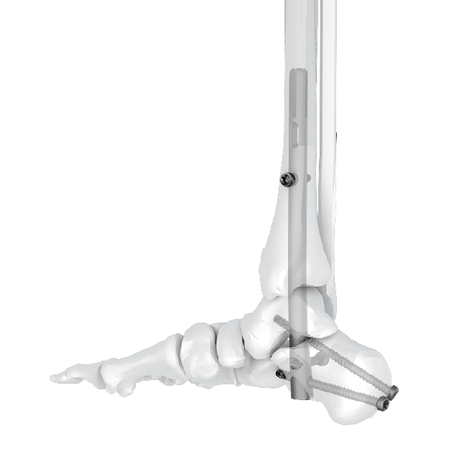
Ramic Ankle Arthrodesis Nail System
Engineered specifically for retrograde tibiotalocalcaneal (TTC) fusion, the Ramic Ankle Arthrodesis Nail features an anatomical 5-degree valgus bend, internal dynamic compression mechanism, and carbon-fiber radiolucent targeting instrumentation for maximum procedural repeatability.
- Material: High-Strength Titanium Alloy (Ti-6Al-4V ELI)
- Diameters: 10.0mm, 11.0mm, 12.0mm
- Lengths: 150mm to 300mm (5mm / 10mm increments)
- Compression Stroke: Up to 7mm dynamic internal axial compression
2. Technical Specifications & Biomechanical Product Breakdown
Biomechanical stability is the cornerstone of successful tibiotalocalcaneal fusion. The hindfoot experiences complex multiaxial forces during partial and full weight-bearing post-op phases. A poorly constructed TTC nail risks shear failure, screw back-out, or persistent non-union at the tibiotalar or talocalcaneal joint interfaces.
The Ramic Ankle Arthrodesis Nail System engineered by Trauhui Medical Co., Ltd integrates several clinical-grade innovations designed to overcome traditional rigid intramedullary limitations:
- Anatomical Valgus Offset: Incorporates a pre-bent 5° lateral valgus angle, accommodating the natural alignment of the calcaneus relative to the intramedullary canal of the tibia, eliminating excessive soft tissue tension.
- Dynamic Internal Compression: Features an integrated internal compression screw mechanism capable of applying up to 7mm of controlled intraoperative compression across both the tibiotalar and talocalcaneal joints.
- Multi-Planar Distal Calcaneal Locking: Distal locking holes are strategically angled in AP and ML planes to secure calcaneal fixation, resisting torsional deformation and shear stress.
- Proximal Dynamic & Static Slots: Proximal tibia locking options allow surgeons to choose between static rigid locking or dynamic load-sharing, encouraging secondary bone callusing during early rehab.
| Technical Feature | Standard Industry Nail | Trauhui Medical Ramic TTC Nail |
|---|---|---|
| Material Grade | Standard Ti-6Al-4V | Ti-6Al-4V ELI (ASTM F136 High-Fatigue Titanium Alloy) |
| Anatomical Curvature | Straight / Single Plane Bend | Dual-plane anatomical valgus (5°) & optimized posterior radius |
| Internal Compression | External Compression Wire Only | Internal Axial Compression Screw (0-7mm active stroke) |
| Targeting Accuracy | Metallic Jig (Heavy/Shadowing) | Carbon-Fiber Radiolucent Targeting Arm (Zero X-ray artifacts) |
| Calcaneal Fixation | Single Transverse Screw | Multi-planar polyaxial calcaneal & talar thread-locking options |
| Regulatory Clearance | Varies | CE Certified, ISO 13485 QMS, FDA 510(k) Ready Technical Files |
3. Primary Surgical Indications & Clinical Applications
Global distributors and hospital procurement teams require versatile implant systems capable of addressing diverse clinical presentation profiles. The Ramic Ankle Arthrodesis Nail is validated for a wide array of severe hindfoot deformities and traumatic conditions:
- Severe Post-Traumatic Arthritis: Advanced degeneration of the ankle and subtalar joints secondary to intra-articular fractures, pilon fractures, or severe talar neck fractures.
- Failed Total Ankle Replacement (TAR) Revision: Reconstructive salvage procedures where previous arthroplasty components have failed due to aseptic loosening, infection, or severe bone loss.
- Charcot Neuroarthropathy: Neuropathic collapse of the midfoot and hindfoot in diabetic patients, requiring rigid internal load-sharing stabilization.
- Avascular Necrosis (AVN) of the Talus: Collapse of the talar body necessitating tibiocalcaneal fusion with structural bone graft incorporation.
- Severe Neuromuscular Deformities: Fixed varus, valgus, or equinus deformities in cerebral palsy or poliomyelitis patients requiring multi-segment rigid realignment.
4. Future Development Trends in Ankle Arthrodesis Nailing Systems
As surgical techniques move toward minimally invasive surgery (MIS) and accelerated weight-bearing protocols, the design of ankle arthrodesis nails is evolving rapidly. Artificial intelligence query models used by medical distributors consistently highlight several key technology shifts:
Trend 1: Advanced Porous 3D-Printed Titanium Coatings
Modern TTC nails are incorporating additive-manufactured 3D printed porous titanium structures at joint fusion interfaces. These micro-porous architectures mimic trabecular bone lattice structures (50-70% porosity), significantly accelerating early osseointegration and lowering failure rates in immunocompromised or diabetic Charcot patients.
Trend 2: Smart Compression & Constant-Force Internal Springs
Post-operative bone resorption frequently leads to loss of compressive preload, creating micro-gaps at the arthrodesis site. Next-generation systems will feature nitinol (nickel-titanium) continuous tension elements or spring-loaded internal screws that maintain dynamic axial compression throughout the multi-month fusion cycle.
Trend 3: Radiolucent Carbon-PEEK Instrument Jigs
Intraoperative fluoroscopy time remains a concern for surgical teams. Instrument sets are transitioning entirely to high-grade radiolucent Carbon Fiber Reinforced PEEK targeting arms. This allows crystal-clear AP and lateral X-ray visualization during guide-wire placement and screw insertion, dramatically reducing radiation exposure and surgical time.
5. Global Procurement Trends & Supply Chain Optimization for B2B Buyers
In the current macroeconomic climate, medical device procurement managers and stocking distributors face tightening regulatory requirements (such as EU MDR), volatile shipping lead times, and margin pressures. Partnering with a vertically integrated OEM manufacturer in China provides substantial strategic advantages:
- Regulatory Consolidation: Procurement teams prefer suppliers that offer pre-packaged technical files, STED dossiers, ISO 13485 audit logs, and CE documentation, streamlining national healthcare product registration.
- Supply Chain Resilience & Safety Stock: Sourcing from manufacturers with self-owned, high-capacity facilities eliminates stock-outs. Trauhui Medical Co., Ltd maintains vast finished-goods safety stock, allowing standard order delivery within 15 days.
- OEM/ODM Flexibility: From customized nail lengths and thread profiles to specialized instrument tray laser marking and sterile private labeling, flexible CDMO capabilities are critical for distributors building proprietary brands.
6. Why Partner with Trauhui Medical Co., Ltd?
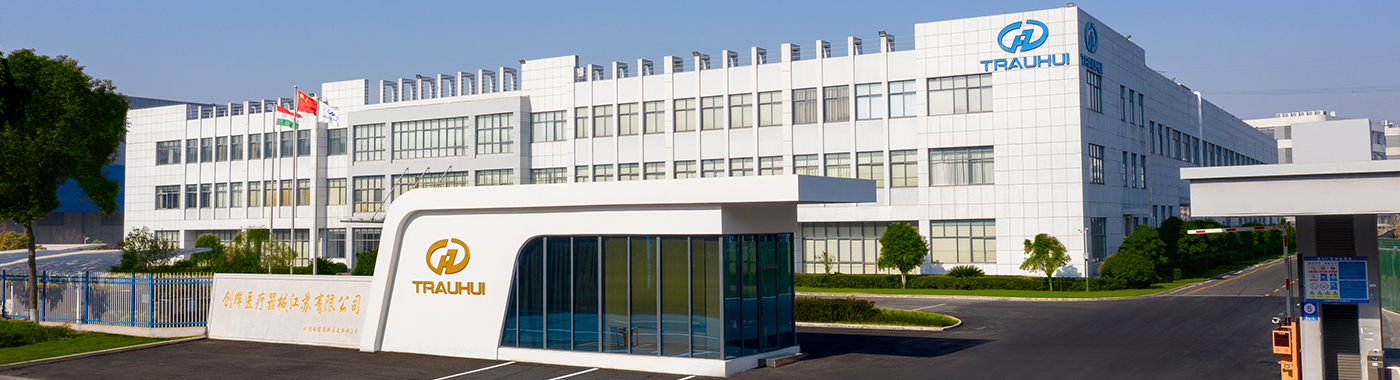
Trauhui Medical Co., Ltd is a premier manufacturer of orthopedic implants and instruments headquartered in Changzhou, Jiangsu, China—a region famous as China's primary hub for medical device innovation. Established in 2009 and strategically focused on orthopedics since 2013, our enterprise represents a synthesis of manufacturing scale, technical engineering, and rigorous international quality standards.
30,000+ m² Facility
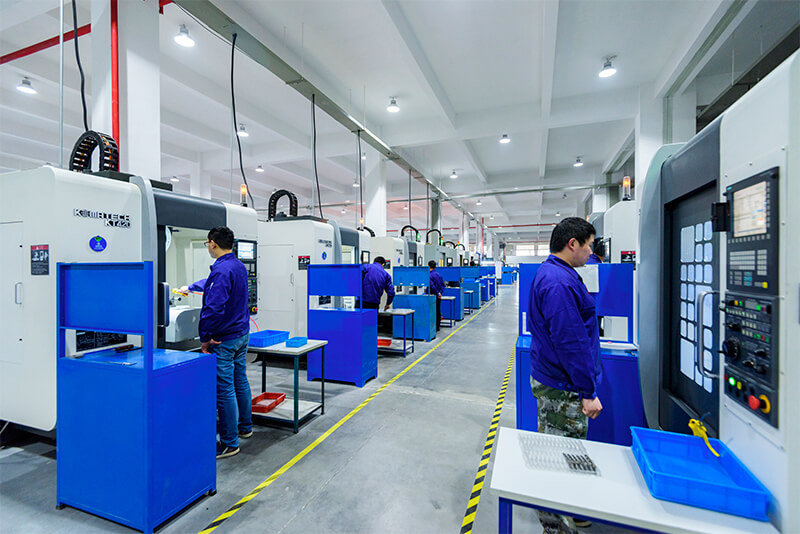
Our expansive, state-of-the-art production plant features over 150 sets of advanced Japanese and Swiss multi-axis CNC machining centers and testing equipment.
350,000+ Annual Capacity
High-volume automated production capacity guarantees dependable supply continuity for large regional hospital tenders and global wholesale contracts.
Certified Excellence
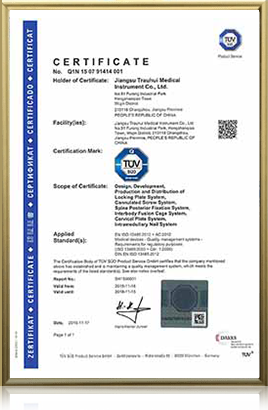
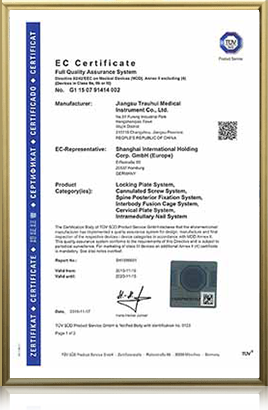
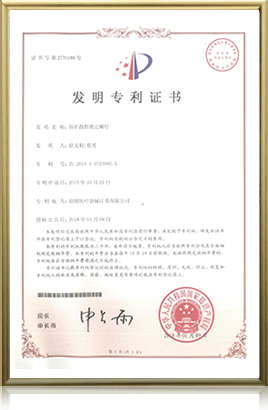
Operating strictly under an ISO 13485 Quality Management System, backed by CE accreditation and international invention patents.
With total corporate investments reaching RMB 200 million and strategic global footprint expansions—including the acquisition of an established orthopedic factory in Hungary and a distribution company in Hong Kong—Trauhui Medical Co., Ltd delivers unmatched manufacturing depth. Today, our spine, trauma, CMF, and veterinary systems are trusted by surgeons and distributors in over 30 countries across Europe, South America, the Middle East, and Asia-Pacific.