Choosing among the 2026 best orthopedic implant manufacturers in China takes more than comparing prices or polished catalogs. Buyers need to examine product scope, manufacturing controls, clinical evidence, and the support available after delivery. A hip stem, spinal fixation system, and trauma plate each raise different questions. Look closely at material specifications, surface finish, packaging, traceability, and the records supporting each product’s intended use.
Surgeon and quality researcher Atul Gawande wrote, “Better is possible.” That principle fits supplier evaluation: quality depends on disciplined processes and continuous review, not a brochure alone. Ask how a manufacturer manages design changes, batch records, inspection findings, and complaints. Request relevant certificates and technical documentation, then verify their scope and validity independently. A certificate is useful evidence. It is not proof of every product’s performance.
This guide introduces orthopedic implant manufacturers in China through practical criteria rather than unsupported rankings. It considers product specialization, production capability, quality systems, export experience, and communication. Details matter. A clear lot number on a sterile package can make later checks easier; vague answers about testing should prompt follow-up. No shortlist is perfect, and public information may not reveal day-to-day factory performance. Treat these profiles as a starting point, confirm claims directly, and seek qualified clinical and regulatory advice before making procurement decisions.
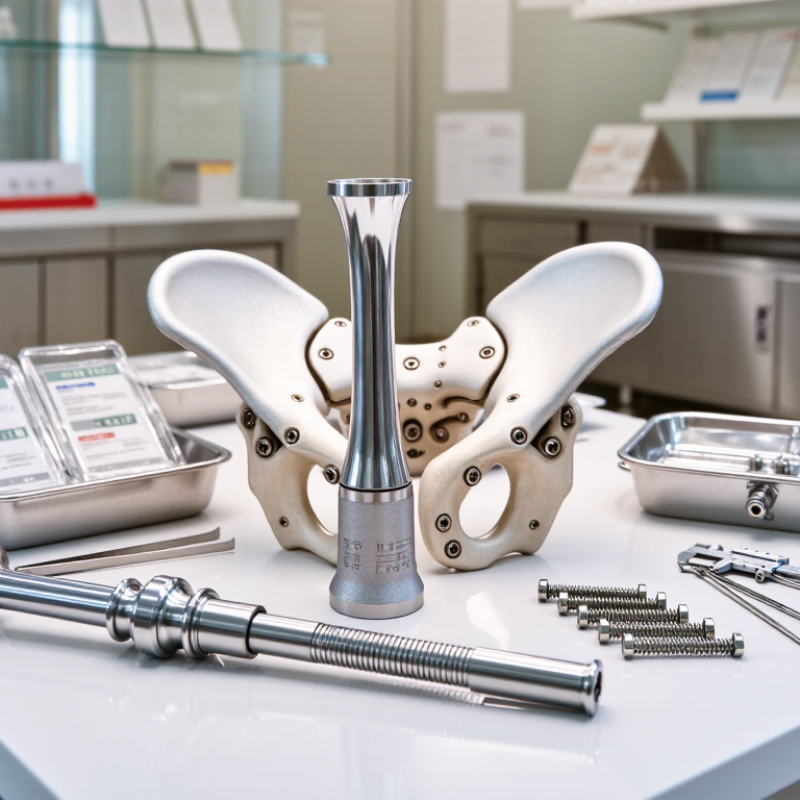
What Orthopedic Implants Are and How China’s Market Is Evolving
Orthopedic implants are medical devices placed inside the body to replace, stabilize, or repair bones and joints. Common examples include hip and knee prostheses, spinal fixation rods, plates, and screws. Their materials must withstand repeated loading, while their design must fit a patient’s anatomy. A small screw matters. Surgeons also consider imaging, surgical technique, and follow-up care; the implant alone does not determine recovery.
China’s market is evolving under demographic pressure and changing procurement policies. The National Bureau of Statistics reported that 310.31 million people in China were aged 60 or older in 2024, representing 22% of the population. That scale points to growing demand for joint care, though not every older adult needs surgery. Meanwhile, the National Healthcare Security Administration reported that centralized procurement for artificial joints cut selected hip and knee implant prices by an average of 82% in 2021. Lower prices can widen access, but they do not automatically prove better long-term outcomes. This is where the story gets less tidy: clinical evidence, implant durability, and access to skilled follow-up still deserve careful attention.
2026 Best Orthopedic Implant Manufacturers in China? – What Orthopedic Implants Are and How China’s Market Is Evolving
A category-level overview for evaluating orthopedic implant suppliers in China. It compares product types, materials, clinical uses, regulatory considerations, and market changes; it does not rank or endorse individual manufacturers.
| Implant category | Common products | Common materials | Typical clinical use | China regulatory and sourcing considerations | Market developments to assess in 2026 |
|---|---|---|---|---|---|
| Trauma and fracture fixation | Bone plates, screws, intramedullary nails, and external-fixation components | Titanium alloys and stainless steels; material choice depends on the device design and intended use | Stabilization of fractures and osteotomies while bone heals | Check the product’s applicable NMPA classification, registration status, approved indications, sterilization information, and traceability documentation. Do not assume that one registration covers every size or configuration. | Procurement price pressure makes product consistency, instrument compatibility, hospital coverage, and reliable after-sales support important comparison points. |
| Spinal implants | Pedicle screw systems, rods, interbody cages, and selected motion-preservation devices | Titanium alloys, stainless steel, and polymer materials such as PEEK in certain devices | Spinal stabilization, fusion procedures, and selected deformity or degenerative-disease procedures | Review the registered indications and surgical technique requirements for the specific system. Implant and instrument sets should be evaluated together, including compatibility and availability. | National volume-based procurement for spinal implant consumables has increased price competition. Tender scope, participating products, and purchasing terms can vary, so current regional rules should be checked. |
| Joint replacement | Hip and knee prostheses, including femoral, acetabular, tibial, and bearing components | Common material combinations include cobalt-chromium alloys, titanium alloys, ceramics, and ultra-high-molecular-weight polyethylene | Replacement of damaged joints, most commonly for advanced osteoarthritis and other qualifying conditions | Compare approved product configurations, surgical instrumentation, clinical evidence, and post-market support. Procurement prices should be considered alongside the complete treatment and service requirements. | China’s centralized procurement of artificial joints has intensified price competition. Long-term performance evidence, predictable supply, and support for hospitals remain relevant alongside bid price. |
| Bone graft substitutes and spinal fusion materials | Selected bone void fillers, synthetic graft materials, and fusion-support products | Depending on the product: calcium phosphate, hydroxyapatite, bioactive glass, or other specified biomaterials | Filling certain bone defects or supporting bone fusion, subject to the product’s approved indication | These products are not interchangeable with structural fixation implants. Verify the exact intended use, product classification, evidence, and handling requirements in the product documentation. | Material science and product-specific clinical evidence are areas to monitor; claims about bone regeneration should be checked against approved labeling and supporting evidence. |
| Patient-specific and additively manufactured implants | Selected customized implants and porous implant components, where authorized for the intended use | Often titanium alloys or other materials specified in the device’s technical documentation | Selected complex reconstruction or anatomical cases, depending on clinical need and regulatory authorization | Confirm the registered product scope, manufacturing controls, design-validation process, and case-specific documentation. A customized design does not by itself establish clinical suitability or regulatory approval. | Digital planning and additive manufacturing are developing areas, but adoption and permitted use are product- and hospital-specific; assess validated processes rather than relying on technology claims alone. |
| Supplier evaluation criteria | Regulatory documentation, product portfolio, manufacturing quality, clinical evidence, and service capability | Material specifications and process controls should match the registered device and applicable standards | Evaluate suitability for the intended procedure and the needs of the treating clinical team | Verify current NMPA registration details, applicable standards, quality-system information, traceability, complaint handling, and post-market obligations through authoritative records and supplier documentation. | Assess tender exposure, supply continuity, product consistency, instrument availability, training, and responsiveness to changing procurement requirements; avoid relying on unverified market-share or “best manufacturer” claims. |
Notes: Orthopedic implants are medical devices, and many implantable orthopedic products are high-risk devices requiring the applicable NMPA registration and conformity with relevant requirements. Exact classification, approval pathway, and applicable standards depend on the specific product. This table is general information, not medical or regulatory advice; confirm current requirements and product status with authoritative Chinese regulatory sources.
FAQS
They are devices placed inside the body to replace, stabilize, or repair bones and joints. Examples include hip and knee components, spinal rods, plates, and screws. Fit matters. Materials must withstand repeated loading, but recovery also depends on surgery and follow-up care.
In 2024, China had 310.31 million residents aged 60 or older, about 22% of its population. This may increase demand for joint care, though not every older adult needs surgery. Centralized procurement cut selected hip and knee implant prices by an average of 82% in 2021. Lower prices may widen access, but they do not prove better long-term outcomes.
Check whether the quality system is certified to ISO 13485. Confirm that the certificate covers the specific facility and products being considered. Scope matters. A certificate alone cannot show that every procedure is followed consistently.
Ask the supplier to trace a sample lot from incoming material to finished-device release. Review material certificates, inspection results, and sterilization records. Look for complete, matching records. One missing link deserves attention.
Observe instrument calibration, production-change controls, and how staff separate nonconforming parts. Check whether operators follow written procedures. Also review complaint handling and corrective actions. A tidy presentation proves little by itself.
Request test reports relevant to the exact implant type. Clinical or performance evidence should match the device and intended market. Requirements differ by destination. Evidence that looks impressive may still have limited relevance.
No. Ask for verifiable production records and, where possible, arrange an independent audit. Documentation can be difficult to interpret without qualified technical review. Some uncertainty remains.
Check lead times, packaging integrity, and how the supplier handles delays or product changes. A spreadsheet can make the decision seem simpler than it is. If answers are vague, pause before placing a large order.
Conclusion
This article explores the role of orthopedic implants in treating musculoskeletal conditions and considers how China’s orthopedic device market is developing. It outlines the main product categories, including implants used in joint reconstruction, trauma care, and spinal procedures, while emphasizing that product suitability depends on clinical needs and intended use. The article also explains how to assess orthopedic implant manufacturers in China by reviewing their product range, manufacturing capabilities, quality management systems, technical support, and approach to research and innovation.
A comparison of manufacturers in 2026 should focus on verifiable capabilities rather than promotional claims. Buyers can consider design consistency, material and process controls, documentation, customization options, and the ability to provide dependable service throughout the procurement process. The final section offers a practical framework for selecting a Chinese supplier, encouraging healthcare organizations and distributors to clarify their requirements, request appropriate product information, and evaluate potential partners against consistent quality and performance criteria.