Choosing the best orthopedic implants manufacturer in China requires more than comparing prices or product catalogs. Hospitals and distributors need evidence of consistent quality, technical capability, and responsible communication. A reliable manufacturer should demonstrate ISO 13485-based quality management, clear product traceability, validated sterilization processes, and appropriate regulatory documentation. Its portfolio may include trauma plates, intramedullary nails, spinal systems, joint components, and surgical instruments. However, a broad catalog does not automatically prove clinical value.
The answer is not perfectly simple.
The right partner depends on the intended procedure, target market, material requirements, and purchasing model. Experienced buyers often inspect production lines, review inspection records, and ask how suppliers manage dimensional tolerances. A polished factory can still leave unanswered questions. That matters. Titanium implants should show controlled composition, surface treatment, and fatigue testing suited to their design. Manufacturers should also explain packaging integrity, batch control, complaint handling, and post-market support in practical terms.
This guide examines how to assess an orthopedic implants manufacturer in China through transparent and verifiable criteria. It considers manufacturing experience, engineering expertise, regulatory readiness, product development, and customer support. Independent certificates and test reports deserve careful review rather than automatic trust. Clinical claims should match available evidence. A supplier’s willingness to disclose limitations may be more valuable than confident marketing language.
Some companies excel in large-scale production. Others provide stronger customization or faster technical collaboration. There is no universal winner. The best choice is the manufacturer that consistently meets defined clinical, regulatory, and commercial requirements.
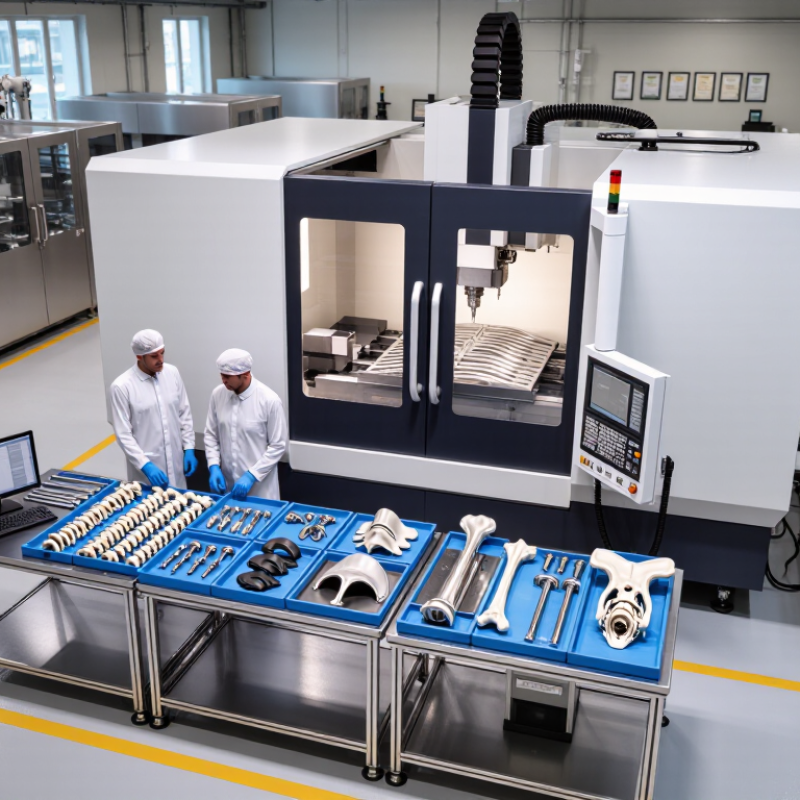
China’s orthopedic implant market is shaped by NMPA Class III medical devices. These products include joint replacements, spinal systems, and trauma implants. They carry higher clinical and manufacturing risks. Registration therefore requires detailed technical documentation, product testing, and evidence supporting safety and performance.
The best orthopedic implants manufacturer in China is not simply the largest factory. A reliable evaluation should examine NMPA registration status, certified quality systems, material traceability, and production consistency. Review the implant’s design history, sterilization controls, and packaging validation. Ask how the manufacturer manages design changes and supplier qualification. A strong technical team should explain these details clearly, without hiding behind marketing language.
Clinical experience also matters. Hospitals and distributors should assess surgeon feedback, complaint handling, and post-market monitoring records. Batch records should connect raw materials with finished implants. That detail can reveal weak control. A polished website is not proof. Neither is a low quotation. Price pressure may affect inspection frequency, training, or service response, although this cannot be assumed without evidence. Some procurement decisions still rely too heavily on samples and conversations. That is a weakness worth correcting. The most dependable partner usually demonstrates consistent documentation, transparent communication, and realistic support for NMPA Class III device requirements. Challenges remain. Even a compliant manufacturer must keep improving clinical evidence, process control, and long-term follow-up.
Choosing the best orthopedic implants manufacturer in China requires more than comparing catalogs or prices. ISO 13485 certification is a useful starting point. It shows that a quality management system has been independently assessed. However, a certificate alone can mislead. Buyers should verify its scope, validity, and connection to the specific implant category.
Clinical evidence deserves close attention. Reliable manufacturers can provide study designs, patient follow-up periods, surgical indications, and documented outcomes. Look for evidence involving similar materials, fixation methods, and patient populations. Ask how complications were recorded. Ask whether unfavorable results were reported. Transparent answers matter.
Product safety should be visible in daily manufacturing details. Check material certificates, batch traceability, sterilization validation, packaging tests, and fatigue-testing records. A serious supplier should explain how nonconforming products are isolated. It should also maintain procedures for complaints, recalls, and post-market surveillance. Experience can be seen on the factory floor. Cleanrooms should have controlled access, calibrated instruments, and clear production records.
Still, no evaluation is flawless. A strong audit may miss weak clinical follow-up. A polished technical file may hide communication delays. I would request sample documentation, inspect production controls, and speak with surgeons familiar with the product. Regulatory support also matters, especially when product specifications change. Careful verification takes time, but it reduces avoidable risk. Small gaps should not be ignored.
China’s orthopedic implant sector is expanding with stronger clinical oversight and domestic engineering capacity. The World Health Organization reports that 1.71 billion people live with musculoskeletal conditions worldwide. That demand affects every implant category.
For hip implants, leading Chinese manufacturers increasingly focus on titanium alloys, ceramic heads, and porous coatings. Knee implant producers compete through better tibial trays, polyethylene inserts, and navigation compatibility.
According to Grand View Research, the global orthopedic implants market is expected to grow steadily through 2030, with joint reconstruction remaining a major segment. However, market size does not prove clinical superiority.
Spine manufacturers emphasize cages, pedicle screws, interbody systems, and minimally invasive instruments. Trauma specialists develop locking plates, intramedullary nails, and modular fixation systems for complex fractures. Strong suppliers should provide ISO 13485-certified production, NMPA registration, traceable materials, and published clinical evidence. Surgeon feedback matters. So does revision data.
No ranking is perfect. Some companies show impressive laboratory results but limited long-term evidence. Others offer reliable implants yet communicate their data poorly. Buyers should compare five-year follow-up, sterilization controls, surgical training, inventory stability, and complaint-handling records. The best Chinese manufacturer depends on anatomy, procedure volume, surgeon preference, and hospital risk standards. WHO evidence and national regulatory records should guide serious evaluations.
Who Is the Best Orthopedic Implants Manufacturer in China?
The strongest manufacturer is not always the largest exporter. UN Comtrade data for 2023 shows Chinese orthopedic-appliance shipments reaching more than 100 reporting markets. However, destination count can hide small distributors and low-value products. Buyers should request shipment records, registration numbers, and product-specific sales data. FDA clearance, FDA approval, and FDA registration are different pathways. A factory claiming “FDA certified” needs careful verification. In Europe, CE marking under the Medical Device Regulation requires documented conformity assessment, clinical evidence, and post-market surveillance. It is not an FDA approval.
Quality-control evidence should be more detailed than an ISO certificate. The 2022 ISO Survey recorded over 30,000 ISO 13485 certificates worldwide, so certification alone cannot identify the best supplier. Ask for batch-release records, sterilization validation, material certificates, complaint rates, nonconformity trends, and CAPA closure times. For titanium implants, traceability should reach the raw-material heat number and final packaging label. FDA inspection observations and recall databases can also reveal recurring weaknesses. A limitation remains: public data rarely compares Chinese factories on identical products. That gap deserves honest attention.
Tips: Compare three years of data, not one impressive quarter. Confirm every FDA listing through official databases. Check CE certificates against the exact model, legal manufacturer, and expiry date. Visit the quality area if possible. A polished audit room proves little without consistent records.
Who Is the Best Orthopedic Implants Manufacturer in China?
The best manufacturer depends on the clinical use case, not factory size. Joint replacement requires precise tolerances, wear testing, and long-term material traceability. Trauma implants need fast customization, strong fatigue performance, and reliable instrument support. Spine systems demand anatomical options, imaging compatibility, and surgeon feedback. According to Fortune Business Insights, the global orthopedic implants market was valued at over USD 50 billion in 2023. That scale reflects rising demand, but it does not prove supplier quality.
For a Chinese manufacturer, review ISO 13485 certification, inspection records, sterilization controls, and technical files. Ask for evidence from similar implant categories, not unrelated products. ASTM and ISO test reports should identify materials, methods, and acceptance limits. Check titanium or cobalt-chrome certificates against each production batch. A factory may show modern equipment. Still, its complaint handling may be weak. That detail is easy to miss. The FDA’s annual device reporting data also shows why post-market surveillance matters. A supplier should track complaints, corrective actions, and field performance clearly.
Tips: Match the audit to the use case. Request sample implants, machining videos, dimensional reports, and packaging validation. Confirm minimum order quantities and spare instrument availability. Ask how quickly design changes are reviewed. Compare total clinical risk, not only unit price. A lower quote can hide testing gaps. One uncomfortable question helps: what failed last year, and what changed afterward? Procurement teams should also verify the manufacturer’s registration status in the destination market before signing.
This chart compares representative elastic-modulus ranges of commonly used orthopedic implant materials. Joint replacement components typically use cobalt-chromium alloys, fixation devices commonly use titanium alloys, cranial and spinal applications may use PEEK, and bearing liners often use UHMWPE. When evaluating a manufacturer, verify material traceability, ISO 13485 quality systems, process validation, biocompatibility testing, sterilization controls, and regulatory documentation for the intended use case.
Values are representative published engineering ranges and are not a ranking of manufacturers.
Review quality systems, clinical evidence, product safety, and post-market support. A certificate helps, but it does not prove everything.
It shows that a quality management system received independent assessment. Check its scope, validity, and implant category.
Request study designs, patient follow-up periods, surgical indications, and documented outcomes. Evidence should involve similar materials and fixation methods.
Check material certificates, batch traceability, sterilization validation, packaging tests, and fatigue records. Ask how nonconforming products are isolated.
Inspect cleanroom access, calibrated instruments, production records, and inspection controls. Factory appearance can mislead.
Yes. Joint replacements need precise tolerances and wear testing. Trauma implants need fatigue strength and responsive customization. Spine systems need anatomical choices and imaging compatibility.
Test reports should identify materials, methods, and acceptance limits. Compare certificates with each production batch. A modern machine proves little alone.
It helps track complaints, corrective actions, recalls, and field performance. Ask what failed last year and what changed afterward.
Request sample implants, dimensional reports, machining records, packaging validation, and technical files. Confirm spare instruments and design-change review times.
No. A lower quote may hide testing gaps, weak follow-up, or slow support. Compare total clinical risk, not only unit price. No checklist is perfect.
Choosing the best orthopedic implants manufacturer in China requires more than comparing prices or product catalogs. China’s market is shaped by strict NMPA Class III device requirements, making regulatory compliance, ISO 13485 certification, clinical evidence, traceability, and product safety essential evaluation criteria. Manufacturers should also demonstrate reliable quality-control systems, validated production processes, and consistent performance across hip, knee, spine, and trauma implant categories.
A thorough comparison should consider manufacturing expertise, material selection, sterilization controls, research capability, export experience, and available FDA or CE approvals where relevant. Independent quality data, clinical support, after-sales service, and supply-chain stability can further distinguish capable suppliers from less experienced ones. The most suitable orthopedic implants manufacturer will depend on the buyer’s specific use case, surgical requirements, target market, regulatory pathway, and long-term cooperation goals. A structured assessment of documentation, certifications, clinical performance, and production capacity can help hospitals, distributors, and medical partners make a safe and well-informed decision.