Choosing a top China orthopedic device manufacturer requires more than comparing prices or browsing polished websites. It demands clinical judgment, engineering awareness, and careful supplier verification. A reliable partner should understand anatomy, surgical workflow, material behavior, and the pressure of real operating rooms. The difference may appear in small details, such as smoother instrument handling, clearer implant markings, or packaging that protects sterility during transport.
Sir John Charnley, a pioneer of modern joint replacement, is often credited with saying, “The surgeon who does not understand engineering is a dangerous surgeon.” This reminder still matters. An orthopedic device manufacturer must connect surgical needs with precise design, validated production, and consistent quality control. Look for documented testing, traceable materials, qualified engineers, and transparent manufacturing records. Ask how the company manages design changes, supplier audits, complaints, and post-market feedback. Vague answers deserve attention.
Certifications are useful, but they are not the whole story. A certificate cannot reveal every production habit. Request samples, inspect labeling, review test reports, and speak with existing customers when possible. Visit the facility if the project is important. Observe cleanliness, calibration records, worker training, and final inspection procedures. These details often reveal more than a sales presentation.
No supplier checklist is perfect. Even experienced buyers can miss a hidden weakness. That is why selection should remain evidence-based and cautious. The strongest China orthopedic device manufacturer is not simply the largest exporter. It is the partner that communicates clearly, supports clinical safety, and improves when problems are honestly identified.
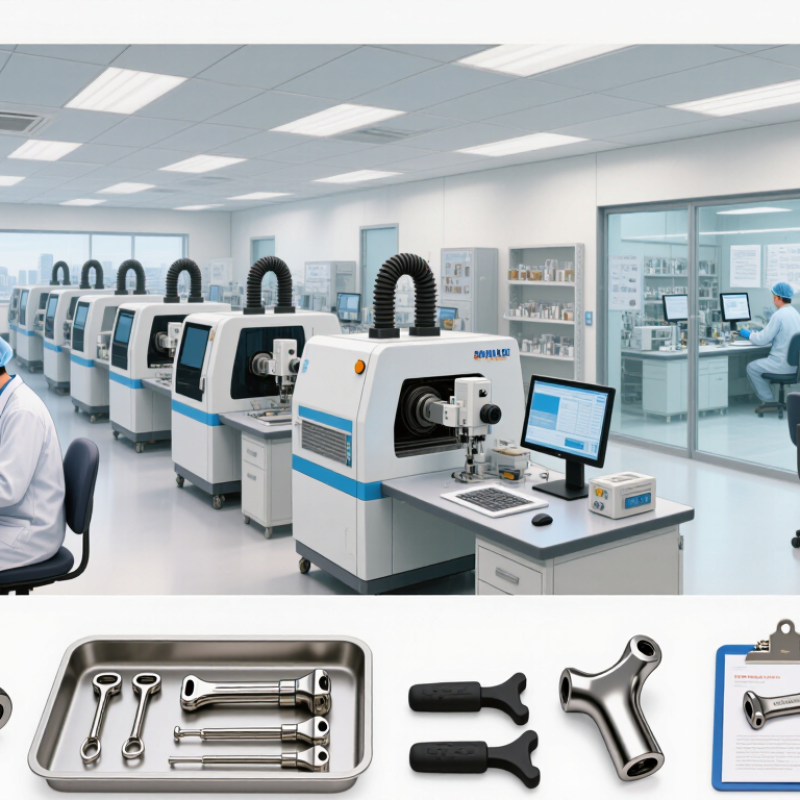
Classify Orthopedic Devices by NMPA Risk Classes I–III
How to Choose a Top China Orthopedic Device Manufacturer?
NMPA risk classes are a practical starting point for evaluating orthopedic manufacturers. Class I devices present lower risks and usually require product filing. Class II devices carry moderate risks and require registration with a provincial medical products authority. Class III devices involve higher risks and require NMPA registration. Implants often fall into this class.
Classification depends on intended use, invasiveness, duration, and design. A support brace may not follow the same pathway as a spinal implant. Check the current classification catalogue and product instructions carefully. Do not accept a convenient classification without evidence.
Ask the manufacturer for valid filing records or registration certificates. Review its quality management system, design controls, material traceability, and sterilization validation. For implants, examine fatigue testing, biocompatibility data, packaging integrity, and clinical evidence. Complaint handling also matters. Small process failures can become serious patient risks.
A polished brochure proves little. Request controlled documents and recent audit records. Some suppliers explain regulations well but lack stable production records. Others have strong factories yet weak registration support. That difference is easy to miss. An honest evaluation may reveal gaps, including incomplete testing or unclear responsibility after delivery. Ask direct questions, document every answer, and involve qualified regulatory professionals when classification remains uncertain.
| NMPA Risk Class | Risk Level | Typical Orthopedic Device Categories | Representative Examples | Common Regulatory Route in China | Key Manufacturer Capabilities to Verify | Typical Technical Documentation and Evidence | Supplier Evaluation Priority |
|---|---|---|---|---|---|---|---|
| Class I | Low risk Products with comparatively limited risk when used as intended. |
Non-invasive or externally used orthopedic support products that do not normally involve a significant biological or mechanical hazard. |
|
Filing is generally required rather than full registration. The applicable filing authority and product category should be confirmed against the current NMPA classification catalogue. |
|
Product technical requirements, risk analysis, product description, inspection records, labeling, instructions for use, and applicable test reports. | Manufacturing consistency, traceability, material compliance, packaging control, and responsiveness to corrective actions. |
| Class II | Moderate risk Products requiring stronger control because of their intended use, performance, or patient contact. |
Devices that may provide therapeutic support, involve sustained patient contact, deliver controlled mechanical assistance, or require more detailed performance verification. |
|
Registration is generally required. For domestic products, Class II registration is commonly handled at the provincial level; imported products are generally registered with the NMPA. The exact route depends on product classification and origin. |
|
Product technical requirements, risk management file, applicable biological evaluation, mechanical or electrical safety testing, sterilization validation when relevant, stability data, clinical evaluation, labeling, and registration records. | Regulatory experience, verification and validation depth, production-process validation, supplier qualification, post-market surveillance, and lot traceability. |
| Class III | High risk Products for which special controls are required because failure may cause serious injury or significant clinical harm. |
Implantable, invasive, life-supporting, or high-consequence orthopedic devices, especially products intended to remain in the body or bear substantial anatomical loads. |
|
Registration with the NMPA is generally required for domestic and imported Class III devices. Clinical evaluation requirements depend on the product, predicate-device pathway, applicable catalogue, and current regulatory rules. |
|
Comprehensive risk management, material characterization, biological evaluation, mechanical and fatigue testing, sterilization validation, packaging validation, shelf-life data, clinical evaluation or clinical investigation where required, manufacturing-site documentation, and post-market surveillance evidence. | Patient safety, regulatory history, implant performance data, process validation, raw-material traceability, nonconformance control, recall readiness, clinical support, and long-term technical service. |
| Practical Manufacturer-Selection Checklist for Orthopedic Devices | |||||||
| 1. Confirm the exact classification | Classification depends on the intended use, invasiveness, duration of contact, implantability, energy source, and other product characteristics—not only on the product name. | 2. Verify registration status | Request the applicable NMPA filing or registration information, product technical requirements, scope of approval, and manufacturing authorization before placing an order. | ||||
| 3. Audit the quality system | Review quality-system certificates, audit reports, document control, training records, CAPA procedures, complaint handling, and supplier-management records. | 4. Inspect production controls | Evaluate clean areas, equipment qualification, process validation, inspection instruments, environmental monitoring, packaging controls, and batch traceability. | ||||
| 5. Check material and testing evidence | For implantable products, verify material certificates, chemical composition, mechanical performance, corrosion or wear data, biological evaluation, and sterilization evidence where applicable. | 6. Assess customization capability | Confirm design-transfer procedures, drawing control, tolerance management, sample approval, engineering-change procedures, and the ability to maintain regulatory compliance after customization. | ||||
| 7. Evaluate supply continuity | Review production capacity, critical-component sourcing, lead times, safety-stock policy, business-continuity planning, and backup suppliers for essential materials. | 8. Review post-market support | Confirm complaint response times, adverse-event reporting support, field-correction procedures, recall processes, technical training, and availability of replacement parts. | ||||
| Important regulatory note: The examples above are general guidance only. The final NMPA classification must be determined using the latest Chinese medical-device classification catalogue, applicable product-specific rules, intended use, design characteristics, and regulatory interpretation. A manufacturer should provide current and verifiable regulatory documentation for the exact model being purchased. | |||||||
FAQS
Class I devices usually present lower risks and need product filing. Class II devices carry moderate risks and require provincial registration. Class III devices involve higher risks and require national registration. Implants often belong to Class III. Classification depends on use, invasiveness, duration, and design.
Not necessarily. A support brace may have limited risk, while a spinal implant is invasive and long-term. Check the current classification catalogue and product instructions. Never accept a convenient classification without evidence.
Request valid filing records or registration certificates. Review quality-system documents, design controls, traceability records, and sterilization validation. Ask for recent audit reports. A polished brochure proves little.
Review fatigue testing, biocompatibility data, packaging integrity, and clinical evidence. Check complaint handling and corrective actions. Small process failures can create serious patient risks. Ask who remains responsible after delivery.
Check the current certificate, audited facility, product scope, certification body, and expiration date. Confirm that the listed site actually manufactures your device. A trading office certificate proves little. Verify details independently.
Request hazard analysis, risk evaluation, control measures, and residual-risk decisions. Check links with testing, usability work, complaints, and corrective actions. Ask for one anonymized risk file. Vague answers deserve attention.
Match each component with the correct material standard. Request certificates for every production lot. Review alloy grade, lot number, test method, laboratory, and traceability. Compare certificates with drawings and purchase specifications.
Not alone. Request independent testing when the risk justifies its cost. Review strength, elongation, hardness, and metallographic results. Inspect discoloration, machining marks, porosity, and casting defects. Missing heat numbers weaken traceability.
Observe incoming inspection, storage labels, clean handling, equipment calibration, and nonconforming-material control. Check supplier-change notifications and complaint trends from three years. Visit evidence is stronger than polished PDFs. I once trusted a standard reference too much. That was too simple.
Conclusion
Choosing the right orthopedic device manufacturer requires a structured evaluation of regulatory compliance, technical capability, and long-term reliability. Begin by classifying the manufacturer’s products according to NMPA Risk Classes I–III, since classification affects documentation, testing, registration, and quality controls. Verify current ISO 13485:2016 quality-management certification and review ISO 14971 risk-management records to confirm that hazards are identified, assessed, and controlled throughout the product lifecycle.
Material selection should also be examined against relevant requirements, including ISO 5832, ASTM F136, and ASTM F75, depending on the device and its intended application. Compare available clinical evidence, product safety history, recall rates, and applicable FDA 510(k) records where relevant. Finally, score each supplier on production capacity, lead times, batch traceability, total cost, defect rates, on-time delivery, and other quality KPIs. A balanced assessment of these factors can help identify a dependable partner that supports consistent product quality, regulatory readiness, and sustainable supply.