Choosing an orthopedic implants supplier is a clinical, technical, and operational decision. It affects surgical consistency, patient safety, and long-term hospital performance. Price matters, but it should not dominate the evaluation.
A reliable supplier should provide clear material certificates, batch records, sterilization details, and product traceability. Ask how titanium alloys, cobalt-chrome components, or polymer materials are tested. Request evidence of quality systems, such as ISO 13485 certification, where relevant. Documentation should be current, readable, and easy to verify. Vague answers deserve attention.
Look beyond the catalog.
Assess the supplier’s engineering support, surgeon training, inventory planning, and complaint-response process. A dependable orthopedic implants supplier should explain product indications without promising unrealistic clinical outcomes. Its representatives should understand anatomy, instrumentation, packaging, and operating-room pressures. Speak with hospitals that use the products regularly. Their feedback may reveal delayed shipments, difficult instruments, or inconsistent communication.
Regulatory requirements differ by market, so independent verification remains essential. Check approvals, labeling, post-market surveillance, and recall procedures with qualified professionals. A supplier may have excellent products but weak service coverage. Another may offer attractive pricing but limited clinical education. Neither issue is obvious from a brochure. Build a comparison table, inspect sample documentation, and record every unanswered question. No supplier is flawless. The goal is not to find a perfect partner, but to identify manageable risks and reliable evidence. A careful review protects procurement teams, surgeons, and the patients who depend on each implant.
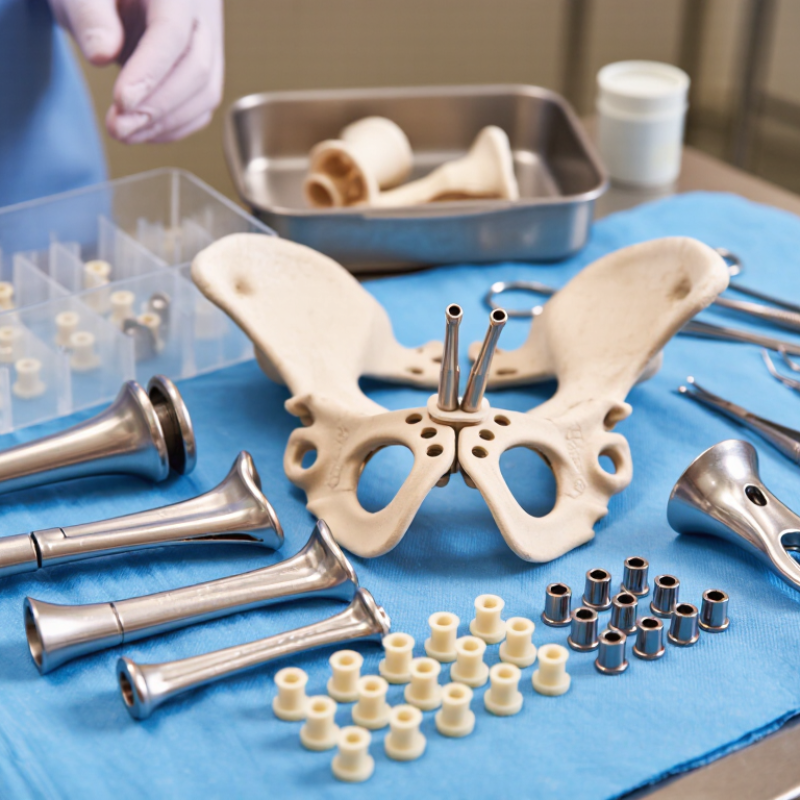
How to Choose an Orthopedic Implants Supplier?
Defining Your Orthopedic Implant Requirements
A reliable supplier search begins with a precise clinical requirement. Define the target anatomy, surgical approach, implant function, and expected load. Include bone quality, patient age range, and common anatomical variations. These details affect geometry, fixation, materials, and available sizes.
Discuss requirements with surgeons, operating-room staff, and biomedical engineers. Their experience can reveal practical issues that specifications may miss. Request dimensional drawings, material certificates, sterilization information, and product traceability records. Confirm whether the supplier maintains a controlled quality system and provides clear technical documentation. Ask for clinical evidence relevant to the intended procedure, not broad promotional claims. A perfect checklist does not exist. Requirements may change after trial fitting or imaging review.
Tips: Create a written requirement sheet before contacting suppliers. List essential features separately from preferred features. Check instrument compatibility, packaging integrity, delivery capacity, and technical support. Ask how complaints, recalls, and design changes are managed. Test communication with specific questions. Slow or unclear answers deserve attention.
Avoid choosing by price alone. A lower quotation may exclude instruments, training, documentation, or replacement support. Compare total lifecycle needs, including delivery reliability and inventory control. Review sample components where appropriate, but do not treat appearance as proof of performance. A polished surface can still hide an unsuitable design. Independent review is useful when the implant will serve complex or high-risk procedures.
A reliable supplier should demonstrate more than attractive pricing. Review its quality management system, including documented design controls, risk management, and production monitoring. ISO 13485 certification can support confidence, but it is not proof of flawless performance. Check the certificate’s scope, issuing body, and expiration date.
Ask how each implant lot is identified and traced. Records should connect raw materials, machining steps, inspections, sterilization, and final release. Request evidence for biocompatibility, mechanical testing, packaging integrity, and sterilization validation. These documents should match the actual product, not a generic catalogue model. Small details matter. A missing revision number can create serious confusion during an audit.
Regulatory expectations differ across markets, so the supplier must understand your intended countries and device classification. Review registration history, technical files, complaint handling, corrective actions, and change-control procedures. Ask how the supplier informs customers about material, process, or facility changes. A competent team answers clearly and provides controlled records. Evasive replies deserve attention.
Visit the facility if possible. Observe clean areas, calibration labels, operator training records, and quarantine controls. A spotless showroom means little. Real reliability appears in ordinary routines. Still, no audit reveals everything. I would avoid treating one successful visit as permanent evidence. Monitor delivery quality, nonconformities, and response times after approval. Supplier evaluation is an ongoing process, not a single purchasing decision.
How to Choose an Orthopedic Implants Supplier?
Material selection should match the implant’s load, location, and expected healing conditions. Titanium offers a strong strength-to-weight ratio and supports bone-friendly surface treatments. Stainless steel can suit specific fixation systems and cost-sensitive applications. Cobalt-chrome provides excellent wear resistance, but its stiffness may affect stress distribution. No material is perfect. A reliable supplier should provide material certificates, fatigue data, corrosion testing, and clear traceability for every batch.
Design details deserve equal attention. Review screw angles, locking mechanisms, porous structures, and instrument ergonomics. A well-designed implant should fit anatomy without forcing excessive bone removal. Modular options can improve surgical flexibility, though they may add connection points and inspection requirements. Ask whether the design has clinical evidence, validated manufacturing controls, and documented revision feedback. Small details matter.
Tips: Compare implants using the same clinical scenario. Check compatibility with existing instruments, imaging equipment, cement systems, and sterilization processes. Confirm dimensions, connection standards, and packaging integrity. Request technical files before purchasing. Do not rely only on attractive drawings. A product may appear compatible but fail during surgery because of a minor interface difference. Involve surgeons, engineers, and procurement specialists in the review. Their priorities may conflict, and that is useful to notice.
This chart provides a qualitative comparison of commonly used orthopedic implant material families. Scores range from 1 (lower relative characteristic) to 5 (higher relative characteristic). “Bone-modulus match” indicates how closely the material’s stiffness generally compares with cortical bone, while “radiographic visibility” reflects how easily the material is seen on standard X-ray imaging. Actual product compatibility depends on anatomy, implant design, fixation method, imaging requirements, sterilization, and regulatory validation.
Choosing an orthopedic implants supplier requires more than comparing catalogs and quoted prices. Manufacturing capacity deserves close attention because surgical schedules cannot depend on optimistic promises. Ask how many validated production lines are available for your implant type. Review equipment maintenance records, staffing levels, and production shift coverage. Capacity matters. A supplier with modern machines may still struggle during demand spikes. Confirm whether critical processes, such as machining, surface treatment, cleaning, and packaging, are managed internally or outsourced.
Supply reliability depends on evidence, not confident presentations. Request historical data for on-time delivery, batch rejection rates, corrective actions, and average lead times. Examine how the supplier handles raw material shortages, equipment failure, and sudden forecast changes. Reliable suppliers maintain approved backup sources without weakening traceability. They should also provide clear lot records, inspection reports, and change-notification procedures. These details support clinical accountability and help procurement teams investigate problems quickly.
During a site assessment, observe real workflow rather than staged demonstrations. Are materials clearly identified? Can operators explain inspection steps? Do production records match physical inventory? My experience suggests that small inconsistencies often reveal larger planning weaknesses. A polished factory tour can still hide fragile scheduling. I would also test communication before signing a long-term agreement. Send a detailed technical question and measure the response time, accuracy, and willingness to admit uncertainty. No supplier performs perfectly. The important issue is whether weaknesses are visible, documented, and actively corrected.
Choosing an orthopedic implants supplier requires more than comparing unit prices. Service quality often determines whether a case stays on schedule. Ask about technical support, surgeon training, instrument availability, and response times. A reliable supplier should provide clear traceability records and documented quality controls. The WHO Global Patient Safety Action Plan 2021–2030 reports that one in ten patients experiences harm in healthcare. More than half of this harm is considered preventable. Supplier communication can reduce avoidable procedural risks.
Cost analysis should include the complete purchasing cycle. Review implant prices, shipping, sterilization support, replacement terms, and inventory requirements. A low quote can look clever. It can also be a trap. OECD Health at a Glance 2023 reports that health spending reached 9.2% of GDP across OECD countries in 2022. This pressure encourages hospitals to control costs, but short-term savings may increase revision expenses. Request a total-cost model over three to five years. Compare delivery accuracy, complaint handling, and training costs. Do not accept vague service promises. Written service levels matter.
Tips: Ask for recent on-time delivery data and anonymized quality records. Check how quickly urgent instruments can be supplied. Speak with clinical and procurement users, not only sales staff. Test the reporting process before signing. It may reveal gaps. Review price-adjustment clauses carefully. Long partnerships need regular performance reviews, open communication, and a documented improvement plan. Even strong suppliers make mistakes, so evaluate how they correct them.
| Evaluation Dimension | Weight | Established Full-Service Supplier | Specialized Contract Manufacturer | Regional Distribution Partner | What to Verify Before Selection |
|---|---|---|---|---|---|
| Regulatory Documentation | 20% | High Usually provides device-history records, certificates of conformity, material certificates, and change-control procedures. |
High Strong production documentation, but market-registration support may need to be contracted separately. |
Medium Typically manages local import and distribution records; technical-file access may be limited. |
Confirm applicable quality certification, traceability by lot or serial number, complaint handling, vigilance support, and audit rights. |
| Quality Management System | 15% | High Formal supplier qualification, process validation, nonconformance control, and periodic internal audits are commonly available. |
High Often highly disciplined in manufacturing controls and inspection plans. |
Medium Quality oversight depends largely on the upstream manufacturer and distributor procedures. |
Request current certificates, sample inspection plans, corrective-action records, and evidence of validated critical processes. |
| Typical Initial Order Quantity | 10% | Approximately 25–100 units per standard product or size range. | Approximately 100–500 units for custom or private-label production; lower quantities may involve setup charges. | Approximately 1–20 units per stock-keeping unit, subject to inventory availability. | Obtain written minimum-order quantities, tooling fees, packaging requirements, and conditions for mixed-size orders. |
| Standard Production Lead Time | 10% | Approximately 6–12 weeks after order confirmation, depending on configuration and capacity. | Approximately 8–16 weeks, including production planning, inspection, and approval of customized specifications. | Approximately 1–4 weeks when products are held in local or regional inventory. | Separate manufacturing time from regulatory release, quality inspection, freight, customs, and local delivery time. |
| Customization Capability | 10% | High May support instrument sets, packaging, labeling, and product configuration changes through controlled processes. |
Very high Usually best suited to dimensional changes, new tooling, surface treatments, and private-label programs. |
Limited Generally focuses on supplying approved catalog products rather than modifying designs. |
Clarify design ownership, validation responsibilities, tooling ownership, design-change approval, and transfer requirements. |
| Technical and Clinical Support | 10% | High May provide surgical technique materials, training coordination, product specialists, and case support. |
Medium Strong engineering support is common; clinical and operating-room support may be limited. |
Medium to high Usually responsive for local product training and logistics coordination. |
Evaluate response times, language coverage, training records, technical complaint escalation, and availability during procedures. |
| Unit Price Position | 10% | Typically medium to high because service, documentation, inventory, and support are included in the commercial model. | Typically low to medium at volume, but engineering, tooling, validation, and change-control costs may be additional. | Typically medium to high due to warehousing, import, inventory, and local service costs. | Compare landed cost rather than quoted unit price, including freight, duties, inspection, packaging, training, and support. |
| Five-Year Total Cost of Ownership | 10% | Predictable Often favorable when consistent documentation, training, and product availability reduce operational risk. |
Potentially low at stable volume Best value when demand is forecastable and the buyer can manage technical and regulatory activities. |
Variable Can be cost-effective for smaller or urgent orders but may carry higher recurring distribution margins. |
Model purchase cost, stockholding, quality failures, rework, recalls, delays, training, regulatory work, and switching costs. |
| Supply Continuity and Risk Control | 5% | High Often has formal capacity planning, safety-stock programs, approved alternate processes, and business-continuity plans. |
Medium to high Capacity may be excellent, but dependency on a single plant or critical process should be assessed. |
Medium Fast local supply may be offset by dependence on upstream inventory and import routes. |
Review forecast commitments, dual sourcing, disaster recovery, inventory visibility, recall procedures, and notification of material changes. |
| Best Fit | Organizations prioritizing comprehensive service, regulatory support, and long-term consistency. | Organizations with stable demand, engineering resources, and a need for customization or volume efficiency. | Organizations prioritizing local availability, smaller order quantities, and responsive regional logistics. | Choose the highest-value operating model, not simply the lowest quoted unit price. | |
Benchmark ranges are typical planning values for orthopedic implant procurement and should be validated through supplier audits, quality agreements, technical documentation, sample orders, and a complete landed-cost analysis.
Define the target anatomy, surgical approach, implant function, and expected load. Include bone quality, patient age range, and common anatomical variations. Write essential features separately from preferred features. Details matter.
Include surgeons, operating-room staff, biomedical engineers, and procurement specialists. Each group notices different problems. A surgeon may assess fit, while an engineer reviews materials and interfaces. Conflicting opinions can reveal hidden requirements.
Request dimensional drawings, material certificates, sterilization information, and traceability records. Also review mechanical testing, biocompatibility evidence, packaging validation, and technical files. Documents should match the exact product. Generic files are weak evidence.
Review design controls, risk management, production monitoring, and inspection procedures. Check certification scope, issuing authority, and expiration date. Confirm that each lot connects raw materials with final release records. Missing revision numbers create confusion.
Confirm the supplier understands the intended markets and device classification. Review registration history, complaint handling, corrective actions, and change-control procedures. Ask how material or facility changes are communicated. Unclear answers deserve caution.
Match the material with load, anatomical location, and healing conditions. Review fatigue data, corrosion testing, surface treatments, and batch traceability. Different materials have different stiffness and wear characteristics. No material is perfect.
Examine screw angles, locking mechanisms, porous structures, connection standards, and instrument ergonomics. Confirm compatibility with existing instruments, imaging equipment, cement systems, and sterilization processes. A tiny interface difference can disrupt surgery. Drawings alone may mislead.
Not necessarily. A low quotation may exclude instruments, training, documentation, or replacement support. Compare delivery reliability, inventory control, technical support, and total lifecycle needs. A polished sample proves very little.
Visit when possible, and observe clean areas, calibration labels, training records, and quarantine controls. A spotless showroom means little. After approval, monitor delivery quality, nonconformities, and response times. One successful audit is not permanent proof.
Choosing the right orthopedic implants supplier is an important decision that can directly affect product performance, patient safety, and operational efficiency. Begin by clearly defining your implant requirements, including intended applications, anatomical needs, sizing options, sterilization expectations, and relevant documentation. Then evaluate each supplier’s quality management systems, regulatory compliance, testing procedures, and traceability practices to ensure consistent and reliable products.
It is also essential to compare materials, implant designs, and compatibility with surgical instruments or existing systems. Review the supplier’s manufacturing capacity, quality-control processes, lead times, inventory management, and ability to maintain stable supply during demand fluctuations. Finally, consider pricing alongside technical support, communication, customization capabilities, after-sales service, and long-term cooperation potential. A dependable orthopedic implants supplier should offer a balanced combination of quality, compliance, flexibility, supply reliability, and professional support, helping healthcare organizations manage risks while achieving sustainable value.