Orthopedic implants become part of someone’s daily life: a hip stem bears weight on stairs, while a spinal screw helps stabilize a delicate structure. Choosing among the best orthopedic implant manufacturers is therefore more than comparing product catalogs. Surgeons and hospitals also consider clinical evidence, material performance, manufacturing controls, and long-term follow-up.
Healthcare strategy expert Michael E. Porter wrote, “Value in health care is measured by the outcomes achieved, not the volume of services delivered.” That principle matters here. A broad product range may look impressive, but it does not by itself prove better patient outcomes. Details matter. For example, clinicians may examine implant design, available sizes, instrument compatibility, and how clearly a manufacturer supports product traceability.
This guide introduces 10 leading orthopedic implant manufacturers worldwide and the factors that distinguish them. It considers their presence across joint replacement, trauma, spine, and related specialties, while recognizing that strengths vary by product line and region. No manufacturer is the right choice for every patient or procedure. That is worth remembering.
The discussion is intended as an informed starting point, not a substitute for clinical judgment or current regulatory checks. Product availability and evidence can change. Readers should verify details with manufacturers, clinicians, and relevant public records before drawing conclusions. Even a careful overview has limits.
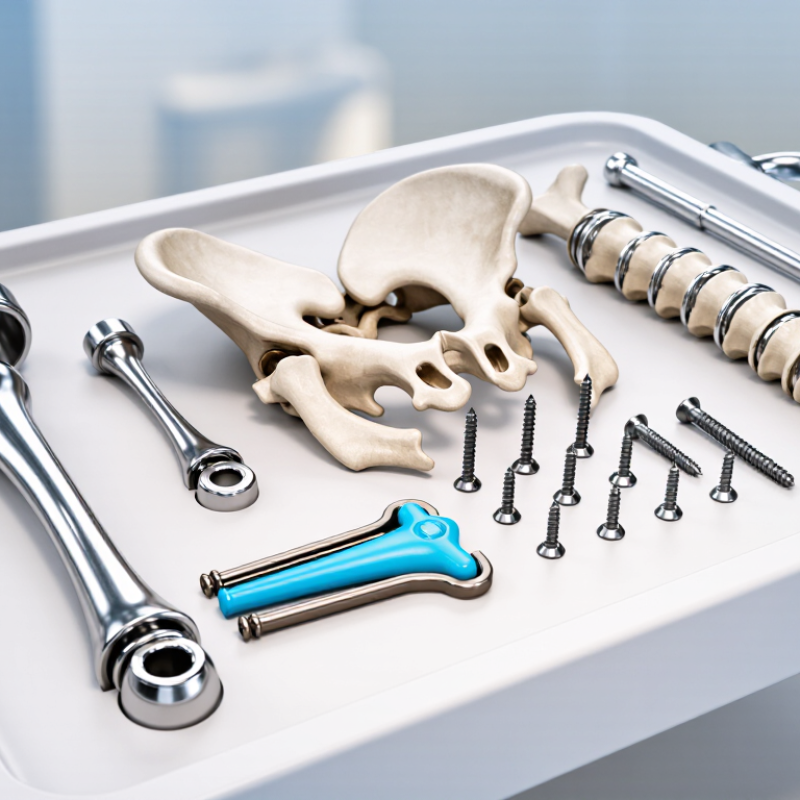
Orthopedic implant manufacturers produce devices that support, replace, or stabilize parts of the musculoskeletal system. Common products include joint replacement components, bone plates, screws, intramedullary nails, and spinal fixation systems. Some manufacturers also produce surgical instruments used to position or secure implants. The exact product range varies by company.
Production begins with design choices about anatomy, intended use, material, and fit. Engineers may use titanium alloys, stainless steel, or specialized polymers, depending on the device. Parts are machined or molded, then inspected for dimensions, surface finish, and defects. Small details matter. A rough edge or poorly fitting connection can affect how a component performs. Manufacturers also document testing and quality controls, though requirements vary across markets and device types. Manufacturing alone does not establish that an implant suits every patient.
Tips: When comparing manufacturers, check which implant categories they make and whether their technical information is clear. Look for details on materials, testing, traceability, and quality processes. Ask how products are intended to be used, and confirm claims with qualified clinical or regulatory sources. Product descriptions can sound reassuring, but they may leave out important limits. That deserves a closer look.
Orthopedic implants serve different mechanical jobs. Total hip and knee replacements restore joint surfaces damaged by arthritis, injury, or other disease. A hip system typically combines a stem placed in the femur with a socket in the pelvis. Knee systems replace selected or broader joint surfaces, depending on damage and surgical assessment. Fracture-fixation implants, including plates, screws, rods, and wires, stabilize broken bone while it heals. Spinal implants such as screws, rods, and interbody cages may support alignment or fusion in selected conditions. They are not interchangeable.
Materials and fit matter. Titanium alloys and cobalt-chromium alloys are common in load-bearing components; polyethylene often forms a bearing surface in joint replacements. The choice depends on anatomy, bone quality, activity, and the intended fixation. The World Health Organization’s 2022 musculoskeletal conditions fact sheet estimates that 1.71 billion people worldwide live with these conditions. That broad figure is not a count of implant candidates. It does show the scale of musculoskeletal need. A tidy category list can hide real variation: two patients with similar scans may need different implant designs, and recovery depends on more than the device alone.
An overview of common orthopedic implant types, their typical components, clinical applications, and materials. Implant selection depends on patient needs, anatomy, and the treating clinician’s judgment.
| No. | Implant Type | Typical Components and Materials | Common Uses | Key Considerations |
|---|---|---|---|---|
| 1 | Total hip replacement implants | Usually include a femoral stem and head, an acetabular cup, and a bearing liner. Materials may include titanium alloys, cobalt-chromium alloys, ceramics, and highly cross-linked polyethylene. | Replace a damaged hip joint, commonly for advanced osteoarthritis, inflammatory arthritis, or certain hip fractures. | Component size, fixation method, bearing surfaces, bone quality, and patient activity are considered when planning surgery. |
| 2 | Total knee replacement implants | Typically comprise a femoral component, a tibial baseplate, and a polyethylene bearing insert; a patellar component may also be used. Common materials include cobalt-chromium alloys, titanium alloys, and polyethylene. | Replace worn joint surfaces, most often in advanced knee osteoarthritis and other forms of severe joint damage. | Implant alignment, stability, ligament balance, bone condition, and the extent of joint damage influence the surgical approach. |
| 3 | Bone plates and plate-screw systems | Metal plates secured to bone with screws; commonly made from titanium alloys or stainless steel. Some systems use locking screws that engage with the plate. | Stabilize fractures, support bone reconstruction, or maintain alignment while bone heals. | Plate shape and length, fracture pattern, bone quality, and nearby soft tissues affect placement and fixation. |
| 4 | Intramedullary nails | A metal rod placed within the marrow canal of a long bone, often secured with locking screws. Titanium alloys and stainless steel are commonly used. | Stabilize many fractures of long bones, particularly the femur and tibia; some designs are used for the humerus. | Nail length and diameter, fracture location, canal anatomy, and the need for rotational or length control are important considerations. |
| 5 | Orthopedic bone screws | Screws are available in different diameters, thread patterns, and head designs. Common materials include titanium alloys and stainless steel. | Provide fixation for fractures, bone fragments, ligament or tendon attachments, and other orthopedic constructs. | Screw type and placement depend on the bone, intended fixation, surrounding anatomy, and whether the screw is used alone or with another implant. |
| 6 | External fixation systems | Frames, rods, clamps, and pins or wires connect to bone through the skin. Metal components are commonly made from stainless steel or titanium alloys. | Temporarily or definitively stabilize fractures, including some complex injuries, and support gradual correction of bone alignment or length. | Pin-site care, frame configuration, soft-tissue condition, and the need for ongoing adjustments are important parts of treatment. |
| 7 | Spinal interbody cages | Spacers placed between vertebrae; commonly made from titanium, porous titanium, or polyetheretherketone (PEEK). They may be used with bone graft material. | Maintain disc-space height and support spinal fusion after removal of a diseased or damaged intervertebral disc. | Spinal level, cage size and shape, bone quality, and the fusion plan guide selection and placement. |
| 8 | Pedicle screw-and-rod systems | Pedicle screws anchored in vertebrae and connected by rods; commonly made from titanium alloys or, in some systems, cobalt-chromium alloys. | Stabilize the spine during fusion procedures and in selected cases of spinal deformity, instability, or fracture. | Screw trajectory, spinal anatomy, construct length, and the underlying diagnosis are considered during surgical planning. |
| 9 | Shoulder replacement implants | Components may include a humeral stem or stemless component, a humeral head, and a glenoid component. Materials can include metal alloys and polyethylene. | Treat severe shoulder joint damage, commonly from arthritis or certain complex fractures. Conventional and reverse designs are used for different clinical situations. | Rotator cuff function, bone condition, joint anatomy, and the chosen replacement design influence the procedure. |
| 10 | Total ankle replacement implants | Typically include tibial and talar metal components with a polyethylene bearing surface. | Replace damaged ankle joint surfaces, often for end-stage ankle arthritis, with the aim of retaining joint motion. | Bone stock, ankle alignment, ligament stability, soft-tissue condition, and patient-specific factors are assessed before surgery. |
Choosing among orthopedic implant manufacturers worldwide requires more than comparing catalogues or unit prices. Start with the intended procedure, implant materials, available sizes, and compatibility with existing instruments. Request current technical documents, material specifications, and evidence supporting design performance. Details matter. Confirm that product clearances and registrations apply in each target market; requirements differ by jurisdiction.
Review the quality system through documented audit results, not polished sales slides. Check how the manufacturer controls suppliers, validates sterilization and packaging, tracks each lot, and investigates complaints or recalls. Request sample labels and traceability records; a lot number should connect to production and release data. Ask for clinical evidence relevant to the implant type and patient population, and distinguish peer-reviewed outcomes from promotional claims. Evidence can be uneven.
Operational fit matters too. Compare lead times, inventory continuity, instrument availability, training, and response times for technical questions. Speak with clinicians and procurement teams in more than one region, since local service can differ sharply. A manufacturer may score well on paper yet struggle with replacement parts or clear communication. No scorecard is perfect; weighting price too heavily can hide meaningful gaps. Record unanswered questions and verify them independently before shortlisting.
Material stiffness is one useful comparison point when assessing implant design and material expertise. The chart shows approximate Young’s modulus ranges in gigapascals (GPa); it does not rank manufacturers.
How to read it: A closer stiffness match to bone may help reduce stress-shielding concerns, but material choice alone cannot establish implant quality. Also assess clinical evidence, regulatory approvals, manufacturing controls, traceability, and post-market surveillance.
Approximate reference ranges; actual values vary with alloy, processing, and measurement method. Sources: Rho et al., Journal of Biomechanics (1993), cortical bone; MatWeb, Ti-6Al-4V; MatWeb, cobalt-chromium alloys; MatWeb, 316L stainless steel.
Profiles of ten leading orthopedic implant manufacturers are most useful when they explain what each company actually makes. Compare hip and knee replacements, trauma plates, spinal fixation systems, and extremity devices. Look beyond product breadth. A careful profile should examine published clinical evidence, material choices, manufacturing traceability, surgeon training, and support for revision procedures. Regional availability matters, too. A technically strong implant is less useful when follow-up support is limited.
Grand View Research’s Orthopedic Implants Market report estimated the global market at US$49.3 billion in 2023, with a projected 4.9% compound annual growth rate from 2024 to 2030. The World Health Organization estimated that 528 million people had osteoarthritis in 2019. These figures show a substantial health and commercial need, but they do not prove that any particular implant or manufacturer delivers better outcomes.
The gaps matter. Market reports measure spending and growth, not long-term implant survival. Profiles should therefore distinguish documented performance from promotional claims, and note where independent comparisons remain limited. Even a neat ranking can hide important differences in patient populations, surgical technique, and follow-up periods.
Global demand is being shaped by aging populations, longer lives, and rising expectations for mobility. The World Health Organization’s 2022 musculoskeletal conditions fact sheet estimates that 1.71 billion people live with these conditions worldwide. The United Nations’ World Population Prospects 2022 projects that people aged 65 or older will grow from 10% of the global population in 2022 to 16% by 2050. More patients may need joint reconstruction, but demand will not rise evenly. The pressure is real.
Hospitals are also seeking implants that support predictable recovery, durable fixation, and efficient surgery. OECD Health at a Glance 2023 reports substantial variation in hip and knee replacement rates across countries, reflecting differences in access, clinical practice, and population need. This makes one-size-fits-all product planning risky. Digital planning, robotics, patient-specific instruments, and additive manufacturing are attracting attention, but they must prove value in routine care—not only in demonstrations. Small gains matter.
Materials and designs are evolving alongside evidence requirements. Manufacturers face closer scrutiny of implant longevity, revision rates, and real-world performance. Surgeons need clear data across diverse patient groups. I would be cautious about calling every new coating or sensor a breakthrough; long-term comparative evidence can lag behind product launches. Supply resilience and affordability matter too, especially where specialist care and follow-up are limited. Innovation is useful only when clinics can deliver it safely and consistently.
Compare intended procedures, materials, available sizes, and compatibility with existing instruments. Price alone is not enough.
Request current technical documents, material specifications, and evidence supporting design performance. Check that registrations apply in each target market.
Review documented audit results and ask how suppliers, sterilization, packaging, and complaints are controlled. Sample labels and traceability records can show how a lot connects to production and release data.
Seek evidence for the specific implant type and patient population. Separate peer-reviewed outcomes from promotional claims. Evidence can be uneven.
Compare lead times, stock continuity, instrument availability, training, and response times. Ask clinicians and procurement teams in different regions about local support.
No. Market figures describe spending and projected growth, not implant survival or clinical results. The distinction matters.
Digital planning, robotics, patient-specific instruments, and new materials may help, but routine-care value needs proof. Long-term comparisons may be limited.
Broad product ranges or a polished ranking can hide gaps in follow-up, revision support, or independent evidence. A neat scorecard can still mislead.
Record them and verify the answers independently before shortlisting. No scorecard is perfect.
Orthopedic implant manufacturers design and produce medical devices that support, repair, or replace bones and joints. Their products may include joint replacement systems, trauma fixation devices, spinal implants, and other specialized solutions, each intended for different clinical needs. Understanding how these implant types are used helps readers compare the range of technologies available and the role manufacturers play in supporting patient care.
This overview also explains how to evaluate manufacturers worldwide, considering factors such as product quality, engineering expertise, manufacturing capabilities, and support for healthcare professionals. Profiles of 10 leading companies offer a broad view of the industry without focusing on any single brand. Finally, the article explores trends shaping the sector, including advances in materials, personalized design, and digital manufacturing, providing a useful introduction to the best orthopedic implant manufacturers and the changing market they serve.