Orthopedic implants are not interchangeable parts. A cobalt-chromium knee component, a porous titanium hip stem, and a spinal fixation screw each face different demands inside the body. For hospitals and surgeons, manufacturer comparisons therefore involve more than brand recognition. They involve clinical evidence, material choices, design history, manufacturing consistency, and support after surgery.
The market is growing, but the figures need context. Grand View Research’s Orthopedic Implants Market Size, Share & Trends Analysis Report estimated the global market at USD 45.8 billion in 2023 and projected a 4.9% compound annual growth rate from 2024 to 2030. That forecast signals commercial momentum, not proof that any one product works best for every patient. That distinction matters. Surgeon and author Atul Gawande wrote, “Better is possible. It does not take genius. It takes diligence.” His words, from Better: A Surgeon’s Notes on Performance, offer a useful lens for assessing manufacturers: diligence means examining evidence, not relying on polished claims.
This guide to the top orthopedic implant manufacturers in 2026 compares established global companies through product breadth, innovation, clinical and regulatory transparency, and practical reach across joint reconstruction, trauma, and spine care. Company scale can indicate resources, but it cannot replace device-specific outcomes or clinical judgment. Public disclosures also vary, making direct comparisons imperfect. Readers should treat this overview as a starting point, then check current product labeling and independent clinical evidence before drawing conclusions.
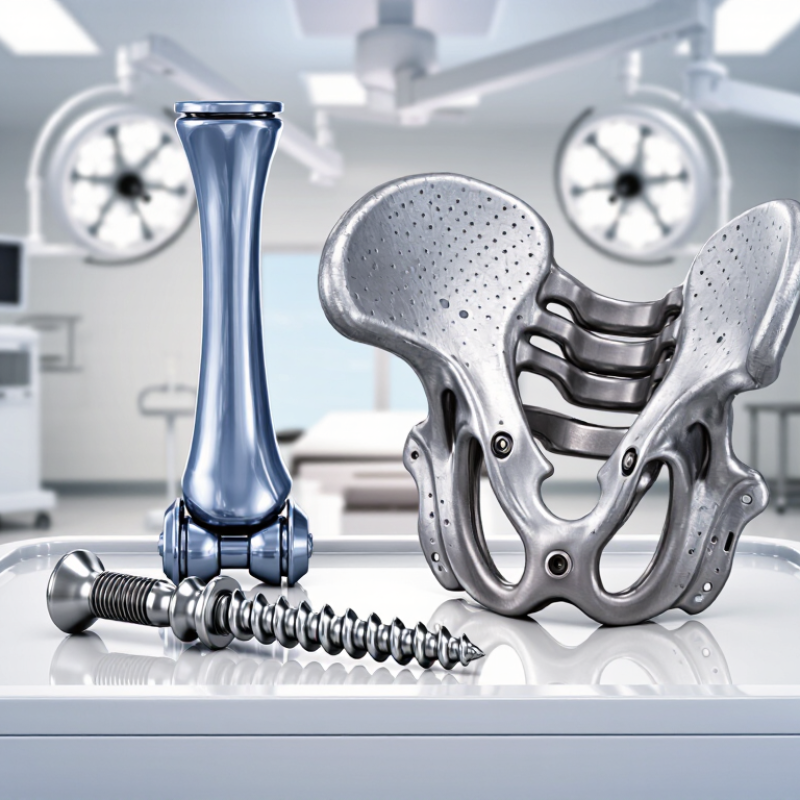
Top Orthopedic Implant Manufacturers in 2026
How Orthopedic Implant Manufacturers Are Classified
Orthopedic implant manufacturers are commonly grouped by the devices they make. Some focus on joint replacement, such as hip and knee components. Others specialize in trauma fixation, including plates, screws, and intramedullary nails. Spine and extremity implants form additional categories. These distinctions help hospitals compare suppliers with relevant product experience.
Product type is only one measure. Manufacturers can also be classified by materials and production capabilities, such as machining titanium alloys or molding medical-grade polymers. Their quality systems matter, too. Buyers often review device traceability, process controls, technical documentation, and clinical evidence. Details matter. A polished catalog alone cannot show how consistently an implant is produced.
Some manufacturers design devices and oversee production, while others rely on qualified manufacturing partners. This affects supply planning, customization, and communication when specifications change. Clinical support also varies, from product training to assistance with surgical instruments. Categories can overlap. A company serving several specialties may have uneven depth across them, so classification should guide questions, not replace careful evaluation. Even experienced buyers may find comparisons imperfect; product ranges and capabilities change over time.
A product-based view of common orthopedic implant categories by clinical area.
Counts represent the example product categories listed for each area, not manufacturer totals, market share, or sales. Manufacturers are commonly grouped by the clinical areas and implant families in their portfolios.
Choosing leading orthopedic implant manufacturers in 2026 takes more than comparing product catalogs. Strong candidates provide clear clinical evidence for the intended use of each implant. Look for peer-reviewed studies, transparent outcome data, and follow-up that extends beyond the first months after surgery. Evidence matters.
Quality systems and product traceability also deserve close attention. Ask how materials, manufacturing steps, and design changes are documented. A reliable manufacturer should explain how it monitors product performance and investigates reported problems. Check whether its supply processes can support consistent availability, since a technically sound implant is less useful when delivery is unpredictable. No single metric tells the whole story. A polished presentation can still leave important questions unanswered.
Tips: Request evidence tied to the specific implant, not just the company’s broader portfolio. Compare reported complications, study duration, and patient groups. Ask qualified clinical and procurement teams to review the findings together.
Surgeon feedback can help reveal practical details, such as instrument usability or the clarity of surgical guidance, but it should not replace independent evidence. Consider training resources, responsive technical support, and communication about product updates. Rankings can be useful starting points, not final verdicts. Even a careful scorecard has limits; evidence quality and real-world needs vary across procedures and patient populations.
Leading orthopedic implant manufacturers build global reach through more than factory locations. Their networks may include regional warehouses, trained clinical support teams, and distribution partners who understand local hospital needs. This matters when a surgeon needs a particular implant size or replacement component without delay. Reliable supply depends on careful inventory planning, not just a large international footprint.
Reach can look impressive on a map. Yet service quality varies between regions. Some manufacturers provide hands-on training and technical assistance nearby; others rely more heavily on distributors. Hospitals can assess this difference by asking how quickly support arrives, how product information is updated, and how supply interruptions are managed. These details are easy to overlook. They can shape everyday clinical workflows.
Tips: Compare regional support, product availability, and training options—not just the number of countries served. Ask for clear evidence, and consider whether local teams can respond when plans change. Global reach is useful, but it is not a guarantee of consistent service.
Top Orthopedic Implant Manufacturers in 2026
Key Implant Types and Manufacturer Specializations
Orthopedic implants are not one market with one skill set. Hip and knee systems need durable bearing surfaces, stable fixation, and precisely matched components. Trauma implants, such as plates and screws, prioritize fracture stability and practical surgical handling. Spine devices focus on alignment and support, while shoulder and foot-and-ankle systems address more specialized anatomy. The details matter.
The 2024 American Joint Replacement Registry Annual Report documents more than 3.7 million hip and knee procedures from participating U.S. institutions. This clinical registry is useful context for the scale of joint replacement, but it does not rank manufacturers or prove one implant is superior. Buyers should compare evidence by implant type, patient group, and outcome—not rely on a broad “top manufacturer” label.
Specialization also shows in materials and design. Some manufacturers emphasize porous metal surfaces and cementless fixation; others focus on modular components, instrumentation, or patient-specific planning. Hospitals should examine registry results, peer-reviewed studies, revision rates, and surgeon familiarity. A low revision figure can be misleading without follow-up duration and patient details. That is the less tidy part. The best fit depends on anatomy, clinical needs, and the team’s experience, not a product feature alone.
| Implant Segment | Key Implant Types | Common Materials | Typical Applications | Manufacturer Specialization |
|---|---|---|---|---|
| Hip reconstruction | Femoral stems, acetabular cups and liners, femoral heads, and partial-hip components | Titanium alloys, cobalt-chromium alloys, highly cross-linked polyethylene, and ceramic bearing materials | Total or partial hip replacement for conditions such as osteoarthritis and certain fractures | Implant systems combining femoral and acetabular components; expertise in bearing couples, fixation options, and modular component design |
| Knee reconstruction | Total knee systems, partial knee components, and patellar components | Cobalt-chromium alloys, titanium alloys, and polyethylene bearing surfaces | Joint replacement for advanced knee arthritis and other forms of severe joint damage | Systems designed around joint alignment, component sizing, polyethylene insert options, and surgical instrumentation |
| Trauma fixation | Bone plates, screws, intramedullary nails, wires, and external fixation components | Titanium alloys and stainless steel | Stabilization of fractures in long bones and other parts of the skeleton | Fracture-specific fixation systems, screw-and-plate compatibility, and instrument sets for different bone sites and fracture patterns |
| Spine implants | Pedicle screw-and-rod systems, interbody cages, plates, and spinal fixation components | Titanium alloys, commercially pure titanium, stainless steel, and polyether ether ketone (PEEK) | Spinal stabilization and fusion procedures for selected degenerative, deformity, or traumatic conditions | Systems for spinal fixation and fusion, including implant geometry and instrumentation tailored to different spinal levels and surgical approaches |
| Shoulder reconstruction | Humeral stems, glenoid components, and anatomic or reverse shoulder systems | Titanium alloys, cobalt-chromium alloys, and polyethylene | Shoulder replacement for severe joint damage; reverse systems may be used in selected cases of cuff deficiency | Shoulder-specific component systems, including designs that accommodate different joint mechanics and bone conditions |
| Sports medicine and soft-tissue fixation | Suture anchors, interference screws, and selected ligament or tendon fixation devices | Titanium alloys, bioabsorbable polymers, and high-strength suture materials | Fixation of tendons or ligaments during procedures such as selected rotator cuff and ligament repairs | Small-format fixation devices and compatible instruments for arthroscopic and open soft-tissue repair procedures |
| Extremity and small-bone implants | Hand, wrist, foot, and ankle plates, screws, pins, and selected joint implants | Titanium alloys and stainless steel | Fixation or reconstruction involving smaller bones and joints of the upper or lower extremities | Compact implant systems and instrumentation designed for smaller anatomy and varied fixation requirements |
| Orthobiologic adjuncts | Bone graft substitutes and bone void fillers used alongside selected fixation or fusion procedures | Depending on the product, calcium phosphate, calcium sulfate, or processed bone-derived materials | Filling selected bone voids or supporting bone-graft procedures; use depends on the product and clinical indication | Material-focused product development, formulation, and delivery systems that complement—not replace—structural fixation implants |
This table summarizes common orthopedic implant categories and general manufacturer capabilities. Materials, indications, and available designs vary by product; clinical use should follow the relevant product labeling and professional judgment.
In 2026, orthopedic implant design is moving toward patient-specific fit, additive manufacturing, and digital surgical planning. These tools can help surgeons match an implant to a patient’s anatomy, while robotic assistance may support more consistent positioning. But technology alone does not guarantee better recovery. Long-term outcomes still depend on patient health, surgical skill, and rehabilitation.
Grand View Research estimated the global orthopedic implants market at USD 47.5 billion in 2023, with a projected 4.9% compound annual growth rate from 2024 to 2030. That outlook signals continued demand, especially as populations age and joint replacement becomes more common. The FDA’s guidance on additive manufactured medical devices also highlights practical concerns, including material properties and manufacturing controls. The evidence is uneven. Adoption costs, training needs, and limited long-term comparisons can complicate decisions; that part deserves more scrutiny.
Tips: Ask how an implant’s design fits the patient’s anatomy, and review outcome data beyond the first year. A precise fit matters, but follow-up matters too.
They are grouped by device type, materials, production capabilities, and quality systems. Categories can overlap.
They include hip and knee replacement, trauma fixation, spine, shoulder, and foot-and-ankle devices. Each has different design priorities.
Review device traceability, process controls, technical documents, and clinical evidence. A catalog can leave gaps.
Some oversee design and production; others use qualified partners. This can affect customization, supply planning, and communication.
Hip and knee systems need durable bearing surfaces and stable fixation. Trauma plates and screws need fracture stability and practical handling. Spine devices support alignment.
No. A 2024 report documents over 3.7 million hip and knee procedures at participating U.S. institutions, but it does not rank manufacturers. Useful context.
Compare evidence by implant type, patient group, follow-up period, and outcome. Revision rates need context; patient details matter.
Some emphasize porous metal surfaces or cementless fixation. Others focus on modular components, instruments, or patient-specific planning. Features alone are not enough.
Consider anatomy, clinical needs, surgeon familiarity, and team experience. Comparisons are not perfectly tidy, and that deserves honest review.
This article explains how orthopedic implant manufacturers are classified by the conditions they serve, the devices they produce, and the regions in which they operate. It outlines the factors used to identify leading companies in 2026, including product quality, research and development, manufacturing capabilities, regulatory compliance, clinical support, and global reach. Rather than treating the market as a single category, the overview shows how manufacturers may focus on particular procedures, patient needs, or stages of care.
The article also surveys major implant types and the specializations associated with them, from joint reconstruction to trauma and spine applications. It considers how digital planning, advanced materials, precision manufacturing, and evolving care needs are influencing the industry. Together, these themes offer a practical framework for understanding the top orthopedic implant manufacturers and the capabilities that may distinguish them in a changing global market.