Which Is the Top Orthopedic Implant Supplier Worldwide? The answer is not as simple as naming the largest company. Orthopedic implants support real patients, including those recovering from hip fractures, knee degeneration, and complex spinal injuries. Therefore, supplier evaluation must examine evidence, not marketing language.
A reliable orthopedic implant supplier should demonstrate consistent manufacturing, documented quality systems, and strong regulatory compliance. Certifications such as ISO 13485 may indicate structured processes, but they do not guarantee perfect clinical outcomes. Product traceability matters when a hospital checks a lot number beside an operating-room tray. Surgeons also need dependable instrumentation, clear surgical guides, and responsive technical support during demanding procedures. Long-term evidence, published clinical research, and transparent post-market surveillance deserve close attention. So does delivery performance.
Global reach can be valuable. However, local training and after-sales service often influence daily clinical performance more than a famous logo. A supplier may offer advanced coatings or customized implants, yet those features require careful review of durability, compatibility, and patient suitability. No ranking is flawless. Data may be limited, comparisons may use different standards, and regional approvals can vary. This article compares leading suppliers through product quality, clinical experience, innovation, manufacturing reliability, and customer support. It also considers an uncomfortable point: the “top” supplier for one hospital may not suit another. The strongest choice is usually the company that combines verified evidence with practical understanding, responsible communication, and consistent support from planning to follow-up.
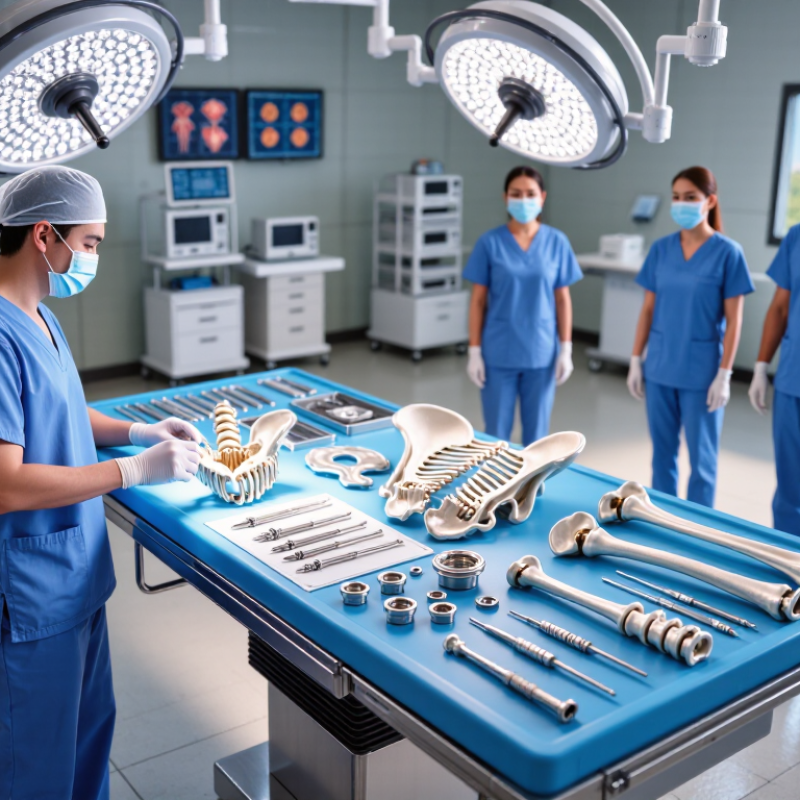
The global orthopedic implant supplier market is broader than a ranking of the largest manufacturers. A credible supplier must combine implant quality, clinical evidence, regulatory discipline, and dependable delivery. Hospitals commonly evaluate suppliers across hip, knee, spine, trauma, and sports medicine products. Each category demands different materials, surgical techniques, and testing methods. The answer is rarely simple.
Market leadership can vary by region. Some suppliers excel in advanced research, while others provide strong local distribution and responsive technical support. Procurement teams often examine manufacturing audits, sterilization records, product traceability, and surgeon training. They also review revision rates, implant longevity, and published clinical outcomes. Price alone misleads. A lower purchase cost may create higher expenses through delays, revisions, or limited service capacity.
Experienced buyers also study post-market surveillance and complaint-response systems. Reliable suppliers should explain how they investigate device concerns and update clinical guidance. Independent evidence matters, especially when marketing claims appear stronger than the available data. Market reports may disagree because they measure revenue, shipment volume, or regional access differently. That uncertainty matters. No supplier serves every anatomy, healthcare system, or surgical preference equally well. Even established evaluation methods can overlook smaller providers with strong regional expertise. A careful assessment should remain open to correction as clinical evidence, manufacturing technology, and healthcare needs change.
Which Is the Top Orthopedic Implant Supplier Worldwide?
The leading orthopedic implant supplier is not defined by sales volume alone. A serious evaluation begins with clinical evidence, manufacturing quality, and dependable service. Review peer-reviewed studies, implant performance data, and documented outcomes from comparable procedures. Ask whether the supplier maintains strict quality systems, clear material specifications, and full batch traceability. A sterile package should have a visible lot number, intact seals, and readable instructions. Small details matter.
Tips: Request independent audit reports and regulatory certificates. Compare revision rates, not only successful case stories. Speak with surgeons who use the implants regularly. Their operating-room experience can reveal issues that brochures omit. Check training quality, instrument availability, delivery reliability, and post-market surveillance. Test the supplier’s response to a difficult question. Delays and vague answers are warning signs.
Cost still matters, but the lowest quote may create higher clinical and logistical risks. Evaluate implant design, compatibility with existing instruments, and support for complex cases. Examine how quickly the supplier investigates complaints and shares corrective information. Strong technical teams can explain biomechanics without hiding uncertainty. That is important. No supplier is perfect, and published evidence may have gaps. A transparent supplier admits limitations, updates recommendations, and welcomes independent review. In my experience, reliable partnerships grow through consistent communication, accurate records, and practical support after the purchase. Availability should be measured over time, not promised during a sales meeting.
| Evaluation Dimension | Objective Measurement | Strong Supplier Benchmark | Why It Matters | Suggested Weight |
|---|---|---|---|---|
| Regulatory Quality System | Current quality-management certification and audit history | Valid ISO 13485 certification, documented design controls, supplier controls, and no unresolved critical audit findings | Demonstrates consistent control of design, manufacturing, traceability, and corrective actions | 20% |
| Product Regulatory Clearance | Approvals or registrations in the target markets | Appropriate authorization for each device and market, supported by complete technical documentation | Legal market access reduces compliance, import, and hospital procurement risks | 15% |
| Clinical Evidence | Peer-reviewed studies, registry data, follow-up duration, and outcome measures | Evidence that is relevant to the intended indication, includes patient outcomes, and provides at least mid-term follow-up where available | Supports safety, performance, durability, and informed clinical adoption | 20% |
| Implant Materials and Design | Material specifications, testing standards, design verification, and compatibility information | Materials and processes documented against applicable ASTM or ISO requirements, with validated design verification and sterilization information | Affects biocompatibility, mechanical strength, wear, corrosion resistance, and surgical reliability | 15% |
| Manufacturing Capability | Process validation, production capacity, inspection systems, and serialization | Validated critical processes, documented inspection plans, lot-level traceability, and controlled capacity expansion | Reduces dimensional variation, defects, supply interruptions, and product-mix errors | 10% |
| Post-Market Surveillance | Complaint handling, adverse-event reporting, trend analysis, and recall procedures | Documented vigilance processes, timely investigation, transparent corrective actions, and accessible safety notices | Identifies emerging risks and demonstrates accountability after product launch | 10% |
| Supply Reliability | On-time delivery, fill rate, lead time, inventory policy, and continuity planning | Consistent service-level reporting, defined safety stock, qualified backup sources, and documented business-continuity plans | Helps hospitals maintain procedure schedules and avoid clinically disruptive shortages | 5% |
| Instrument and Surgical Support | Instrument availability, training, technical support, and operating-room assistance | Complete instrument compatibility documentation, trained field support, and responsive technical service | Improves procedural efficiency and reduces avoidable setup or compatibility issues | 3% |
| Total Cost of Ownership | Unit price, instruments, training, logistics, revision risk, and warranty terms | Transparent pricing model with documented service costs and lifecycle implications | The lowest purchase price does not always represent the lowest clinical or operational cost | 2% |
| Total Evaluation Weight | 100% | |||
Recommended approach: score each supplier from 1 to 5 for every dimension, multiply the score by the suggested weight, and verify all regulatory, clinical, and quality claims using current official records and controlled supplier documentation.
Which Is the Top Orthopedic Implant Supplier Worldwide?
Major Companies in the Worldwide Orthopedic Implant Industry
The worldwide orthopedic implant industry includes manufacturers with broad surgical portfolios and strong clinical support. Major suppliers produce systems for joint replacement, spinal stabilization, trauma repair, and sports medicine. Their scale often supports research, surgeon training, and distribution across multiple regions. Yet size alone does not prove superior patient outcomes.
Experienced buyers examine more than product catalogs. They review implant materials, sterilization controls, regulatory records, and long-term clinical evidence. Titanium alloys, cobalt-chromium alloys, ceramics, and advanced polymers each serve different surgical needs. A reliable supplier also provides accurate instrumentation, clear surgical guidance, and responsive technical service. Small details matter. A missing instrument can delay an operation.
Market leaders usually maintain manufacturing facilities, quality laboratories, and post-market surveillance programs. They track revision rates, reported complications, and performance differences among patient groups. However, public comparisons remain difficult because companies use different study designs and reporting periods. Some claims sound impressive but lack independent verification. That deserves caution.
Hospitals may also assess supply continuity, training quality, local regulatory approval, and total lifecycle cost. A lower purchase price can become expensive when instruments fail or inventory remains incomplete. My view is imperfect: the “top” supplier may change by procedure, region, and clinical expertise. A strong hip implant provider may not lead in spinal devices. The most credible choice is usually the company that matches evidence, surgical needs, and dependable service.
The top orthopedic implant supplier cannot be judged by sales alone. Product breadth matters, from trauma plates and joint replacements to spinal systems and sports medicine tools. Fortune Business Insights valued the global orthopedic devices market at about USD 53.7 billion in 2023. Its report expects continued growth through 2030, driven by aging populations and less invasive procedures. A strong supplier should cover these needs without forcing hospitals into one narrow platform.
Technology deserves closer inspection. Look for porous surfaces, navigation compatibility, patient-specific planning, and evidence from controlled clinical studies. The GlobalData Medical Devices Market Review identifies digital surgery and additive manufacturing as important growth areas. However, a clever feature is not automatically a useful feature. Surgeons need repeatable fit, clear instruments, and dependable training.
Regulatory clearance also matters. A supplier serving multiple regions should demonstrate quality systems aligned with ISO 13485, plus appropriate market approvals. Global reach means more than warehouses. It includes local service engineers, instrument replacement, surgeon education, and reliable delivery during urgent cases.
Tips: Compare five-year revision data, not brochure claims. Ask for peer-reviewed evidence. Check training response times in your region. Review the total cost of trays, implants, software, and maintenance. No scorecard is perfect. My practical concern is often overlooked: a broad portfolio can create unnecessary complexity. The best supplier may be the one that supports consistent clinical decisions, not the one with the largest catalogue.
Which Is the Top Orthopedic Implant Supplier Worldwide?
Identifying the top orthopedic implant supplier worldwide requires more than comparing product catalogs. A credible supplier should show strong clinical evidence, dependable manufacturing, and transparent quality controls. Its implants should meet recognized regulatory requirements in every target market. Surgeons also need clear technical documentation, accurate sizing guides, and responsive support during complex procedures.
Experience matters at the operating table. A useful supplier provides practical training, sterile packaging, traceable lot numbers, and consistent delivery schedules. Hospitals should review revision rates, published studies, surgeon feedback, and long-term patient outcomes. They should also examine how the supplier handles complaints and product changes. Small details matter. A delayed component can disrupt an entire surgical plan.
No scorecard is perfect. A supplier may offer advanced designs but provide weak local support. Another may have excellent logistics but limited independent clinical research. This is where careful review becomes necessary. Procurement teams should compare evidence from several sources, not rely on polished sales materials. Cost deserves attention, but the lowest quote may create higher expenses through revisions, delays, or training gaps. The strongest worldwide supplier is usually the one that combines proven performance, ethical communication, reliable service, and measurable accountability across different healthcare systems.
Global orthopedic implant market by product category, 2023 estimated value (USD billions)
Joint reconstruction represents the largest orthopedic implant category worldwide, followed by spinal implants and trauma fixation systems. A leading supplier is typically assessed by its coverage across these high-value segments, regulatory reach, clinical adoption, and manufacturing capacity. Values are rounded global market estimates and exclude company-level or brand-level data.
Source: 2023 global orthopedic device and implant market estimates synthesized from publicly available industry market reports, including Grand View Research and Fortune Business Insights.
A credible supplier combines clinical evidence, manufacturing quality, regulatory discipline, and dependable delivery. No single measure is enough.
Not necessarily. Sales volume can hide weak support, limited evidence, or delivery problems. Regional expertise may matter more.
Review peer-reviewed studies, revision rates, implant longevity, and outcomes from comparable procedures. Marketing claims need independent support.
Check material specifications, manufacturing audits, sterilization records, and batch traceability. A sterile package should have intact seals and a readable lot number.
It shows how a supplier investigates complaints and shares corrective information. Clear answers build trust. Vague responses deserve attention.
Not always. A cheaper implant may create higher costs through delays, revisions, missing instruments, or limited technical support.
Check delivery reliability, instrument availability, surgeon training, complaint response, and support for complex cases. Availability should be tested over time.
Compare local distribution, clinical evidence, technical support, and healthcare needs. Market leadership changes by region. One supplier may not fit every system.
Watch for delayed answers, incomplete records, exaggerated claims, and unclear material details. Small omissions can become operating-room problems.
Probably not. Reports measure revenue, shipments, or regional access differently. I may overvalue published evidence and miss practical local experience. Recheck the decision.
The global orthopedic implant supplier market is a dynamic and highly specialized sector that supports hospitals, surgeons, and patients with devices used in joint reconstruction, trauma care, spinal procedures, and other orthopedic treatments. Evaluating a leading orthopedic implant supplier requires more than reviewing product availability. Important criteria include implant quality, material safety, manufacturing consistency, clinical reliability, regulatory compliance, research investment, customization capabilities, and after-sales support. Suppliers with strong quality systems and dependable distribution networks are better positioned to serve diverse healthcare markets.
A comparison of major suppliers should consider the breadth of their product portfolios, the usefulness of their technologies, and their ability to provide solutions across different regions and healthcare environments. Product innovation, surgical compatibility, training resources, and responsive customer service also contribute to long-term value. Ultimately, the top orthopedic implant supplier worldwide is not defined by one feature alone, but by a balanced combination of trusted products, continuous innovation, global reach, operational stability, and a clear commitment to improving orthopedic care.