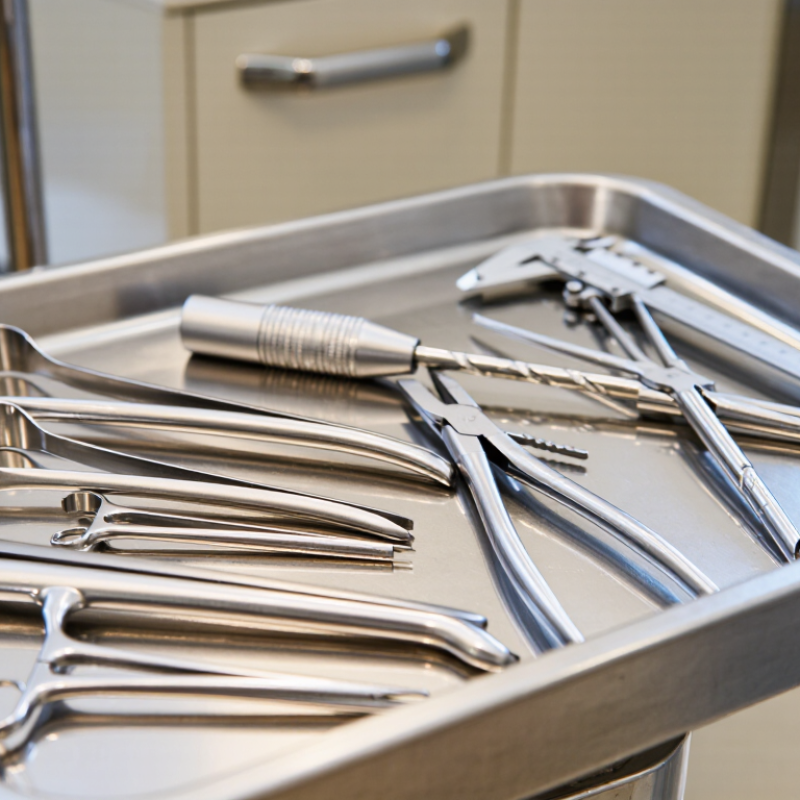
Choosing an orthopedic surgical instruments manufacturer affects more than purchase price. It influences surgical precision, staff confidence, sterilization routines, and long-term operating costs. Experienced manufacturers understand how a small change in jaw alignment or handle balance can affect control during demanding procedures.
A qualified orthopedic surgical instruments manufacturer should combine engineering knowledge with documented quality practices. Look for clear material specifications, dimensional inspection, corrosion testing, and traceable production records. Instruments should support common orthopedic workflows, including cutting, grasping, drilling, measuring, and fixation assistance. A reliable supplier can explain how each instrument is tested, finished, packaged, and prepared for the customer’s validation process. Certifications may strengthen confidence, but they should never replace direct evidence of product consistency.
Details matter.
A useful evaluation also includes communication after delivery. Responsive technical teams can help review samples, discuss surgical preferences, and identify maintenance concerns before they become costly problems. However, no manufacturer is perfect for every hospital or distributor. Custom designs may require longer development timelines, and familiar instruments may still need clinical feedback. That limitation deserves honest discussion. Buyers should compare documented performance, service capability, and total ownership costs rather than relying on attractive catalogs alone. With careful assessment, the right manufacturing partner can provide dependable instruments while supporting safer, more controlled orthopedic practice.
Orthopedic Instrument Manufacturers and the 1.71 Billion People with Musculoskeletal Conditions
Why Choose an Orthopedic Surgical Instruments Manufacturer?
An estimated 1.71 billion people live with musculoskeletal conditions worldwide, according to the World Health Organization. This immense need places practical pressure on orthopedic care teams. Surgeons require instruments that support precise, repeatable movements during joint, trauma, and spine procedures. A specialized manufacturer understands these demands through material testing, production controls, and clinical feedback. Small details matter. A secure grip can reduce hand fatigue during a long operation. A well-balanced retractor can improve visibility in a narrow surgical field.
Reliable manufacturing also involves more than producing sharp or polished instruments. Each device should have consistent dimensions, corrosion resistance, clear identification, and compatibility with validated cleaning processes. Experienced manufacturers document quality checks and investigate production variations. That process builds trust. However, no instrument is perfect. A catalog may look impressive, yet it might not match every surgical technique or hospital workflow. Manufacturers should listen carefully, test designs realistically, and accept uncomfortable feedback from users.
Tips: Review material specifications, surface finish, and sterilization guidance before purchasing. Ask how inspections are recorded and how replacement parts are managed. Test handling with gloved hands, not only on a product sheet. A short trial can reveal balance problems, awkward locking mechanisms, or poor visibility. Compare real clinical needs with technical claims. Cost matters, but unreliable performance can create greater operational pressure.
Why Choose an Orthopedic Surgical Instruments Manufacturer?
Orthopedic Instrument Manufacturers and the 1.71 Billion People with Musculoskeletal Conditions
The World Health Organization estimates that approximately 1.71 billion people worldwide live with musculoskeletal conditions. Using an estimated global population of 8.0 billion, this represents about 21.4% of the world's population. The scale of this need highlights the importance of reliable, precise, and clinically appropriate orthopedic surgical instruments.
Sources: World Health Organization, “Musculoskeletal health”; United Nations, World Population Prospects 2022. Figures are rounded estimates.
How ISO 13485 Quality Systems Improve Surgical Instrument Reliability
Why Choose an Orthopedic Surgical Instruments Manufacturer?
How ISO 13485 Quality Systems Improve Surgical Instrument Reliability
Orthopedic procedures depend on instruments that feel predictable in the hand. A retractor must hold position. A bone cutter needs a consistent edge. Small dimensional changes can affect fit, alignment, and surgical control.
An orthopedic surgical instruments manufacturer working under ISO 13485 uses documented quality processes throughout production. Engineers review design risks before manufacturing begins. Technicians verify material certificates, surface finishes, tolerances, and functional performance. Inspection records can connect each instrument to its production history. That traceability matters when a question appears months later.
Clean details matter. Serrations should engage without excessive force. Hinges should move smoothly but not loosely. Cannulated instruments require clear internal passages. Quality teams may use calibrated gauges, visual inspections, cleaning validation, and functional testing to check these points. Supplier controls also help reduce variation in steel, coatings, and packaging materials.
No system removes every risk. Human judgment still matters. Records may be incomplete, and a perfect inspection plan can miss an unusual failure. A reliable manufacturer treats those gaps seriously through corrective actions, staff training, internal audits, and design reviews. Practical experience from instrument handling can reveal problems that measurements alone overlook. ISO 13485 provides structure, but disciplined people make that structure useful.
Why FDA 21 CFR Part 820 Compliance Matters for Orthopedic Instruments
Why Choose an Orthopedic Surgical Instruments Manufacturer?
FDA 21 CFR Part 820 compliance matters because orthopedic instruments support precise, high-pressure procedures. A qualified manufacturer should control design, materials, production, inspection, and post-market feedback. Each forceps, retractor, or drill guide needs consistent dimensions and dependable performance.
Look for documented design controls, risk analysis, supplier qualification, and process validation. Traceability should connect raw steel to the finished instrument and inspection record. Clear batch records make investigations faster when a problem appears. For reusable devices, cleaning, corrosion resistance, and sterilization guidance also require careful verification. Compliance does not guarantee perfection. It creates a disciplined system for finding weaknesses before they affect clinical use.
Tips: Ask to review quality procedures, inspection methods, and corrective-action records. Confirm that measurement equipment is calibrated. Check whether operators receive documented training. A certificate alone is not enough. Ask practical questions about rejected parts, complaint handling, and change control. Strong answers should include dates, records, and responsible personnel. Small gaps can matter. A polished audit file may still hide inconsistent shop-floor habits, so an on-site review can reveal useful details.
Material Selection, Sterilization, and Precision in Orthopedic Instrument Design
Why Choose an Orthopedic Surgical Instruments Manufacturer?
Material selection shapes safety, durability, and surgical control. Medical-grade stainless steel offers strength, corrosion resistance, and reliable cleaning performance. Titanium can reduce weight and limit imaging interference in selected applications. However, lighter is not always better. A delicate instrument may lose balance or tactile feedback under pressure. Experienced manufacturers test hardness, surface finish, fatigue resistance, and repeated sterilization cycles before production.
Sterilization affects every design decision. Instruments must tolerate validated steam sterilization without warping, staining, or losing movement. Narrow channels and hidden joints can retain soil if cleaning access is poor. Precision machining helps create consistent edges, secure grips, and smooth hinges. Small dimensional errors may cause noticeable problems during fixation or bone preparation. Quality systems, inspection records, material traceability, and documented validation support dependable production. No instrument is perfect, and practical feedback often reveals weaknesses that laboratory testing misses.
Tips: Ask how materials are verified and how sterilization compatibility is tested. Review cleaning instructions, inspection methods, and tolerance data. Request samples when possible. Check the hinge, grip, and cutting edge by hand. A polished surface can look impressive, yet function matters more. Ask difficult questions early.
How Manufacturer Support Reduces Risks Across the Orthopedic Surgical Workflow
Why Choose an Orthopedic Surgical Instruments Manufacturer?
How Manufacturer Support Reduces Risks Across the Orthopedic Surgical Workflow
A reliable orthopedic surgical instruments manufacturer supports more than production. Their technical team can review instrument geometry, handling comfort, and compatibility with surgical techniques. This input matters during procedure planning. Small design issues can create delays, tissue damage, or user frustration. Experienced manufacturers also provide material information, inspection records, and traceability documents. These details help hospitals investigate problems instead of guessing.
Support should continue after delivery. Clear cleaning guidance, maintenance instructions, and staff training can reduce misuse between procedures. Instrument sets should arrive organized, labeled, and checked against agreed specifications. When a replacement is needed, responsive communication limits operating room disruption. A manufacturer’s quality system may include inspections and validation, but no system removes every risk. Human error still happens. That uncomfortable fact deserves attention.
FAQS
Why choose a specialized orthopedic instrument manufacturer?
Specialized manufacturers understand joint, trauma, and spine procedures. They test materials, dimensions, grip comfort, and repeated sterilization performance. A secure handle can reduce fatigue during long operations.
Which materials are commonly used for orthopedic instruments?
Medical-grade stainless steel provides strength, corrosion resistance, and dependable cleaning performance. Titanium can reduce weight and imaging interference in selected applications. Lighter is not always better.
How does sterilization affect instrument design?
Instruments should tolerate validated steam sterilization without warping, staining, or losing movement. Hidden joints and narrow channels may retain soil. Cleaning access matters.
What quality records should buyers request?
Ask for material verification, inspection records, tolerance data, and sterilization validation. Traceability can help identify production variations. Missing records deserve careful questions.
How can a hospital evaluate instrument handling?
Test samples with gloved hands before purchasing. Check balance, grip comfort, hinge movement, and locking mechanisms. A product sheet cannot reveal every handling problem.
Why are precision and consistent dimensions important?
Small dimensional errors can affect fixation, bone preparation, and instrument control. Consistent edges and smooth hinges support repeatable movements. Tiny flaws can become noticeable under pressure.
What should buyers consider beyond the purchase price?
Review replacement parts, cleaning guidance, expected durability, and workflow compatibility. Low cost may create greater operational pressure later. The cheapest option may disappoint.
Can laboratory testing guarantee perfect instrument performance?
No instrument is flawless. Laboratory testing may miss awkward grips, poor visibility, or uncomfortable balance. Clinical feedback should challenge technical claims and improve future designs.
Conclusion
Choosing an orthopedic surgical instruments manufacturer is an important decision for healthcare providers seeking safe, dependable, and efficient surgical tools. With more than 1.71 billion people affected by musculoskeletal conditions worldwide, the demand for high-quality orthopedic instruments continues to grow. A capable manufacturer should maintain an ISO 13485 quality system to support consistent production, traceability, risk control, and product reliability. Compliance with FDA 21 CFR Part 820 also demonstrates a structured approach to design, manufacturing, documentation, and quality assurance.
Reliable orthopedic instruments depend on careful material selection, precise engineering, corrosion resistance, and validated sterilization compatibility. In addition to producing instruments, an experienced orthopedic surgical instruments manufacturer can provide technical guidance, customization, inspection support, packaging solutions, and after-sales service. This comprehensive support helps reduce risks throughout the surgical workflow, from instrument selection and preparation to operation and reprocessing, while promoting greater efficiency, consistency, and patient safety.
Vivienne is a skilled marketing professional dedicated to helping businesses understand the value of practical, reliable, and customer-focused solutions. With a strong knowledge of the company’s products, services, and industry applications, she creates clear, informative content that connects......