Certified Orthopedic Implants Product Catalog
Explore our flagship CE and ISO 13485 certified orthopedic implant solutions engineered for precision surgical execution, immediate biomechanical stability, and accelerated tissue osseointegration.
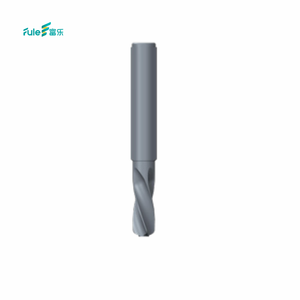
CE Marked China Manufacture PFNA Femoral Intramedullary Nail Orthopedic Implant Titanium OEM Fule Brand Class III 5-Year
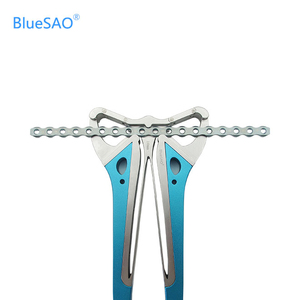
Wholesale Price Bluesao Veterinary Bone Implants Titanium Orthopedic Implants
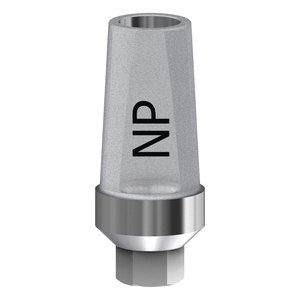
Titanium Dental Implant Abutments 0 Degree 15 Degree 25 Degree for Cemented Single and Bridge Prostheses
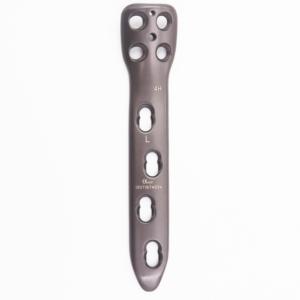
MEDICAL Factory Supply Titanium Distal Femur Medial Osteotomy Locking Plate CE/ISO/13485 Certified Class III Implant
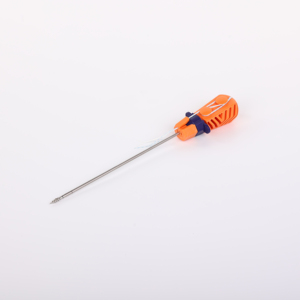
CE Factory Price Suture Anchor 5.5 Titanium Alloy Anchor Ergonomic Handle Orthopedic Instrument Arthroscopy Implants Equipment
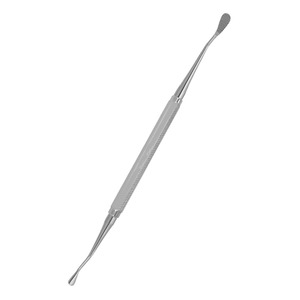
Manual Stainless Steel Bone File Miller Dental Instruments for Orthopedic Surgery Implantology Scraper High Quality CE Certified
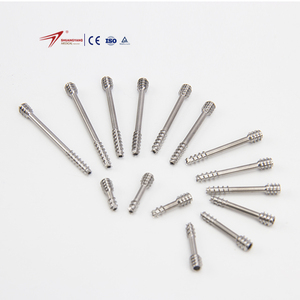
Trauma Surgery Orthopedic Implants Compression Headless Bone Screws Price Titanium Cannulated Orthopaedic Herbert Screw
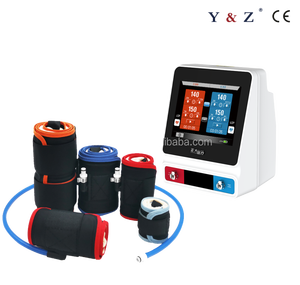
Y&Z YTQ-G CE Approved Surgical Orthopedic Electric Pneumatic Tourniquet System Class II China Manufacturer
Metallurgy & Engineering Standards in Medical Implants
Sourcing orthopedic implants for clinical use requires rigorous evaluation of metallurgical composition, mechanical fatigue limits, bio-compatibility profiles, and structural stress dissipation. Modern orthopedic manufacturing has evolved beyond generic machining to ultra-precision bio-engineering.
When healthcare networks and regional distributors decide to buy orthopedic implants online, verifying compliance with international ASTM and ISO material benchmarks is the primary step in mitigating clinical risk. Metallic biomaterials used in load-bearing applications must balance mechanical strength against Young's modulus to prevent stress shielding—a primary cause of secondary implant loosening and osteolysis.
Comparative Biomaterial Analysis Matrix
Below is an authoritative technical overview comparing the four dominant biomaterials utilized across trauma, spine, and craniomaxillofacial reconstructive procedures:
| Biomaterial Standard | Tensile Strength (MPa) | Elastic Modulus (GPa) | Biocompatibility Profile | Primary Surgical Indication |
|---|---|---|---|---|
| Ti-6Al-4V ELI (ASTM F136 / ISO 5832-3) | 860 - 960 | 110 - 114 | Exceptional inertness; rapid hydroxyapatite bonding via anodic oxidation. | Intramedullary nails, pedicle screws, trauma locking plates, CMF devices. |
| PEEK Optima (ASTM F2026) | 90 - 100 | 3.6 - 4.1 | Radiolucent, zero artifact on MRI/CT, modulus closely matches human cancellous bone. | Interbody fusion cages (ACDF, TLIF, XLIF), cranial defect reconstructions. |
| Stainless Steel 316LVM (ASTM F138 / ISO 5832-1) | 860 - 1100 | 190 - 210 | Vacuum arc remelted for high pitting corrosion resistance; high stiffness. | Temporary internal fracture fixation, Kirschner wires, external fixator pins. |
| Porous 3D Titanium (Ti-6Al-4V Additive) | 450 - 600 | 1.5 - 3.0 | Interconnected porous matrix (60-70% porosity) facilitating osteon migration. | 3D printed custom vertebral body replacements, biological fusion cages. |
Surface Topography & Advanced Passivation Tech
Mechanical performance is only half the requirement; the surface interface between titanium alloy implants and biological host tissue dictates long-term clinical survival. Modern certified manufacturing processes utilize Type II (Dark Grey) and Type III (Color) Anodization under ISO 24034 standards, creating a stable titanium dioxide (TiO₂) passivation layer. This oxide layer prevents aluminum and vanadium ion leeching into systemic circulation while enhancing bone-to-implant contact (BIC) ratios by up to 35% compared to non-passivated turned metal surfaces.
Why Qualified Procurement Teams Trust Trauhui Medical
Established in 2009 in Changzhou—China's premier cluster for orthopedic device engineering—Trauhui Medical Co., Ltd represents over 15 years of dedicated R&D, manufacturing depth, and global distribution capability.
Self-Owned Manufacturing Infrastructure
By controlling 100% of precision turning, 5-axis wire EDM, automated ultrasonic cleaning, and Class 100,000 (ISO Class 8) cleanroom packaging in-house, we eliminate sub-contractor variability and offer direct manufacturer landed pricing.
Full CE, FDA 510(k) & ISO 13485 QMS
Operating under an audited ISO 13485:2016 quality system, our implants hold European CE certification and select FDA clearances. Complete Technical Documentation Files (TDF) and STED registration dossiers are supplied for rapid regulatory approval in destination markets.
Dedicated OEM / ODM Customization
Our in-house staff of 30+ R&D engineers supports global medical brands through CAD/CAM design modeling, FEA stress simulation, rapid titanium prototyping, custom instrument tray creation, and private-label packaging.
15-Day Fast Dispatch & Stock Safety
To reduce hospital backorder risks for our global distributors, we hold extensive safety buffer stock for standard trauma plates, pedicle screws, and intramedullary nails, maintaining a standard order dispatch timeline of 15 days.
Full Surgical System Integration
We do not supply loose hardware. Every implant family is accompanied by ergonomically engineered, color-coded stainless steel surgical instrument kits, trials, drills, and reamers to guarantee seamless operating room execution.
Distributor Training & Field Support
We empower our channel partners with comprehensive clinical dossier translation, surgical technique videos, surgeon workshop sponsorships, and technical rep support during hospital procurement tenders.
Future Sourcing & Procurement Trends in Orthopedic Implants
The global market for B2B medical device purchasing is experiencing a structural migration driven by regulatory evolution, additive digital manufacturing, and supply chain resiliency demands. Understanding these macro trends is vital for hospital supply leaders and device brand owners.
1. Transition to Additive 3D Trabecular Structures
Traditional machined solid titanium implants are increasingly being replaced by 3D-printed porous implants featuring interconnected biomimetic lattice structures. These trabecular surfaces match the elastic modulus of natural bone, eliminating stress shielding and permitting direct cellular endosteal ingrowth throughout the entire body of the implant, rather than just at the surface interface.
2. EU MDR (2017/745) Supply Chain Consolidation
The rigorous requirements of European Medical Device Regulation (EU MDR)—demanding extensive post-market clinical follow-up (PMCF) and tighter notified body audits—have caused many smaller European niche suppliers to cease production. Consequently, global distributors are consolidating supply lines around large-scale Asian manufacturers holding fully backed CE mark technical files and ISO 13485 QMS infrastructure.
3. Smart Implants & Bio-Sensory Tracking
The next decade will see the clinical introduction of sensor-embedded trauma fixation devices capable of measuring micro-motion, strain distribution, and local temperature variations post-operation. These smart implants transmit real-time fracture healing metrics directly to orthopedic surgeons, signaling early delayed union or surgical site infection before radiological detection.
4. Digital Surgical Planning & Patient-Specific Implants (PSI)
Standard off-the-shelf sizing is expanding into DICOM-based 3D CT reconstruction, allowing surgeons to request custom patient-specific osteotomy guides and oncological reconstructive plates. Direct online CAD integration enables custom implant production and delivery within 7 to 10 days of preoperative imaging.
Comprehensive Surgical Specialty Coverage
Our manufacturing portfolio addresses four core clinical sectors, delivering specialized implants and complete instrument systems designed for optimal surgical access and fixative security.
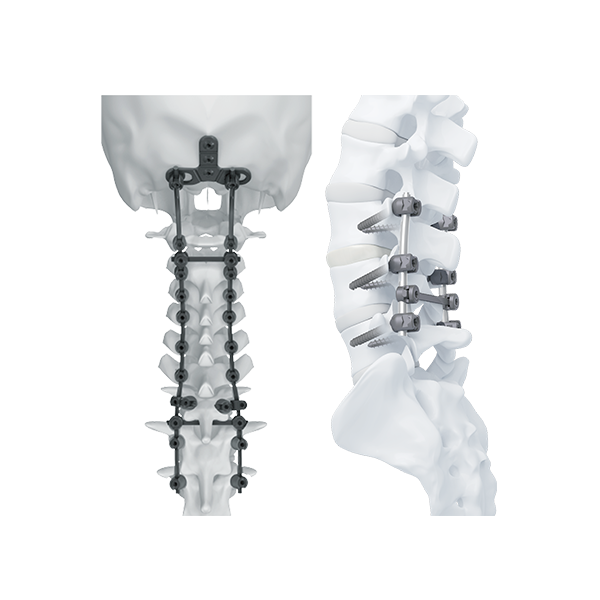
Spine Surgery Systems
Comprehensive spinal fixation hardware including pedicle screw systems, cervical disc prostheses, ACDF, TLIF, XLIF fusion cages, 3D printed porous cages, balloon kyphoplasty, and expandable corpectomy devices.
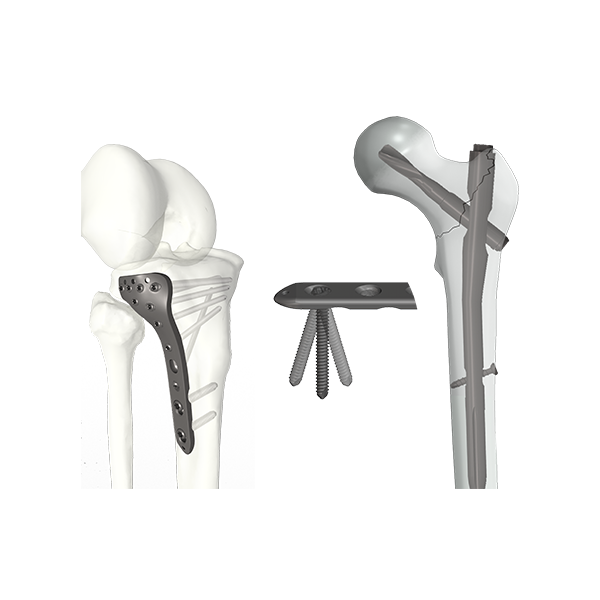
Trauma & Fracture Care
Complete trauma series comprising titanium PFNA intramedullary nails, distal femoral locking plates, variable angle locking systems, cannulated compression screws, and circular ring external fixators.
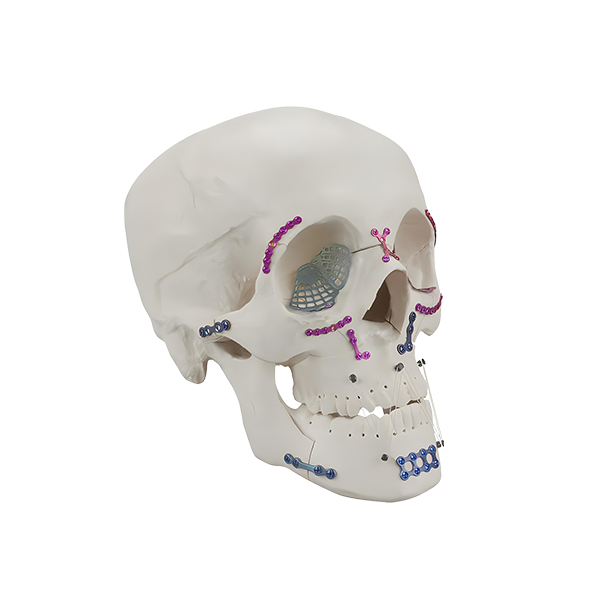
Craniomaxillofacial (CMF)
Ultra low-profile 1.5mm, 2.0mm, and 2.4mm titanium micro-plate and screw systems engineered specifically for trauma reconstruction, mandibular orthognathic surgery, and cranial flaw coverage.
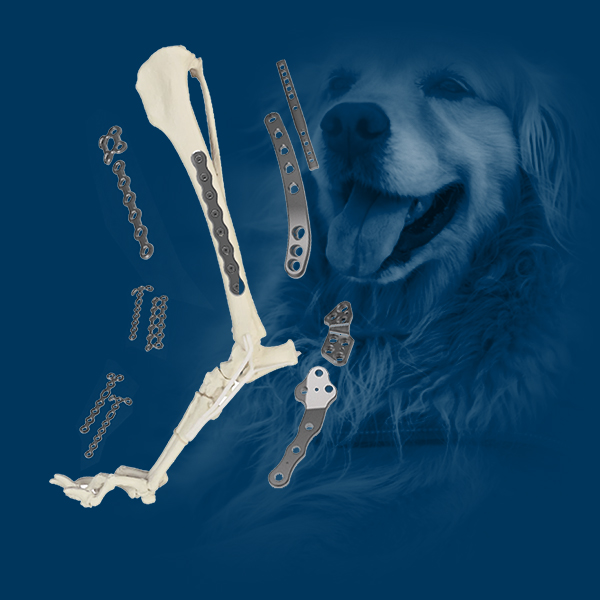
Veterinary Orthopedics
Dedicated animal plating systems (Lovan Series) formulated for small and large animal fracture reduction, TPLO knee corrections, and specialized veterinary orthopedic reconstruction.
Audited Quality & Regulatory Certificates
All Trauhui Medical implants are produced under internationally accredited quality management systems. Official certificate validation copies are available to distributors for market registration.
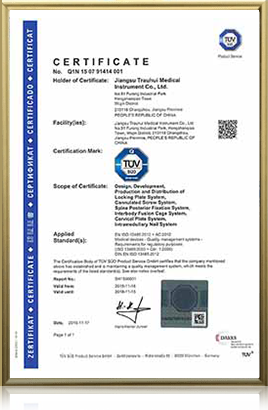
TÜV ISO 13485 Certificate
Medical Device Quality Management System Approval
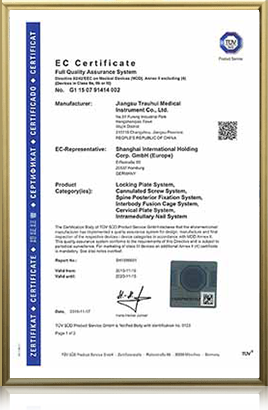
EC Certificate (CE Marking)
Full Quality Assurance System Compliance
Frequently Asked Questions for Global Buyers
Technical, regulatory, and commercial answers for hospital procurement executives, medical device distributors, and private-label OEM brands seeking to buy orthopedic implants online.
Which regulatory certifications do your orthopedic implants hold?
Trauhui Medical products are certified with European CE marking (Class IIa, IIb, and Class III medical devices) and select US FDA 510(k) clearances. All design, manufacturing, testing, and packaging operations are controlled under an audited ISO 13485:2016 Quality Management System. Complete Technical Files (STED format), biocompatibility reports (ISO 10993), and clinical evaluation reports are readily accessible to authorized distributors for market registration.
Can Trauhui Medical execute custom OEM/ODM private label production?
Yes. We operate a dedicated OEM/ODM engineering department consisting of over 30 R&D specialists. We take contract manufacturing projects from original concept, CAD design, finite element analysis (FEA), dynamic fatigue testing (ASTM F1717 / ASTM F1264), through to precision multi-axis CNC machining, custom laser marking, and sterile cleanroom pouch sealing under your brand identity.
What is your typical order lead time and delivery schedule?
To support hospital tender commitments and prevent distributor stockouts, Trauhui maintains substantial safety inventories of standard trauma locking plates, pedicle screws, intramedullary nails, and spinal cages. Standard product catalog orders are typically dispatched within 15 working days. Customized OEM/ODM production runs are scheduled based on drawing approval, tooling validation, and batch size requirements.
What raw biomaterials are used in your implant manufacturing?
We source only implant-grade biomaterials from accredited international suppliers. Our metallic implants utilize Medical Grade Titanium Alloy Ti-6Al-4V ELI (ASTM F136 / ISO 5832-3) and Vacuum Arc Remelted Stainless Steel 316LVM (ASTM F138). Our non-metallic spinal fusion cages utilize certified PEEK-OPTIMA® polymer (ASTM F2026). Every material lot includes full chemical analysis and mechanical tensile test certs.
How do you ensure quality control across high-volume production?
Quality assurance is embedded in every phase of our manufacturing facility. We utilize over 150 sets of advanced inspection equipment, including Zeiss Coordinate Measuring Machines (CMM), optical video measuring projectors, automated surface roughness testers, and digital torque testers. Every individual implant undergoes 100% visual dimensional inspection, passivated surface verification, and UDI (Unique Device Identification) laser code tracking prior to cleanroom packaging.
Do you supply matching surgical instrument sets for your implant systems?
Yes. Every orthopedic implant line (spine, trauma, CMF, and veterinary) is paired with a comprehensive, dedicated surgical instrument container system. Instruments are manufactured from high-grade German stainless steel and lightweight anodized aluminum alloys, engineered for ergonomic surgeon control, repeated autoclave sterilization cycles, and seamless intraoperative alignment.
Where is your factory located, and can we conduct a facility audit?
Our global headquarters and manufacturing facility are situated at No.2 Longqing Road, Wujin Hi-tech Zone, Changzhou City, Jiangsu Province, China. We welcome hospital procurement committees, regulatory auditors, and international distributor partners to audit our CNC workshops, quality laboratories, and cleanrooms either in person or via live remote video walk-throughs.
How do I request a quotation or technical dossier to buy orthopedic implants online?
You can connect directly with our international regulatory and commercial team by clicking the conversion button on this page. Our specialists will provide product catalogs, pricing tiers based on purchase volume, regulatory registration dossiers, and technical engineering specifications within 24 hours.
Partner with a Certified Orthopedic Implant Manufacturer
Contact our senior engineering consultants today to obtain technical dossiers, request sample evaluation kits, or initiate OEM contract manufacturing discussions.