Featured Orthopedic Implant & Instrument Systems
Explore our primary CE & ISO certified surgical product lines. Engineered from medical-grade Ti6Al4V ELI titanium alloy, implant-grade PEEK, and stainless steel under strict ISO 13485 quality management.
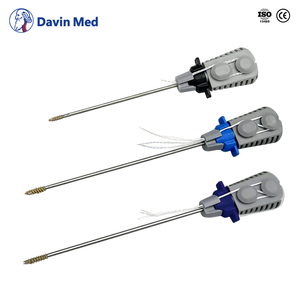
Davin Med Knotless PEEK Suture Anchor
Engineered for shoulder arthroscopy and rotator cuff repair. High-strength radiolucent PEEK polymer ensures optimal pull-out force and biological artifact-free MRI imaging.
Inquire Now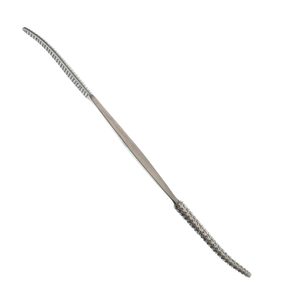
Curved Ends Stainless Steel Bone File
Precision-crafted surgical rasp with dual curved ergonomic ends. Manufactured from surgical-grade stainless steel for bone contouring and smooth resection.
Inquire Now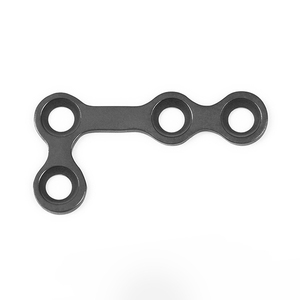
Advanced Veterinary Fracture Repair System
Comprehensive animal plate and screw fixation set for canine and feline trauma surgery. Anatomical plates offer high fatigue resistance and easy intraoperative contouring.
Inquire Now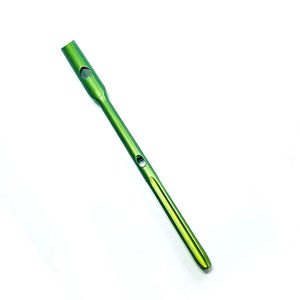
Antirotation Titanium Proximal Femoral Nail (PFNA)
Advanced intramedullary hip fracture solution featuring helical antirotation blade technology for superior compaction of cancellous bone in osteoporotic patients.
Inquire Now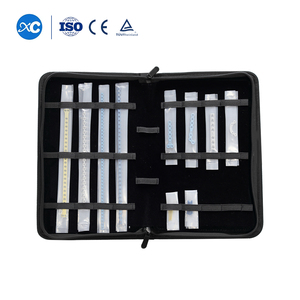
Pet Orthopedic AO/Stem Implant System
Modular small-animal reconstructive hip and stem system. Certified Class III manufacturing standards utilizing ultra-clean titanium alloy and stainless steel construction.
Inquire Now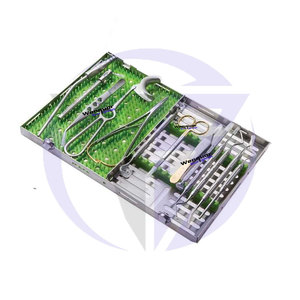
13 Pcs Manual Dental & CMF Surgical Instrument Set
Complete autoclavable stainless steel hand instrument kit for dental implant insertion, bone grafting, and craniomaxillofacial reconstructive procedures.
Inquire Now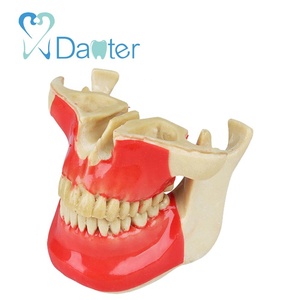
Anatomical Ortho Implant Resin Practice Model
High-density synthetic resin biomechanical bone model for surgical simulation, implant placement validation, hospital demonstrations, and medical training.
Inquire Now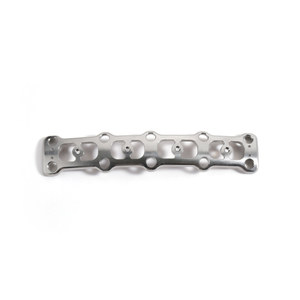
Micro CNC Machined TC4 Titanium Alloy Bone Stud
Ultra-precision 5-axis CNC machined TC4 titanium alloy component designed for complex bone fixation assemblies, spinal pedicle systems, and custom OEM devices.
Inquire NowExecutive Summary: Sourcing CE Certified Orthopedic Medical Devices in 2025 and Beyond
The global market for orthopedic implants and trauma hardware is undergoing a structural paradigm shift driven by stringent regulatory overhauls, demographic aging, and a demand for accelerated hospital procurement cycles. As regional healthcare authorities transition from the legacy Medical Device Directive (MDD 93/42/EEC) to the rigorous EU Medical Device Regulation (MDR 2017/745), medical device distributors, OEM brand managers, and hospital procurement directors face unprecedented scrutiny regarding technical documentation, bio-compatibility, and cleanroom manufacturing stability.
As a leading direct manufacturer headquartered in Changzhou, China—the world’s premiere hub for medical-grade precision titanium machining—Trauhui Medical provides a vertically integrated manufacturing infrastructure. Operating fully under ISO 13485 quality management system certification and accredited with direct CE marking and FDA 510(k) clearances, our production ecosystems bridge the gap between cost-effective volume scalability and strict Swiss-tier engineering tolerance.
Core Quality Commitment: Every orthopedic implant system leaving our facility undergoes 100% optical CMM dimensional verification, strict ASTM F136 / ISO 5832-3 raw material batch certification, and endotoxin-tested cleanroom packaging to ensure zero-defect clinical reliability.
Regulatory Compliance Architecture: Decoding CE Marking & EU MDR Transition
For international medical device distributors, verifying true compliance is the most vital risk-mitigation step in the procurement process. Obtaining and maintaining a valid CE certificate under the EU MDR frame requires extensive clinical evaluation reports (CER), rigorous post-market surveillance (PMS) data, and full material traceability down to the raw ingot heat number.
When evaluating a prospective CE certified orthopedic device manufacturer, procurement buyers must demand compliance across four non-negotiable regulatory pillars:
Full Technical File Access
Complete Class IIb and Class III technical documentation, risk management files (ISO 14971), and biomechanical test reports (ASTM F1717 / ASTM F543).
Biocompatibility & Cleanliness
Cytotoxicity, sensitization, and systemic toxicity testing per ISO 10993, backed by validated ultrasonic cleaning and ISO Class 7 cleanroom packaging.
Notified Body Auditing
Unannounced audits and ongoing surveillance by recognized European Notified Bodies (e.g., TÜV Rheinland / TÜV SÜD) confirming robust process validation.
Metallurgical Engineering & Manufacturing Infrastructure
The mechanical performance of an orthopedic implant is fundamentally bounded by raw material selection and CNC precision machining stability. In trauma fixation (intramedullary nails, locking plates) and spine reconstruction (TLIF cages, cervical discs, pedicle screw systems), structural fatigue resistance under cyclic physiological loading is critical to prevent hardware failure prior to bone union.
1. Advanced Medical Titanium Alloys (Ti6Al4V ELI)
We utilize implant-grade Extra Low Interstitial Titanium Alloy (ASTM F136 / Grade 23). Compared to standard Grade 5 titanium, ELI variants offer reduced interstitial oxygen and iron content, dramatically improving fracture toughness, ultimate tensile strength, and fatigue crack growth resistance in weight-bearing anatomical sites.
2. Polyether Ether Ketone (PEEK-OPTIMA) in Spinal & Sports Surgery
For interbody fusion cages and knotless suture anchors, high-performance radiolucent PEEK polymers are selected. PEEK closely mirrors the elastic modulus of human cortical bone (3.6 GPa vs 18 GPa for cortical bone), minimizing stress shielding, encouraging natural osseointegration, and allowing radiologist artifact-free CT and MRI follow-up evaluations.
3. Precision 5-Axis CNC & Swiss Machining
Our facility houses over 150 sets of modern precision machinery, including multi-axis CNC Swiss automatic lathes, high-speed 5-axis vertical machining centers, and wire EDM unit lines. This enables complex geometry fabrication—such as variable-angle locking thread structures and porous 3D titanium lattice surfaces—with micron-level repeatability (±0.005mm).
Technical Data Visualization: Implant Material Performance Comparison
Selecting the correct metallurgical profile for specific clinical indications is essential for both OEM product design and distributor catalog positioning:
| Material Specification | Elastic Modulus (GPa) | Tensile Strength (MPa) | Radiolucency | Primary Clinical Application |
|---|---|---|---|---|
| Ti6Al4V ELI (Grade 23) | 110 - 114 GPa | ≥ 860 MPa | Radiopaque | Spinal Pedicle Screws, PFNA Nails, Locking Plates |
| PEEK Optima Polymer | 3.6 - 4.0 GPa | 90 - 100 MPa | Radiolucent (MRI Clear) | ACDF / TLIF Cages, Arthroscopic Suture Anchors |
| 316L Stainless Steel (ASTM F138) | 190 - 200 GPa | ≥ 690 MPa | Radiopaque | Pediatric Trauma, Temporary Internal Fixation, Surgical Files |
| Porous 3D Printed Titanium | 1.5 - 3.0 GPa | 50 - 150 MPa | Semi-Radiolucent | Trabecular Bone Fusion Cages, Custom Cranial Plates |
Future Sourcing Trends in Orthopedic Device Procurement (2025–2030)
As global healthcare systems focus on cost-containment, supply chain resilience, and value-based clinical outcomes, B2B procurement strategies are shifting dramatically. Key trends shaping global procurement over the coming decade include:
1. Rise of Direct Contract OEM/ODM Manufacturing
Distributors are moving away from traditional high-markup brand re-selling to establishing private-label implant lines. Direct OEM partnerships significantly improve gross margins while preserving complete brand ownership.
2. Total Cost of Ownership (TCO) Optimization
Forward-thinking hospital groups prioritize complete procedure kits over standalone implants. Bundled delivery of implants, dedicated reusable instrument sets, and single-use sterile disposables minimizes inventory holding costs.
3. Rapid Stock Replenishment & Short Lead Times
Volatile global shipping routes necessitate suppliers maintaining large finished-goods safety stock. Modern suppliers must guarantee standard system dispatch within 15 days to safeguard hospital supply chains.
Emerging Technological Trends in Orthopedic Device Manufacturing
Technological innovation in surgical device manufacturing is accelerating rapidly. Direct manufacturers with in-house R&D and rapid prototyping capability are leading the charge in four main domain areas:
1. 3D Printed Additive Manufacturing & Trabecular Structures
Electron Beam Melting (EBM) and Direct Metal Laser Sintering (DMLS) technologies allow for the creation of porous 3D titanium implants with interconnected pore sizes matching human cancellous bone (300–600 microns). This interconnected porous lattice promotes rapid cellular attachment and vascularized osteogenesis, reducing non-union rates in spinal fusion and joint revision procedures.
2. Bioactive & Antimicrobial Surface Engineering
Advanced surface treatments—including plasma-sprayed Hydroxyapatite (HA) coatings, type II anodization, and silver ion-doped antimicrobial surfaces—are significantly improving early mechanical stability while lowering implant-associated infection risks in trauma and arthroplasty surgeries.
3. Patient-Specific Implants (PSI) & CMF Customization
In craniomaxillofacial (CMF) and complex oncological resections, one-size-fits-all hardware is often inadequate. Integrating preoperative 3D DICOM CT data into CAD/CAM software allows manufacturers to produce patient-matched titanium plates and custom cranial meshes with sub-millimeter precision.
4. Minimally Invasive Surgery (MIS) Instrument Systems
Surgical trends heavily favor smaller incisions, reduced blood loss, and shorter patient recovery windows. Implant hardware is increasingly designed in tandem with specialized MIS delivery instruments—such as percutaneous pedicle screw towers, expandable retractor systems, and knotless suture anchors.
Frequently Asked Questions for Buyers & Distributors
Direct technical answers to the regulatory, logistics, and quality assurance queries most frequently raised by medical device buyers.
Our implants and instrument lines are manufactured under an ISO 13485 accredited quality system, holding comprehensive CE mark certification and FDA 510(k) clearances. We furnish complete technical dossiers (STED), biocompatibility reports (ISO 10993), and sterilization validation data to streamline product registration in your local market.
Yes. Our experienced R&D team provides complete OEM/ODM engineering services—from 3D CAD modeling and finite element analysis (FEA) to rapid prototyping, dynamic fatigue testing, and custom laser-etched private labeling with sterile packaging tailored to your brand specifications.
We maintain a large safety inventory of standardized spine, trauma, and veterinary systems, enabling dispatch within 15 business days for standard orders. For custom OEM runs or specialized non-stock items, production timelines range between 30 to 45 days based on validated tooling requirements.
We exclusively source implant-grade titanium (Ti6Al4V ELI) and PEEK from fully audited, certified suppliers (such as Invibio for PEEK-OPTIMA). Every batch comes with raw material mill certificates, and every finished product is laser-marked with a unique lot number for 100% full-lifecycle traceability.
Partner with a Certified Orthopedic Manufacturing Pioneer
Empower your distribution business or hospital network with high-precision, CE certified spine, trauma, CMF, and veterinary implant solutions. Request our full catalog or speak directly with an OEM engineer today.