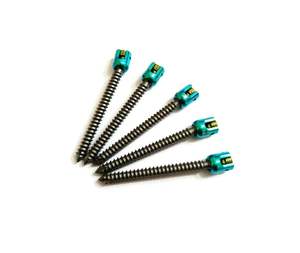
Veterinary Spine Fixation
8.0mm Polyaxial Screw Veterinary Surgical Instrument Set
Heavy-duty polyaxial pedicle screw system engineered for large animal spinal stabilization and veterinary orthopedic reconstruction.
Manufactured under ISO 13485 QMS with complete CE Technical Files, Raw Material Traceability (MTR), and Validation Reports.
Heavy-duty polyaxial pedicle screw system engineered for large animal spinal stabilization and veterinary orthopedic reconstruction.
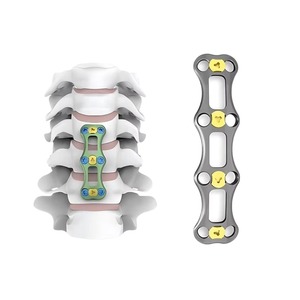
Ultra-low-profile cervical plating system featuring tactile locking confirmation and multi-directional trajectory screw angles.
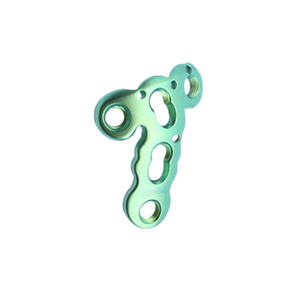
Anatomically shaped periarticular locking plate designed for complex 3-part and 4-part proximal humerus fractures.
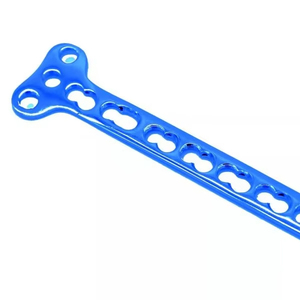
High-tensile 316L stainless steel surgical bone plates and cortical screws conforming to ISO 5832-1 bio-mechanical specifications.
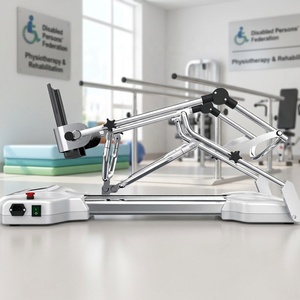
Microprocessor-controlled anatomical CPM rehabilitation system designed for post-operative joint range-of-motion recovery.
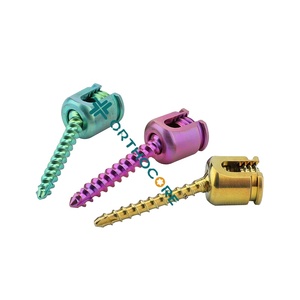
High-load capacity titanium spinal screws engineered specifically for equine and large-breed canine spinal fusion procedures.
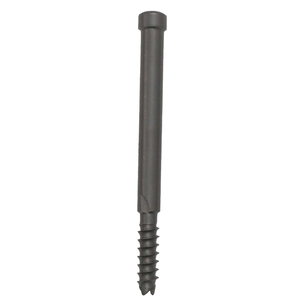
Advanced intramedullary hip fracture solution engineered to prevent rotation and collapse in trochanteric fracture lines.
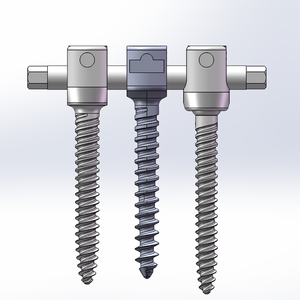
Minimally invasive spinal compression fracture fixation system constructed from medical titanium alloy (Ti-6Al-4V ELI).
In the contemporary global medical device regulatory landscape, obtaining and maintaining a CE Certified orthopedic implant documentation package is no longer merely a bureaucratic requirement—it is the foundational pillar of market access, risk mitigation, and commercial growth. Following the complete transition from the European Medical Devices Directive (MDD 93/42/EEC) to the stringent European Medical Devices Regulation (EU MDR 2017/745), hospital procurement directors, regional distributors, and OEM/ODM private label brand owners face unprecedented scrutiny regarding the technical documentation, clinical evidence, and quality control systems of their manufacturing partners.
An orthopedic implant—whether a Class III spinal cervical plate, an intramedullary proximal femoral nail (PFN), or a custom 3D-printed porous interbody fusion cage—is classified as a high-risk implantable medical device. Notified Bodies (such as TÜV Rheinland, TÜV SÜD, BSI, and DEKRA) require exhaustive Summary of Technical Documentation (STED) files before issuing CE certificates. Global exporters who provide ready-to-submit, fully compliant technical dossier packages offer a massive strategic advantage to international importers, reducing regulatory clearance timelines from years to months.
By partnering with a verified manufacturer like Trauhui Medical, distributors obtain immediate access to audited technical dossiers, complete material test reports (MTRs), mechanical fatigue test data conforming to ASTM F2077 and ASTM F543, biological evaluation reports under ISO 10993, and pre-compiled GSPR (General Safety and Performance Requirements) checklists.
A comprehensive CE documentation package prepared by an experienced orthopedic implant manufacturer must adhere strictly to Annex II and Annex III of the EU MDR 2017/745. Below is the detailed structural overview of what a tier-one technical dossier contains:
Comprehensive technical specifications detailing implant geometry, dimensional tolerances (CNC micro-machining precision down to ±0.005mm), raw material grades (ASTM F136 Titanium / ISO 5832-1 316L Stainless Steel), variant matrices, UDI-DI assignment, and intended clinical indications.
The GSPR checklist maps each requirement of Annex I under MDR 2017/745 to specific test reports, risk evaluations, and international standards (e.g., ISO 14971 for risk management, ISO 11607 for sterile packaging integrity).
Complete ISO 10993 chemical characterization, cytotoxicity, systemic toxicity, genotoxicity, and wear debris analysis. Includes mechanical static and dynamic fatigue test protocols under ASTM F2077 (Spinal Cages) and ASTM F543 (Bone Screws).
Process flowcharts, CNC multi-axis machining parameter validation, automated ultrasonic washing, passivation reports, and Class 7 (Class 10,000) cleanroom particle count logs, backed by ISO 11137 gamma irradiation or ISO 11135 EO sterilization validation.
State-of-the-art literature appraisal, clinical trial data (or robust equivalence demonstration under strict MDR rules), post-market clinical follow-up (PMCF) plans, and Summary of Safety and Clinical Performance (SSCP) for public EUDAMED registration.
Proactive post-market surveillance protocols, Periodic Safety Update Reports (PSUR), vigilance reporting procedures, and feedback integration mechanisms connecting field clinical feedback directly to R&D engineering teams.
As healthcare systems globally implement value-based procurement models, hospital purchasing groups and medical device distributors are adjusting their sourcing strategies. Procurement leaders are moving away from sole-reliance on legacy Western multinationals whose inflated margins strain national health budgets, turning instead to established tier-1 manufacturers in specialized manufacturing hubs like Changzhou, China.
Several macro trends are currently reshaping orthopedic implant procurement:
The biomedical engineering field is experiencing rapid technological evolution across materials science, surface modification, and additive manufacturing. Leading orthopedic manufacturers are integrating these advances directly into their standard product lines:
Selective Laser Melting (SLM) and Electron Beam Melting (EBM) technologies allow the creation of biomimetic trabecular titanium structures. Cages produced via 3D printing feature interconnecting porous networks (pore sizes 400–700 μm) that mimic human cancellous bone, significantly accelerating osteointegration and vascular ingrowth compared to solid PEEK or smooth titanium implants.
Traditional fixed-angle locking plates restrict screw placement options during complex periarticular fracture reduction. Second-generation variable-angle (VA) locking compression plate systems enable surgeons to trajectory-steer locking screws within a 30-degree cone, securing small osteochondral fragments around joints without sacrificing locking strength.
Type II Anodization and Micro-Arc Oxidation (MAO) create hard, dense titanium oxide surface layers. These treatments enhance wear resistance, dramatically reduce ion release in vivo, improve fatigue strength under cyclic loading, and enable vivid color-coding for rapid size identification in the sterile field.
While interbody fusion cages (ACDF, TLIF, XLIF) remain the gold standard for segment stabilization, motion-preserving technologies like Cervical Intervertebral Disc Arthroplasty are seeing high growth. These devices restore natural segmental kinematics, protecting adjacent disc levels from accelerated degeneration.
Headquartered in Changzhou, Jiangsu Province—universally recognized as the heart of China's orthopedic medical device cluster—Trauhui Medical Co., Ltd has established itself as a global leader in spine, trauma, craniomaxillofacial (CMF), and veterinary orthopedic manufacturing since 2009.
With an investment exceeding RMB 200 million and a modern production complex spanning over 30,000 square meters, Trauhui Medical operates a world-class manufacturing facility equipped with over 150 sets of advanced CNC machining centers, high-precision Swiss-type turning lathes, wire EDM systems, and automated cleaning stations. The facility houses an annual manufacturing capacity of over 350,000 certified implant components and precision surgical instruments.
Quality management is the core element of Trauhui Medical's operations. The company maintains an auditing-ready Quality Management System certified under ISO 13485:2016 and holds official CE Certificates issued by European Notified Bodies, alongside select FDA 510(k) clearances. An internal R&D team consisting of more than 30 senior biomedical engineers works continuously on finite element analysis (FEA), mechanical fatigue testing, and clinical feedback integration, backed by proprietary invention patents.
Detailed technical and regulatory answers for hospital procurement directors, regulatory consultants, and medical device importers.
Trauhui Medical provides a complete, STED-formatted technical dossier aligned with EU MDR 2017/745 (Annex II & III). The documentation package includes: Device Specifications & Variant Drawings, General Safety and Performance Requirements (GSPR) Checklist, Risk Management File (ISO 14971), Raw Material Test Certificates (MTR for titanium grade Ti-6Al-4V ELI / stainless steel 316L), Biocompatibility Test Reports (ISO 10993), Mechanical Static & Dynamic Fatigue Test Protocols (ASTM F2077, ASTM F543, ISO 14801), Packaging Integrity & Shelf Life Validation (ISO 11607), Sterilization Validation Reports (ISO 11137/11135), Instructions for Use (IFU), UDI-DI Assignment Data, and the Clinical Evaluation Report (CER) with Post-Market Surveillance (PMS) plans.
For private label partners and OEM clients, Trauhui Medical provides full regulatory support. Our dedicated regulatory affairs department prepares customized Technical Documentation dossiers under your brand identity, assists with Notified Body technical file inquiries, supplies direct access to master files (MAF), and provides full traceability documentation during ISO 13485 or CE unannounced audits.
We strictly utilize medical-grade raw materials sourced from globally certified suppliers. Titanium implants are crafted from Ti-6Al-4V ELI (Extra Low Interstitial) conforming to ASTM F136 / ISO 5832-3, or commercially pure Titanium under ASTM F67. Stainless steel trauma plates and screws use high-tensile 316L surgical steel under ISO 5832-1. Every batch of raw material undergoes spectral analysis, mechanical yield/tensile testing, and microstructure verification, with full Material Test Reports (MTR) included in every shipment lot.
Due to our extensive manufacturing footprint featuring 150+ CNC equipment sets, standard catalog systems (such as ACDF plates, TLIF cages, PFN nails, and locking compression plates) are maintained in inventory, enabling fast dispatch within 15 days. Customized OEM projects, custom plate geometry modifications, or specialized instrument sets typically require 30 to 45 days, inclusive of design validation, prototyping, precision machining, and final QC inspection.
Yes. All Trauhui Medical surgical instrument trays, color-coded trial reamers, drill guides, and insertion instruments are manufactured from high-grade stainless steel (such as 17-4PH, 420, 316L) and medical RADEL/PEEK polymers. They are validated to withstand repeated steam sterilization (autoclaving) cycles at 134°C (273°F) under ISO 17665 standards without mechanical degradation or color code fading.
Absolutley. We welcome distributor procurement officers, hospital surgical committees, and third-party regulatory auditors to visit our Changzhou facility. Visitors can inspect our 30,000 m² production complex, multi-axis CNC machine centers, Class 7 cleanrooms, optical Coordinate Measuring Machines (CMM), and internal mechanical testing laboratories. Virtual live factory audits are also available upon request.
Connect directly with Trauhui Medical’s regulatory and engineering team to receive complete technical dossiers, sample documentation sets, and competitive B2B factory pricing.