Precision Surgical Products Available for Global Distribution & OEM
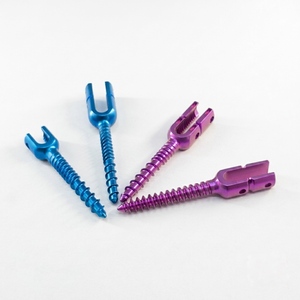
Anodized Titanium Monoaxial Pedicle Screw Orthopedic Implants Surgery Spine 6.0MM Reduction Screw For Hospital Use
Inquire Now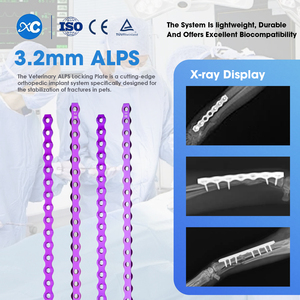
XC MEDICO Export Grade 3.2mm ALPS Titanium Trauma Reconstruction Veterinary Orthopedic Implant for Animal Clinic Use
Inquire Now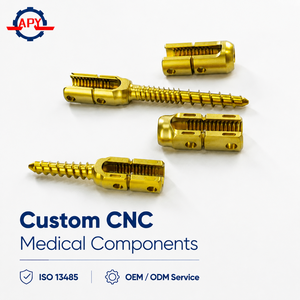
Gold Anodized Titanium Spinal Pedicle Screw And Tulip Head Housing ISO13485 Orthopedic Implants Components For Spine Surgery
Inquire Now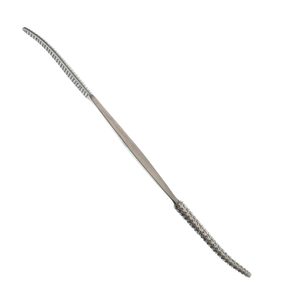
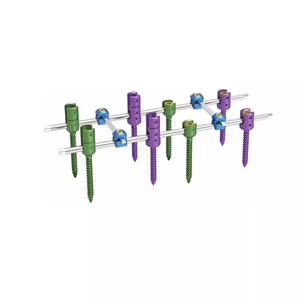
Factory Price Straight Pedicle Screw Spinal Screw Orthopedic Implants Orthopedic Instruments Bone Implants
Inquire Now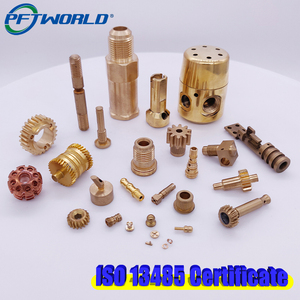
ISO 13485 Certified OEM Custom CNC Machined Parts PEEK Titanium Implant Grade Stainless Steel For Surgical & Orthopedic
Inquire Now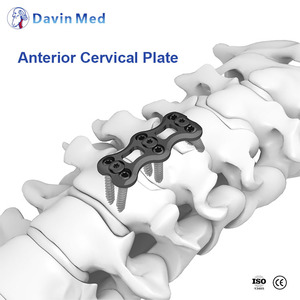
CE ISO Anterior Cervical Plate System Titanium Alloy Spine Implants Orthopedic Surgical Instruments for Cervical Fusion Surgery
Inquire Now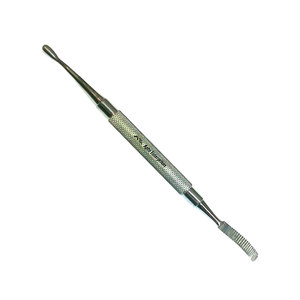
Dental Instruments Premium Implantology Orthopedic Scraper Precision Lifetime Best Quality Manual Bone Molt Elevator File Miller
Inquire NowNavigating the Global Orthopedic Manufacturing Landscape
The modern musculoskeletal device industry demands unprecedented levels of metallurgical purity, dimensional precision, and regulatory transparency. Sourcing high-grade surgical devices—ranging from titanium spinal pedicle screw systems to custom PEEK interbody fusion cages and variable-angle locking reconstruction plates—requires choosing a qualified CE certified orthopedic implant manufacturer capable of delivering scalable OEM production while mitigating clinical and regulatory risks.
With global healthcare markets transitioning toward strict medical device regulations (such as the European Union's CE MDR 2017/745 and FDA 510(k) clearances), orthopedic distributors, hospital purchasing syndicates, and private-label brand managers must evaluate suppliers beyond surface-level pricing. True enterprise value lies in a manufacturer's internal quality management system (ISO 13485:2016), advanced multi-axis CNC machining setup, surface treatment capabilities (such as Type II anodization and micro-arc oxidation), and comprehensive technical documentation (STED files) required for market registration.
Precision CNC Multi-Axis Machining
Equipped with 150+ sets of high-precision DMG MORI 5-axis machining centers and Citizen Swiss-type automatic lathes, achieving sub-micron tolerances down to ±0.003mm for intricate tulip-head threads and polyaxial screw mechanisms.
Full Material Traceability & Compliance
Utilizing strictly certified implant-grade raw materials—including Titanium Alloy (Ti-6Al-4V ELI / ASTM F136), PEEK Optima (LT1), and High-Nitrogen Stainless Steel (316LVM / ASTM F138)—accompanied by mill test certificates for every production batch.
Cleanroom Processing & Packaging
Automated ultrasonic multi-stage washing, passivating, and packaging operated under validated ISO Class 7 (Class 10,000) cleanroom environments, ensuring bioburden control and low particulate counts for sterile packaging options.
Product Recommendations & Clinical Indications
Selecting the correct orthopedic implant configuration depends directly on anatomical requirements, bone density, load-bearing mechanical constraints, and surgical methodology. Below is an authoritative technical overview of our key product categories:
1. Spinal Fixation & Interbody Fusion Systems
Monoaxial & Polyaxial Pedicle Screws: Designed with dual-lead threads for fast insertion and high pull-out force. Polyaxial tulip heads offer a 52-degree cone of deflection, simplifying rod seating in complex degenerative scoliosis and spondylolisthesis corrections.
Reduction Screws: Feature extended breakaway tabs to facilitate step-by-step vertebral alignment without risking thread stripping.
ACDF & TLIF Interbody Cages: Manufactured in PEEK Optima or 3D-printed porous titanium. PEEK implants match the modulus of elasticity of natural cortical bone (reducing stress shielding), while 3D trabecular structures promote rapid osseointegration.
2. Trauma Fixation & Reconstruction Systems
Variable-Angle Locking Plate Systems: Anatomically pre-contoured plates featuring locking screw holes with a ±15° trajectory cone. Ideal for complex intra-articular fractures where precise screw direction is required to avoid joint penetration.
Intramedullary Nails (PFNA II, Tibial, Femoral): Cannulated nails crafted from high-strength titanium alloy. The PFNA II system employs a helical blade mechanism that compresses cancellous bone in osteoporotic femoral head structures, drastically lowering cut-out rates.
External Fixators: Titan-Fix circular ring fixators and modular limb reconstruction frames engineered for high rigidity during limb lengthening and open fracture management.
3. Veterinary & CMF Reconstruction Implants
ALPS Veterinary Trauma Plating: Ultra-low profile 3.2mm ALPS titanium reconstruction plates designed specifically for canine and feline orthopedics. Preserves periosteal blood supply through minimal contact plate design.
Craniomaxillofacial (CMF) Systems: Low-profile micro and mini-plate constructs (1.5mm to 2.0mm) for delicate midface, mandibular, and cranial defect fixation.
Precision Surgical Instruments: High-grade stainless steel bone files, Miller rasps, Molt elevators, and specialized scrapers engineered for repeated autoclave sterilization without edge dulling.
Orthopedic Biomaterials Technical Comparison
| Biomaterial Type | Standard Specification | Tensile Strength (MPa) | Elastic Modulus (GPa) | Radiolucency / Imaging | Primary Surgical Indications |
|---|---|---|---|---|---|
| Ti-6Al-4V ELI Alloy | ASTM F136 / ISO 5832-3 | 860 – 960 | 110 | Metallic Artifacts Present | Pedicle Screws, Trauma Plates, Nails |
| Porous 3D Titanium | Additive Mfg / ASTM F3001 | 150 – 350 (Engineered) | 3 – 5 (Matches Cancellous) | Porous Structure Visible | 3D Interbody Fusion Cages |
| PEEK Optima LT1 | ASTM F2026 | 90 – 100 | 3.6 (Matches Cortical) | 100% Radiolucent (X-Ray Clear) | Spinal Cages, Cervical Discs |
| 316LVM Stainless Steel | ASTM F138 / ISO 5832-1 | 860 – 1100 | 210 | High Artifact Density | Surgical Instruments, Bone Files |
Technological Trends & Metallurgy Innovations in Orthopedics
The global orthopedic device manufacturing sector is undergoing rapid technological upgrades driven by biomechanical research and digital manufacturing techniques. A key driver is 3D-printed porous titanium implants. By utilizing Selective Laser Melting (SLM) additive manufacturing, factory engineers can produce bionic trabecular structures with interconnected pore sizes ranging from 300 to 600 micrometers. This exact architecture mimics natural human cancellous bone, facilitating vascularization and accelerating bone cell proliferation (osteogenesis) directly through the matrix of spinal interbody cages.
Surface finishing technology has similarly evolved. Advanced Type II Anodization treats titanium pedicle screws and tulip housings to form a dense, low-friction titanium dioxide layer. This electrochemical passivation drastically increases fatigue strength (preventing micro-cracking under repetitive spinal loading cycles) and reduces the friction coefficient between pedicle screw tulips and locking set screws. Furthermore, color anodization (Type III) enables clear color-coded size identification inside the operating room, speeding up surgical workflows and reducing surgical error.
In motion-preserving procedures, such as total cervical disc replacement (arthroplasty), hybrid implants incorporating medical-grade PEEK and titanium plasma spray (TPS) coatings combine the elastic flexibility of polymers with the biological anchoring properties of rough titanium interfaces.
Future Procurement & Sourcing Trends for B2B Importers
As medical device purchasing becomes increasingly central to hospital budgeting, distributors and brand owners must rethink their supply chain strategies. Key trends shaping international procurement include:
1. Regulatory Harmonization & STED Dossiers
Importers no longer evaluate factories solely on unit cost. Buyers demand full STED (Summary Technical Documentation) dossiers, including biocompatibility reports (ISO 10993), mechanical fatigue test data (ASTM F1717 for spinal constructs, ASTM F543 for bone screws), and cleanroom validation data to speed up local FDA/MOH registrations.
2. Turnkey OEM/ODM Localization
Leading distributors are establishing private-label brands. Partnering with a skilled OEM factory in China allows companies to customize screw thread profiles, plate contours, instrument tray ergonomics, and sterile packaging—substantially enhancing brand equity while maintaining competitive margins.
3. Supply Chain Consolidation & Resilience
Sourcing implants and matching surgical instrument sets from a single certified manufacturer eliminates compatibility issues between instruments and implants. Centralized production shortens lead times, reduces landed freight costs, and minimizes stockout risks.
Frequently Asked Questions (FAQ) for Global Buyers
Which international certifications do your orthopedic implants hold?
Our products are manufactured under a TÜV-audited ISO 13485:2016 quality management system. Product lines carry full CE Marking certificates under European directives/MDR regulations, as well as selected FDA 510(k) clearances. Comprehensive technical documentation, design history files (DHF), and certificate copies are provided to qualified distributors to support national health authority registrations.
What is the standard order lead time and minimum order quantity (MOQ)?
Standard catalog implants and instruments (e.g., standard pedicle screws, locking plates, intramedullary nails) are maintained in inventory, enabling fast dispatch within 15 days. For custom OEM/ODM projects or private-label production, development timelines range from 30 to 60 days depending on drawing approvals, CAD/CAM programming, initial prototyping, and mechanical testing requirements. Flexible MOQs are available for new market evaluation.
Do you provide custom OEM/ODM engineering and private labeling services?
Yes. Our engineering R&D team consists of 30+ experienced orthopedic design professionals. We offer end-to-end OEM/ODM services—taking your concept from initial 3D CAD modeling and FEA (Finite Element Analysis) stress simulation to precision CNC machining, custom laser marking (logo, lot number, QR code), and protective cleanroom blister packaging under your private brand name.
How do you guarantee quality consistency across mass production batches?
Quality assurance is integrated into every manufacturing stage: raw material chemical analysis via spectroscopy upon entry, first-article inspection (FAI) during multi-axis machining, automated optical coordinate measuring machine (CMM) dimensional verification, dynamic fatigue testing per ASTM standards, and 100% visual inspection before final cleanroom sealing.
Can distributors request samples for surgical evaluation or mechanical testing?
Yes, qualified medical device distributors and hospital procurement teams can request sample implants and demonstration surgical instrument kits for hands-on evaluation, dimensional verification, and surgical technique alignment prior to committing to commercial volume contracts.
Why Global Partners Choose Our Manufacturing Hub
Headquartered in Changzhou's Wujin Hi-tech Zone—known as the heart of China's medical device manufacturing sector—our facility represents over 15 years of continuous dedication to orthopedic precision. With over 200 million RMB in infrastructure investment, 30,000 m² of specialized production space, and an annual manufacturing capacity exceeding 350,000 pieces, we serve as an essential production partner for medical device distributors in over 30 countries across Europe, the Americas, the Middle East, and Asia-Pacific.
By combining direct factory sourcing with comprehensive technical support, clinical training collaterals, and dedicated regulatory assistance, we enable our partners to accelerate market entry, capture market share, and deliver safe, high-performance orthopedic solutions to surgeons and patients worldwide.
Partner with a Certified Orthopedic Implant Manufacturer
Contact our senior medical engineering team today to request product catalogs, technical documentation (STED files), factory audit schedules, or an OEM quote for your target market.