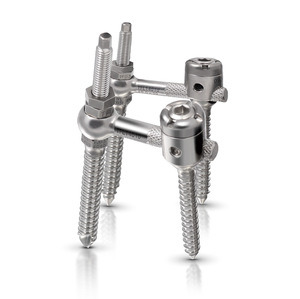
CE Marked Titanium Spinal Traumatic System (Side Opening Pedicle)
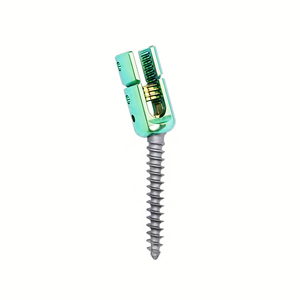
Engineered with medical-grade Ti-6Al-4V ELI alloy, featuring a side-opening slot designed for simplified rod insertion in complex thoracic and lumbar trauma reconstructions.
Explore our flagship spinal fixation, trauma plating, and micro-screw assemblies. Designed to ISO 13485 and ASTM specifications, backed by complete technical dossier support for international regulatory submissions.
Engineered with medical-grade Ti-6Al-4V ELI alloy, featuring a side-opening slot designed for simplified rod insertion in complex thoracic and lumbar trauma reconstructions.
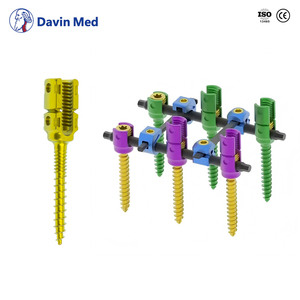
Features an extended thread neck to enable gradual, controlled vertebral reduction during spondylolisthesis and scoliosis correction procedures with optimal pull-out resistance.
Rigid monoaxial construct offering maximum mechanical stability for posterior lumbar interbody fusion (PLIF), manufactured with friction-free thread profiles.
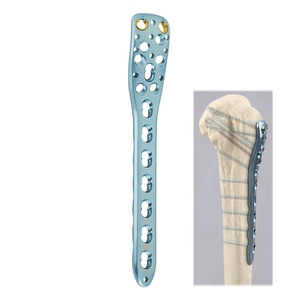
Anatomically contoured locking plate system allowing +/- 15 degrees off-axis screw trajectory for multi-fragment proximal humeral fracture fixation.
High-precision 360-degree articulation head design facilitating effortless rod engagement across complex multi-segment spinal instrumentations.
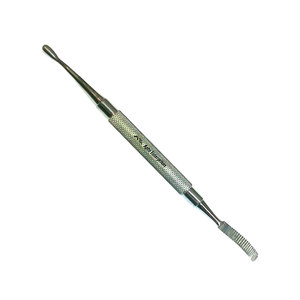
German stainless steel hand instruments for precise periosteal elevation, bone scraping, and delicate tissue handling during orthopedic and CMF procedures.
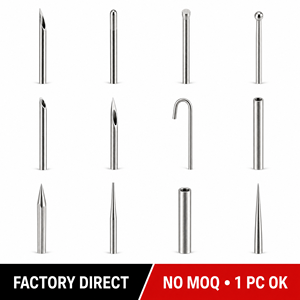
Ultra-precision OEM micro-screws manufactured via 5-axis Swiss turning. Designed for craniomaxillofacial, hand, and small joint fixation systems.
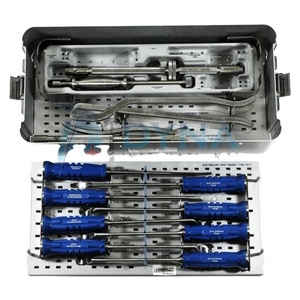
Comprehensive extraction toolset compatible with international standard broken screw, stripped hex head, and well-fixed implant removal protocols.
In the contemporary global medical device industry, the procurement of orthopedic implants and specialized surgical instrumentation has transitioned from basic price-per-unit evaluation to a rigorous qualification of metallurgical purity, biomechanical fatigue resistance, and regulatory compliance. Hospitals, clinical healthcare systems, and regional distributors demand absolute manufacturing precision. A deviation of mere micrometers in pedicle screw thread pitch or locking plate hole countersinking can result in intraoperative hardware failure, delayed union, or premature revision surgery.
As a leading CE Certified orthopedic implant sample supplier and exporter based in Changzhou, China—the world's foremost cluster for orthopedic manufacturing excellence—Trauhui Medical bridges the critical gap between advanced bio-engineering capabilities and global regulatory requirements. By deploying ISO 13485:2016 quality management systems alongside European Medical Device Regulation (EU MDR 2017/745) technical file architecture, we deliver sample kits and commercial production batches that meet the exact physical, mechanical, and biological evaluation standards mandated by Western regulatory bodies and clinical key opinion leaders (KOLs).
Core Metallurgy Note: All Trauhui Medical titanium spinal implants and trauma plates are manufactured from premium Ti-6Al-4V ELI (Extra Low Interstitial) alloy conforming to ASTM F136 and ISO 5832-3 standards. This material delivers superior biocompatibility, heightened fatigue strength, and reduced magnetic susceptibility for optimal post-operative MRI artifact minimization.
Understanding the material breakthroughs and manufacturing paradigms transforming modern spine, trauma, and craniomaxillofacial procedures.
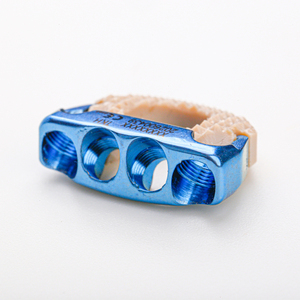
Additive manufacturing via Electron Beam Melting (EBM) allows the direct synthesis of porous trabecular titanium structures. Mimicking natural cancellous bone elasticity, these structures significantly lower the modulus of elasticity, eliminating stress shielding and accelerating early osseointegration in interbody fusion cages.
Advanced Type II anodization and plasma-sprayed Hydroxyapatite (HA) coatings optimize the bone-implant interface. Type II electrochemical anodization enhances surface fatigue endurance under cyclic loading while minimizing aluminum ion release into peri-implant tissues during long-term implantation.
Modern trauma systems are shifting from fixed mono-directional locking mechanisms to polyaxial variable-angle plate-screw interfaces. Allowing up to 30 degrees of conical angulation, surgeons can precisely target dense subchondral bone stock without compromising screw locking integrity.
The global orthopedic market is undergoing a structural realignment driven by healthcare cost-containment mandates, regulatory harmonization, and supply chain vulnerability mitigation. Healthcare providers and medical device distributors can no longer rely on traditional single-region supply strategies. Key macro-trends shaping future procurement include:
Distributors are progressively shifting away from third-party branding brokers to establish direct OEM/ODM partnerships with certified contract manufacturers in Asia. By contracting directly with primary manufacturers possessing 5-axis Swiss CNC machining capacity and ISO 13485 certification, procurement organizations achieve a 35% to 50% reduction in total landed acquisition costs without sacrificing surgical performance or material traceability.
With the implementation of the European Union's Medical Device Regulation (EU MDR 2017/745), market authorization now requires extensive clinical evaluation reports (CER), post-market surveillance (PMS) protocols, and comprehensive risk management files under ISO 14971. Future-ready orthopedic suppliers must provide distributors with fully accessible technical master files, biocompatibility test reports (ISO 10993), and mechanical validation data (ASTM F1717 for spinal implants, ASTM F543 for bone screws).
Standardized off-the-shelf implant lines are increasingly complemented by custom anatomical solutions. Sourcing directors prioritize suppliers who offer turn-key sample validation programs. The ability to request precision-machined evaluation samples, perform dimensional CMM verification, and execute benchtop mechanical trial fittings within a 15-day window has become a decisive competitive differentiator.
Geopolitical friction and global freight volatility have heightened the importance of vendor inventory buffers. Leading contract manufacturers maintain strategic reserves of raw medical-grade titanium bars, PEEK polymers, and finished standard SKU components. This inventory depth enables regular order dispatch within 15 days, protecting regional hospital systems from critical surgical stock-outs.
Supply Chain Security Matrix: Trauhui Medical maintains an uninterrupted raw material supply chain backed by mill test certificates (MTC) for every titanium batch, tracking chemical composition, grain size, and ultrasonic flaw detection down to the original ingot level.
Combining world-class German & Swiss machining technology with rigorous quality control systems to support global orthopedic distributors and private-label partners.
Our 30,000+ square meter production facility in Changzhou houses over 150 sets of ultra-precision Swiss Tornos turning centers, DMG MORI 5-axis machining centers, and high-speed wire EDM machines capable of tolerances down to ±0.005mm.
Quality management is embedded into every stage of our production cycle. Certified by TÜV Rheinland under ISO 13485, our product lines hold valid EC certificates for CE marking and FDA 510(k) clearances for key spinal and trauma systems.
With an experienced R&D team comprising over 30 biomedical engineers, we convert custom surgical concepts, CAD models, or physical samples into validated, sterile or non-sterile finished products with private-label branding options.
By maintaining vast safety buffer stocks of high-demand spinal and trauma components, standard orders are dispatched within 15 days, supported by complete shipping documentation, Certificate of Analysis (CoA), and sterile barrier packaging.
Technical, regulatory, and commercial guidelines for buyers evaluating Trauhui Medical as an orthopedic manufacturing partner.
Trauhui Medical products are manufactured under an audited ISO 13485:2016 Quality Management System. Our primary spine, trauma, and CMF product lines hold CE marking under European Directive 93/42/EEC (transitioning into EU MDR 2017/745 compliance dossiers) and selected US FDA 510(k) clearances. Qualified international distributors receive complete technical documentation including Material Test Reports (MTR), Biocompatibility Reports (ISO 10993 series), Biomechanical Static & Fatigue Test Summaries (ASTM F1717, ASTM F543), and Clinical Evaluation Files to support local national registration (such as ANVISA, SFDA, MOH, or COFEPRIS).
We provide a structured sample validation workflow for OEM/ODM clients. Upon receipt of your engineering drawings or STEP files, our R&D team conducts a Design for Manufacturability (DFM) review within 48 hours. Non-sterile evaluation samples (such as titanium pedicle screws, locking plates, or instrument prototypes) are precision-machined and dispatched via express courier within 10 to 15 working days. Sample kits include full coordinate measuring machine (CMM) inspection reports and material batch trace certificates.
We exclusively utilize certified medical-grade raw materials sourced from audited global suppliers. Titanium components utilize Grade 5 Ti-6Al-4V ELI (ASTM F136 / ISO 5832-3) and Commercially Pure Titanium Grade 2 / Grade 4 (ASTM F67). Non-fusion interbody cages utilize implant-grade PEEK OPTIMA (Invibio). Surgical instruments are crafted from high-hardness German stainless steel (AISI 17-4PH, 420, and 316L). Complete chemical composition and mechanical strain test reports are archived for every raw material heat lot.
For standard catalog items (including standard spine screw systems, trauma plates, intramedullary nails, and basic instrument trays), regular commercial orders are typically packed and ready for export shipment within 15 calendar days. For custom OEM projects involving custom forging dies, specialized anodization colors, or private-label laser marking and cleanroom packaging, lead times range from 30 to 45 days depending on batch quantity and validation scope.
Yes. We offer turnkey private-label manufacturing services. Our in-house fiber laser marking systems enable permanent, high-resolution etching of your brand logo, lot number, QR code, and UDI (Unique Device Identification) barcode directly onto implants and instrument handles. We also provide customized blister sealing, cleanroom Class 100,000 double-pouch sterile barrier packaging, and customized outer box artwork compliant with international labeling requirements.
Our global headquarters and main manufacturing complex are located at No.2 Longqing Road, Wujin Hi-tech Zone, Changzhou City, Jiangsu Province, China (approx. 1 hour via high-speed rail from Shanghai). We welcome procurement directors, distributor quality teams, and third-party auditors (such as TÜV, SGS, or BSI) to conduct physical plant audits of our machining workshops, cleanrooms, mechanical testing laboratories, and quality control departments.
Partner with a trusted China orthopedic implant manufacturer. Contact our senior biomedical sales engineers for full product catalogs, CAD specifications, sample requests, or custom OEM quotes.
Get a Quote