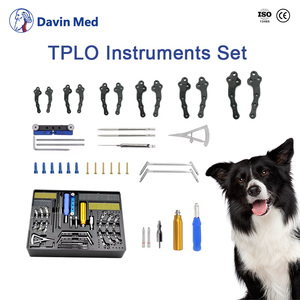
Veterinary Surgery
High-precision orthopedic hardware and surgical instrument sets built to rigorous EU MDR standards and supported by comprehensive technical documentation dossiers.
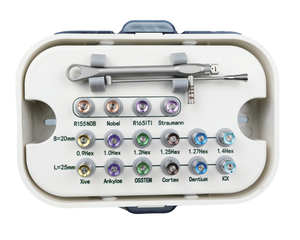
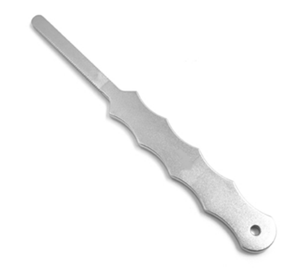
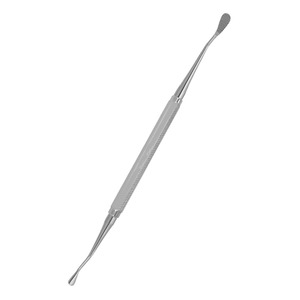
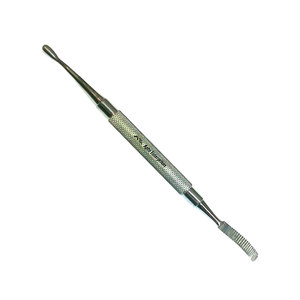
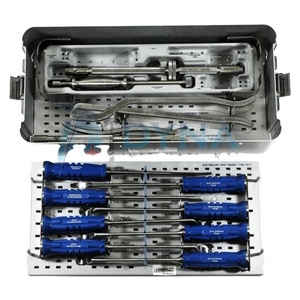
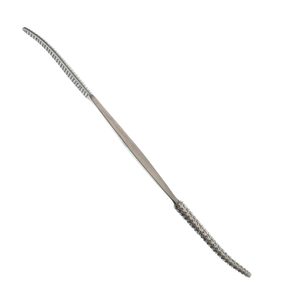
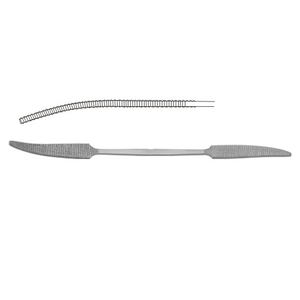
Navigating the global regulatory landscape for orthopedic medical devices requires more than high-grade titanium and precision machining. Under the European Union Regulation (EU) 2017/745 on Medical Devices (EU MDR), Class IIa, Class IIb, and Class III implants—ranging from pedicle screw fixation systems and interbody cages to trauma locking plates and intramedullary nails—demand an exhaustive, fully traceable Technical File (Technical Documentation Annex II & III) audited by Notified Bodies (such as TÜV Rheinland, TÜV SÜD, or BSI).
As a premier OEM/ODM manufacturer headquartered in Changzhou, China—the epicenter of medical device engineering—Trauhui Medical Co., Ltd manufactures implants and instruments backed by complete Summary Technical Documentation (STED). Our technical dossier architecture gives medical device distributors, private-label partners, and hospital tenders immediate regulatory readiness, mitigating registration friction across Europe, Latin America, Southeast Asia, and the Middle East.
When sourcing CE-marked orthopedic devices, procurement officers and regulatory affairs managers must audit the manufacturer's Technical File to ensure it encompasses six indispensable pillars:
From raw titanium billet to final sterile barrier packaging, our self-owned plant maintains total control over metalworking, quality assurance, and regulatory file generation.
Utilizing over 150 sets of multi-axis CNC Swiss-type lathes (Star, Citizen), 5-axis machining centers, and precision wire EDM machines to produce complex implant geometries with tolerances down to ±0.005mm.
In-house electron beam melting (EBM) and laser powder bed fusion (LPBF) technologies to fabricate biomimetic 3D-printed titanium fusion cages with interconnected porous structures matching cancellous bone modulus.
100,000/10,000-level cleanroom environment equipped with ultrasonic multi-stage cleaning systems, purified water loops (RO/EDI), and automated pouch sealing for medical device compliance.
To assist global buyers in evaluating regulatory lead times and documentation completeness, the matrix below outlines Trauhui Medical's technical file assets across key regional frameworks.
| Dossier Component | EU MDR 2017/745 (CE Class IIb/III) | US FDA 510(k) Premarket | ISO 13485:2016 QMS File |
|---|---|---|---|
| Risk Management | EN ISO 14971:2019 Benefit-Risk Ratio | ISO 14971 Hazard Identification File | Risk Control throughout Design Life Cycle |
| Biocompatibility | ISO 10993-1:2018 Complete Testing Suite | FDA Guidance 2020 Biocompatibility Matrix | Raw Material Material Safety Data Sheets (MSDS) |
| Mechanical Testing | ASTM F1717 / F2077 / F382 Static & Dynamic | Bench Performance Data & Predicate Comparison | Verification & Validation Test Reports |
| Clinical Evidence | Clinical Evaluation Report (CER) & PMCF Plan | Substantial Equivalence (SE) Rationale | Clinical Literature Review & Vigilance Records |
| Traceability & Marking | Basic UDI-DI & EUDAMED Data Model Entry | GUDID Database Unique Device Identification | Batch Record Traceability & Serial Mapping |
| Sterilization Validation | ISO 11137 (Gamma) / ISO 11135 (EO) Reports | Sterility Assurance Level (SAL 10⁻⁶) Rationale | Cleanroom Environmental Monitoring Log |
The global orthopedic implant market is undergoing a seismic transformation. Driven by regulatory shifts, hospital cost-containment strategies, and breakthroughs in biomaterial engineering, healthcare procurement teams are adjusting their supply chain strategies. Below are four key trends shaping orthopedic sourcing over the next decade:
The transition from the legacy Medical Device Directive (MDD 93/42/EEC) to EU MDR 2017/745 has increased technical file maintenance costs by an estimated 300% to 500%. Consequently, mid-tier European manufacturers are discontinuing lower-margin implant SKUs. Global distributors are increasingly relying on qualified Chinese contract manufacturers (OEMs) who possess fully prepared, audited Technical File dossiers and ISO 13485 certified quality management systems to fill critical portfolio gaps.
Additive manufacturing is transitioning from boutique custom implants to standardized mass-market interbody fusion cages and acetabular cups. Trabecular titanium structures designed with open-pore architecture (500–700 μm pore size, 60–80% porosity) closely mirror human cancellous bone. This accelerates osseointegration and reduces the Young's modulus of titanium implants to match natural bone (~1.5 to 3.0 GPa), effectively mitigating stress shielding and adjacent segment degeneration.
Distributors no longer accept simple white-label products without complete technical dossiers. Modern OEM contracts mandate that the supplier provides a turn-key Technical Documentation package—including CAD step files, FEA (Finite Element Analysis) reports, cleaning validation protocols, and CER templates—enabling private label brand owners to register products rapidly under their own name with national regulatory authorities.
Veterinary orthopedics is experiencing unprecedented growth. Veterinary surgeons are rejecting low-grade industrial hardware in favor of human-grade implant materials (Ti-6Al-4V ELI) and precision locking plate systems (TPLO, ALPS). Suppliers capable of leveraging human orthopedic manufacturing lines for veterinary implants—complete with autoclavable PPSU sterilization trays—are capturing dominant market share.
Founded in 2009 in Changzhou's Wujin Hi-tech Zone, Trauhui Medical has built an integrated orthopedic development, manufacturing, and regulatory support ecosystem. Having strategically focused on orthopedic devices since 2013, our operations now feature total investments exceeding RMB 200 million and product distribution spanning 30+ countries across 5 continents.
Over 30,000 m² of modern industrial facility housing 30+ specialized production lines. In-house control of CNC machining, surface treatments (anodizing, passivation), and sterile packing guarantees reliable 15-day delivery times for standard stock.
Supported by 30+ dedicated R&D engineers, we take custom implant and instrument projects from initial hand sketches and CT data to 3D prototype validation, mechanical fatigue testing, and final market registration dossiers.
Our Quality Management System is ISO 13485 certified by TÜV Rheinland. Core products hold CE certificates under European regulatory standards and FDA 510(k) clearances, facilitating entry into global tender markets.
Clear answers to technical, regulatory, and supply chain queries commonly submitted by healthcare procurement directors.
We provide a comprehensive Technical File compiled according to EU MDR 2017/745 Annex II and III standards. This includes raw material mill certificates, dimensional engineering prints, ISO 14971 risk management reports, ASTM F1717/F2077 mechanical bench test data, ISO 10993 biocompatibility test summaries, Clinical Evaluation Reports (CER), and UDI-DI registry documentation.
Yes. Our regulatory team assists qualified distributors with local Ministry of Health (MOH) or national medical device agency registration (such as ANVISA in Brazil, COFEPRIS in Mexico, SFDA in Saudi Arabia, or local MOH registrations across ASEAN). We supply LOAs (Letters of Authorization), Certificates of Free Sale (CFS), legal notarization files, and complete technical dossiers.
Our metallic implants are manufactured exclusively from medical-grade Titanium Alloy (Ti-6Al-4V ELI conforming to ASTM F136 / ISO 5832-3) and Implant-Grade Stainless Steel (316L conforming to ASTM F138). Interbody cages are crafted from non-reinforced PEEK-OPTIMA (Invibio LT1) or 3D-printed porous titanium alloy.
Under our ISO 13485 QMS, every raw material batch undergoes spectral analysis and tensile validation upon arrival. Finished components undergo 100% optical dimension checks via CMM and video measuring system (VMS). Every single implant is laser-marked with a unique batch number and DataMatrix UDI code linked to its raw material heat lot and manufacturing route sheet.
Standard system catalog items (spine, trauma, veterinary plates) are held in safety stock reserves and ship within 15 days of order confirmation. Custom OEM/ODM projects requiring new forging dies or custom machining cycles typically follow a 45 to 60-day turnaround, including prototype sampling and mechanical verification.
Our surgical instrument sets (such as pedicle screw drivers, bone rasps, drills, and implant removal kits) are designed with ergonomic, standardized quick-connect couplings (AO connection). They are fully compatible with standard sterilization trays and offer cross-compatibility with major global implant footprints.
Partner with a certified China orthopedic implant manufacturer. Contact our regulatory specialists and medical device engineers to audit our technical files, sample our surgical sets, or request pricing for hospital tenders.