Navigating Orthopedic Implant Procurement: Quality, Compliance & Cost Architecture
A comprehensive analysis for medical device distributors, hospital procurement managers, and OEM partners seeking certified orthopedic solutions.
Procurement Intelligence Executive Summary
In the global orthopedic device sector, balancing regulatory compliance (CE MDR, FDA 510(k)), bio-mechanical precision, and commercial competitiveness is paramount. As healthcare systems push for cost containment without compromising surgical outcomes, direct-from-manufacturer sourcing of titanium spine systems, trauma intramedullary nails, and locking plates has become a strategic necessity. This guide breaks down pricing parameters, manufacturing standards, material trends, and factory capabilities.
Featured CE Certified Orthopedic Implants & Surgical Kits
Manufactured under strict ISO 13485 QMS using medical-grade Titanium Alloy (Ti6Al4V ELI) and Stainless Steel (316L).
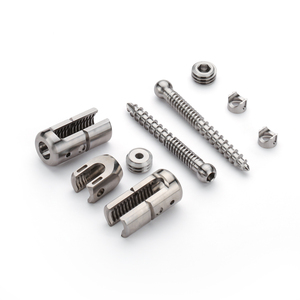
Top-tier pedicle screw and rod system designed for spinal stabilization, deformity correction, and thoracolumbar trauma.
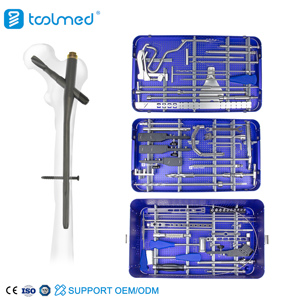
Advanced proximal femoral intramedullary nailing solution for stable rotational control in trochanteric fractures.
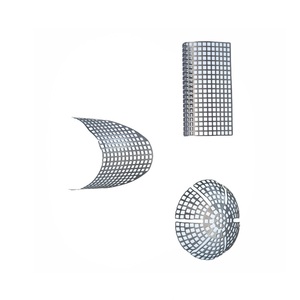
Biocompatible mesh implants optimized for bone structural support, corpectomy, and reconstructive bone surgery.
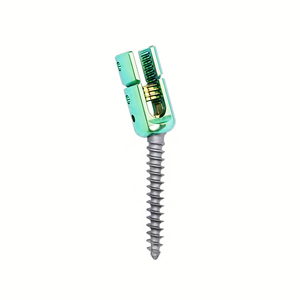
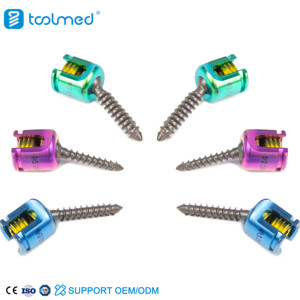
Precision-engineered polyaxial screws enabling smooth angulation and powerful reduction force in spinal fusion.
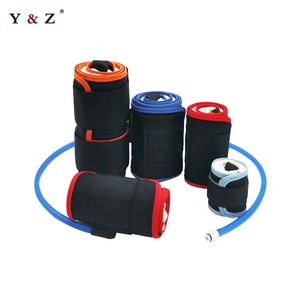
Intelligent electric-powered tourniquet for bloodless surgical fields in upper and lower limb orthopedic surgery.
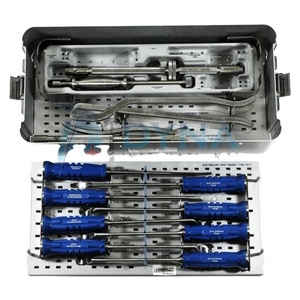
Specialized extractor set designed for efficient extraction of broken screws, stem components, and damaged hardware.
Fully integrated container sets including drills, taps, screwdrivers, and trial implants for operating theatre readiness.
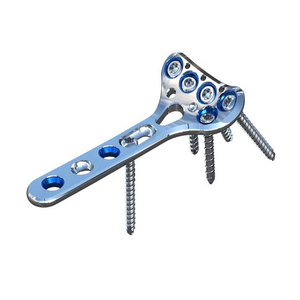
Micro and mini bone plating/screw systems tailored for veterinary orthopedic trauma and spine stabilization in animals.
Orthopedic Implant Pricing Breakdown & Landed Cost Drivers
Understanding the cost composition of CE certified orthopedic devices to optimize institutional procurement budgets.
The price of CE certified orthopedic implants varies significantly depending on material grade, biomechanical design complexity, surface finishing, and quality assurance overhead. Traditional Tier-1 multinational brands often include substantial markups to cover excessive marketing and indirect distribution costs. By contracting directly with certified original equipment manufacturers (OEMs), distributors can achieve 30% to 50% cost reduction while maintaining strict compliance with international clinical standards.
| Implant System Category | Primary Material Grade | Manufacturing Complexity | CE MDR Compliance Factor | Estimated OEM Price Benchmark (USD) |
|---|---|---|---|---|
| Pedicle Screw Systems (Spine) | Ti6Al4V ELI (ASTM F136) | High (5-axis CNC multi-tasking) | Class III / Class IIb | Get a Quote |
| Intramedullary Nails (PFNA / Tibia) | Titanium / 316L Stainless Steel | High (Deep hole drilling + anodization) | Class IIb | Get a Quote |
| Variable Angle Locking Plates | Pure Titanium / Titanium Alloy | Medium-High (Anatomical bending) | Class IIb | Get a Quote |
| 3D Printed Titanium Cages (TLIF/ACDF) | Ti6Al4V Powder (Selective Laser Melting) | Very High (Additive EBM/SLM) | Class III | Get a Quote |
| Surgical Instrument Kits (Container Set) | Custom German Stainless Steel (1.4116/1.4021) | High (Hand-crafted calibration) | Class I Reusable / Class IIa | Get a Quote |
Material Integrity (ASTM F136 / ISO 5832)
Implant pricing directly reflects raw material verification. High-grade Medical Titanium (Ti-6Al-4V ELI) ensures superior fatigue strength, reduced elastic modulus mismatch with cortical bone, and zero cytotoxic cellular responses.
Cleanroom Cleaning & Packaging
CE certified devices must undergo validated automated ultrasonic cleaning, bioburden testing, and Class 100,000 cleanroom primary packaging (double Tyvek pouches) to guarantee sterile barrier integrity during shipment.
Regulatory Quality Overhead
Maintaining full compliance under EU MDR 2017/745 and FDA 510(k) requires ongoing clinical evaluation reports (CER), post-market surveillance (PMS), and batch traceability, which are embedded into certified product valuations.
Global Procurement & Technical Evolution Trends in Orthopedics
Key technological advancements and supply chain realignments shaping the next decade of orthopedic surgery.
1. Porous 3D Printed Additive Manufacturing
Traditional solid PEEK and machined titanium cages are rapidly yielding market share to 3D printed porous titanium implants. Utilizing Selective Laser Melting (SLM), modern factories manufacture implants with interconnected trabecular pore structures (500–700 μm pore size, 60-70% porosity) that closely mimic native cancellous bone. This accelerates early osteoblast cell migration and osseointegration while mitigating stress shielding.
2. Decentralized OEM Manufacturing Hubs
Distributors in Western Europe, Latin America, Southeast Asia, and the Middle East are shifting from single-source multinational brands to qualified OEM manufacturers in China's established medical industrial clusters (such as Changzhou). This decentralized model shortens inventory cycles, lowers acquisition costs, and allows custom brand labeling for regional tender tenders.
3. Anatomically Pre-Contoured Locking Systems
Trauma fixation is moving away from universal flat plates toward anatomically pre-contoured variable angle locking systems (Cottey-MD line). These plates reduce intraoperative bending requirements, preserve periosteal blood supply, and feature multi-directional locking screw options (±15° trajectory freedom) for superior stability in osteoporotic or periarticular fractures.
4. Expansion of Veterinary Orthopedics
The companion animal healthcare market is experiencing unprecedented expansion. Veterinary surgeons now demand human-grade implant precision, leading manufacturers to adapt mini locking plates, TPLO systems, and polyaxial pedicle screws specifically sized for feline and canine trauma and spinal applications (Lovan Veterinary Line).
Trauhui Medical: Your Partner in Orthopedic OEM & Direct Supply
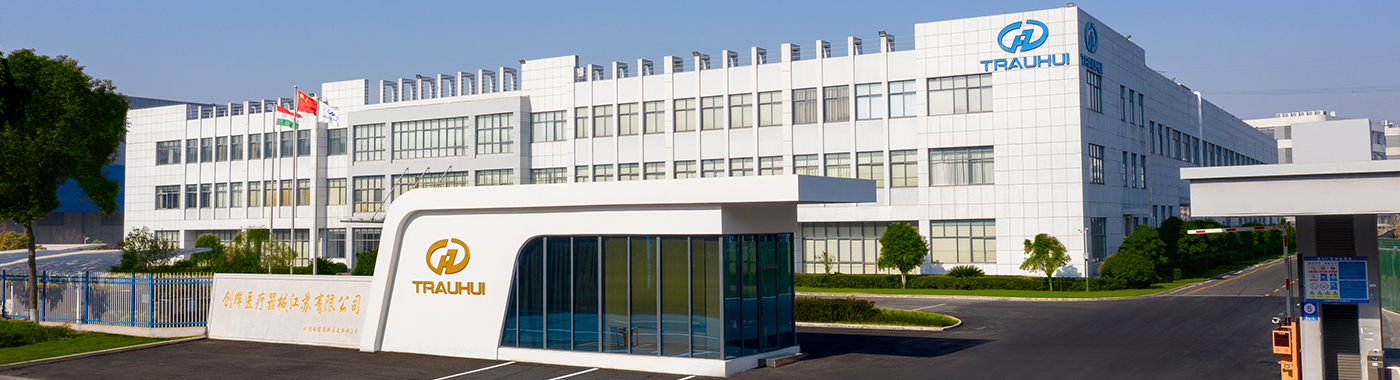
Founded in 2009 in Changzhou—China's premier orthopedic device cluster—Trauhui Medical delivers end-to-end orthopedic device manufacturing.
Integrated R&D, Modern Machining & Global Quality Standards
Trauhui Medical Co., Ltd has invested over RMB 200 million to construct a state-of-the-art 30,000+ m² manufacturing facility. Equipped with more than 150 sets of advanced 5-axis CNC machining centers (Hardinge, Citizen, DMG Mori), coordinate measuring machines (CMM), and optical surface profiling instruments, Trauhui ensures sub-micron manufacturing accuracy across every product batch.
With an annual capacity exceeding 350,000 pieces, Trauhui serves hospital groups, private labels, and medical device distributors across 30+ countries worldwide. Every system is backed by comprehensive regulatory technical files to support rapid market registration.
Frequently Asked Questions by Orthopedic Buyers
Essential guidance on regulatory certifications, OEM customization, lead times, and quality assurance protocols.
Which international certifications do Trauhui Medical orthopedic implants hold?
Trauhui Medical products hold full CE Certification (EC Certificate) and FDA 510(k) clearances for key spine and trauma product lines. All manufacturing and design activities operate under an audited ISO 13485 Quality Management System (certified by TÜV). Full technical dossiers (STED), biocompatibility reports (ISO 10993), and packaging validation files are available to qualified distributor partners to facilitate national healthcare authority registration.
What factors influence the wholesale price of orthopedic pedicle screws and intramedullary nails?
Wholesale pricing is governed by several core factors: raw material specification (certified Titanium Alloy Ti6Al4V ELI vs. 316L Stainless Steel), design complexity (polyaxial, monoaxial, reduction, or extended tab screws), batch order volume, custom packaging requirements, and sterilization status (sterile non-pre-packaged vs. pre-sterilized gamma/EO packaging). Sourcing direct from OEM factories eliminates intermediary distributor markups, providing a competitive landed price advantage.
Does Trauhui Medical offer custom OEM/ODM development and private-label packaging?
Yes. Trauhui operates a dedicated R&D engineering team with over 30 specialists capable of transforming client concepts or CAD models into market-ready implants and matching surgical instrument sets. Our turnkey OEM/ODM services include rapid prototyping, mechanical fatigue testing (ASTM F1717 for spine, ASTM F1264 for intramedullary nails), custom laser etching, customized tray/caddy design, and private-label box packaging.
What is the standard lead time for regular stock orders vs. customized OEM orders?
For standard portfolio items (such as standard pedicle screws, PFNA nails, locking plates, and cages), Trauhui maintains extensive buffer stocks, enabling dispatch within 15 calendar days. For customized OEM/ODM projects requiring new tooling, validation, and private-label compliance, typical lead times range from 45 to 90 days depending on project scope and regulatory documentation requirements.
How does Trauhui Medical ensure batch-to-batch quality consistency and mechanical safety?
Quality control is integrated across every stage of manufacturing. Raw materials undergo spectrum analysis and ultrasonic flaw detection prior to machining. During CNC production, automated optical coordinate measurement machines (CMM) inspect critical tolerances down to ±0.005mm. Finished batches undergo cleanroom particle counting, passivated corrosion testing, and mechanical static/dynamic fatigue testing in our in-house ISO 17025 testing environment.
What surgical instrument support is provided with orthopedic implant systems?
Every implant line is complemented by dedicated, surgeon-validated surgical instrument sets. These instruments are manufactured using high-durability German stainless steel and lightweight aluminum alloys. Trauhui provides customized sterilization trays, color-coded trial implants, drills, reamers, and inserters. Instrument sets can also be customized to match specific surgical preferences or hospital sterilizer container dimensions.
Can distributors request factory audits or third-party inspections prior to shipment?
Absolutely. Trauhui Medical welcomes on-site audits at our Changzhou facility by distributor procurement teams, hospital groups, or certified third-party inspection agencies (SGS, TÜV, Intertek). We provide complete transparency across machining workshops, cleanrooms, physical testing labs, and warehouse logistics.
Partner with a Certified Orthopedic Implant Manufacturer
Expand your product line with high-precision, CE & FDA qualified spine, trauma, CMF, and veterinary implant systems. Contact our engineering and commercial export team today for detailed catalogs, compliance documentation, and factory-direct price quotations.