Navigating China’s Orthopedic Manufacturing Landscape: Metallurgy, Precision Machining, and Global Quality Standards
The global market for orthopedic implants and trauma fixation hardware is undergoing a structural shift. Hospital procurement groups, OEM brand owners, and international distributors are increasingly establishing long-term contract manufacturing partnerships with elite Chinese suppliers. Centered around major medical device hubs like Changzhou in Jiangsu Province, modern Chinese manufacturing facilities have evolved from simple cost-competitive machine shops into world-class biomedical production centers equipped with 5-axis CNC machining, Swiss-type longitudinal turning, electron beam melting (EBM) 3D printing, and fully automated surface anodization lines.
Evaluating a supplier for permanent implantable hardware—such as spinal interbody fusion cages, pedicle screw systems, intramedullary nails, variable angle locking plates, and craniomaxillofacial (CMF) plating—requires deep technical scrutiny. Medical-grade components demand extreme dimensional precision (often within ±0.005mm tolerances), controlled surface topography for optimal osseointegration, and flawless biocompatibility verified under ISO 10993 testing protocols. This technical whitepaper breaks down the metallurgical specifications, manufacturing engineering, quality assurance systems, and future procurement trends defining top-tier orthopedic implant manufacturers in China.
Biomedical Metallurgy
Full spectrum Ti-6Al-4V ELI (Grade 23), PEEK OPTIMA, and 316LVM implant steel verified by ultrasonic flaw detection and heat-lot chemical traceability.
Swiss CNC Micro-Turning
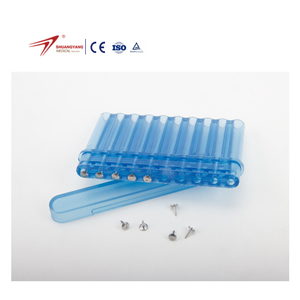
High-precision multi-axis Citizen and Star CNC lathes designed for complex thread whirling on pedicle screws, bone studs, and locking fasteners.
ISO 13485 & Regulatory QMS
Rigorous quality controls certified under ISO 13485:2016, backed by complete technical construction files (TCF) supporting CE and FDA 510(k) clearances.
1. Material Science and Metallurgical Specifications in Implant Manufacturing
The selection of biomaterials dictates the mechanical performance, fatigue life, and biological response of orthopedic hardware. Leading Chinese manufacturing plants adhere strictly to ASTM and ISO standards for medical-grade alloys and polymers:
- Titanium Alloy (Ti-6Al-4V ELI - ASTM F136 / ISO 5832-3): Extra Low Interstitial (ELI) Grade 5 titanium is the gold standard for load-bearing orthopedic trauma plates, intramedullary nails, and pedicle screws. The reduced oxygen and iron content increases fracture toughness and fatigue resistance under cyclic bending loads.
- Unfilled & Porous PEEK (Polyetheretherketone - ASTM F2026): Widely utilized in spinal interbody fusion cages (ACDF, TLIF, XLIF), PEEK offers an elastic modulus (approx. 3.6 GPa) closely matching human cortical bone. This mitigates stress-shielding effects while maintaining radiolucency for clear postoperative X-ray evaluation.
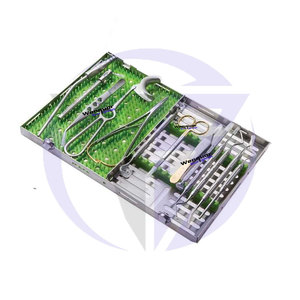
- Implant-Grade Stainless Steel (316LVM - ASTM F138 / ISO 5832-1): Vacuum Arc Remelted (VAR) stainless steel provides high tensile strength and ductility, making it ideal for temporary fracture fixation, K-wires, external fixators, and manual surgical instrumentation.
Technical Information Gain: Leading Chinese factories implement 100% Raw Material Positive Material Identification (PMI) via X-ray fluorescence spectroscopy (XRF) and optical emission spectrometry, ensuring zero cross-contamination before machining commences.
Comparative Biomaterial Performance Matrix
| Biomaterial Standard | Tensile Strength (MPa) | Yield Strength (MPa) | Elastic Modulus (GPa) | Primary Clinical Application |
|---|---|---|---|---|
| Ti-6Al-4V ELI (ASTM F136) | ≥ 860 | ≥ 795 | 110 - 114 | Pedicle Screws, Trauma Plates, Micro Studs |
| PEEK OPTIMA (ASTM F2026) | 90 - 100 | ≥ 85 | 3.5 - 4.0 | Spinal Fusion Cages (ACDF / TLIF / XLIF) |
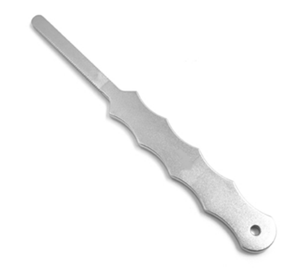
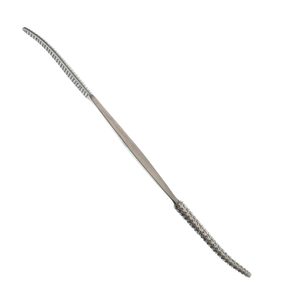
| 316LVM Stainless (ASTM F138) | ≥ 860 | ≥ 690 | 190 - 200 | External Fixators, Surgical Instruments, Bone Files |
| 3D Printed Porous Ti (SLM/EBM) | 500 - 700 | 400 - 600 | 1.5 - 3.0 (Lattice-controlled) | Trabecular Bone Implants, Custom Joint Reconstruction |
2. Advanced Manufacturing Technologies & Precision Engineering
Achieving micron-level dimensional repeatability requires significant investment in advanced machinery. Premier orthopedic factories operate specialized multi-axis CNC cells designed for medical hardware:
Multi-Axis Swiss Lathes and Thread Whirling
Bone screw geometries—such as dual-lead cannulated screws or variable-pitch pedicle screws—require specialized thread whirling heads mounted on 9-axis CNC Swiss-type lathes. Thread whirling cuts deep screw profiles in a single pass without introducing thermal stress micro-cracks, ensuring high fatigue strength under continuous spinal loading.
5-Axis CNC Milling for Complex Anatomical Plates
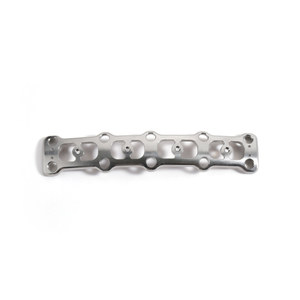
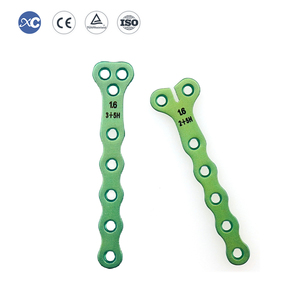
Anatomical variable-angle locking plates require complex 3D surface contours to match specific bony landmarks (e.g., distal radius, proximal humerus, or calcaneus). 5-axis high-speed CNC milling centers generate smooth transitional radii and burr-free locking holes with non-threaded spherical locking mechanisms.
Surface Modification & Anodization Technologies
Implant surface topography directly impacts biological integration. Advanced Chinese processing lines incorporate:
- Type II Hard Anodization: Increases surface hardness and fatigue resistance while eliminating titanium-on-titanium galling in threaded interfaces.
- Type III Color Anodization: Provides durable, bio-compatible color coding (cyan, gold, magenta, green) for fast size identification during complex surgical operations.
- SLA & Hydroxyapatite (HA) Coatings: Sandblasted, Large-grit, Acid-etched (SLA) surfaces create micro- and nano-porosities that accelerate osteoblast attachment and bone growth.
Need Custom OEM Manufacturing for Your Orthopedic Line?
Partner directly with a certified Chinese facility offering high-precision CNC machining, rapid prototyping, and complete private-label packaging solutions.
3. Global Sourcing Trends in Orthopedic Hardware (2025–2030)
The global orthopedic contract manufacturing sector is entering a transformative era driven by technological innovation and shifting healthcare supply chain dynamics. Buying organizations must align their procurement strategies with four key market trends:
Trend 1: Rapid Adoption of Porous Additive Manufacturing (3D Printing)
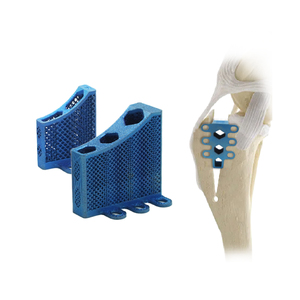
Traditional subtractive machining of spinal cages is giving way to Direct Metal Laser Sintering (DMLS) and Electron Beam Melting (EBM). 3D printing enables the creation of complex, interconnected pore structures (porosity between 60%–80%, pore size 300–600 microns) that mimic native human cancellous bone. This bio-mimetic geometry eliminates the need for bone graft substitutes by allowing direct bone in-growth through the lattice.
Trend 2: Rigorous Regulatory Traceability (EU MDR & UDI Systems)
With the transition from EU MDD to EU MDR (2017/745) and strict US FDA Unique Device Identification (UDI) mandates, orthopedic factories must deliver 100% component-level traceability. Leading Chinese exporters utilize high-precision fiber laser marking systems to etch 2D DataMatrix codes onto micro-implants without compromising surface structural integrity or corrosion resistance.
Trend 3: Value-Based Sourcing and Supply Chain Resiliency
Global medical device OEMs are diversifying their supply chains away from single-source domestic vendors to mitigate margin compression. Certified Chinese manufacturers provide substantial cost optimization (30% to 50% savings over Western contract manufacturers) while delivering identical material traceability, ISO Class 7 cleanroom washing, and validated gamma/EtO sterilization-ready packaging.
4. Enterprise Manufacturing Infrastructure: Trauhui Medical Technical Profile
Founded in 2009 in Changzhou—the heart of China's medical device cluster—Trauhui Medical Co., Ltd represents the pinnacle of modern orthopedic device contract manufacturing and branded production. Occupying over 30,000 square meters of state-of-the-art industrial infrastructure, Trauhui Medical operates a complete ecosystem integrating continuous product research, precision machining, physical/chemical laboratory testing, and global distribution logistics.
Manufacturing & Engineering Infrastructure
Trauhui Medical’s factory features over 150 sets of advanced manufacturing equipment, including DMG MORI 5-axis machining centers, Citizen Swiss CNC lathes, wire-cut EDM systems, and computerized coordinate measuring machines (CMM) with sub-micron measurement accuracy. With an annual production capacity exceeding 350,000 finished implant units and surgical instrument sets, the factory maintains short delivery lead times (typically within 15 days for standard catalog systems).
Quality Assurance and International Certification
Every phase of production is governed by a fully certified ISO 13485:2016 Quality Management System. Trauhui Medical holds certified CE marks and US FDA 510(k) clearances for its core spine and trauma systems. Internal quality checks include batch-level tensile and torsional testing, static and dynamic axial fatigue evaluation (compliant with ASTM F2077 and ASTM F1717), and cleanroom particulate monitoring.