Featured Orthopedic Implant & Instrument Systems
Explore our flagship biomedical surgical solutions, manufactured under strict ISO 13485 quality control guidelines and exported worldwide for trauma, spinal, and reconstructive surgeries.
China Orthopedic Implants & Surgical Instruments Sourcing Guide
An authoritative analysis of biomedical manufacturing standards, regulatory compliance (EU MDR & US FDA), material science engineering, and international supply chain optimization.
Biomedical Metallurgy
Utilizing high-grade Ti-6Al-4V ELI (ASTM F136), pure titanium (ASTM F67 Grade 2/4), PEEK OPTIMA, and cobalt-chromium alloys for biocompatibility and superior fatigue endurance.
Certified Quality Systems
Manufacturing facilities governed strictly by ISO 13485:2016 QMS, maintaining full material heat-number traceability and CE / FDA 510(k) regulatory readiness.
Sub-Micron Machining
Equipped with 150+ sets of multi-axis Citizen Swiss CNC lathes, 5-axis DMG MORI machining centers, Wire EDM, and Zeiss CMM automated inspection equipment.
1. Global Orthopedic Manufacturing Landscape & The China OEM Ecosystem
The global market for orthopedic implants and surgical instruments is undergoing a dramatic structural transformation. Hospital purchasing groups, regional healthcare distributors, and multinational brand owners face rising cost pressures, stringent regulatory shifts such as the European Union Medical Device Regulation (EU MDR 2017/745), and the urgent need for agile supply chain partners. Within this global environment, China has emerged not merely as a high-volume production hub, but as an advanced epicenter for precision biomedical engineering, additive manufacturing (3D printing), and specialized contract manufacturing.
At the center of this industrial cluster is Changzhou, Jiangsu Province—internationally recognized as the "Hometown of Chinese Orthopedics." Here, top-tier exporters integrate raw material supply chains, advanced metallurgy, sub-micron CNC machining, cleanroom packaging, and international regulatory compliance under one unified infrastructure. Leading manufacturers such as Trauhui Medical Co., Ltd (headquartered at No. 2 Longqing Road, Wujin Hi-tech Zone) embody this evolution, combining over 15 years of technical expertise with international operations spanning over 30 countries across Europe, Latin America, the Middle East, and Asia-Pacific.
Technical Information Gain Note: Modern medical-grade titanium alloy implants require strict adherence to ASTM F136 (Ti-6Al-4V ELI - Extra Low Interstitial). The control of interstitial elements such as iron, oxygen, and hydrogen is paramount to prevent micro-fissures during high-cycle dynamic loading in spinal pedicle screws and intramedullary nails.
2. Clinical Application Taxonomy: Trauma, Spine, CMF & Veterinary Systems
To satisfy the operational requirements of modern orthopedic surgeons and hospital procurement committees, leading Chinese exporters supply complete, integrated surgical ecosystems consisting of Class IIb and Class III bio-implants alongside color-coded, passivated surgical instrument sets.
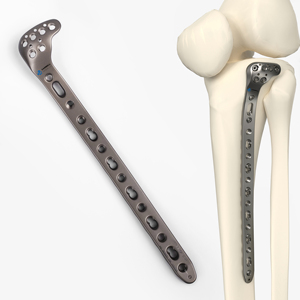
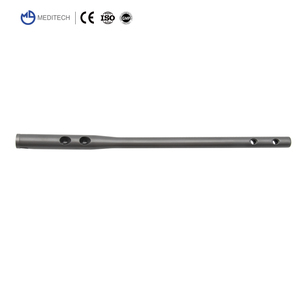
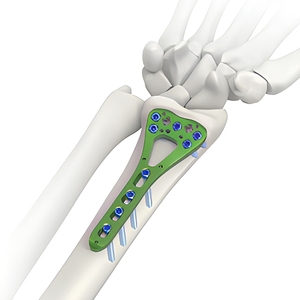
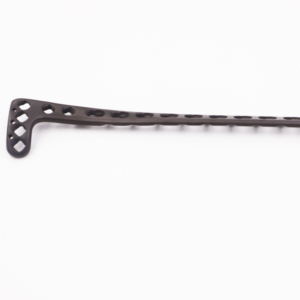
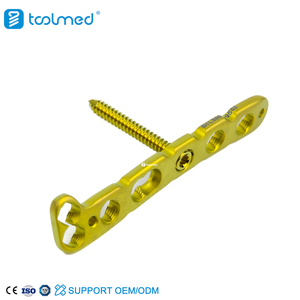
Trauma Fracture Fixation Systems: Fracture management demands biomechanical stability, anatomical contouring, and minimal soft tissue disruption. Variable Angle (VA) Locking Compression Plate (LCP) systems allow surgeons to direct locking screws up to 15 degrees off-axis, facilitating secure bicortical fixation in complex intra-articular periarticular fractures (such as distal radius, proximal tibia, and distal femur). Intramedullary Nailing Systems—such as the Ramic Proximal Femoral Nail (PFNA II/TRT11) and Tibial Intramedullary Nails—incorporate helical blades or dual interlocking screws designed to maximize rotational stability in osteoporotic bone.
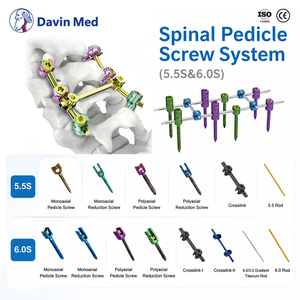
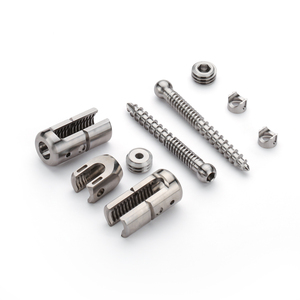
Spinal Reconstruction & Interbody Fusion: Spinal trauma, degenerative disc disease, and scoliosis corrections demand uncompromising mechanical endurance. Modern posterior thoracolumbar fixation systems utilize 5.5mm / 6.0mm polyaxial pedicle screws manufactured from high-strength Ti-6Al-4V ELI titanium alloy, capable of enduring millions of flexural fatigue cycles (tested under ASTM F1717 protocols). Interbody fusion cages—including Anterior Cervical Discectomy and Fusion (ACDF), Transforaminal Lumbar Interbody Fusion (TLIF), and Extreme Lateral Lumbar Interbody Fusion (XLIF)—are produced using bio-inert PEEK-OPTIMA or 3D-printed porous trabecular titanium to promote rapid bone ingrowth and osseointegration.
Craniomaxillofacial (CMF) & Veterinary Orthopedics: In CMF trauma and reconstructive surgery, low-profile 1.5mm to 2.0mm micro-plates require exceptional ductility and malleable memory to match complex skull and mandibular anatomy. Simultaneously, the global growth in veterinary orthopedics has accelerated demand for dedicated animal plate systems (such as the Lovan system), providing veterinary surgeons with tailored implants and mini-instrument sets for feline and canine fracture repair.
3. Future Technological & Procurement Trends in Orthopedic Exporters
Evaluating an orthopedic implant exporter requires understanding the technological trajectories shaping the next decade of surgical care. Key industry innovations include:
Additive Manufacturing & Bio-Mimetic Lattices
Direct Selective Laser Melting (SLM) and Electron Beam Melting (EBM) enable the direct fabrication of porous trabecular titanium implants. Featuring pore sizes between 300 to 600 microns, these 3D printed cages mimic native cancellous bone architecture, eliminating the need for plasma-sprayed coatings and significantly reducing stress shielding.
Patient-Specific Implants (PSI) & Digital Surgery
Integration of preoperative 3D CT scanner DICOM datasets directly with CAD/CAM software allows rapid production of customized resection guides and patient-specific CMF or oncological reconstruction plates, cutting intraoperative time by up to 30%.
Bioabsorbable Metallurgical Alloys
Research into magnesium-zinc-calcium (Mg-Zn-Ca) bioabsorbable alloys offers a future alternative to permanent titanium hardware in pediatrics and minor fracture repairs, allowing hardware to safely degrade post-union and eliminating secondary removal surgeries.
MDR Technical Dossier & Traceability Integration
Global buyers are shifting away from uncertified suppliers toward exporters providing complete regulatory technical files, ISO 14644 Class 7 cleanroom packaging, bioburden testing, and UDI (Unique Device Identification) barcode laser marking on every individual screw and plate.
4. Enterprise Manufacturing Standards & Quality Infrastructure
A trustworthy China orthopedic exporter must operate under uncompromising quality control standards. Standard operational protocols at top-tier facilities involve multi-stage testing:
1. Raw Material Verification: Every batch of bar stock or raw titanium plate is accompanied by EN 10204 3.1 chemical composition and mechanical strain test certificates, followed by internal spectrographic re-validation.
2. Precision Machining: Precision tolerances down to ±0.005mm are maintained using multi-axis Swiss-type automatic CNC lathes and high-speed milling centers.
3. Surface Treatment & Passivation: Anodizing, electrochemical polishing, and chemical passivation according to ASTM F86 standards ensure the formation of a durable titanium oxide surface layer, minimizing metal ion leaching.
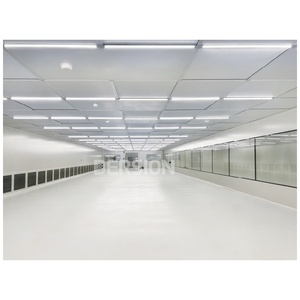
4. Cleanroom Packaging & Sterilization: Implants are ultrasonically cleaned and double-blister packed in ISO Class 7 (Class 10,000) cleanrooms before undergoing validated Gamma Irradiation or Ethylene Oxide (EO) sterilization under ISO 11137 / ISO 11607 protocols.
Frequently Asked Procurement Questions
Essential answers for hospital procurement managers, regulatory affairs specialists, and global medical device distributors sourcing from China.
Which international quality certifications do modern China orthopedic exporters hold? +
Can Chinese manufacturers support OEM, ODM, and customized implant development? +
What is the typical lead time and order fulfillment process for international shipments? +
How are raw materials and production batches traced throughout manufacturing? +
What support is provided to global distributors during hospital tender applications? +
Can prospective international buyers visit and audit the manufacturing facility? +
Partner with China's Premier Orthopedic Manufacturer
Accelerate your market expansion with certified, high-precision trauma, spine, CMF, and surgical instrument systems. Request our complete 2025 product catalog, technical dossier samples, or OEM project consultation today.