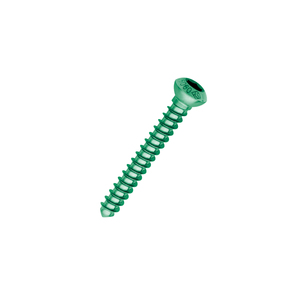
Direct Manufacturer Catalog
Featured Orthopedic Implants & Surgical Instrumentation
Explore our direct factory product series manufactured under strict ISO 13485 and CE quality management systems. Engineered with medical-grade Titanium Alloy (Ti6Al4V ELI) and Surgical Stainless Steel (316L) for superior biological performance and clinical safety.
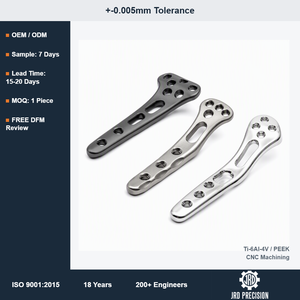
Medical Grade Orthopedic Implant Precision 5 Axis CNC Machining ±0.005mm Titanium Ti6Al4V ISO 9001 CMM Certified Custom OEM ODM
Get Catalog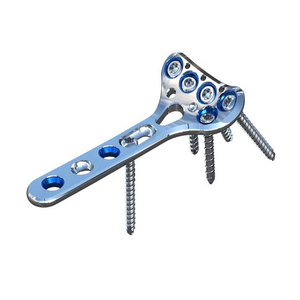
Medical Instruments Bone Surgical Kit Orthopedic Implants High Quality Orthopedic Surgical Spine Implants
Get Catalog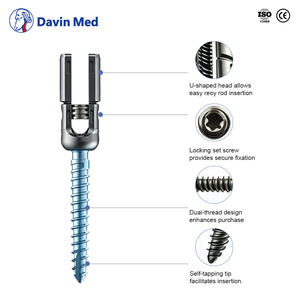
DavinMed CE/ISO Spine Polyaxial Pedicle Screw Long Tail Titanium Orthopedic Implant Sterile Packaging Anodized Surface Finish
Get Catalog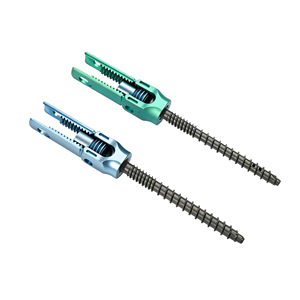
Percutaneous Titanium Alloy Pedicle Screw, Minimally Invasive Orthopedic Spinal Implant for Thoracic & Lumbar Spine
Get Catalog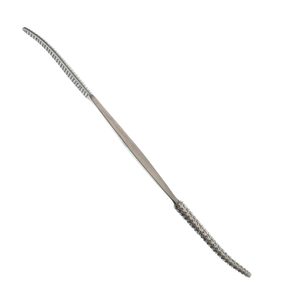
Curved Ends Stainless Steel Orthopedic Surgical Bone File
Get Catalog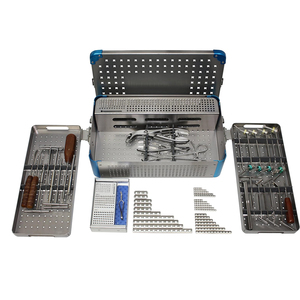
Tegra Surgical Locking Plate Screw Orthopedic Implants Instrument Set Manual Top Value Trauma Stainless Steel Veterinary Bone
Get Catalog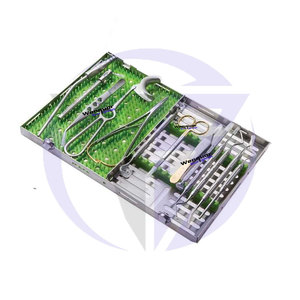
High Grade 13 Pcs Manual Dental Implant Orthopedic Surgical Set Stainless Steel CE Certified Direct Manufacturer Supplier
Get Catalog30,000m²
Modern Manufacturing Base
30+
Advanced Production Lines
350,000+
Annual Piece Capacity
30+
Global Export Markets
Industry Whitepaper Analysis
China Direct-Factory Orthopedic Manufacturing: Technical Standards & E-E-A-T Authority
In the rapidly evolving global healthcare ecosystem, international medical device distributors and hospital procurement syndicates are increasingly bypassing conventional trading intermediaries to establish direct partnerships with specialized Chinese orthopedic manufacturers. Headquartered in Changzhou, Jiangsu Province—universally recognized as China’s premier orthopedic industrial manufacturing cluster—our facility represents the pinnacle of medical-grade precision manufacturing, regulatory compliance, and biological material innovation.
Founded in 2009 and executing a strategic consolidation toward high-end orthopedic implant R&D since 2013, our corporate infrastructure combines over 15 years of metallurgical expertise with rigorous international quality standards. Holding accredited ISO 13485 Quality Management System certification, CE Marking, and FDA 510(k) clearances, we empower global healthcare partners by delivering high-precision spinal, trauma, craniomaxillofacial (CMF), and veterinary implant systems directly from our state-of-the-art production floors.
Sub-Micron Machining Precision & 5-Axis CNC Infrastructure
Implant biological success relies entirely on structural micro-geometry and surface integrity. Our manufacturing workshop houses over 150 sets of international advanced machining and testing systems, including Swiss-type automatic lathes and DMG MORI 5-axis CNC machining centers. We consistently achieve precision tolerances within ±0.005mm, verified via 3D German Zeiss Coordinate Measuring Machines (CMM) and optical profile projectors.
Medical-Grade Metallurgical Traceability & Biocompatibility
We source exclusively high-tier bio-metals: Ti-6Al-4V ELI (ASTM F136 / ISO 5832-3) for weight-bearing spinal pedicle screws and interbody cages, alongside Medical Grade Stainless Steel 316L (ASTM F138 / ISO 5832-1) for trauma plates and surgical files. Every raw material heat batch undergoes mandatory spectroscopic chemical analysis, tensile yield testing, and microstructural metallography to guarantee absolute fatigue resistance in clinical load-bearing environments.
ISO Class 7 Cleanroom & Full Packaging Integrity
To eliminate pyrogenic risks, final ultrasonic cleaning, assembly, and blister sealing are conducted in a certified Class 100,000 (ISO Class 7) cleanroom environment. Products are packed in medical-grade Tyvek pouch packaging compatible with Ethylene Oxide (EO) or Gamma irradiation sterilization, providing a guaranteed 5-year sterile shelf life for global export distribution.
Future Technological Trends
Technological Development & Sourcing Trends in Orthopedic Engineering
As clinical requirements transition toward minimally invasive procedures and customized anatomical reconstruction, orthopedic implant manufacturing is experiencing four major technological shifts.
1. Additive Manufacturing & 3D-Printed Trabecular Structures
Traditional smooth PEEK cages are rapidly losing market share to 3D-printed porous titanium cages. Utilizing Selective Laser Melting (SLM) technology, modern manufacturers construct biomimetic trabecular structures with controlled 60-70% porosity and pore sizes of 400-600 microns. This geometry mimics human cancellous bone, significantly reducing elastic modulus mismatch, mitigating stress shielding, and accelerating early bony osseointegration without requiring biological bone grafts.
2. Variable-Angle (VA) Locking Plate Systems
Fixed-angle locking compression plates (LCP) are evolving into Variable-Angle (VA) Locking Plate Systems. By incorporating multi-directional threaded bushing holes, surgeons gain up to 15° to 30° of polyaxial screw trajectory freedom. This design allows precise screw placement away from intra-articular spaces and joint surfaces while maintaining rigid anatomical fixation in complex comminuted articular fractures.
3. Advanced Bioactive Surface Modifications
Simple anodization is giving way to electrochemical functionalization. Techniques such as Type II Anodization (Hard Anodization) and Micro-Arc Oxidation (MAO) produce dense TiO2 ceramic layers that enhance scratch resistance during screw insertion. Furthermore, nanoscale Hydroxyapatite (HA) coating applications significantly improve implant-to-bone contact ratios in osteoporotic bone conditions.
4. Minimally Invasive Surgery (MIS) Systems
With healthcare providers shortening post-operative hospital stays, demand for Percutaneous Spinal Pedicle Screw Systems and retro-grade intramedullary nails has surged. Factory-direct suppliers must provide extended-length removable screw extension towers, cannulated drills, and radiolucent carbon-fiber insertion instruments designed for fluoroscopy-guided percutaneous delivery.
Procurement Strategy Comparison
Direct Factory OEM vs. Traditional Supply Chain Intermediaries
A detailed breakdown for hospital directors and medical brand owners evaluating procurement economics and regulatory risk management.
| Evaluation Criterion | Direct Chinese Factory Manufacturer | Third-Party Commercial Intermediary |
|---|---|---|
| Landed Unit Procurement Cost | Direct factory pricing (30-50% savings via eliminated margins) | Inflated prices due to multi-tiered markup percentages |
| OEM / ODM Design Flexibility | Direct collaboration with R&D engineers, rapid prototype tooling | Restricted to static stock items; customized engineering unavailable |
| Regulatory Dossier Support | Full STED technical files, raw testing data (ISO 10993, ASTM F1717) | Basic product sheets; limited access to primary lab testing reports |
| Quality Control & Batch Traceability | 100% individual piece measurement via automated CMM & laser coding | Random spot-checks without direct oversight of factory production |
| Standard Production Lead Time | 15-day expedited dispatch for standard inventory lines | 30 to 90 days dependent on secondary distributor stock availability |
Technical & Sourcing FAQ
Frequently Asked Questions by Medical Device Procurement Officers
Clear answers regarding regulatory compliance, metallurgical specifications, OEM minimum order quantities, and factory audit procedures.
Which specific international medical certifications do your orthopedic implants possess?
Our complete manufacturing operation operates under an audited ISO 13485 Quality Management System. Our core spinal systems (pedicle screws, ACDF/TLIF cages) and trauma locking plate lines hold CE Certificates (under EU MDR framework) and selected FDA 510(k) clearances in the United States. We provide qualified international distributors with complete STED technical dossiers, Declaration of Conformity (DoC) documents, ISO 10993 biological evaluation reports, and sterile validation studies to support fast registration in local ministries of health.
What raw material grades are utilized for your spinal and trauma products?
We strictly utilize medical-grade raw materials conforming to international standards:
• Titanium Alloys: Ti-6Al-4V ELI (Extra Low Interstitial) conforming to ASTM F136 and ISO 5832-3, chosen for exceptional fatigue strength and fracture toughness.
• PEEK Cages: Implantable Grade PEEK (Polyetheretherketone) conforming to ASTM F2026, offering radiolucency and an elastic modulus closely matching human cortical bone.
• Surgical Stainless Steel: High-purity 316L VM conforming to ASTM F138 / ISO 5832-1 for bone instruments and trauma constructs.
What are your minimum order quantities (MOQ) and lead times for OEM/ODM orders?
For standard catalog items (such as cortical bone screws, standard locking plates, and pedicle screw constructs), we maintain robust safety stock levels, enabling order dispatch within 15 calendar days. For custom OEM/ODM projects requiring private label laser marking, custom anodization colors, or modified plate geometries, initial prototype batch lead times range between 3 to 4 weeks depending on design complexity and tooling requirements.
How do you conduct biomechanical load testing on new implant designs?
Every newly engineered implant system undergoes rigorous static and dynamic fatigue testing in our in-house mechanical testing laboratory prior to commercial release. Testing protocols strictly follow international standards:
• Spinal Implants: ASTM F1717 (Static and dynamic flexural fatigue of spinal construct assemblies).
• Interbody Fusion Cages: ASTM F2077 (Static and dynamic compression and shear testing).
• Bone Screws: ASTM F543 (Axial pullout strength, driving torque, and torsional yield strength).
Can foreign distributors visit and audit your manufacturing plant in China?
Yes. We welcome facility audits by hospital procurement committees, regulatory auditors, and prospective distribution partners. Our manufacturing center is located at No.2 Longqing Road, Wujin Hi-tech Zone, Changzhou City, Jiangsu Province, China (approximately 1 hour from Shanghai via high-speed rail). We provide full airport transfer support, factory tours of our CNC machining halls and Class 100,000 cleanrooms, and technical sessions with our senior R&D engineering staff.
Do you offer customized surgical instrument container trays for specialized surgical sets?
Absolutely. Complete surgical kits require ergonomic, intuitive instrumentation. We engineer and manufacture matching, autoclavable hard-anodized aluminum or PPSU plastic surgical instrument cases. Trays feature custom silicone positioning brackets, dual-layer storage layout, clear laser-etched graphic labeling, and full compatibility with hospital steam autoclave sterilization protocols.
Partner with China's Premier Direct Orthopedic Implants Manufacturer
Elevate your market competitiveness with CE and ISO 13485 certified spine, trauma, CMF, and veterinary surgical implants directly from our factory floor. Download our complete product catalog or request a customized OEM quotation today.