Featured FDA & CE Certified Orthopedic Implants
High-precision orthopedic implant systems manufactured under strict ISO 13485 QMS protocols for international surgical supply distributors and hospital procurement.
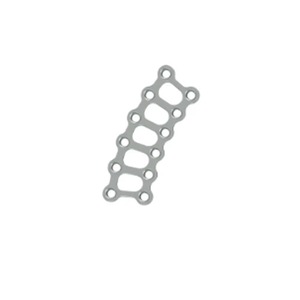
Wholesale Orthopedic Implants Export Quality Surgical Implant
Precision-machined internal fixation implants constructed from high-tensile titanium alloy. Engineered for optimal biomechanical stability.
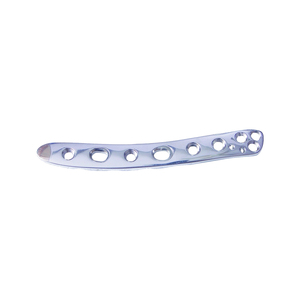
Stainless Steel Orthopedic Implants CE Certified Lightweight
Biocompatible 316L medical stainless steel trauma plates. Features anatomical contours and customized screw hole profiles.
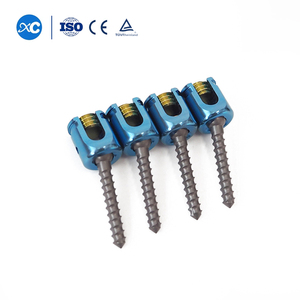
Veterinary Polyaxial Spine Pedicle Screw Titanium Implant
Polyaxial pedicle screw system delivering friction-head insertion and multi-angle angulation for complex spinal stabilization.
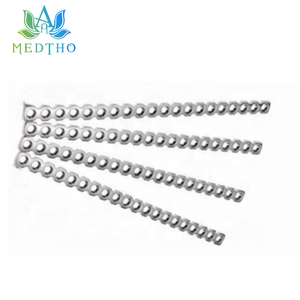
Straight Reconstruction Plate 1.5/2.0/2.4/2.7/3.5mm CE ISO
Low-profile cuttable reconstruction plates engineered for precise fragment reduction in veterinary and human clinical trauma applications.
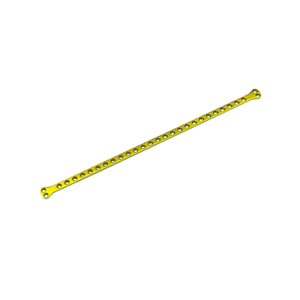
Veterinary Titanium Double T Cuttable Plate CE Certified
Versatile double-T design offering adaptable contouring for corrective osteotomies and complex articular fracture repair.
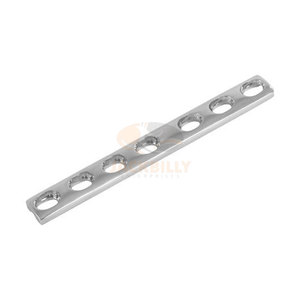
Premium Orthopedic Bone Implants & Manual Surgical Instruments
Complete ergonomic surgical instrument sets manufactured to stringent international tolerances for seam-less operative workflows.
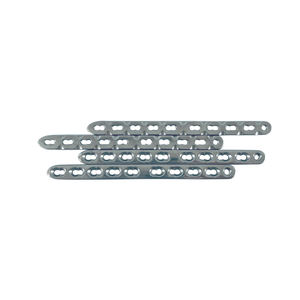
Veterinary Orthopedic Implant 3.5mm System CE Certified
Heavy-duty 3.5mm stainless steel plating system designed for high load-bearing anatomical stabilization and rapid osteosynthesis.
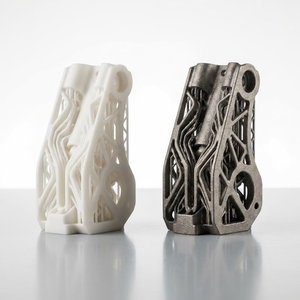
ISO 13485 Biocompatible Titanium SLM 3D Printed Bone Implants
Advanced porous trabecular structure manufactured via Selective Laser Melting (SLM) to promote rapid bone ingrowth and integration.
1. Strategic Overview: The Landscape of Chinese Orthopedic Device Manufacturing
The global demand for high-performance orthopedic implants—spanning spinal trauma, joint reconstruction, craniomaxillofacial (CMF) fixation, and veterinary orthopedics—has undergone a structural evolution. Overseas medical device distributors, group purchasing organizations (GPOs), and private-label OEMs are increasingly turning to China's specialized medical device manufacturing hubs. Among these, the Changzhou Wujin Hi-Tech Industrial Zone in Jiangsu Province stands as China’s recognized center of orthopedic innovation and mechanical excellence.
Sourcing from China wholesale FDA-approved orthopedic implant factories allows international partners to reconcile two historically competing priorities: uncompromising biomechanical quality and operational cost containment. Supported by complete regional industrial supply chains, advanced 5-axis CNC Swiss-type machining centers, and comprehensive regulatory alignment (CE MDR, FDA 510(k), ISO 13485:2016), established manufacturers like Trauhui Medical deliver medical devices that conform strictly to international standards such as ASTM F136 (Ti-6Al-4V ELI) and ASTM F138 (316L Implant Grade Stainless Steel).
Executive Information Gain Key Takeaway
Procuring orthopedic implants directly from certified Chinese manufacturers reduces landed unit acquisition costs by 35% to 55% compared to Western OEMs, without compromising structural fatigue resistance, dimensional tolerances (±0.005mm), or surface biocompatibility.
2. Material Science & Biomechanical Metallurgy in Orthopedic Implants
The clinical efficacy of internal fixation hardware relies heavily on raw material purity, surface passivation, and fatigue strength. Leading Chinese factories maintain strict metallurgical validation protocols, ensuring every batch of raw material undergoes spectral analysis and mechanical property verification before entering production lines.
2.1 Titanium Alloy (Ti-6Al-4V ELI / ASTM F136) vs. Stainless Steel (316LVM / ASTM F138)
Selecting the appropriate biomaterial depends on the surgical indication, biomechanical load demands, and patient-specific factors:
- Grade 5 Titanium Alloy (Ti-6Al-4V ELI): Possesses an elastic modulus (~110 GPa) closer to human cortical bone (~18-20 GPa) than stainless steel, significantly mitigating stress shielding. Titanium offers superior corrosion resistance, artifact-free MRI compatibility, and ideal cell-adhesion properties for permanent load-bearing implants like spinal pedicle screws, interbody cages, and intramedullary nails.
- 316LVM Medical Grade Stainless Steel: Vacuum arc remelted stainless steel provides exceptional yield strength and ductility. It remains the gold standard for temporary trauma fixation plates, pediatric fracture stabilization, external fixators, and cost-effective veterinary orthopedic systems.
| Biomaterial Standard | Yield Strength (MPa) | Tensile Strength (MPa) | Elastic Modulus (GPa) | Primary Clinical Applications |
|---|---|---|---|---|
| Titanium Ti-6Al-4V ELI (ASTM F136) | ≥ 795 MPa | ≥ 860 MPa | 110 GPa | Spinal Pedicle Screws, Interbody Cages, PFNA Nails |
| Stainless Steel 316LVM (ASTM F138) | ≥ 690 MPa | ≥ 930 MPa | 193 GPa | Trauma Plates, Locking Screws, External Fixator Rings |
| PEEK Optima (ASTM F2026) | ≥ 110 MPa | ≥ 170 MPa | 3.6 GPa | ACDF & TLIF Spinal Fusion Cages (Radiolucent) |
| SLM Porous Titanium (3D Printed) | Engineered | Engineered | 2.5 - 4.5 GPa | Trabecular Osseointegrative Cages & Bone Scaffolds |
3. Product Category Deep-Dives & Clinical Engineering
3.1 Spinal Fixation & Interbody Fusion Systems
Spinal surgery requires zero-tolerance precision. Top-tier Chinese manufacturers produce broad-spectrum spinal implants designed for cervical, thoracic, and lumbar reconstruction:
- Cervical Intervertebral Disc Systems & ACDF Cages: Designed to maintain anatomical disc height while preserving natural segment mobility or promoting solid anterior cervical discectomy fusion. Anatomical teeth profiles prevent postoperative cage migration.
- TLIF / XLIF / PLIF Fusion Cages: Available in radiolucent PEEK, solid titanium, and additive-manufactured 3D titanium. Bullet-nosed leads facilitate easy insertion in minimally invasive spine surgery (MISS).
- Selective Laser Melting (SLM) 3D Printed Titanium Cages: Incorporates continuous porous trabecular structures with 60%–70% interconnected porosity, creating an ideal micro-environment for rapid osteoblast attachment and vascularization.
- Posterior Thoracolumbar Pedicle Screw Systems: Feature low-profile friction-fit heads, self-tapping double-lead threads, and polyaxial angulation up to 50 degrees to minimize intraoperative screw-rod alignment complexity.
3.2 Trauma Fixation Systems & Intramedullary Nailing
Trauma fixation accounts for the largest volume in global orthopedic procurement. Advanced Chinese factories specialize in comprehensive anatomical plating and closed intramedullary nailing systems:
- Proximal Femoral Nail Antirotation (PFNA / TRT11): Engineered specifically for unstable trochanteric fractures. The helical blade compacts cancellous bone rather than removing it, providing superior cut-out resistance in osteoporotic bone.
- Variable Angle Locking Compression Plates (VABP): Feature combi-holes allowing both dynamic axial compression and angular stable locking screw insertion at ±15° trajectories, optimizing articular fragment reduction.
- Tibial, Femoral, and Humeral Intramedullary Nails: Cannulated intramedullary systems designed for reamed or unreamed insertion, featuring multi-planar distal locking options for metaphyseal stabilization.
- Circular & Monolateral External Fixation: High-rigidity carbon fiber rings and aluminum alloy connectors engineered for complex open fracture stabilization, limb lengthening, and non-union management.
3.3 Craniomaxillofacial (CMF) Plating Systems
Craniomaxillofacial implants demand micro-scale engineering. Medtrix CMF lines feature 1.5mm, 2.0mm, and 2.4mm titanium mesh, L-plates, Y-plates, and chin plates designed with ultra-low plate-screw profiles (below 0.6mm) to eliminate soft-tissue palpability in cranial and midface reconstruction.
3.4 Veterinary Orthopedic Implants
Veterinary orthopedics represents a rapidly expanding market worldwide. Factories like Trauhui Medical supply specialized veterinary lines—including Lovan animal plate systems, TPLO (Tibial Plateau Leveling Osteotomy) plates, double-T cuttable plates, and mini 1.5/2.0mm locking systems—designed for canine, feline, and equine orthopedic procedures.
Future Sourcing Trends (2025–2030): Technical & Operational Insights
The global medical supply chain is undergoing four major structural shifts that strategic procurement officers must navigate:
- Additive Manufacturing (3D Printing) Hegemony: Transitioning from conventional subtractive CNC milling of cages to Selective Laser Melting (SLM). 3D printed lattice implants eliminate the need for secondary HA (Hydroxyapatite) coatings by creating inherently osteoconductive surfaces.
- Regulatory Harmonization (FDA 510k & CE MDR Compliance): Global buyers are consolidating vendor bases around factories holding verified FDA 510(k) clearances and ISO 13485 QMS audits to streamline local registration in LATAM, Southeast Asia, the Middle East, and Europe.
- Integrated Surgical Instrument Sets: High-margin contracts are increasingly awarded to suppliers capable of delivering standardized, color-coded stainless steel instrument trays paired directly with matching implant implants.
- OEM / ODM Customization Speed: Leading Chinese exporters now offer full turn-key private-labeling, taking custom implant geometries from CAD drawings and FEA (Finite Element Analysis) testing to prototype validation within 30 to 45 days.
4. Vendor Qualification Framework: How to Audit a Chinese Orthopedic Factory
When evaluating a potential manufacturing partner in China, global buyers must apply a rigorous quality management system (QMS) audit process covering three essential tiers:
1. Regulatory Traceability
Verify valid ISO 13485:2016 certification issued by accredited notified bodies (e.g., TÜV Rheinland, TÜV SÜD). Ensure raw materials possess Mill Test Certificates (MTC) matching ISO 5832 or ASTM specifications.
2. Biomechanical Testing
Confirm the manufacturer conducts dynamic fatigue testing (ASTM F2077 for cages, ASTM F1717 for spinal constructs, ASTM F382 for metallic bone plates) utilizing dynamic axial testing rigs to establish 5-million-cycle endurance limits.
3. Cleanroom & Packaging
Audit Class 100,000 (ISO Class 8) cleanrooms for primary packaging. Ensure automated ultrasonic cleaning lines and medical-grade Tyvek pouch sealing conform to ISO 11607 sterile packaging requirements.
5. Enterprise Profile & Technical Capabilities (Trauhui Medical)
Founded in 2009 and headquartered in Changzhou, China, Trauhui Medical Co., Ltd. has established itself as an elite manufacturer of orthopedic implants and matching surgical instruments. With total industrial investments exceeding RMB 200 million, Trauhui Medical operates modern facility space spanning over 30,000 square meters.
Equipped with over 150 sets of advanced CNC machining equipment—including Swiss DMG MORI 5-axis machining centers, Citizen longitudinal lathes, and high-precision Coordinate Measuring Machines (CMM)—the facility maintains an annual production output exceeding 350,000 sets of implants. Trauhui Medical’s robust quality management system is certified under ISO 13485, with multiple product lines holding CE certifications and FDA 510(k) clearances, serving medical distributors across more than 30 countries in Europe, the Americas, the Middle East, and Southeast Asia.
Frequently Asked Sourcing Questions
Clear, authoritative answers to critical compliance, technical, and logistics questions raised by medical device buyers.
Which regulatory certifications do your orthopedic implants hold for international markets?
Our orthopedic manufacturing facility operates under an audited ISO 13485:2016 Quality Management System. Selected spine, trauma, and joint product lines hold official CE marking (under EU MDD/MDR transition) and FDA 510(k) clearances. Full technical dossiers (STED), biocompatibility test reports (ISO 10993 series), dynamic fatigue test data, and Certificate of Analysis (CoA) documentation are provided to authorized distributors to support local Ministry of Health (MOH) registrations.
What are the raw material grades utilized for titanium and stainless steel implants?
We source medical-grade biomaterials directly from certified global suppliers. Metallic implants utilize titanium alloy Ti-6Al-4V ELI conforming strictly to ASTM F136 / ISO 5832-3. Stainless steel implants utilize high-purity vacuum arc remelted 316LVM stainless steel conforming to ASTM F138 / ISO 5832-1. Non-metallic interbody fusion cages utilize PEEK-OPTIMA Natural conforming to ASTM F2026. Every raw material lot is accompanied by complete mill test certificates.
Does your factory provide OEM, ODM, and custom private-label packaging services?
Yes. We offer complete OEM and ODM customization services for global brand owners and healthcare groups. Our in-house engineering team assists partners at every development phase—from CAD design modifications and FEA structural simulations to rapid prototyping, custom surgical instrument design, laser etching, and customized sterile/non-sterile Tyvek packaging design.
What is the standard production lead time and order fulfillment timeline?
For standard SKU catalog inventory (such as standard PFNA nails, locking plates, and spine screws), orders are typically dispatched within 15 business days. For bulk OEM orders or custom ODM implant developments, production timelines range between 30 to 45 days, depending on tooling requirements, specialized surface treatments, and batch packaging specifications.
How do you ensure mechanical fatigue resistance and quality control?
Quality assurance is embedded at every manufacturing stage. We operate dedicated testing laboratories equipped with multi-axis dynamic fatigue testing machines (evaluating pedicle screws under ASTM F1717 and cages under ASTM F2077 up to 5,000,000 cycles without failure). Production quality control includes 100% optical CMM dimensional inspection, surface roughness testing, and Class 100,000 cleanroom bioburden monitoring.
What is the minimum order quantity (MOQ) requirement for wholesale buyers?
We maintain flexible MOQ policies to support both regional medical distributors and enterprise-level GPO procurement. For standard stocked implant SKUs, initial trial sample orders require low MOQs. For customized OEM private-label production runs, specific MOQ thresholds apply based on raw material batch requirements and CNC machining setup parameters.
Do you manufacture matching surgical instruments for implant placement?
Absolutely. Every implant system—whether spinal pedicle screw systems, intramedullary nails, locking plates, or CMF kits—is accompanied by a dedicated, reusable surgical instrument set. Instruments are crafted from surgical-grade stainless steel and aluminum alloy sterilization trays, designed for ergonomic handling and repeated autoclave cycles.
Can international procurement teams schedule physical or virtual factory audits?
We welcome physical facility audits at our manufacturing headquarters in the Wujin Hi-Tech Zone, Changzhou, Jiangsu, China. For international clients unable to travel immediately, we offer live virtual video audits led by our quality assurance directors, covering our CNC machining workshops, cleanroom facilities, testing labs, and warehouse logistics centers.
Request the Complete FDA/CE Orthopedic Catalog
Connect directly with our senior medical device engineering team. Receive detailed technical specifications, regulatory registration files, and competitive wholesale pricing for your market.