Featured ISO 13485 Certified Implants & Surgical Instruments
Direct-from-factory wholesale medical solutions manufactured under strict ISO 13485, CE, and FDA 510(k) quality management standards for global medical distributors and hospital networks.
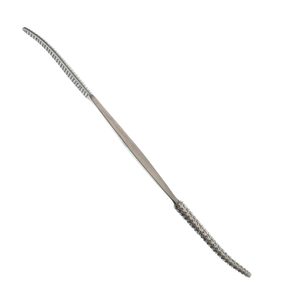
Curved Ends Stainless Steel Orthopedic Surgical Bone File
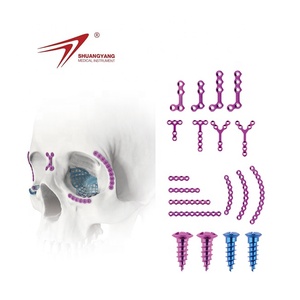
Orthopedic Implant Crainal Skull Surgical Plate And 1.5/2.0 Self -Drilling Screw
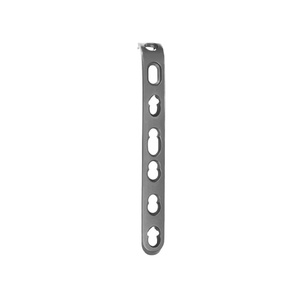
Davin Med MEDICAL Titanium Multi Axial Ulna Olecranon Locking Plate II Class III Orthopedic Trauma Implant
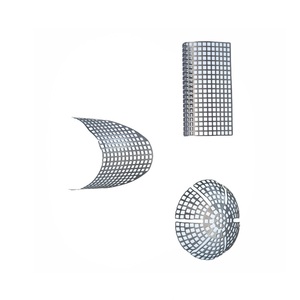
Competitive Price Titanium Alloy Material MESH Orthopedic Implants for Hospital
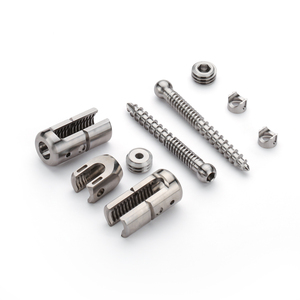
JZC High-quality Orthopedic Spinal Implant Posterior Thoracolumbar Nailing and Rod Fixation System Titanium Alloy
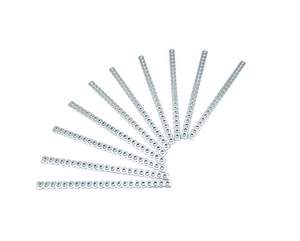
High Quality DCP Recon Orthopedic Implants 2.7mm Plate Veterinary Instruments CE Approved Lot of 10 Pcs
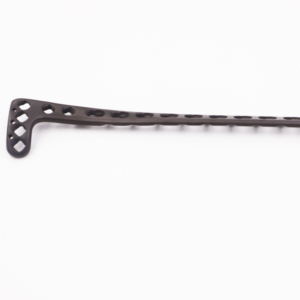
Factory Supply Discount Price CE Certified Titanium Orthopedic Instruments Multi-Axial Distal Tibial Anterolateral Locking
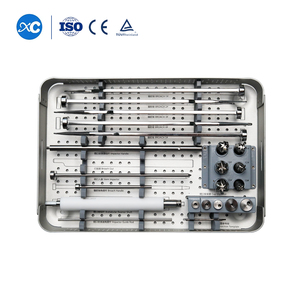
XC MEDICO Premium MINI Double Action Hip System-Veterinary Orthopedic Implants for Animal Hip Joint Prosthesis Surgery
Executive Whitepaper: Strategic Sourcing of ISO 13485 Orthopedic Implants
An authoritative analysis on raw material metallurgy, manufacturing quality assurance, cleanroom compliance, and regulatory risk mitigation for international medical device importers.
Metallurgical Integrity & Biocompatibility Standards
When evaluating a wholesale orthopedic manufacturer in China, compliance with ISO 13485 is only the baseline entry barrier. Medical buyers must scrutinize raw material origin and chemical consistency. Premium implants utilize Titanium Alloy Grade 5 (Ti-6Al-4V ELI / ASTM F136) and Implant-Grade PEEK (Polyetheretherketone) to guarantee maximum tensile strength, fatigue resistance, and ideal modulus of elasticity matching human cortical bone.
Leading manufacturing facilities implement complete chemical spectral analysis and mechanical tensile testing for every titanium billet batch. Traceability from raw bar stock to finished sterile-packaged plate or pedicle screw ensures zero micro-voids, eliminating in-vivo structural fatigue failures.
Precision Machining & Surface Modification
Modern orthopedic manufacturing relies on multi-axis CNC Swiss-type lathes and 5-axis machining centers (such as DMG MORI and Citizen). These systems achieve manufacturing tolerances within ±0.005mm for complex geometries like multi-axial locking screw threads, anatomical volar plates, and expandable interbody fusion cages.
Advanced surface treatment processes—including Type II Anodization for enhanced friction coefficients, Type III Hard Color Anodization for color-coded surgical identification, and Micro-arc Oxidation (MAO)—drastically reduce ion leaching while promoting rapid osteoblast adhesion and trabecular osseointegration.
| Material Designation | Standard Specification | Tensile Strength (MPa) | Primary Clinical Application | Biomechanical Advantage |
|---|---|---|---|---|
| Titanium Ti-6Al-4V ELI | ASTM F136 / ISO 5832-3 | ≥ 860 MPa | Spinal Pedicle Screws, Trauma Locking Plates | High strength-to-weight ratio, excellent fatigue limits. |
| Unalloyed Titanium (Grade 2) | ASTM F67 / ISO 5832-2 | ≥ 345 MPa | CMF Reconstructive Mesh & Cranial Plates | High ductileness allowing precise intraoperative contouring. |
| PEEK-OPTIMA Natural | ASTM F2026 | ≥ 95 MPa | ACDF & TLIF Interbody Fusion Cages | Radiolucent profile; elastic modulus closely matches human bone. |
| 316L Stainless Steel | ASTM F138 / ISO 5832-1 | ≥ 860 MPa | External Fixators, Surgical Instruments & Files | Exceptional torsional stiffness and economical utility. |
Enterprise Infrastructure & Quality Ecosystem
Headquartered in Changzhou, Jiangsu—China's recognized hub for medical device innovation—Trauhui Medical Co., Ltd operates an integrated end-to-end manufacturing complex built specifically for international distribution scale.
15+ Years Specialized Manufacturing
Founded in 2009 and strategically pivoting in 2013 to focus exclusively on orthopedic device development, our engineering team has accumulated deep manufacturing know-how. Backed by over 200 million RMB in structural capital investment, our facility combines automated milling with rigorous hand-finishing expertise.
International Footprint & Mergers
To serve global markets effectively, Trauhui Medical acquired a specialized orthopedic equipment manufacturer in Hungary and established international holding structures in Hong Kong in 2017. This dual-arm approach ensures direct alignment with European CE MDR standards and rapid logistics for EMEA buyers.
ISO 13485 QMS & Regulatory Filing
Every production batch operates within an ISO 13485 audited Quality Management System. Complete Technical Files (STED), Risk Assessment Reports (ISO 14971), and Biocompatibility Dossiers (ISO 10993) are systematically updated to assist distributors with fast-track Ministry of Health (MOH) market registrations.
Full-Spectrum Product Architecture & OEM Capability
Our wholesale supply portfolio encompasses four major orthopedic disciplines, engineered as fully integrated matching systems of implants and dedicated surgical instruments.
1. Spinal Fixation & Interbody Systems
Designed to restore sagittal balance and stabilize degenerated or traumatized spinal segments. Core systems include:
- Thoracolumbar Fixation (JZC System): Top-loading polyaxial and monoaxial pedicle screws, low-profile cross connectors, and titanium rods.
- Cervical Arthroplasty (Coahard): Motion-preserving artificial cervical disc replacement preserving physiological range of motion.
- Interbody Fusion Cages (Coales Series): Comprehensive ACDF, TLIF, and XLIF cages available in radiolucent PEEK and 3D Printed Porous Titanium.
- Vertebral Augmentation (Carlon & Coapt): Balloon kyphoplasty inflation systems and expandable telescopic corpectomy cages for complex spine reconstruction.
2. Trauma & Fracture Fixation Systems
Extensive range of long-bone fracture management implants prioritizing anatomical conformity and stable internal fixation:
- Intramedullary Nailing (Ramic Series): Proximal Femoral Nails (TRT11 & PFNA II), Tibial Nailing, Humeral Nailing, and Retrograde Ankle Arthrodesis system.
- Anatomical Locking Plates (Cottey-MD): Variable-angle locking compression plates (LCP) for distal radius, proximal humerus, distal femur, and olecranon fractures.
- External Fixation (Titan-Fix): Modular circular ring fixators and linear external fixators for open complex fractures and limb lengthening procedures.
3. Craniomaxillofacial (CMF) Systems
Ultra-low profile micro, mini, and reconstruction plate-and-screw systems (Medtrix CMF line) crafted from pure titanium (Grade 2):
- 1.5mm / 2.0mm Micro Skull Plates: High malleability for precision facial fracture stabilization and orthognathic surgery.
- Self-Drilling Screws: Precision thread geometry allowing swift bone engagement without pre-drilling micro-fractures.
- Orbital & Mandibular Mesh: 3D-formable mesh implants for complex cranial defect reconstruction.
4. Veterinary Orthopedic Implants
Dedicated veterinary solutions (Lovan System) tailored specifically to small animal orthopedics and canine joint repair:
- TPLO & TTA Plating: Tibial Plateau Leveling Osteotomy plates for canine cranial cruciate ligament disease treatment.
- Micro & Mini LCP Systems: 1.5mm to 3.5mm dynamic compression plates for feline and canine trauma cases.
- Mini Double Action Hip Prosthesis: Specialized animal hip joint replacement systems engineered for small breeds.
Future Trends in Global Orthopedic Manufacturing
The global orthopedic implant market is undergoing a rapid evolution toward additive manufacturing, patient-specific customization, and enhanced biological integration.
1. Additive 3D Titanium Printing
Direct Metal Laser Sintering (DMLS) is replacing traditional machining for interbody fusion cages. 3D-printed titanium implants feature interconnected porous trabecular structures (60-70% porosity with 400-600μm pore size) that directly mimic human cancellous bone, dramatically accelerating bone ingrowth without requiring biological coatings.
2. Smart Bio-Coatings & Antimicrobial Surfaces
Post-operative infection prevention is driving adoption of surface-modified implants. Next-generation wholesale devices incorporate silver nanoparticle ion implantation, plasma-sprayed Hydroxyapatite (HA), and bio-absorbable polymer coatings that release localized antibiotics during initial healing phases.
3. Patient-Specific Implants (PSI) & OEM Agility
With 3D CT reconstruction software, surgeons increasingly demand patient-customized reconstructive plates for severe oncology and CMF cases. Chinese manufacturers equipped with rapid prototyping and agile ISO 13485 OEM pipelines can deliver custom implants in under 14 days, offering distributors a strong competitive edge.
Global B2B Procurement Strategy for Medical Distributors
Strategic insights for purchasing directors aiming to balance cost containment, regulatory safety, and lead-time reliability when sourcing from China.
Landed Cost Optimization & Inventory Risk Reduction
Sourcing directly from an established ISO 13485 manufacturer eliminates multi-tier trading margins, reducing landed unit costs by 35% to 55% compared to Western Tier-1 brands. However, cost reduction should never compromise supply chain continuity.
Leading manufacturers maintain safety stock levels for standard systems (e.g., standard trauma LCP plates and pedicle screws), enabling delivery dispatch within 15 days of order placement. This agile buffer stock model protects distributors against unexpected hospital tender spikes and reduces local warehousing overhead.
Regulatory File Auditing & OEM Private Labeling
Before committing to bulk contracts, procurement officers must verify that the factory's ISO 13485 scope explicitly includes both "Design and Development" and "Manufacturing" of active/non-active orthopedic implants.
Full-service OEM partners provide private-label laser marking (UDI compliance under US FDA and EU MDR), customized sterile barrier packaging (Tyvec blister pouches), and comprehensive Technical File access for local health authority registration in Latin America, Southeast Asia, the Middle East, and Eastern Europe.
Frequently Asked Questions (FAQ)
Critical procurement and technical compliance questions answered by our biomedical engineering and regulatory teams.
Accelerate Your Orthopedic Distribution Capabilities
Partner with China's premier ISO 13485 certified manufacturer. Access full product catalogs, CAD specifications, CE/FDA technical documentation, and factory-direct wholesale pricing.