Global Medical Supply Chain Excellence & Quality Standards
As an industry-leading ISO 13485 certified orthopedic implants factory and exporter in China, Trauhui Medical delivers certified, high-precision surgical solutions to healthcare distributors, hospital networks, and OEM/ODM brand owners in over 30 countries. Engineered in Changzhou—China's premier biomedical manufacturing hub—our comprehensive trauma, spine, craniomaxillofacial (CMF), and veterinary systems integrate cutting-edge 5-axis CNC machining, micro-metallurgical verification, and strict regulatory technical documentation for seamless market registration.
Featured ISO 13485 Orthopedic Implants & Precision Instruments
Explore our primary export catalog featuring medical-grade Titanium Alloy (Ti-6Al-4V ELI) locking plates, cannulated compression screws, intramedullary nails, scan bodies, and custom CNC components.
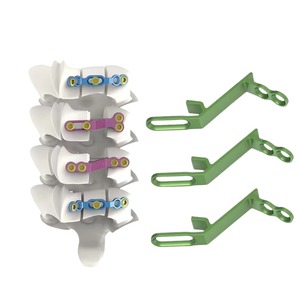
Pure Titanium Double-Bend Long-Hole Locking Plate
Anatomically contoured double-bend design engineered from biocompatible Grade 2 / Ti-6Al-4V for optimal shaft contouring and trauma fracture reduction.
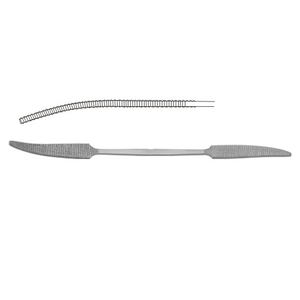
Professional Orthopedic Bone Files & Rasps Set
Crafted from German stainless steel with ultra-durable cutting teeth, ensuring smooth canal preparation and precise bone sculpting during arthroplasty.
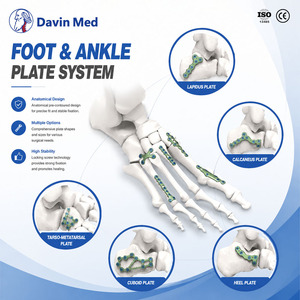
3.5mm Calcaneal Circumferential Locking Plate
Low-profile circumferential titanium locking construct optimized for multi-fragment intra-articular calcaneus fractures and rigid joint stabilization.
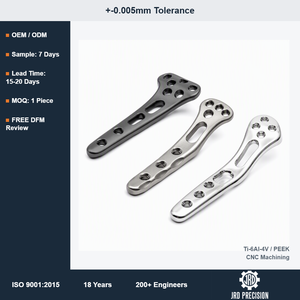
5-Axis CNC Precision Titanium Ti6Al4V Machined Components
Ultra-precise OEM/ODM contract machining with micro-tolerances down to ±0.005mm, verified via automated Coordinate Measuring Machines (CMM).
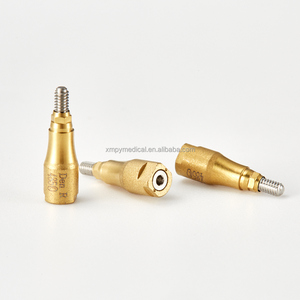
High Accuracy Implant Scan Body for Digital Workflow
PEEK-topped titanium scan posts providing exact optical recognition and micro-fit compatibility for digital impression restorative protocols.
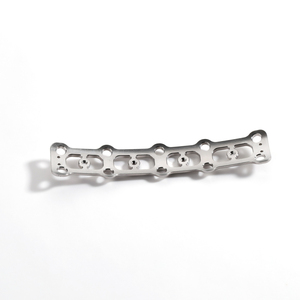
Titanium Alloy Bone Studs & Custom Machined Plates
Custom 3D CNC milled orthopedic hardware utilizing high-tensile titanium studs engineered for rigid segmental bone stability.
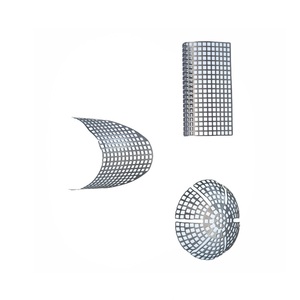
3D Titanium Alloy MESH Orthopedic Reconstruction Implants
Interconnected porous lattice mesh structures designed to mimic cancellous bone architecture and accelerate vascular osseointegration.
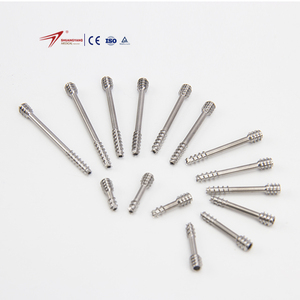
Titanium Cannulated Headless Compression Herbert Screws
Differential thread pitch headless screws facilitating intra-articular rigid interfragmentary compression for scaphoid and osteochondral fractures.
Enterprise Infrastructure & Technical Quality Controls
Founded in 2009 with a total investment exceeding RMB 200 million, Trauhui Medical operates as a fully integrated biomedical manufacturer specializing in design, rapid prototyping, dynamic biomechanical testing, and international export compliance.
ISO 13485 & CE Compliance
Every manufacturing step adheres strictly to the ISO 13485 Medical Quality Management System. Certified by TÜV Rheinland and audited for EU CE marking and US FDA 510(k) submission frameworks.
5-Axis CNC Swiss Machining
Equipped with 150+ high-end imported Swiss lathe turning centers (Citizen, Star) and 5-axis DMG MORI machining units capable of dimensional precision down to ±0.005mm.
Metallurgical Integrity & Passivation
We source medical-grade Ti-6Al-4V ELI (ASTM F136) and 316LVM Stainless Steel (ASTM F138). Automated Type II/III anodic oxidation ensures chemical inertness and vibrant color-coding.
In-House Biomechanical Lab
Fatigue life testing, static axial compression, and torsional rigidity evaluations performed in accordance with ASTM F1717 (Spinal Constructs) and ASTM F382 (Metallic Bone Plates).
Custom OEM / ODM Engineering
Dedicated R&D team of 30+ biomedical engineers providing rapid CAD/CAM modeling, custom sterile pouch packaging (ISO 11607), and turn-key private label manufacturing.
Optimized Lead Times & Consignment
Massive raw material inventory and stock buffers enable 15-day lead times for standard implant catalog orders, preventing stock-outs for hospital distribution partners.
Technological & Material Trends in Orthopedic Manufacturing
As clinical orthopedics transitions toward personalized, minimally invasive surgery (MIS) and bio-interactive fixation, wholesale implant manufacturers must lead technological breakthroughs in metallurgy, additive fabrication, and surface biomechanics.
1. Additive Manufacturing & Trabecular 3D Titanium
Traditional subtractive CNC machining creates solid metal surfaces that rely primarily on mechanical interlock. Modern clinical trends favor 3D printed porous titanium interbody cages (ACDF, TLIF, XLIF) featuring interconnected trabecular pore sizes ranging from 400µm to 700µm. This biomimetic geometry matches the elastic modulus of human cancellous bone (reducing stress shielding) while allowing early osteoblast migration and direct vascular bone ingrowth without secondary bone graft coatings.
2. Surface Engineering & Nanostructured Coatings
Implant failure is frequently tied to aseptic loosening or bacterial colonization. Next-generation factory exporters are implementing advanced surface modification techniques, including Electrochemical Anodization (Type II/III), Plasma-Sprayed Hydroxyapatite (HA) layers, and antimicrobial silver nanoparticle deposition. These processes optimize the bone-implant interface shear strength and drastically improve pull-out force metrics in osteopenic and osteoporotic bone structures.
3. PEEK vs. Carbon Fiber & Bioabsorbable Polymers
While Ti-6Al-4V remains the gold standard for load-bearing trauma plates and intramedullary nails, spinal fusion and sports medicine increasingly leverage radiolucent PEEK (Polyetheretherketone) and Carbon-PEEK composites. Radiolucency allows unobstructed artifact-free post-operative CT/MRI imaging. Furthermore, bioabsorbable polymers such as PLLA-PGA are revolutionizing interference screw and anchor designs, eliminating the clinical need for secondary hardware removal procedures.
4. Digital Surgical Integration & Patient-Specific Implants (PSI)
The convergence of high-resolution CT imaging, CAD reconstruction, and optical navigation scan bodies enables direct patient-specific surgical implant manufacturing. Factory workflows now seamlessly process DICOM data into custom cranial mesh plates, complex pelvic fracture reconstruction kits, and patient-specific cutting guides (PSI), significantly decreasing intra-operative surgical time and blood loss.
Future Procurement Trends for International Medical Distributors
Navigating post-pandemic supply chains, regulatory tightening (EU MDR 2017/745), and hospital cost-containment mandates requires a strategic paradigm shift in how international medical procurement teams select Chinese manufacturing partners.
Direct Factory OEM vs. Tier-3 Traders
To maintain sustainable profit margins against national tender price cuts, global buyers are bypassing middle-man trading houses to establish direct contract manufacturing agreements with audited ISO 13485 factories in China. Direct sourcing provides 30-45% cost savings while establishing direct line-of-sight to raw material mill test certificates (MTC).
Technical File Readiness & Regulatory Dossiers
Regulators worldwide (FDA, EMA, ANVISA, COFEPRIS) require exhaustive Device Master Records (DMR) and Technical Files. Top-tier Chinese exporters now deliver comprehensive registration packages including ISO 10993 biocompatibility reports, gamma sterilization validation dossiers, and cleanroom environmental monitoring data alongside hardware shipments.
Consignment & Stock-Buffer Management
Leading wholesale partners now offer flexible supply chain contracts incorporating localized stock buffers and rapid 15-day replenishment cycles for standard anatomical plates and screws. This agility minimizes inventory holding costs for regional distributors while maintaining 99.8% surgical tray fulfillment rates.
Material & Engineering Specification Matrix
| Implant Material Grade | Tensile Strength (MPa) | Yield Strength (MPa) | Elongation (%) | Primary Clinical Application | Regulatory Standard |
|---|---|---|---|---|---|
| Ti-6Al-4V ELI (Grade 23) | ≥ 860 | ≥ 795 | ≥ 10% | Spinal Pedicle Screws, Trauma Plates, Nails | ASTM F136 / ISO 5832-3 |
| Commercially Pure Titanium (Gr 2/4) | 500 - 700 | 380 - 520 | ≥ 15% | CMF Plates, Low-load Cranial Mesh | ASTM F67 / ISO 5832-2 |
| 316LVM Stainless Steel | ≥ 860 | ≥ 690 | ≥ 12% | Extremity Bone Screws, Kirschner Wires | ASTM F138 / ISO 5832-1 |
| PEEK-OPTIMA® Medical Grade | 90 - 100 | 110 (Flexural) | ≥ 5% | Radiolucent Spinal Fusion Cages (ACDF/TLIF) | ASTM F2026 |
Frequently Asked Questions (FAQ) for Global Buyers
Technical, regulatory, and commercial answers for hospital procurement officers, OEM partners, and orthopedic distributors.
Which international quality certifications do your orthopedic implants hold?
What is your typical lead time for wholesale and OEM contract orders?
How do you verify dimensional micro-tolerances and material composition?
Do you offer custom private-label laser marking and sterile packaging?
What is your Minimum Order Quantity (MOQ) for international distributors?
How can international buyers audit your manufacturing facilities in Changzhou?
Partner with China's Premier ISO 13485 Orthopedic Implants Exporter
Elevate your orthopedic product portfolio with CE & FDA certified trauma, spine, and CMF implant systems. Request our complete technical catalog, factory audit report, or a competitive OEM price quote today.