Featured Medical Implants & Surgical Components
Direct contract manufacturing showcase covering Spine, Trauma, Dental, Craniomaxillofacial (CMF), and Veterinary Orthopedics engineered under strict ISO 13485 QMS control.
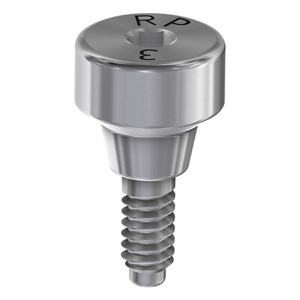
Multi-Unit Abutment Conical Connection Internal Hex Compatible Implant System Titanium Prosthetic Component Dental Clinic
Precision CNC machined Grade 5 ELI titanium multi-unit abutment. Engineered for screw-retained multi-unit restorations with optimal seating torque and biological seal.
Send an Inquiry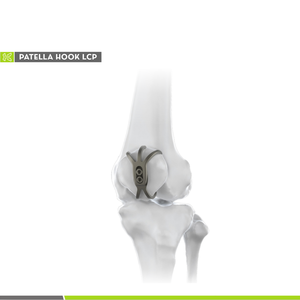
Orthopedic Trauma Bone Implant for Lower Limb Osteosynthesis Patella Claw Plate Contract Manufacturer Healthcare Supply
Anatomically contoured patellar claw plate for comminuted fractures. Features multi-directional claw geometry to ensure dynamic stability without soft tissue impingement.
Send an Inquiry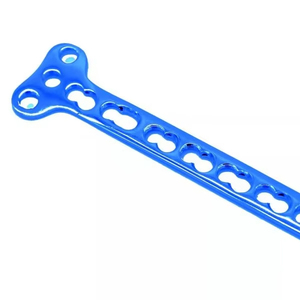
Medical Orthopedic Implants Stainless Steel CE Certified High Quality Best Style Lightweight Surgical Wholesale Price Customized
High-tensile 316LVM medical grade stainless steel bone plates and screws. CE marked with high fatigue endurance for fracture repair in high-load structural bone zones.
Send an Inquiry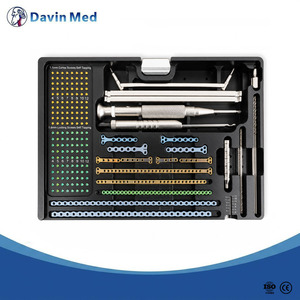
Veterinary ALPS Mini Titanium Locking Plate And Screw System 1.1/1.6mm Bone Plate Small Animal Orthopedic Surgical Implant Kit
Biological small animal fracture system. Low-profile titanium mini locking plates designed to preserve periosteal blood supply in feline and canine orthopedic procedures.
Send an Inquiry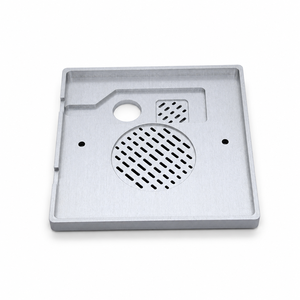
Multi Axis CNC Machining Manufacturer Precision Components Custom Complex Parts OEM Service
Ultra-precision 5-axis Swiss CNC machining for complex orthopedic sub-assemblies, spinal rod connectors, and custom instrument handles with micron-level tolerances.
Send an Inquiry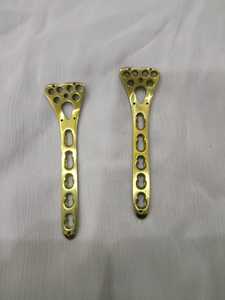
High Quality Custom Brand Distal Radius Medial Locking Plate T Type Orthopedic Implant Surgical Kit Manual Class I CE Certified
Anatomical T-shaped distal radius volar locking plate system. Features polyaxial locking technology and optimized screw trajectories to minimize tendon friction.
Send an Inquiry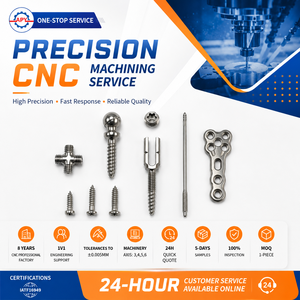
Precision CNC Machined Orthopedic Implants Titanium Bone Screws Spinal Fixation Parts OEM Custom Medical Components Manufacturer
Pedicle screws and spinal rod components machined from ASTM F136 Ti-6Al-4V ELI. Engineered with dual-lead thread profiles for maximum pullout resistance in osteoporotic bone.
Send an Inquiry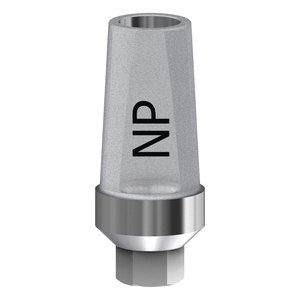
Titanium Dental Implant Abutments 0 Degree 15 Degree 25 Degree for Cemented Single and Bridge Prostheses
Standard and angled titanium abutments (0°, 15°, 25°) for single-unit and bridge restorations. Precision micro-machined hex connection ensures tight anti-rotational coupling.
Send an InquiryNavigating China's Orthopedic Implant Supply Chain: Manufacturer vs. Sourcing Agent
An in-depth evaluation framework for international orthopedic distributors, hospital procurement groups, and private-label OEM brands seeking scalable manufacturing and regulatory risk management in China.
Direct Factory Contracting Dynamics
Direct engagement with an established orthopedic implant manufacturer in China offers distinct capital advantages, including unit-cost minimization, direct access to 5-axis CNC tooling setups, and real-time engineering feedback on 3D CAD/CAM models.
For high-volume distributors with existing regulatory teams, direct factory procurement delivers unmatched scalability. However, managing direct factory relationships requires internal expertise to audit ISO 13485 cleanrooms, monitor lot-by-lot metallurgical batch certificates, and enforce strict adherence to Device Master Records (DMR).
The Strategic Value of an Orthopedic Sourcing Agent
An experienced orthopedic sourcing agent in China acts as a localized technical safeguard. Rather than operating purely as a middleman, a specialized medical device agent provides localized quality assurance, vendor consolidation across multi-specialty lines (Spine, Trauma, CMF, Dental), and hands-on factory floor oversight.
Sourcing agents streamline regulatory compliance by converting localized Chinese Technical Documentation into standardized FDA 510(k) Premarket Notifications and EU MDR Technical Files (2017/745), dramatically shortening market entry timelines for global buyers.
Sourcing Architecture Comparison
Comparing operational metrics across Direct Factory Contracting, Technical Sourcing Agencies, and Generic Trading Intermediaries.
| Evaluation Parameter | Direct Factory Contracting | Specialized Sourcing Agent | Generic Trading Intermediary |
|---|---|---|---|
| Quality System Audit | Direct audit of ISO 13485 & Cleanroom Class 7/8 facilities. | Continuous localized auditing & CAPA supervision. | Basic paperwork verification; no technical audit. |
| MOQ & Batch Flexibility | Higher MOQs required for CNC setup efficiency. | Flexible consolidation across multiple lines & low MOQs. | Variable, often inflated to cover margins. |
| Design History File (DHF) Access | Full access to raw CAD, material testing & validation data. | Assembled regulatory dossier ready for international filing. | Limited or restricted technical document access. |
| Metallurgical Traceability | Direct mill certificates (ASTM F136 / F138 / PEEK Optima). | Third-party lab verification (SGS/TÜV) per production lot. | Unverified secondary supplier certificates. |
| Total Cost of Ownership (TCO) | Lowest unit manufacturing cost for large contract runs. | Optimized landed cost including risk mitigation & QC. | Higher hidden costs due to quality defects & delays. |
Future Sourcing & Technological Trends in Orthopedic Manufacturing
As global healthcare systems demand higher biological performance and reduced revision rates, Chinese orthopedic contract manufacturing is undergoing a structural transition toward advanced biomaterials and additive engineering.
1. Porous 3D Additive Titanium Manufacturing
Traditional machined PEEK cages are rapidly losing market share to 3D printed biomimetic titanium cages. Selective Laser Melting (SLM) and Electron Beam Melting (EBM) technologies now allow Chinese factories to fabricate controlled pore sizes (400–700 microns) with interconnected trabecular structures.
This biological pore network mimics human cancellous bone, significantly accelerating osseointegration and vascular ingrowth while reducing stress shielding around spinal fusion and CMF defect reconstruction zones.
2. Polyaxial Variable-Angle Locking Mechanics
In osteosynthesis trauma plating, standard fixed-angle locking screws are evolving into polyaxial variable-angle systems. Advanced multi-axis CNC Swiss lathe technology enables precise micro-cutting of deformable thread geometry within plate locking holes.
Surgeons gain a ±15° cone of intraoperative screw trajectory freedom, allowing targeted fracture fragment capture in complex periarticular fractures (e.g., distal radius, calcaneus, and distal femur) without sacrificing angular stability.
3. Specialized Bioactive Surface Modifications
Surface chemistry is becoming a key differentiator for contract manufacturers. China’s leading implant plants are integrating automated Anodization Type II (Ti-Color) and Micro-Arc Oxidation (MAO) lines.
These specialized electrochemical treatments deposit bioactive hydroxyapatite (HA) nanolayers or corrosion-resistant oxide barriers, dramatically improving bone-to-implant contact (BIC) and mitigating titanium ion leaching over long-term implant life cycles.
Factory Capabilities & OEM Enterprise Infrastructure
Headquartered in Changzhou, Jiangsu Province—the core hub of China’s orthopedic manufacturing industry—our ecosystem combines high-precision infrastructure with stringent international quality standards.
Full-Cycle OEM/ODM Contract Manufacturing Lifecycle
From initial CAD modeling and finite element analysis (FEA) to rapid prototype milling, cleanroom cleaning, laser marking, and sterile pouch packaging, our facility manages the entire value chain in-house. This centralized control drastically reduces time-to-market while ensuring strict lot-to-lot consistency for medical device distributors worldwide.
Frequently Asked Sourcing & Procurement Questions
Detailed answers addressing regulatory, technical, commercial, and quality assurance aspects of importing orthopedic implants from China.
Which quality certifications do Chinese orthopedic implant manufacturers hold for export?
Top-tier Chinese orthopedic manufacturers operate under an ISO 13485 certified Quality Management System (QMS). For international export, verified suppliers hold CE Certificates (under EU MDR 2017/745 or MDD transition rules) and FDA 510(k) premarket notifications. Complete Technical Dossiers, ISO 10993 biocompatibility test reports, and mechanical fatigue test data (ASTM F2077 / ASTM F543) are available to qualified distributors for national registration.
How does a specialized sourcing agent protect my IP during custom OEM implant development?
A specialized medical device sourcing agent enforces dual-layered IP protection. First, enforceable Non-Disclosure & Non-Compete Agreements (NNN Agreements) are executed under Chinese jurisdiction. Second, engineering workflows are segregated: sensitive 3D CAD files are compartmentalized so that toolmaking, CNC machining, surface treatment, and final laser engraving are executed across verified sub-tier vendors without exposing the complete product design file to a single entity.
What raw material grades are standard for Chinese orthopedic bone plates and screws?
Medical implant raw materials strictly adhere to international metallurgical standards. Titanium products utilize Ti-6Al-4V ELI (Extra Low Interstitial) conforming to ASTM F136 or Unalloyed Titanium conforming to ASTM F67. Stainless steel implants utilize high-purity 316LVM conforming to ASTM F138. Interbody fusion cages utilize medical-grade PEEK-OPTIMA or additively manufactured Grade 5 titanium powder. Mill material test certificates (MTC) accompany every single manufacturing batch.
What is the typical lead time for standard wholesale orders versus custom OEM tooling?
For standard inventory systems (such as trauma locking plates, pedicle screw sets, and intramedullary nails), standard lead times range from 15 to 20 business days. For custom OEM/ODM projects requiring specialized CNC fixture tooling, 3D printing parameter validation, and custom surgical instrument tray design, full-cycle development typical spans 45 to 75 days from frozen 3D drawing approval to final pre-production sample sign-off.
Can Chinese contract factories provide customized surgical instrument sets matching implant lines?
Yes. A complete orthopedic implant system requires ergonomically matched, reusable surgical instruments. Factories produce specialized passivated stainless steel and aluminum alloy instrument kits—including bone drills, reamers, plate benders, rod pushers, and torque-limiting screwdrivers—packaged in custom anodized sterilizing graphic trays.
How are pre-shipment quality inspections executed for sterile vs. non-sterile implants?
Non-sterile implants undergo 100% optical CMM dimensional verification, ultrasonic degreasing, passivating, and batch sampling for mechanical pullout and fatigue testing. Sterile implants are processed inside ISO Class 7 (Class 10,000) cleanrooms, sealed in medical-grade Tyvek blister packaging, and subjected to EO (Ethylene Oxide) or Gamma sterilization with validated bioburden and sterility assurance level (SAL 10⁻⁶) documentation.
Partner with China's Premier Orthopedic Manufacturing Network
Whether you require direct factory supply, private-label OEM development, or a trusted sourcing agent in China to streamline regulatory dossiers and quality control, our technical team is ready to support your enterprise expansion.