Featured Surgical Implants & Instrument Sets
Certified medical-grade titanium and stainless steel implants manufactured under ISO 13485 QMS and CE standards for global distribution.
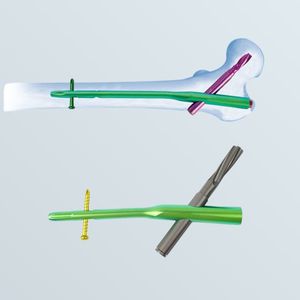
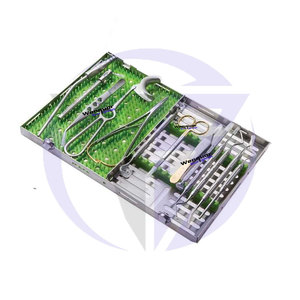
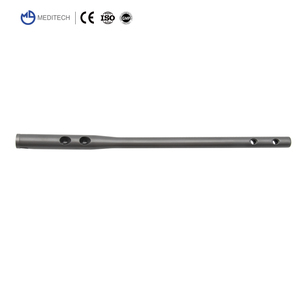
1. Executive Sourcing Guide: Navigating China's Orthopedic Manufacturing Landscape
Global medical device procurement has undergone a profound paradigm shift over the past decade. International healthcare distributors, group purchasing organizations (GPOs), and hospital networks are increasingly turning to premier Chinese manufacturers for high-grade orthopedic implants and matching surgical instrument sets. The historical perception of low-cost manufacturing has been fundamentally replaced by a sophisticated ecosystem of high-precision CNC machining, ISO 13485 quality management systems, CE marking under EU MDR, and FDA 510(k) clearances.
China's orthopedic device sector is concentrated in hyper-specialized industrial clusters, most notably Changzhou in Jiangsu Province. Known globally as the "hometown of orthopedics," Changzhou houses an integrated supply chain ecosystem spanning raw titanium material refining, 5-axis Swiss-type lathe precision turning, bio-compatible surface anodization, and automated cleanroom packaging. For global procurement officers, direct OEM/ODM sourcing from established manufacturers in Changzhou yields significant strategic advantages: a 30% to 50% reduction in landed unit costs, accelerated production lead times (often within 15 to 30 days for standard systems), and direct access to dedicated R&D engineering teams capable of private-label customization.
Key Procurement Insight: Sourcing orthopedic implants directly from certified Chinese factories provides global buyers with high-margin competitiveness while upholding rigorous clinical compliance with ASTM F136 titanium standards and ISO 14801 fatigue strength benchmarks.
2. Metallurgical Standards & Bio-Material Selection for Surgical Implants
The mechanical longevity and clinical success of orthopedic fixation systems depend entirely on raw material purity and biomechanical compatibility. Qualified OEM manufacturers utilize medical-grade alloys engineered to withstand cyclic loading, dynamic fatigue, and physiological fluid exposure without undergoing fretting corrosion or structural failure.
Primary Medical Alloys & Polymers in Manufacturing
When auditing China wholesale orthopedic implant factories, procurement teams must verify material certificates (Mill Test Reports - MTRs) matching international bio-compatibility standards:
| Material Type | International Standard | Biomechanical Properties | Primary Surgical Indications |
|---|---|---|---|
| Titanium Ti-6Al-4V ELI | ASTM F136 / ISO 5832-3 | Extra-low interstitial grade; high yield strength (≥860 MPa); elastic modulus (~110 GPa) closer to bone. | Pedicle screw systems, intramedullary nails (PFNA, Femoral, Tibial), trauma locking plates. |
| Commercially Pure Titanium (CP-Ti) | ASTM F67 / ISO 5832-2 | Excellent osseointegration capability; high ductility; corrosion-resistant oxide layer. | Craniomaxillofacial (CMF) reconstruction plates, dental implants, bio-coated surfaces. |
| PEEK-OPTIMA Polymer | ASTM F2026 | Radiolucent; elastic modulus (~3.6 GPa) perfectly matching human cancellous/cortical bone structure. | Interbody fusion cages (ACDF, TLIF, XLIF), cervical spinal spacers. |
| Surgical Stainless Steel 316LVM | ASTM F138 / ISO 5832-1 | Vacuum arc remelted steel; high tensile fatigue resistance; cost-efficient structural integrity. | Temporary fracture fixation plates, external fixation pins, manual surgical tool sets. |
| Cobalt-Chromium Alloy (Co-Cr-Mo) | ASTM F75 / ISO 5832-4 | Extreme wear resistance; superior polishability; excellent rotational fatigue stability. | Joint arthroplasty bearing surfaces, high-load spinal rods, structural corpectomy implants. |
Furthermore, top-tier factories employ advanced surface modification technologies to enhance biological fixation. These include Type II Anodization (providing anti-galling properties for pedicle screw threads), Micro-Arc Oxidation (MAO), and Plasma-Sprayed Hydroxyapatite (HA) coatings, which accelerate osteoblast proliferation and reduce healing periods in clinical settings.
3. Precision Machining, Cleanroom Packaging & Quality System Validation
Orthopedic implants demand tolerances measured in single-digit micrometers (μm). Leading factories utilize multi-axis CNC machining centers imported from Germany, Switzerland, and Japan (such as Star, Citizen, and DMG Mori). Thread profiles on locking bone screws and helical blades on PFNA nails undergo rigorous optical comparator inspection to prevent thread stripping during intraoperative torque application.
5-Axis CNC Precision Lathes
Simultaneous 5-axis milling guarantees seamless anatomical contouring for variable angle locking plates and polyaxial pedicle screw heads without residual stress concentrations.
Cleanroom Packaging (ISO Class 8)
Automated ultrasonic washing lines integrated with Class 100,000 cleanrooms ensure non-pyrogenic, sterile-ready double blister packaging meeting ISO 11607 validation standards.
Mechanical Fatigue Testing
In-house testing laboratories simulate 5,000,000 cycles of dynamic fatigue loading (ASTM F1717 for spine constructs, ASTM F1264 for intramedullary nails) to ensure structural safety.
4. Future Sourcing & Technological Trends in Orthopedic Device Manufacturing
As global healthcare procurement evolves toward value-based purchasing, orthopedic distributors and hospital networks must align with forward-looking manufacturing trends. Suppliers that fail to innovate in additive manufacturing, digital workflow integration, and streamlined regulatory compliance will ultimately be displaced by agile factories.
1. Additive 3D-Printed Porous Titanium
Direct Metal Laser Sintering (DMLS) and Electron Beam Melting (EBM) enable the creation of biomimetic trabecular structures. Featuring interconnecting pores of 300–600 μm and 60%–70% porosity, 3D printed cages eliminate stress shielding, match natural bone elasticity, and facilitate rapid endosteal tissue ingrowth without bone graft displacement.
2. Patient-Specific Implants (PSI) & Preop CAD
The integration of hospital DICOM CT scan data with factory-level 3D CAD/CAM software allows rapid production of customized reconstructive plates and resection guides. PSI solutions significantly reduce operating room time in complex revision hip arthroplasty, craniomaxillofacial trauma, and pediatric deformity corrections.
3. Sterile Single-Use Procedure Kits
Global hospital systems are actively shifting away from heavy, reusable surgical instrument trays that incur continuous autoclaving costs and infection risks. Procurement is moving toward pre-sterilized, single-use, color-coded ergonomic tool sets bundled directly with implants in sealed blister packs.
5. Why Global Procurement Partners Choose Trauhui Medical
Founded in 2009 and strategically headquartered in Changzhou, Jiangsu Province, Trauhui Medical Co., Ltd. stands as a premier manufacturer of complete orthopedic implant systems and high-precision surgical instruments. With total capital investment exceeding RMB 200 million, Trauhui Medical operates a modern 30,000+ square meter manufacturing campus equipped with over 150 sets of advanced CNC machining centers and testing devices.
Self-Owned Modern Manufacturing Plant
Every titanium plate, intramedullary nail, spinal cage, and instrument set is machined, polished, cleanroom washed, and inspected in-house, ensuring complete batch traceability and reliable landed delivery dates.
Global Regulatory Dossier Support
Products are CE certified and produced under a certified ISO 13485 Quality Management System. Complete technical documentation dossiers are made available to distributors to expedite domestic health authority registrations.
Streamlined OEM / ODM Customization
A dedicated engineering R&D team of 30+ specialists handles private-label branding, customized laser marking, geometric alterations, and proprietary instrument tray development from initial CAD concept to mass production.
Rapid Inventory & 15-Day Lead Times
Maintaining high safety stock levels across core trauma and spinal product lines enables standard distributor orders to be dispatched within 15 days, mitigating stock-out risks for hospital tenders.
6. Frequently Asked Questions (FAQ) for Global Importers & Procurement Officers
Key answers addressing the technical, regulatory, and commercial queries most frequently raised by international medical device buyers during vendor qualification audits.
Ready to Optimize Your Orthopedic Supply Chain?
Connect directly with our senior biomedical engineers and export directors to receive full product catalogs, technical registration dossiers, or customized factory price quotations.