Featured Certified Orthopedic Implants & Systems
Engineered in compliance with ISO 13485, CE Marking, and FDA standards for traumatology, spinal reconstruction, and veterinary orthopedics.
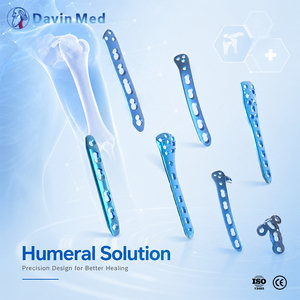
Orthopedic Humeral Locking Plate & Screw System
Anatomically contoured titanium alloy plates engineered for proximal and shaft humeral fracture fixation with variable angle locking technology.
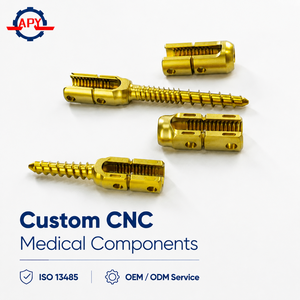
Gold Anodized Titanium Pedicle Screw & Tulip Housing
ISO 13485 certified polyaxial pedicle screws with Type II anodized tulip head housing for advanced thoracolumbar spinal fusion.
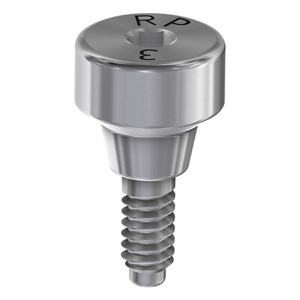
Multi-Unit Abutment Conical Hex Titanium System
Precision-machined internal hex conical connection prosthetic components designed for high fatigue strength and long-term stability.
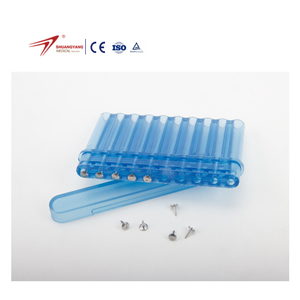
Titanium Alloy Screw & GBR Membrane Bone Tack System
CE and ISO certified micro-tack and membrane fixation kit optimized for guided bone regeneration and maxilla-facial augmentation.
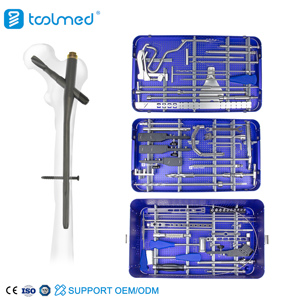
PFNA Femoral Intramedullary Nail & Instrument Set
Proximal femoral nail antirotation system crafted from ELI titanium alloy for minimally invasive intertrochanteric fracture care.
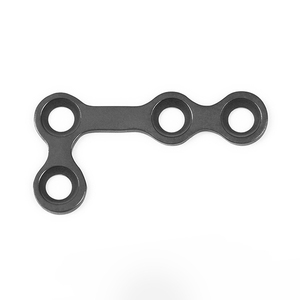
Veterinary Fracture Repair & TPLO Plate System
Comprehensive veterinary orthopedic implants including locking bone plates and surgical instrument sets for small-animal fracture care.
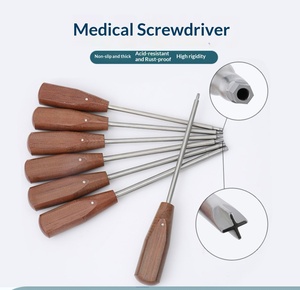
Precision Medical Screwdrivers (Torx, Hex, Hollow)
Class I ergonomic surgical drivers featuring Star/Plum Blossom and Hexagonal hollow profiles (2.5mm to 3.5mm) for trauma fixation.
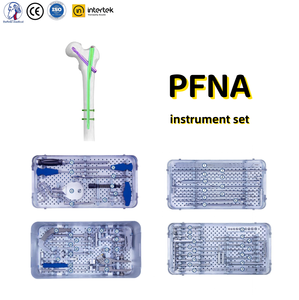
Interlocking PFNA Titanium Femoral System Kit
Full surgical kit with cannulated reamers, aiming arms, and locking blade components for retrograde and anterograde femoral repair.
Engineering Excellence in Custom OEM Orthopedic Implants
A comprehensive evaluation of biomaterials, CNC precision machining, surface passivation, and regulatory compliance paradigms for international medical device procurement.
Biomaterial Metallurgy
Strict utilization of medical-grade Ti-6Al-4V ELI (ASTM F136 / ISO 5832-3) and PEEK-OPTIMA®. Engineered for high fatigue endurance, bio-inertness, and modulus matching to human cortical bone to prevent stress shielding.
5-Axis CNC Precision
Tolerance execution within ±0.005mm utilizing Swiss-type automatic CNC lathes and high-speed milling centers. Specialized in complex thread profiles, cannulated bores, and locking mechanism geometry.
ISO 13485 & CE Audit
Fully validated cleanroom packaging, 100% CMM inspection, micro-hardness verification, and full material lot traceability under CE MDR (2017/745) and FDA Class II/III guidelines.
1. Biomaterial Mechanics & Metallurgical Selection Standards
The global market for OEM orthopedic devices demands absolute fidelity in biomaterial integrity. Primary orthopedic reconstructive components—ranging from trauma locking plates to spinal pedicle screws and joint prostheses—depend heavily on the microstructural characteristics of metallic and polymeric substrates.
When evaluating top-tier manufacturing suppliers, healthcare procurement engineers evaluate critical metallurgical variables:
- Ti-6Al-4V ELI (Grade 23): Extra Low Interstitial titanium alloy provides superior fracture toughness and bio-corrosion resistance compared to standard Grade 5 titanium. Reduced oxygen, nitrogen, and iron content minimizes brittle transition phases under cyclic physiological loading.
- PEEK OPTIMA® (Polyether ether ketone): Radiolucent thermoplastic offering an elastic modulus (~3.6 GPa) nearly identical to natural trabecular and cortical bone tissue. Essential for interbody fusion cages (ACDF, TLIF, XLIF) to permit post-operative X-ray and MRI fusion imaging without metal artifact interference.
- Cobalt-Chromium-Molybdenum (CoCrMo - ASTM F75): Utilized in joint articulating surfaces requiring exceptional tribological properties, high polished wear resistance, and high structural modulus.
- 316L Stainless Steel (ASTM F138): Cost-effective solution for temporary internal fixation components, temporary pins, K-wires, and specialized trauma fixation devices.
| Biomaterial Standard | Tensile Strength (MPa) | Yield Strength (MPa) | Modulus of Elasticity (GPa) | Primary Clinical Application |
|---|---|---|---|---|
| Ti-6Al-4V ELI (ASTM F138 / ISO 5832-3) | ≥ 860 | ≥ 795 | 110 - 114 | Locking Plates, PFNA Nails, Pedicle Screws, CMF |
| PEEK-OPTIMA® (ASTM F2026) | ≥ 95 | ≥ 90 | 3.5 - 4.0 | Cervical & Lumbar Interbody Fusion Cages |
| CoCrMo Alloy (ASTM F75 / ISO 5832-4) | ≥ 660 | ≥ 450 | 210 - 230 | Femoral Heads, Knee Articular Inserts, Spinal Rods |
| 316L Implant Stainless Steel (ASTM F138) | ≥ 860 | ≥ 690 | 190 - 200 | External Fixation, K-Wires, Bone Screws |
State-of-the-Art Manufacturing & OEM/ODM Capacity
Combining over 15 years of precision device manufacturing in Changzhou, China with global export capabilities serving over 30 countries.
Turnkey OEM / ODM Contract Manufacturing
From conceptual engineering CAD design, FEA (Finite Element Analysis) biomechanical modeling, and rapid 3D prototyping to commercial-scale CNC machining, surface anodization, cleanroom washing, and sterile pouch packaging—our facility handles the full product development lifecycle.
- Dedicated R&D engineering team of over 30 senior biomaterial specialists.
- In-house custom tooling, jig manufacturing, and fixture engineering.
- Custom laser marking for OEM brand logos, UDI barcode compliance, and lot serialization.
- Standard order fulfillment delivered within 15 days for in-stock catalog systems.
Quality Assurance & Regulatory Technical Files
Exporting medical devices requires absolute regulatory compliance. We equip global distributors and brand owners with ready-to-file regulatory dossiers to streamline local market registration.
- ISO 13485:2016 Certified Quality Management System: Certified by TÜV Rheinland.
- CE Mark & FDA 510(k) Documentation: Comprehensive Design History Files (DHF), Device Master Records (DMR), and Risk Management files per ISO 14971.
- Cleanroom Operations: ISO Class 7 cleanrooms for bio-burden control and validated ethylene oxide (EO) or gamma sterilization packaging options.
Future Trends in Orthopedic Manufacturing & Global Procurement
Key technological shifts shaping the next decade of surgical implants, additive manufacturing, and healthcare supply chains.
1. Additive Manufacturing & 3D-Printed Porous Titanium
Direct Metal Laser Sintering (DMLS) and Electron Beam Melting (EBM) have transformed spinal cage and joint reconstruction manufacturing. By engineering stochastic porous lattice structures with open pore sizes between 300 μm and 600 μm, 3D printed implants mimic human cancellous bone, facilitating vascularization and direct cellular osteointegration without structural delamination risks.
2. Patient-Specific Implants (PSI) & Digital Surgery Integration
The shift toward personalized medicine is driving rapid growth in Patient-Specific Implants (PSI) and patient-matched surgical guides. OEM suppliers are integrating CT/MRI volumetric CAD conversion workflows, allowing surgeons to request custom-milled trauma plates and CMF reconstructive grids for complex oncological or revision procedures within short turnaround windows.
3. Surface Nano-Coatings & Antimicrobial Functionalization
Post-operative surgical site infections (SSI) remain a costly hospital burden. Advanced OEM exporters are incorporating bio-active surface modifications including Plasma-Sprayed Hydroxyapatite (HA), Ag-ion (Silver nanoparticle) antimicrobial sputtering, and Type II hard anodization to reduce bacterial biofilm formation on trauma nails and pedicle screws.
4. Supply Chain Regionalization & Hybrid OEM Contracting
Healthcare procurement managers are actively diversifying supply chains away from single-source risk. Tier-1 hospital groups and global brands are establishing hybrid manufacturing partnerships—combining high-volume production in certified Chinese manufacturing centers with local fulfillment hubs to achieve up to 40% reduction in total landed costs.
Frequently Asked Procurement & Technical Questions
Clear, authoritative answers addressing quality compliance, technical customization, regulatory dossier transfers, and bulk export logistics.
What specific international quality certifications do your orthopedic implants hold?
Our complete line of orthopedic implants and matching surgical instrument sets are manufactured under a full ISO 13485:2016 Quality Management System audited by TÜV Rheinland. Key product families—including our spine systems, intramedullary nails, and locking plate lines—hold official CE Marking (under EU MDR 2017/745) and US FDA 510(k) clearance.
For international market registration, we provide qualified distributors with complete Technical Documentation packages, including CE Certificates of Conformity, ISO Certificates, Free Sales Certificates (FSC), Materials Test Reports (MTR per EN 10204 3.1), and Biocompatibility Test Reports according to ISO 10993.
How does your OEM/ODM custom development process work for specialized implant designs?
Our turnkey OEM/ODM custom manufacturing follows a strict 6-stage engineering process designed for accuracy and speed:
1. Requirements & Blueprint Audit: Our R&D team reviews your 2D/3D CAD models, material specifications, and clinical intent.
2. FEA & Design Optimization: We perform static and dynamic finite element analysis to validate structural strength under biomechanical stress.
3. Rapid Prototyping: Prototype samples are milled using 5-axis Swiss CNC machinery for physical tactile assessment.
4. Mechanical Testing Validation: Testing is conducted per ASTM F543 (bone screws), ASTM F1717 (spinal constructs), or ASTM F1264 (intramedullary nails).
5. Cleanroom Pilot Batch: Initial pilot production in our ISO Class 7 cleanroom facility.
6. Mass Production & Custom Labeling: Scale manufacturing with custom laser branding, custom color anodizing, UDI labeling, and private-label packaging.
What is the standard production lead time and Minimum Order Quantity (MOQ)?
For standard catalog items (such as standard intramedullary nails, pedicle screws, locking plates, and surgical tools), we maintain large buffer inventories, allowing dispatch within 15 calendar days upon order confirmation.
For custom OEM/ODM projects or private-label orders, typical lead times range between 30 to 45 days depending on complexity and surface treatment requirements. Flexible Minimum Order Quantities (MOQs) are available to support initial pilot trials and regional distributor market launches.
How do you ensure biomaterial traceability and zero-defect quality control?
Every single batch of raw titanium (Ti-6Al-4V ELI), PEEK, or stainless steel bar stock is sourced exclusively from certified medical-grade suppliers and undergoes raw material spectral chemical analysis and mechanical tensile testing upon arrival.
During machining, automated Coordinate Measuring Machines (CMM), optical comparators, and 3D digital profilers inspect critical dimensions at high frequencies. Every finished implant is laser-etched with a unique Lot/Batch Code that traces back to the exact melt source, machine operator, cleanroom cleaning shift, and final inspection logbook.
Can you supply complete, matching surgical instrument sets for your implant systems?
Yes. Implants must perform seamlessly with surgical tools in the operating theater. We design and manufacture dedicated reusable surgical instrument trays for every implant system we offer (including PFNA aimers, cannulated reamers, pedicle screw benders, depth gauges, and Class I ergonomic screwdrivers).
Instrument sets are housed in anodized aluminum or PPSU sterilizing containers designed to withstand repeated hospital autoclave cycles (134°C steam sterilization) without degradation.
Why should international distributors choose Changzhou-manufactured orthopedic products?
Changzhou, Jiangsu Province is globally recognized as the center of China’s medical device and orthopedic manufacturing cluster. This ecosystem provides unparalleled supply chain integration, raw material availability, advanced multi-axis CNC tooling infrastructure, and highly skilled precision engineering talent.
By partnering with an established manufacturer in Changzhou like Trauhui Medical (operating 30,000+ m² facility, 150+ CNC machine sets, export experience in 30+ countries), buyers secure European-equivalent device quality at direct-from-factory pricing structures.
Accelerate Your Orthopedic Supply Chain Today
Connect with our dedicated medical device engineers to request complete product catalogs, technical CE/FDA regulatory files, or custom OEM manufacturing proposals.