Trauma Fixation
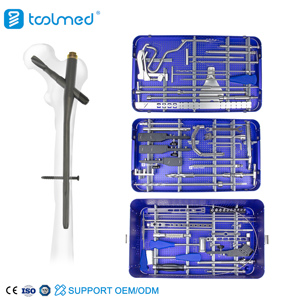
PFNA Femoral Intramedullary Nail & Instrument Set
Ti-6Al-4V ELI titanium anatomical nail system designed for stable fixation of proximal femoral fractures with helical blade stabilization.
Explore our core MDR 2017/745 ready orthopedic implant lines and matching surgical instrument sets engineered for worldwide hospital tenders and OEM brand customization.
Ti-6Al-4V ELI titanium anatomical nail system designed for stable fixation of proximal femoral fractures with helical blade stabilization.
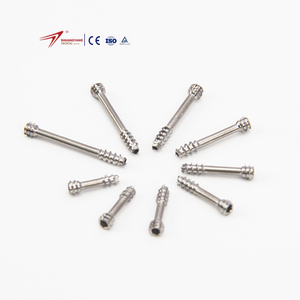
Variable-pitch headless compression screw optimized for scaphoid fractures, osteochondral defects, and small bone intra-articular arthrodesis.
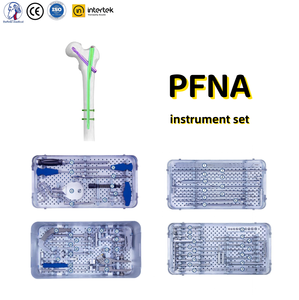
Complete instrumentation kit manufactured from surgical-grade stainless steel with ultra-precise targeting guides for MIS trochanteric nailing.
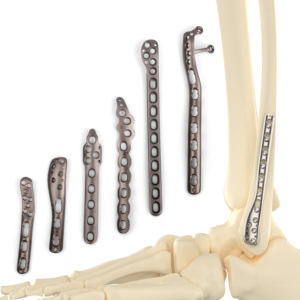
Anatomically contoured low-profile titanium locking plate system engineered for complex periarticular distal fibular fracture reconstruction.
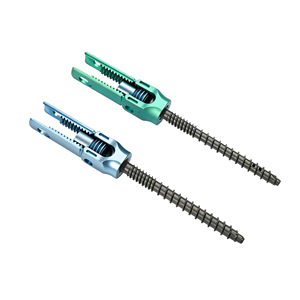
Cannulated polyaxial pedicle screws designed for minimally invasive spine surgery (MISS) with integrated extension sleeves for smooth rod insertion.
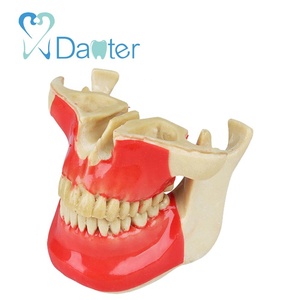
High-density biomechanical synthetic bone resin models for orthopedic surgical workshops, mechanical testing, and distributor showrooms.
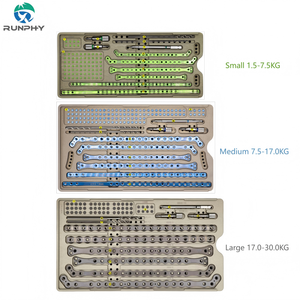
AO cap head threaded locking screw and plate reconstruction system specifically designed for canine and feline complex fracture repair.
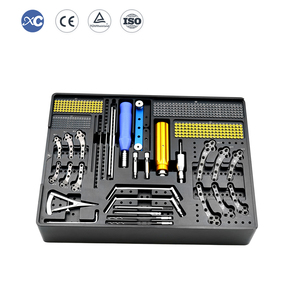
Tibial Plateau Leveling Osteotomy (TPLO) titanium contour plate system engineered for canine cranial cruciate ligament disease treatment.
An authoritative technical brief on regulatory transitions, risk management under ISO 14971, and technical documentation requirements for Class III & Class IIb implants.
The enforcement of the European Union Medical Device Regulation (EU MDR 2017/745) has fundamentally redefined global sourcing benchmarks for orthopedic implants and associated surgical instrumentation. Replacing the legacy Medical Device Directive (MDD 93/42/EEC), the MDR framework mandates unprecedented clinical rigor, total supply chain transparency, post-market vigilance, and rigorous equivalence verification. For global B2B procurement managers, hospital groups, and OEM brand owners, securing an OEM partner capable of providing robust Technical Documentation (STED) alongside ISO 13485:2016 quality management is no longer optional—it is a critical prerequisite for market survival.
SEO Regulatory Insight: MDR 2017/745 reclassifies surgical invasive devices intended for long-term implantability (such as spinal pedicle screws, total hip systems, and interlocking intramedullary nails) into strict Class III or Class IIb high-risk categories. Contract manufacturers must deliver verified GSPR (General Safety and Performance Requirements) matrices backed by biomechanical fatigue testing, ISO 10993 biocompatibility data, and full UDI (Unique Device Identification) traceability.
To assist regulatory affairs directors and OEM sourcing specialists in evaluating contract manufacturing readiness, the matrix below details the structural shift in documentation, clinical evidence, and quality assurance mandated under current EU regulations:
| Regulatory Domain | Legacy MDD 93/42/EEC Standard | Enforced EU MDR 2017/745 Benchmark | Impact on OEM Sourcing Strategy |
|---|---|---|---|
| Classification & Risk | Class IIa / IIb self-claim options based on historical predicate safety. | Strict Class IIb/Class III rules (Rule 8/ Rule 14). Upclassified implant categories. | Demands deeper Notified Body audit trails and expanded technical files. |
| Clinical Evaluation (CER) | Literature equivalence allowed with minimal physical implant data. | Clinical Evaluation Reports require direct clinical data or technical identity demonstration. | Suppliers must provide raw biomechanical test reports (ASTM F1717 / ISO 14801). |
| Post-Market Surveillance | Reactive complaints handling and periodic review. | Mandatory proactive PSUR (Periodic Safety Update Report) and PMCF plans. | Requires continuous clinical feedback loops between manufacturer and distributor. |
| Traceability (UDI System) | Batch/Lot tracking on primary box labels. | Direct Part Marking (DPM) UDI-DI & UDI-PI barcode coding on metal implants. | Requires high-precision fiber laser marking and EUDAMED database sync. |
| Raw Material Quality | Basic material certificates (MTR) from stock suppliers. | Full material characterization under ISO 5832 series (Ti-6Al-4V ELI, CoCrMo, PEEK). | Eliminates unverified raw metals; requires batch-level spectral chemical analysis. |
A true OEM manufacturing partner must serve as an extension of your regulatory team. At Trauhui Medical, our engineering and regulatory affairs divisions build comprehensive Common Submission Dossiers (STED) directly aligned with Annex II and Annex III of MDR 2017/745. Every custom implant system produced in our facility includes:
Combining over 15 years of orthopedic manufacturing mastery in Changzhou with international precision engineering and continuous quality improvement.
Headquartered in Changzhou, Jiangsu—China's renowned "Capital of Orthopedics"—our 30,000 m² state-of-the-art facility integrates development, precision machining, surface treatment, cleanroom packing, and international logistics.
Equipped with over 150 sets of top-tier machining equipment, including 5-axis DMG MORI milling centers, Citizen Swiss-type sliding head lathes, Wire EDM, and high-speed longitudinal turning machines for complex implant geometry.
Operating under an audited ISO 13485:2016 Quality Management System. Final ultrasonic washing and primary packaging are conducted inside ISO Class 8 (Class 100,000) cleanrooms to guarantee particle and endotoxin control.
Supported by a dedicated 30+ engineer R&D team. We convert client sketches, CAD concepts, or custom clinical requests into validated prototypes, production tooling, and finished private-label sterile packages within rigid timelines.
Exporting to over 30 countries across Europe, Latin America, the Middle East, and Southeast Asia. Strategic international expansion includes acquiring a European factory in Hungary and a Hong Kong entity to support global logistics.
With an annual output capacity exceeding 350,000 implant components and matching instrument trays, standard items are held in buffer stock for fast dispatch within 15 days, drastically lowering distributor stock-out risk.
Analyzing advanced titanium alloys, additive manufacturing, surface bio-functionalization, and resilient contract manufacturing models.
Implants designed for long-term load bearing demand precise control over metallurgical grain structure, tensile strength, and fatigue life. Trauhui Medical strictly utilizes certified medical-grade raw materials accompanied by full Mill Test Reports (MTR):
As healthcare procurement shifts toward total cost of ownership (TCO) and regulatory safety margins, four macro trends are reshaping how medical device brand owners select contract manufacturers:
Traditional machined solid implants are increasingly being replaced by Additive Manufacturing (Selective Laser Melting - SLM). 3D printed porous titanium interbody cages feature interconnected micro-porosity (500–700 µm pore size) that mimics natural cancellous bone, encouraging direct bone ingrowth (osseointegration) without requiring secondary coatings.
Global distributors can no longer rely on single-region production. Partnering with established high-volume hubs like Changzhou provides cost competitiveness without sacrificing quality. OEM brand owners are establishing dual-sourcing models—combining local final assembly with high-precision component contract manufacturing in China.
Regulatory mandates across the US FDA (GUDID) and European Union (EUDAMED) mandate direct laser marking of DataMatrix barcodes onto physical implants. Future-ready suppliers integrate automated optical inspection (AOI) to verify barcode readability post-anodization and chemical passivation.
Surgeons evaluate implant systems based on instrument ergonomics. Leading procurement teams are avoiding unbundled sourcing. Sourcing implants together with dedicated, customized surgical instrument sets guarantees tactile feedback, exact drill-bit tolerances, and zero intraoperative fitting failure.
Direct technical and operational answers for B2B procurement officers, OEM brand managers, and regulatory directors.
Trauhui Medical products are manufactured under a TÜV Rheinland certified ISO 13485:2016 Quality Management System. Our core spinal and trauma implant systems hold CE Certificates for European market distribution as well as FDA 510(k) clearances for specific lines. Complete technical dossiers (STED), biocompatibility reports (ISO 10993), and biomechanical test reports are available to qualified distributor partners to support local Ministry of Health registration in over 30 countries.
We provide complete contract manufacturing services ranging from contract machining of client-owned CAD models to co-development of custom orthopedic systems. Our R&D engineering team utilizes advanced SolidWorks modeling, FEA (Finite Element Analysis) stress simulations, rapid prototyping, custom tooling creation, laser etching, and private-label packaging (including sterile blister pouch sealing inside ISO Class 8 cleanrooms).
For standard catalog items (spine, trauma, CMF, and veterinary lines), Trauhui maintains a substantial buffer stock in our Changzhou warehouse, allowing dispatch within 15 days. For custom OEM projects or private-label production runs, typical lead times range between 30 to 45 days following final CAD blueprint sign-off and pilot sample validation.
Every batch of raw titanium (Ti-6Al-4V ELI) or PEEK is sourced exclusively from certified medical-grade suppliers accompanied by physical and chemical Mill Test Reports (MTR). Incoming materials undergo spectral analysis before entering our 5-axis CNC workshops. Finished implants undergo 100% optical dimensions checking via Zeiss CMM (Coordinate Measuring Machines) and mechanical fatigue testing per ASTM F1717 / ASTM F1264 standards.
We offer flexible MOQ structures tailored to regional distributor needs. Standard catalog systems carrying our brand have minimal MOQ limits. For custom OEM private labeling (custom laser branding, box design, and sterile pouch packaging), MOQs are evaluated per project based on manufacturing setup and raw material procurement requirements.
Yes, we warmly welcome procurement teams, hospital auditors, and regulatory representatives to visit our headquarters and production facility in Changzhou, Jiangsu, China (just 1 hour from Shanghai by high-speed rail). For clients unable to travel immediately, we offer live interactive video audits covering our CNC machining shop, cleanroom packaging line, testing laboratory, and quality assurance control points.
Partner with an established ISO 13485 & CE certified manufacturer. Contact our engineering and regulatory consultants today for product specifications, technical dossiers, or custom OEM quotations.