Global Contract Manufacturing Excellence: Precision 5-Axis CNC Machining, ISO 13485 QMS, CE & FDA 510(k) Certified Orthopedic Implant Systems
Medical Device OEM Portfolio
Featured Orthopedic Implant & Instrument Systems
Precision-engineered spinal, trauma, CMF, and veterinary solutions manufactured under rigorous quality control standards for international healthcare brands and distributors.
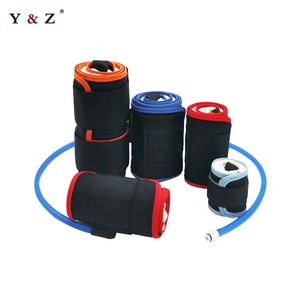
High Quality Orthopedic Pneumatic Tourniquet Cuff Electricity Powered ABS Reusable CE Certified
Electrically powered surgical pneumatic tourniquet system with digital pressure control and autoclavable dual-channel cuffs for bloodless limb surgery.
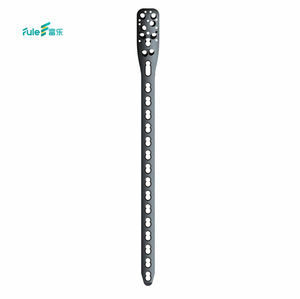
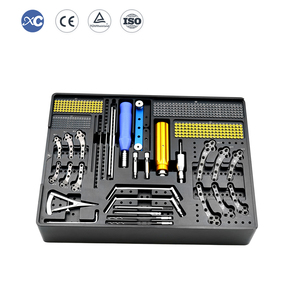
High Quality Stainless Steel Material Orthopedic Implants Premium Surgical Instrument
Medical-grade 316LVM stainless steel manual surgical instrument set designed for trauma bone fixation, fracture reduction, and orthopedic reconstruction.
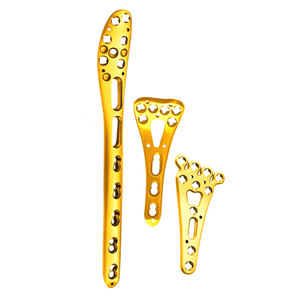
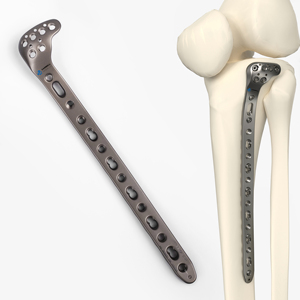
Titanium Proximal Tibial Locking Plate Orthopedic Implant Trauma Fixation System Class III
Class III medical device locking plate system featuring variable-angle locking screw technology for complex proximal tibial plateau fracture reconstruction.
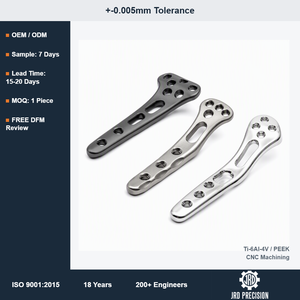
Ultra-precision contract manufacturing service utilizing 5-axis Swiss CNC machining with ±0.005mm dimensional tolerance for custom joint and spinal implants.
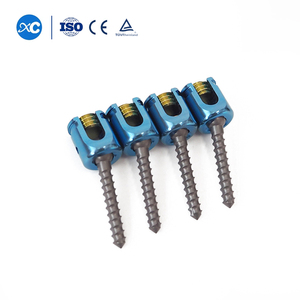
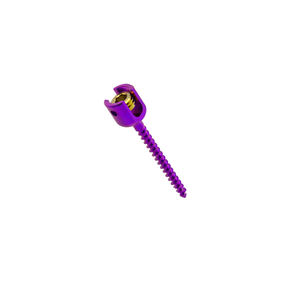
Factory Direct Orthopedic Implant Monoaxial Pedicle Screw For Spinal Fixation Titanium CE Certified
Standard 5.5mm/6.0mm titanium monoaxial pedicle screws engineered for rigid thoracic and lumbar spinal fusion surgery, holding full CE & ISO certificates.
The global orthopedic medical device market is undergoing a paradigm shift driven by demographic aging, complex spinal deformities, high-velocity trauma cases, and the rapid expansion of veterinary specialized surgeries. For original equipment manufacturers (OEMs), brand owners, and multinational hospital distributors, selecting a custom OEM orthopedic implant OEM manufacturer factory & suppliers is no longer merely a cost-efficiency decision—it is a mission-critical strategic choice impacting product safety, regulatory audit readiness, bio-mechanical durability, and time-to-market speed.
Precision medical device manufacturing requires absolute mechanical compliance with international standards such as ASTM F136 (Ti-6Al-4V ELI titanium alloy), ISO 5832-3, and ASTM F138 (316LVM surgical stainless steel). Implants installed into the human axial skeleton or appendicular bones endure millions of cyclic loading stress loops over a patient's lifespan. Consequently, contract manufacturing facilities must operate advanced 5-axis Swiss-type CNC micro-machining centers capable of maintaining ultra-tight micron-level tolerances (±0.005mm) alongside 100% optical Coordinate Measuring Machine (CMM) dimensional verification.
Key Strategic Takeaway for OEM Buyers: Supply chain resilience in 2025 and beyond requires partnering with fully integrated medical device factories that combine in-house tooling development, bio-compatible surface treatments (Type II/III anodizing, micro-arc oxidation), cleanroom packaging (ISO Class 7/8), and extensive regulatory technical documentation (DHF/DMR) for FDA 510(k) and EU MDR 2017/745 submissions.
As a established orthopedic enterprise founded in 2009 in Changzhou, China—the world-renowned hub of medical device manufacturing—Trauhui Medical Co., Ltd. has dedicated over 15 years to bridging high-level biomedical engineering with scalable contract manufacturing. By uniting raw material traceability, 3D additive manufacturing, variable-angle locking technologies, and rigorous ISO 13485 quality management systems, certified OEM suppliers empower global brands to compete at the highest clinical level.
Biomaterial Engineering & Micro-Machining Specs in Orthopedic Contract Manufacturing
Modern surgical fixation systems demand structural materials that optimize biomechanical load sharing while minimizing stress shielding. In spinal fusion, trauma plating, craniomaxillofacial (CMF) stabilization, and TPLO veterinary procedures, the selection of implant-grade raw materials directly influences bone healing kinetics and osseointegration success.
Material Benchmark
Elastic Modulus (GPa)
Yield Strength (MPa)
Biocompatibility & Corrosion Resistance
Primary Clinical Applications
Titanium Ti6Al4V ELI (Grade 23)
110 - 114
≥ 795 - 860
Superior (Passivated TiO2 layer, zero nickel toxicity)
Pedicle screws, Trauma locking plates, TPLO implants, Intramedullary nails
Direct biological bone ingrowth (Osseointegration)
3D Printed interbody spinal cages, Custom cranial/pelvic defect augments
Stainless Steel 316LVM (ASTM F138)
190 - 200
≥ 690 - 890
High fatigue strength, standard surgical grade
Temporary fracture fixators, External ring fixators, Surgical instruments
Achieving structural perfection requires cutting-edge machine tools. OEM factories utilizing multi-axis CNC turn-mill centers process complex geometries—such as polyaxial pedicle screw tulip heads, dual-lead cannulated threads, and anatomical variable-angle locking holes—in a single setup. This reduces cumulative positioning errors, ensuring seamless inter-operability between surgical implants and mating instrument drivers.
5-Axis Swiss CNC Precision
Micron-level machining tolerance achieved via automated Japanese and Swiss CNC centers, handling delicate pediatric spinal screws to heavy-duty femoral nails.
ISO 13485 & Cleanroom Control
Class 100,000 (ISO Class 8) cleanroom washing and primary packaging capabilities paired with automated ultrasonic cleaning lines for zero-residue implants.
DFM & Rapid Prototyping
Dedicated R&D engineers transform customer CAD models into functional prototypes within 7 to 10 days, optimizing design for volume manufacturability.
Strategic Market Insights
Future Procurement Trends in the Global Orthopedic Implant Industry (2025–2030)
As healthcare systems worldwide demand higher surgical success rates alongside contained medical expenditure, the procurement strategies of medical device companies are evolving rapidly. Sourcing officers and product management leads must navigate several macro trends defining the next decade of orthopedic manufacturing:
1. Rise of 3D Printed Additive Manufacturing
Traditional subtractive machining is increasingly augmented by Electron Beam Melting (EBM) and Direct Metal Laser Sintering (DMLS). Additive manufacturing allows the creation of biomimetic trabecular structures with porosity levels matching human cancellous bone (60-80% porosity), accelerating osteoblast migration without needing secondary porous coatings.
2. Strict Regulatory Convergence (EU MDR & FDA 510k)
The transition from EU MDD to MDR (2017/745) has elevated technical file standards, requiring rigorous clinical evaluation reports (CER), post-market surveillance (PMS), and total raw material batch traceability. Procurement managers are consolidating supplier bases, shifting orders exclusively to certified factories with full ISO 13485 QMS transparency and CE technical documentation.
3. Expansion of Specialized Veterinary Orthopedics
The companion animal healthcare market is experiencing unprecedented double-digit growth. Veterinary surgeons now expect human-grade orthopedic implants—including specialized TPLO plates, micro polyaxial screws, and locking compression systems—forcing OEM factories to establish dedicated veterinary device manufacturing lines.
4. Demand for Complete System Solutions
Distributors no longer buy standalone implants. Sourcing trends prioritize contract manufacturers capable of supplying complete, integrated procedure kits—combining color-coded implant trays, reusable surgical instruments, single-use trial spacers, and sterile protective packaging under private label branding.
Key Development Trends Shaping Next-Generation Orthopedic Solutions
Innovation in orthopedic surgery is centered around minimally invasive surgery (MIS), patient-specific solutions, and biological surface functionalization. Modern OEM manufacturers are investing heavily in advanced production techniques to keep global clients ahead of the curve:
Minimally Invasive Spinal Surgery (MISS) Integration: The shift toward MIS procedures requires smaller pedicle screw profiles, extended tab designs for percutaneous insertion, and flexible cannulated screw systems. OEM factories are customizing ultra-slender instrument shafts and high-torque drivers designed specifically for micro-incision approaches.
Variable-Angle Locking Compression Technology: In trauma fixation, conventional mono-directional locking plates are giving way to variable-angle (VA) locking systems. By allowing surgeons to angle locking screws up to ±15 degrees off-axis, VA plates facilitate precise fragment targeting in complex periarticular intra-articular fractures.
Anodizing Type II & Type III Electrochemical Surface Treatments: Surface modification plays a critical role in tribology and fatigue resistance. Type II anodization provides a hardened titanium oxide barrier that drastically reduces micro-fretting wear between set screws and pedicle screw heads, while Type III color anodizing enables intuitive intra-operative size identification for surgical staff.
Enterprise E-E-A-T Benchmark
Why Global Medical Brands Choose Trauhui Medical as Their OEM Factory Partner
Headquartered at No.2 Longqing Road, Wujin Hi-tech Zone, Changzhou, Jiangsu, China, Trauhui Medical Co., Ltd. stands as a premier orthopedic implant and instrument manufacturer. Operating over 30,000 square meters of state-of-the-art facility equipped with 150+ sets of high-precision CNC machining and inspection tools, Trauhui delivers unmatched manufacturing depth across Spine, Trauma, Craniomaxillofacial (CMF), and Veterinary specialties.
Full Contract Manufacturing Lifecycle
From initial design concept, 3D CAD modeling, and DFM optimization to rapid prototyping, mechanical testing, mass production, and private-label packaging.
Uncompromised Regulatory Backing
Supported by full CE certifications, FDA 510(k) clearances, and TÜV ISO 13485 audit reports, ensuring smooth medical device registration in over 30 countries.
15-Day Delivery & Inventory Security
By maintaining vast safety buffer stocks of standard titanium plates, screws, and fusion cages, regular orders are dispatched within 15 days to prevent hospital supply chain interruptions.
Whether you require private-label manufacturing of standard spinal fusion systems, custom modifications to trauma intramedullary nails, or full-scale OEM development of veterinary TPLO systems, Trauhui Medical provides the engineering expertise, technical documentation, and production scale required to grow your brand's market share.
Sourcing & Procurement FAQ
Frequently Asked Questions for B2B Orthopedic OEM Sourcing
Which quality certifications do Trauhui Medical implants hold?
Trauhui Medical products hold full CE Certificates, FDA 510(k) market clearances, and are produced under a TÜV-audited ISO 13485 Quality Management System. Complete technical dossiers (STED) are available to qualified partners to facilitate local regulatory registrations.
What is the capability scope for custom OEM/ODM projects?
Our OEM/ODM services cover custom dimensional modifications, material selection (Ti6Al4V, PEEK, 316LVM), laser marking of custom part numbers and brand logos, custom instrument tray layout design, and sterile/non-sterile private label packaging.
What is the typical production lead time for standard vs customized orders?
Standard catalog items maintained in our stock buffer are typically shipped within 15 calendar days. Custom OEM orders requiring new tooling or design validation are scheduled individually, with prototype samples delivered within 2 to 4 weeks.
How does the factory guarantee batch-to-batch dimensional accuracy?
Every production batch undergoes strict in-line inspection using automated 3D Coordinate Measuring Machines (CMM), optical profile projectors, and digital thread gauges under ISO 13485 protocols, guaranteeing zero-defect shipment.
Are surgical instrument sets fully compatible with OEM implant systems?
Yes. Trauhui Medical engineers matched surgical instrument sets alongside every implant line. Taps, drivers, reamers, and benders are designed and tolerance-tested together with implants to prevent intra-operative slippage or stripping.
Can international buyers conduct on-site factory audits?
We welcome procurement teams, regulatory auditors, and hospital representatives to visit our Changzhou manufacturing complex to inspect our CNC workshops, cleanrooms, and testing labs firsthand.
Partner with a World-Class OEM Orthopedic Implant Manufacturer
Accelerate your product launch, optimize unit manufacturing costs, and secure certified high-precision orthopedic implant supplies. Request our complete product catalog and engineering technical file today.