Featured OEM Orthopedic Implants & Instrument Systems
Explore our core Class IIb and Class III medical device implant lines. Every system is backed by complete Design History Files (DHF), full raw material traceability, and pre-compiled technical dossiers engineered to accelerate CE MDR, US FDA 510(k), and national health authority approvals.
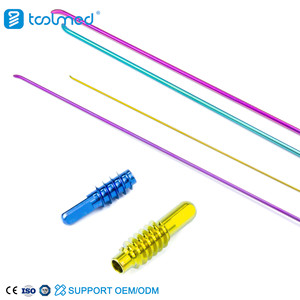
Intramedullary Titanium Elastic Nail Orthopedic Implants for Hospital Use-Toolmed Brand 3-Year Warranty
High-elasticity Ti-6Al-4V ELI titanium alloy nails designed for pediatric long bone fractures. Supplied with ASTM F1264 mechanical testing datasets and cleanroom packaging validation.
Contact Us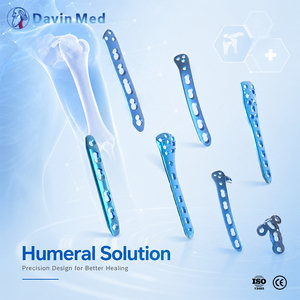
Factory Price Orthopedic Humeral Plate And Screw System OEM ODM Surgical Implants
Variable-angle locking plate architecture engineered for proximal humeral reconstruction. Supported by complete Device Master Records (DMR) and fatigue resistance data.
Contact Us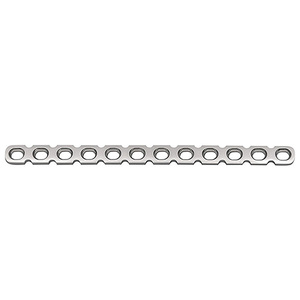
Orthopedic Implants for Veterinary Animal Pets 2.0 Straight Reconstruction Plate
Precision-machined 2.0mm micro-reconstruction titanium plates designed for small-animal fracture fixation. ISO 13485 compliant manufacturing with private label options.
Contact Us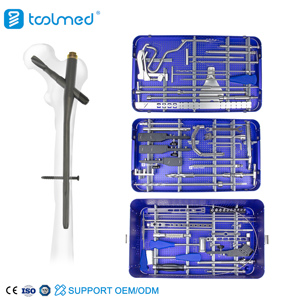
Orthopedic Implant PFNA Femoral Intramedullary Nail Orthopedic Instrument Set Orthopedic Titanium Trauma Nail Implants
Proximal Femoral Nail Antirotation (PFNA) system featuring helical blade technology for osteoporotic hip fracture stabilization. Fully documented for Class III registration.
Contact Us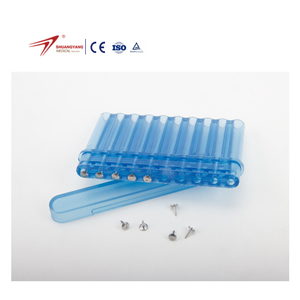
Shuangyang Orthopedic Implant Titanium Alloy Screw Gbr Membrane Bone Tack System Dental Hospital Use CEISO Certified 1 Year
Ultra-precision GBR bone tack and membrane fixation systems. Manufactured under ISO 10993 cytotoxicity standards with full biocompatibility validation dossiers.
Contact Us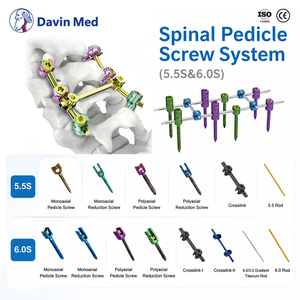
Davin Med Titanium Orthopedic Surgery Spinal 5.5/6.0mm Polyaxial Pedicle Screw Orthopedic Spine Screw Implants CE ISO
High-angle polyaxial pedicle screws engineered for thoracolumbar spinal fusion. Accompanied by ASTM F1717 mechanical static and dynamic fatigue test protocols.
Contact Us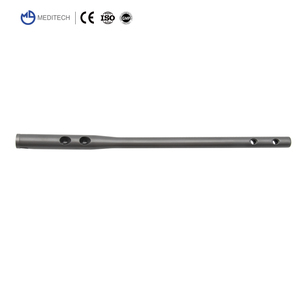
Factory Price High Quality CZMEDITECH Titanium Alloy Orthopedic Intramedullary Nail Implants CE ISO Certified Class III Model
Class III interlocking femoral and tibial intramedullary nails. Supplied with modular technical dossiers to expedite regional health ministry authorization.
Contact Us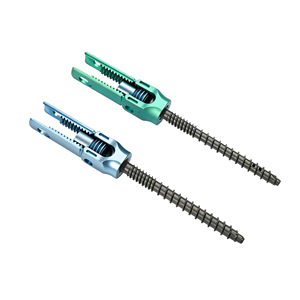
Percutaneous Titanium Alloy Pedicle Screw, Minimally Invasive Orthopedic Spinal Implant for Thoracic & Lumbar Spine
MIS percutaneous pedicle screw system engineered for reduced tissue trauma. Includes full STED file support for rapid EU MDR and global market clearances.
Contact UsNavigating Regulatory Registration Hurdles in Orthopedic Implant OEM Contract Manufacturing
In the modern medical device ecosystem, the strategic role of a Custom OEM orthopedic implant manufacturer extends far beyond high-precision Swiss lathe turning and 5-axis CNC machining. Global regulatory convergence—marked by the transition from the European Medical Devices Directive (MDD 93/42/EEC) to the stringent European Medical Devices Regulation (EU MDR 2017/745), alongside the United States FDA’s refined 510(k) Substantial Equivalence guidance and China NMPA Order No. 739—has fundamentally altered procurement metrics. Medical device brand owners, regional orthopedic distributors, and hospital purchasing groups no longer evaluate suppliers solely on unit price or surface finish; they demand a turnkey regulatory partner capable of bridging product design with rigorous global compliance frameworks.
The registration of implantable Class IIb and Class III orthopedic devices—ranging from pedicle screw spinal systems and total joint replacements to complex interbody fusion cages and interlocking intramedullary nails—requires meticulous compilation of Summary Technical Documentation (STED). When expanding into international markets, distributors frequently encounter extended approval bottlenecks due to fragmented technical documentation, incomplete biocompatibility evaluations, or unvalidated cleanroom packaging processes. A competent contract manufacturing supplier must provide fully compiled regulatory support modules that drastically compress time-to-market.
For instance, under EU MDR 2017/745, spinal pedicle screws and load-bearing fracture plates undergo enhanced Notified Body scrutiny. Manufacturers are mandated to provide detailed Clinical Evaluation Reports (CER), Post-Market Clinical Follow-up (PMCF) plans, and explicit Unique Device Identification (UDI) assignment metrics. Trauhui Medical addresses these regulatory hurdles by establishing pre-validated Design History Files (DHF) and Device Master Records (DMR). By leveraging our ISO 13485:2016 quality management system, international brand partners can seamlessly reference our master technical files to secure product registration certificates across CE, FDA, NMPA, ANVISA (Brazil), and SFDA (Saudi Arabia) jurisdictions.
Future Sourcing & Manufacturing Trends in Orthopedic Engineering
As clinical demand shifts toward minimally invasive surgery (MIS), patient-specific implants (PSI), and biological osseointegration, contract manufacturing paradigms are evolving rapidly between 2025 and 2035.
Additive Manufacturing & Porous Micro-Structures
Direct Metal Laser Sintering (DMLS) and Electron Beam Melting (EBM) titanium 3D printing are replacing subtractive machining for interbody fusion cages. Controlled 60–80% porosity structures with 300–600 μm pore sizes mimic human cancellous bone, lowering the modulus of elasticity to eliminate stress shielding and accelerate bone ingrowth.
Advanced Bio-Polymers & CFR-PEEK
While Ti-6Al-4V ELI remains the gold standard for load-bearing fracture plates, Polyetheretherketone (PEEK) and Carbon Fiber Reinforced PEEK (CFR-PEEK) are dominating spinal implants and radiolucent trauma fixators. These materials enable artifact-free postoperative CT/MRI imaging while providing fatigue life superior to metallic alloys.
Bioactive Surface Coatings & Anodization
Modern OEM supply chains are integrating specialized functional surface treatments. Type II and Type III anodization, plasma-sprayed Hydroxyapatite (HA) coatings, micro-arc oxidation (MAO), and antimicrobial silver-ion deposition enhance early stage cell attachment, reduce infection rates, and secure mechanical primary stability.
Strategic Procurement Trends: The Shift Toward Integrated OEM/ODM Ecosystems
A noticeable structural shift is occurring among mid-tier and tier-one orthopedic brand owners across North America, Western Europe, and Latin America. Historically, medical device brands maintained fragmented vendor bases—sourcing raw titanium bars from one vendor, rough machining from another, surface anodization from a third, and packaging/sterilization from a fourth. Today, economic and regulatory pressures favor **integrated contract manufacturing hubs** located within specialized orthopedic clusters such as Changzhou, Jiangsu, China.
By consolidating manufacturing, surface modification, cleanroom primary packaging, and regulatory file compilation under a single ISO 13485 QMS umbrella, device brands achieve significant strategic advantages:
- Reduction in Total Cost of Ownership (TCO): Eliminating multi-tier vendor handoffs lowers supply chain logistics costs by 25–35% while compressing production lead times from months to 15-day replenishment cycles for stock items.
- Unified Quality Liability & Traceability: Under regulatory audits, managing a single integrated OEM partner with complete raw material heat-lot tracking simplifies Notified Body and FDA inspections.
- Rapid Prototyping & DFM Optimization: Dedicated R&D engineering teams conduct Design for Manufacturability (DFM) reviews prior to tooling cut, resolving potential stress concentrations or tolerance stack-up issues early in the engineering lifecycle.
Trauhui Medical: Your Regulatory-Driven Manufacturing Partner
Headquartered in Changzhou's high-tech medical industrial zone, Trauhui Medical Co., Ltd brings over 15 years of dedicated orthopedic manufacturing excellence to global partners.
World-Class Manufacturing Infrastructure
Spanning a modern 30,000 square meter facility with over RMB 200 million in total capital investment, our plant houses more than 150 sets of advanced CNC machining centers, Swiss-type automatic lathes (Citizen, Haas, DMG Mori), wire EDM units, and optical coordinate measuring machines (CMM). Our annual production capacity exceeds 350,000 finished implant units and matching instrument sets.
ISO 13485 QMS & Multi-National Certifications
Trauhui Medical operates strictly under a TÜV Rheinland certified ISO 13485 Quality Management System. Our full portfolio of spine (ACDF, TLIF, XLIF, Pedicle Screws, Kyphoplasty), trauma (PFNA, Intramedullary Nails, Locking Plates), CMF, and Veterinary systems holds CE Mark and FDA 510(k) clearances. Products are exported to over 30 countries across Europe, the Americas, Middle East, and Asia.
End-to-End Registration Support Workflow for OEM Partners
Design & DFM Review
3D CAD optimization, tolerance stack-up analysis, raw material selection (Ti-6Al-4V ELI ISO 5832-3 / PEEK Optima), and initial prototype cut.
V&V Testing & Dossiers
Execution of ASTM F1717 / ASTM F1264 biomechanical testing, ISO 10993 cytotoxicity, ISO 11607 cleanroom packaging validation, and STED compilation.
Regulatory Submission & Audit
Providing Master Files (MAF), responding to Notified Body or FDA technical inquiries, facilitating factory audits, and supporting fast clearance.
Frequently Asked Questions: OEM Orthopedic Implant Registration
In-depth answers to regulatory, quality control, and contract manufacturing questions frequently raised by global procurement officers and regulatory affairs managers.
How does Trauhui Medical support distributors with local health ministry registration?
We provide a comprehensive technical documentation package (STED format) tailored to your target region's health authority (e.g., FDA 510(k), CE MDR, NMPA, ANVISA, SFDA). This includes ISO 13485 certificates, Declarations of Conformity, raw material mill certificates (ISO 5832-3 / ASTM F136), mechanical static and dynamic fatigue test reports (ASTM F1717, ASTM F1264, ASTM F382), biological evaluation reports (ISO 10993 series), cleanroom environmental control validation, and shelf-life stability data. Our regulatory affairs team directly assists your team in answering technical queries raised by Notified Bodies or regulatory auditors.
Which raw materials are utilized for your titanium orthopedic implants and instrument sets?
All load-bearing permanent implants are fabricated from medical-grade Titanium Alloy (Ti-6Al-4V ELI conforming to ASTM F136 and ISO 5832-3) or commercially pure titanium (CP Ti Grade 2/4). For specialized spinal cages, we utilize biocompatible PEEK (Polyetheretherketone) meeting ISO 10993 standards. Surgical instruments are manufactured using high-grade stainless steel alloys (17-4PH, 420, 316L) to ensure high corrosion resistance, edge retention, and endurance through repeated autoclave sterilization cycles. Full chemical and mechanical mill test certificates accompany every batch.
Can Trauhui Medical support private labeling, custom laser marking, and customized packaging?
Yes. We provide complete OEM/ODM private-label manufacturing. This encompasses custom laser etching of your brand logo, catalog numbers, lot numbers, and Unique Device Identification (UDI) 2D DataMatrix barcodes directly onto implants and instruments. Packaging options range from non-sterile bulk protective packaging to ISO Class 8 (100,000 cleanroom) double-blister Tyvek pouch packaging validated for gamma-ray or ETO sterilization according to ISO 11607 standards.
What is the typical lead time for standard wholesale orders versus custom OEM prototype development?
For standard system inventory across our Spine, Trauma, CMF, and Veterinary portfolios, regular wholesale orders are dispatched within 15 days due to our extensive safety stock levels. For custom OEM/ODM projects, initial 3D CAD design and Design for Manufacturability (DFM) approval take approximately 5–7 working days. Physical prototypes are typically completed within 14 to 21 days, followed by full production batch scheduling upon prototype validation.
What mechanical testing standards are performed to verify implant structural integrity?
Our in-house quality testing laboratory, augmented by certified third-party testing houses (such as TÜV and SGS), performs rigorous biomechanical testing. Spinal constructs undergo static and dynamic axial compression, torsion, and fatigue testing per ASTM F1717 and ASTM F2077. Intramedullary nails and bone plates undergo static bending and fatigue strength evaluation per ASTM F1264 and ASTM F382. Test reports are directly integratable into your product registration technical files.
Are international customers permitted to conduct on-site factory quality audits in Changzhou?
We welcome quality assurance managers, regulatory auditors, and executive teams from prospective distributors and OEM partners to inspect our facility. Located at No.2 Longqing Road, Wujin Hi-tech Zone, Changzhou, Jiangsu, China, our campus is easily accessible from Shanghai. Audits cover our 5-axis CNC machining workshops, cleanrooms, CMM inspection labs, raw material warehouses, and ISO 13485 documentation control systems. Remote video audits are also available upon request.
How does your quality management system guarantee batch-to-batch precision and dimensional stability?
Quality control is embedded into every stage of manufacturing. We employ automated In-Process Quality Control (IPQC) using optical image measuring systems and Zeiss CMM equipment. Every machined lot undergoes First Article Inspection (FAI), statistical process control (SPC) monitoring during production runs, 100% critical dimension verification, and final inspection prior to cleanroom washing. Complete batch execution records are maintained in our ERP system for 15+ years to guarantee 100% historical traceability.
What is the process for requesting product samples or initiating a custom OEM contract manufacturing inquiry?
To initiate a consultation, click the Contact Us button to connect with our dedicated product consultants. You can share your technical specifications, 2D/3D CAD drawings, or target market regulatory requirements. Our engineering and regulatory team will evaluate your project within 24 hours, providing a detailed DFM assessment, unit pricing matrix, sample delivery schedule, and a tailored regulatory support roadmap.
Ready to Accelerate Your Orthopedic Implant Registration & Supply Chain?
Partner with an established, ISO 13485 certified contract manufacturer. Access high-precision spine, trauma, CMF, and veterinary implants backed by complete technical dossiers and fast 15-day lead times.
Contact Us