High-Precision Orthopedic Implants & Surgical Toolkits
Explore our certified trauma, spine, dental, and veterinary implant hardware engineered to international metallurgical and clinical standards.
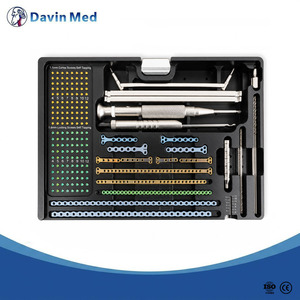
Veterinary ALPS Mini Titanium Locking Plate System
1.1/1.6mm bone plate kit designed for small animal trauma stabilization, featuring micro-locking screws and anatomical contouring.
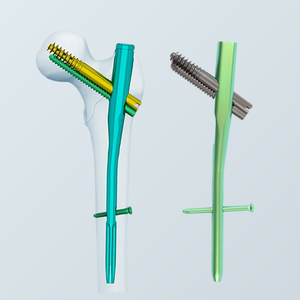
Titanium Interlocking Intramedullary Nail Implant System
Advanced intertrochanteric and femoral fracture trauma treatment implant engineered from high-strength Ti-6Al-4V ELI alloy.
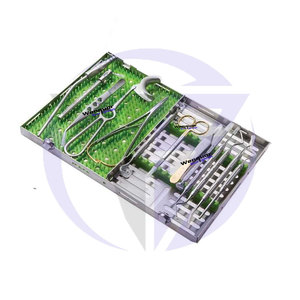
13 Pcs Manual Dental & Orthopedic Surgical Instrument Set
High-grade stainless steel ergonomic surgical kit, CE certified for osteotomy, reaming, and manual implant placement.
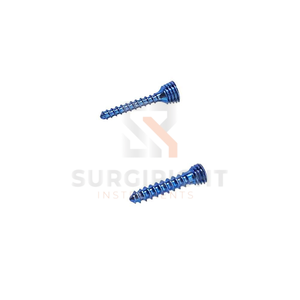
Medical Grade Orthopedic Cortical & Cancellous Bone Screws
Precision-threaded trauma screws available in self-tapping and variable angle geometry for secure bone fracture fixation.
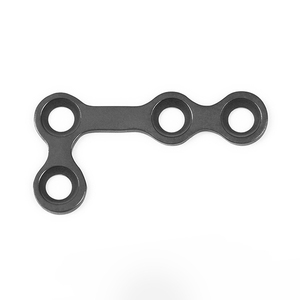
Advanced Veterinary Fracture Repair Plating Systems
Comprehensive veterinary trauma implants offering versatile locking compression plates and anatomical bone reconstructive hardware.
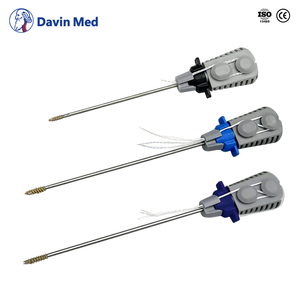
Knotless PEEK Suture Anchor Shoulder Arthroscopy System
Biocompatible PEEK Optima suture anchor engineered for shoulder arthroscopy, labral repair, and rotator cuff reconstruction.
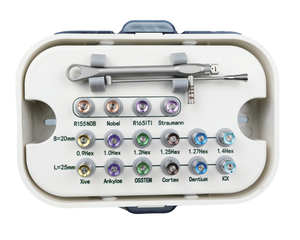
Electric Surgical Handpiece & Implant Tool Sterilization System
High-torque autoclavable surgical power tool kit with CE documentation, optimized for dental implantology and micro-orthopedics.
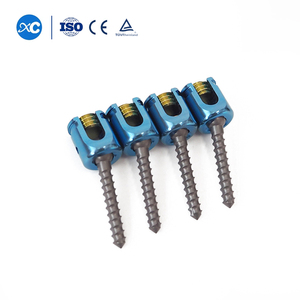
Veterinary Polyaxial Spine Pedicle Screw Titanium Implant
Multi-axial spinal pedicle screw fixation system engineered for complex canine and feline vertebral stabilization surgery.
Enterprise Capacity & Quality Management
Trauhui Medical Co., Ltd operates a state-of-the-art manufacturing infrastructure in Changzhou's high-tech zone, maintaining strict adherence to ISO 13485 and global regulatory frameworks.
Contract OEM & ODM Manufacturing Workflow
From metallurgical verification to 5-axis CNC micro-machining and cleanroom packaging, discover how we deliver turnkey customized orthopedic hardware.
1. CAD Design, DFM & Biomechanical FEA
Our engineering team translates clinical concepts into ISO-compliant 3D models using SolidWorks and Creo. We execute Finite Element Analysis (FEA) to simulate cyclic fatigue stress, von Mises tension, and micro-motion distribution under biomechanical loads specified by ASTM F1717 (spinal implants) and ASTM F543 (medical bone screws).
- Optimization of screw thread pitch, core diameter, and lead angle for pullout strength.
- Anatomical plate pre-contouring tailored to specific ethnicity and skeletal structures.
- Customized surgical tool design including sleeve guides, drivers, and reamers.
2. Medical Metallurgy & Material Validation
Implant integrity relies on uncompromising raw material purity. Trauhui Medical sources certified implant-grade titanium alloys, implant stainless steels, and engineering polymers with comprehensive heat-lot traceability and chemical composition certificates (MTC).
- Ti-6Al-4V ELI (ASTM F136 / ISO 5832-3): Extra Low Interstitial grade offering superior fracture toughness and bio-inertness for trauma and spine.
- PEEK Optima (ASTM F2026): Radiolucent polyether ether ketone for spine interbody fusion cages and knotless suture anchors.
- 316LVM (ASTM F138): Vacuum arc remelted stainless steel for specialized trauma hardware and manual surgical instruments.
3. Precision CNC Machining & Surface Functionalization
Utilizing high-precision Citizen multi-axis Swiss lathe turning centers and DMG MORI 5-axis CNC milling machines, we produce sub-micron tolerance components. Surface finishing options include Type II/III titanium anodization, micro-blasting, electropolishing, and hydroxyapatite (HA) plasma spray coating for enhanced osseointegration.
- Sub-micron surface roughness control ($Ra < 0.4 \mu m$) on joint-articulating interfaces.
- Color-coded electrochemical anodization for easy surgical intraoperative sizing identification.
- Ultrasonic multi-stage detergent cleaning removing all cutting fluids and particulate residues.
4. Class 100,000 Cleanroom Packaging & Registration Support
Final cleaning, visual inspection under high-magnification stereomicroscopes, coordinate measuring machine (CMM) dimensional verification, and blister sealing are conducted inside an ISO Class 7 (Class 100,000) controlled environment. We supply fully validated sterile double-blister packaging or non-sterile bulk distribution configurations.
- Complete Device Master File (DMF) and Technical Dossier preparation for local FDA/MDR submissions.
- EO (Ethylene Oxide) and Gamma sterilization validation under ISO 11135 / ISO 11137.
- Private-label laser marking (UDI barcode, lot number, brand typography) per FDA UDI guidelines.
Orthopedic Implant Material Specifications
A technical comparison of biological alloys and high-performance polymers utilized across Trauhui Medical's custom manufacturing ecosystem.
| Material Designation | Standard Compliance | Yield Strength (MPa) | Elastic Modulus (GPa) | Primary Clinical Applications |
|---|---|---|---|---|
| Ti-6Al-4V ELI Grade 23 | ASTM F136 / ISO 5832-3 | ≥ 795 MPa | 110 GPa | Spine Pedicle Screws, Trauma Plates, Intramedullary Nails |
| Commercially Pure Titanium (CP Ti Gr 4) | ASTM F67 / ISO 5832-2 | ≥ 480 MPa | 105 GPa | Craniomaxillofacial (CMF) Plates, Reconstructive Mesh |
| PEEK-OPTIMA LT1 | ASTM F2026 | ≥ 95 MPa | 3.6 GPa | ACDF / TLIF / XLIF Fusion Cages, Suture Anchors |
| Stainless Steel 316LVM | ASTM F138 / ISO 5832-1 | ≥ 690 MPa | 190 GPa | External Fixation Pins, Kirschner Wires, Surgical Tools |
| 3D Printed Porous Titanium | ASTM F3001 (Selective Laser Melting) | Tailored (150-300 MPa) | 1.5 - 3.0 GPa (Trabecular Match) | Additive Manufactured Interbody Cages, Custom Bone Defects |
Future Development Trends in Orthopedic Sourcing
Key technological shifts shaping the next decade of orthopedic implant design, contract manufacturing, and international distribution.
1. Additive Manufacturing & Porous Trabecular Structures
Traditional solid PEEK and machined titanium cages are rapidly yielding market share to 3D printed additive-manufactured implants. Electron Beam Melting (EBM) and Direct Metal Laser Sintering (DMLS) allow the fabrication of biomimetic trabecular pore architectures (500–700 μm pore size, 60–80% porosity). This structural pore topology mimics native human cancellous bone, dramatically accelerating vascularization, osteoblast migration, and direct bone ingrowth (osseointegration) without needing secondary bone grafting.
2. Patient-Specific Implants (PSI) & AI CT-Segmentation
Off-the-shelf standardized implants often demand intraoperative manual bending and compromise anatomical fit, especially in complex revision surgeries, oncology resections, and craniomaxillofacial reconstructive procedures. The future of medical contract manufacturing centers on AI-driven DICOM CT image segmentation, converting patient scans into patient-specific implants (PSI) and patient-specific surgical cutting guides within 48 to 72 hours, optimizing surgical outcome predictability and reducing operative time.
3. Bioabsorbable Polymers & Antibacterial Surface Functionalization
Secondary implant removal surgeries represent a significant financial burden on global healthcare systems. Innovation is accelerating toward bioabsorbable magnesium alloys (Mg-Zn-Ca) and high-molecular-weight PLLA/PGA copolymers that gradually degrade and transfer mechanical load back to healing bone over 12 to 24 months. Simultaneously, surface functionalization featuring silver nanoparticle ion implantation and atomic layer deposition (ALD) of nanostructured hydroxyapatite creates bactericidal micro-environments that inhibit Biofilm formation and postoperative surgical site infections.
Global Procurement & Supply Chain Trends
How medical device distributors, hospital purchasing syndicates, and OEM brand managers are managing regulatory overhead and inventory risks in 2026 and beyond.
Consolidation Around Vertically Integrated Clusters
Rising regulatory compliance costs under the European Union Medical Device Regulation (EU MDR 2017/745) and US FDA Quality System Regulation (QSR 21 CFR Part 820) are compelling distributors to migrate away from fragmented regional machine shops. Sourcing partners are consolidating purchase volumes with vertically integrated medical device hubs like Changzhou, China. Vertically integrated factories that encompass raw material forging, 5-axis machining, surface anodizing, mechanical testing laboratories, and cleanroom packaging under one roof eliminate supply chain friction, shorten lead times to under 15 days for standard lines, and lower total landed unit cost.
Dual Sourcing & Rapid Private-Label Deployment
Global supply chain volatility has made single-region reliance risky for major orthopedic brand owners. Medical buyers are establishing dual-sourcing framework agreements with established Asian OEM/ODM manufacturers capable of delivering private-label turn-key product systems. By leveraging existing certified product designs with customizable laser etching, color-coded instrument trays, and multi-lingual IFU (Instructions for Use) documentation, brand owners can enter emerging healthcare markets in Latin America, Southeast Asia, the Middle East, and Eastern Europe in half the traditional R&D cycle time.
Why Partner with Trauhui Medical Co., Ltd?
Headquartered in Changzhou—China's recognized capital of orthopedic medical device manufacturing—Trauhui Medical combines 15+ years of specialized R&D with international manufacturing assets.
15+ Years Specialized Focus
Founded in 2009 and fully dedicated to orthopedic hardware design since 2013, our engineering matrix brings deep clinical understanding to spine, trauma, CMF, and veterinary surgical applications.
International Infrastructure
With a total capital investment exceeding RMB 200 million, Trauhui Medical operates state-of-the-art domestic plants alongside a specialized orthopedic manufacturing facility in Hungary and a Hong Kong international logistics base.
Comprehensive Regulatory Portfolio
Our manufacturing system is certified under TÜV ISO 13485. Full technical dossiers, CE certificates, and FDA 510(k) clearances are ready to empower seamless registration for global distributors.
Frequently Asked Questions for Sourcing Managers
Detailed technical, regulatory, and procurement answers tailored for medical device buyers, OEM brand owners, and hospital tenders.
Which regulatory certifications and quality standards cover your orthopedic implants?
Trauhui Medical products are manufactured under a TÜV-audited ISO 13485 Quality Management System. Our key spine, trauma, and instrument product families hold CE marks and US FDA 510(k) clearances. Each shipment is accompanied by Mill Test Certificates (MTC) verifying raw material chemical and mechanical properties per ASTM F136 / ASTM F2026, CMM inspection reports, passivated surface verification, and sterility assurance documentation where applicable.
What is your customized OEM/ODM design process and typical turnaround time?
Our OEM/ODM workflow progresses through five key phases: (1) Initial CAD evaluation and DFM analysis (3–5 days); (2) Finite Element Analysis (FEA) stress testing and prototype sampling (2–3 weeks); (3) Mechanical validation per ASTM/ISO standards; (4) Pilot production run and private-label packaging tooling (2 weeks); (5) Commercial batch manufacturing. Rapid functional prototypes can be produced via Swiss CNC turning or metal 3D printing within 7 business days.
What is your Minimum Order Quantity (MOQ) and delivery lead time for regular vs OEM orders?
For standard catalog items (such as standard pedicle screws, locking trauma plates, and veterinary ALPS systems), we maintain robust safety inventory in Changzhou, allowing dispatch within 15 calendar days. For custom OEM/ODM projects or bespoke private-label orders, typical production lead times range from 30 to 45 days, depending on geometry complexity, surface treatment requirements (e.g., HA coating or specialized anodization), and custom packaging specifications.
Can you manufacture custom surgical instrument kits to accompany proprietary implants?
Yes. A successful surgical system requires seamless synergy between implant hardware and surgical instrumentation. Trauhui Medical engineers complete surgical toolkits—including ergonomic silicone-handled drivers, depth gauges, drill guides, bending pliers, and quick-coupling pass-through reamers—custom-fitted into autoclavable graphic aluminum or PEEK sterilization trays with customized silicone grommets.
How do your veterinary orthopedic implant systems differ from human hardware?
While veterinary implants utilize the exact same medical-grade Ti-6Al-4V ELI titanium and ISO 13485 manufacturing tolerances as human hardware, veterinary anatomy requires distinct dimensional profiles. Our Lovan and ALPS veterinary lines feature ultra-mini micro-locking plates (1.1mm, 1.6mm, 2.0mm, 2.4mm, 2.7mm, 3.5mm) with aggressive screw thread angles optimized for canine and feline cortical bone density, offered alongside polyaxial pedicle screws specifically sized for veterinary spinal reconstruction.
How do you support international distributors with hospital tender submissions and local registration?
We provide global distribution partners with a complete regulatory support package, including Notarized Certificates of Free Sale (CFS), ISO 13485 certificates, CE Declarations of Conformity, full Technical Files (STED format), biocompatibility test reports (ISO 10993), clinical evaluation summaries, and high-resolution marketing catalogs/video assets. Our regulatory team assists directly in answering local health authority inquiries to accelerate your market launch.
Accelerate Your Orthopedic Product Strategy Today
Partner with China's leading ISO 13485 & CE-certified OEM/ODM contract manufacturer. Contact our biomedical engineering team to request sample kits, technical dossiers, or custom production estimates.