Navigating Global Regulatory Compliance in Orthopedic Manufacturing
The international orthopedic device market is experiencing a profound structural shift driven by the stringent transition to the European Union Medical Device Regulation (EU MDR 2017/745), escalating requirements for Design History File (DHF) verification, and demand for precision additive manufacturing. Hospital procurement networks and healthcare distributors can no longer rely solely on legacy supply chains. Partnering with a vertically integrated OEM/ODM manufacturer possessing robust Class III medical device regulatory infrastructure has become a baseline operational prerequisite.
Featured EU MDR & ISO 13485 Orthopedic Systems
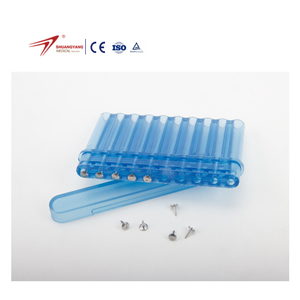
Shuangyang Orthopedic Implant Titanium Alloy Screw GBR Membrane Bone Tack System
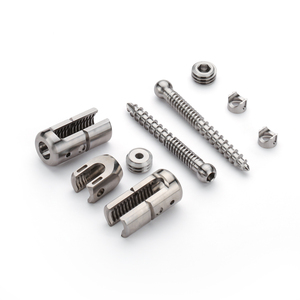
JZC High-quality Orthopedic Spinal Implant Posterior Thoracolumbar Nailing & Rod System
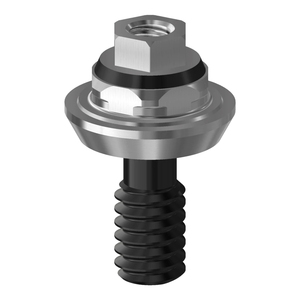
Dental Implant Compatible Titanium Healing Abutment Scan Post Restoration System
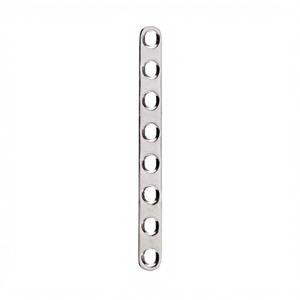
Stainless Steel Phillips Bone Plates High Quality Veterinary Bone Orthopedic Implants
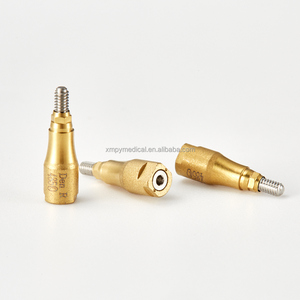
High Accuracy Implant Scan Body Compatible with Nobel System Scan Post
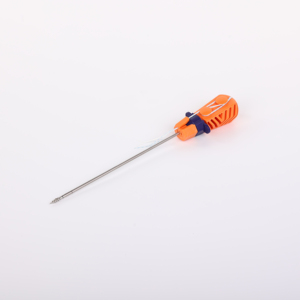
Suture Anchor 5.5 Titanium Alloy Anchor Ergonomic Handle Arthroscopy Implants
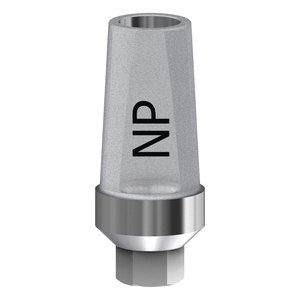
Titanium Dental Implant Abutments 0° / 15° / 25° for Cemented Single & Bridge Prostheses
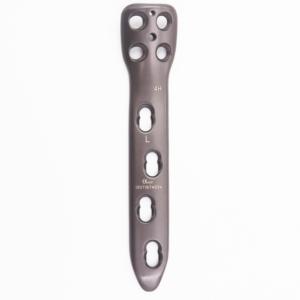
Titanium Distal Femur Medial Osteotomy Locking Plate Class III Certified Implant
Why Global Healthcare Brands Partner With Trauhui Medical
Headquartered in Changzhou, Jiangsu—the definitive epicenter of China’s orthopedic surgical instrument industry—Trauhui Medical Co., Ltd brings over 15 years of dedicated contract manufacturing expertise to global healthcare partners.
Full EU MDR & ISO 13485 Rigor
Complete compliance architecture under TÜV certified ISO 13485 QMS and EU MDR (EU 2017/745) requirements. We maintain fully compliant Technical Documentation Files (TDF), clinical evaluation data, and UDI traceability for seamlessly executing market authorizations worldwide.
Swiss-Type Multi-Axis CNC Precision
Our state-of-the-art facility operates more than 150 sets of modern processing equipment including Citizen Swiss multi-axis automatic lathes, DMG MORI 5-axis machining centers, and wire EDM tools. We consistently maintain tolerances down to ±0.005mm.
End-to-End OEM/ODM Co-Development
Equipped with a senior engineering team of 30+ R&D specialists, we turn CAD models into prototype samples within ultra-short cycles. From initial titanium/PEEK material selection to custom surgical instrument kit design, we offer complete private-label manufacturing.
Class 100,000 Cleanroom Packaging
All orthopedic implants undergo automated ultrasonic cleaning, pass micro-particle analytical validation, and are sealed inside ISO 7 / Class 100,000 cleanrooms in medical-grade Tyvek pouch packaging ready for Gamma or Ethylene Oxide (EtO) terminal sterilization.
Agile Supply Chain & Fast Lead Times
By keeping an extensive buffer inventory of medical-grade titanium bars (Ti-6Al-4V ELI grade 5, ASTM F136), implant-grade PEEK, and stainless steel (316L), standard implant orders are fulfilled and dispatched within 15 working days.
Comprehensive Metallurgical Traceability
Every batch of implants is tied to raw material heat numbers with full 100% optical coordinate measuring machine (CMM) inspection reports, static and dynamic fatigue test logs (per ASTM F1717 / ISO 14801), and complete risk management documentation under ISO 14971.
Industry Development & Technical Trends in Orthopedic Engineering
Information Gain Insights: Modern orthopedic device procurement has evolved beyond unit cost negotiations. Global distributors must focus on biomechanical biomimicry, additive porous titanium architectures, and regulatory data portability to stay competitive under changing healthcare regimes.
1. The Transition to Additive Manufacturing & Porous Trabecular Titanium
Traditional solid titanium alloy and PEEK implants are increasingly giving way to 3D printed porous titanium structures (Direct Metal Laser Sintering - DMLS / Electron Beam Melting - EBM). By engineering interconnecting pore geometries with 60%–80% porosity and average pore diameters of 300–600 microns, additive manufacturing closely mirrors human cancellous bone modulus. This dramatically reduces stress shielding, accelerates osseointegration, and eliminates the need for complex plasma-sprayed bone coatings. OEM partners must ensure their manufacturing supplier possesses dedicated 3D printing post-processing lines, including hot isostatic pressing (HIP) and residual powder removal verification.
2. Heightened Regulatory Requirements Under EU MDR 2017/745
The enforcement of EU MDR has placed unprecedented demands on medical device importers and OEM brand owners. Class IIb and Class III structural implants—such as pedicle screw systems, spinal interbody fusion cages, distal femoral locking plates, and total hip/knee prostheses—require comprehensive clinical evaluation reports (CER), rigorous Post-Market Clinical Follow-up (PMCF) plans, and explicit biocompatibility profiles under ISO 10993. Sourcing from contract manufacturers with pre-established Technical Documentation Files (TDF) drastically cuts time-to-market for European and Latin American distributors.
3. Convergence of Digital Workflows & Patient-Specific Implants (PSI)
From dental GBR (Guided Bone Regeneration) membrane tacks and multi-platform scan bodies to complex craniomaxillofacial (CMF) reconstruction, digital workflows are reshaping patient care. Surgeons now routinely demand optical intraoral scanning, CT-based 3D reconstruction, and custom anatomical locking plates. Contract manufacturers must support open-architecture STL file conversion, high-accuracy CAD CAM prototyping, and tight tolerance micro-machining to fulfill custom patient-specific requests.
| Material Specification | Biomechanical Profile | Primary Surgical Applications | Key Regulatory Standards |
|---|---|---|---|
| Ti-6Al-4V ELI (Grade 5) | High yield strength, superior fatigue life, low modulus vs. steel | Spinal Pedicle Screws, Intra-medullary Nails, Locking Plates | ASTM F136 / ISO 5832-3 |
| Implant-Grade PEEK Optima | Radiolucent, elastic modulus matching cortical bone (~3.6 GPa) | ACDF, TLIF, XLIF Cervical & Lumbar Interbody Cages | ASTM F2026 |
| Stainless Steel 316LVM | High tensile strength, ductile, cost-effective stability | Veterinary Trauma Plates, Maxillofacial Screws, External Fixators | ASTM F138 / ISO 5832-1 |
| Porous Trabecular Titanium | Interconnected pore network, high friction coefficient, rapid bone ingrowth | 3D Printed Spinal Fusion Cages, Acetabular Cups | ASTM F3001 / ISO 13485 QMS |
Future Sourcing Trends for Global Medical Device Buyers
Procurement executives in hospital networks, orthopedic distribution companies, and private-label brands are shifting from transactional purchasing to integrated supply chain alliances. Key sourcing trends shaping the next decade include:
- DHF & Technical Dossier Ownership Transfer: Buyers prefer working with OEM manufacturers willing to share comprehensive risk management matrices, test protocols, and validation packages to accelerate localized product registrations (e.g., NMPA, US FDA 510k, ANVISA, COFEPRIS).
- Supply Chain Consolidation: Procurement teams are reducing their vendor roster by partnering with multi-specialty manufacturers capable of supplying Spine, Trauma, Arthroscopy, Dental, CMF, and Veterinary systems simultaneously under a single ISO 13485 umbrella.
- Surgeon-Centric Instrument Kit Customization: Implants must be accompanied by intuitive, ergonomically balanced surgical instrument trays. Modern contract manufacturing must include customized CNC-milled aluminum tray containers, silicon holding grommets, and color-coded surgical drills.
- Buffer Stocking & Consignment Logistics: To guard against global freight bottlenecks, major OEMs provide localized safety stock warehousing and rapid 15-day batch fulfillment.
Orthopedic Implants OEM/ODM Sourcing FAQ
Clear, expert answers to key technical, regulatory, and supply chain questions from international healthcare buyers.
Which certifications do Trauhui Medical orthopedic implants hold for international markets?
Trauhui Medical products are manufactured under an ISO 13485 certified Quality Management System. Selected core lines hold CE marking under European regulatory standards and FDA 510(k) clearances in the United States. We maintain complete Technical Documentation Files (TDF) structured in STED format, ISO 10993 biocompatibility testing data, and ASTM F1717 / ISO 14801 mechanical test reports to assist global distributors with local regulatory registration in LATAM, SE Asia, the Middle East, and Europe.
What is the typical lead time for standard OEM orders and custom ODM projects?
For standard portfolio implants (such as pedicle screws, locking plates, intramedullary nails, and dental abutments), production and dispatch are typically completed within 15 working days thanks to our pre-stocked certified raw materials. For custom ODM projects—involving non-standard implant geometries or customized surgical instrument sets—the prototype development cycle takes approximately 3 to 4 weeks, with full commercial batch production executed within 45 days after design freeze and initial sample sign-off.
Does Trauhui Medical support private-label branding and customized packaging?
Yes. We offer complete turnkey private-label OEM and ODM manufacturing services. This includes high-precision laser marking of your brand logo and UDI barcode onto implants, customized color anodization for size identification, bespoke surgical instrument tray design, and cleanroom heat-sealed Tyvek pouch packaging with customized graphic boxes and multilingually compliant IFUs (Instructions for Use).
What raw materials are utilized in your orthopedic implant manufacturing?
We source only raw materials with full mill test certificates and heat traceability:
- Titanium Alloy: Premium Ti-6Al-4V ELI (Grade 5) compliant with ASTM F136 / ISO 5832-3.
- Implant-Grade PEEK: Biocompatible PEEK-OPTIMA compliant with ASTM F2026 for radiolucent spinal cages.
- Stainless Steel: High-purity 316LVM surgical steel per ASTM F138 for specialized trauma plates and veterinary fixation.
How does Trauhui Medical guarantee product quality and dimensional accuracy?
Quality assurance is embedded at every manufacturing step under our ISO 13485 QMS. We utilize automated Coordinate Measuring Machines (CMM), optical profile projectors, surface roughness testers, and digital torque testers. 100% of finished implants undergo final visual and dimensional inspection prior to automated ultrasonic cleaning and cleanroom packaging. Static and dynamic fatigue testing is conducted regularly to verify long-term structural integrity.
Can distributors audit your production facility in Changzhou, China?
Absolutely. We welcome prospective distributors, hospital procurement committees, and third-party audit agencies to conduct on-site facility audits at our 30,000+ m² manufacturing plant located at No.2 Longqing Road, Wujin Hi-tech Zone, Changzhou, Jiangsu, China. Virtual live video audits and complete quality documentation reviews are also available upon request.
Partner With a Leading OEM/ODM Orthopedic Manufacturer Today
Expand your product portfolio with EU MDR and ISO 13485 compliant spinal, trauma, CMF, arthroscopy, and veterinary implant systems. Contact our engineering team for full product catalogs, technical documentation files, or custom quotation specs.