Flagship Orthopedic Implant & Surgical Systems
Designed for biomechanical integrity, clinical precision, and anatomical adaptability. Manufactured in state-of-the-art ISO Class 7 cleanrooms using medical-grade Titanium alloys and PEEK polymers.
Executive Whitepaper: Strategic Sourcing & Engineering Frameworks for Orthopedic Manufacturing
The global orthopaedic implant market demands an uncompromising synthesis of metallurgical purity, micro-machining accuracy, structural biomechanics, and stringent regulatory compliance. As surgical interventions become increasingly minimally invasive and patient-specific, orthopedic medical device companies, hospital procurement groups, and private-label distributors face escalating challenges: balancing rigorous quality control under ISO 13485:2016, EU MDR 2017/745, and US FDA 510(k) frameworks with cost-effective contract manufacturing and reliable supply chain agility.
1. Material Science and Biocompatibility Fundamentals in Orthopedic OEM
Orthopedic implants operate in high-stress, corrosive biological environments. Achieving long-term osseointegration or stable internal fixation depends heavily on the selected raw materials. Recognized international standards strictly govern the material selection in our manufacturing facilities:
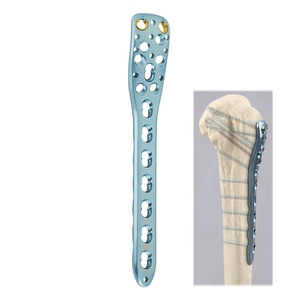
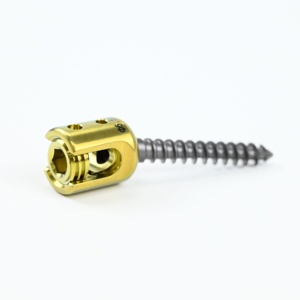
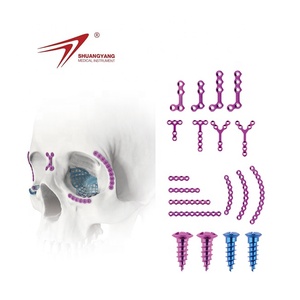
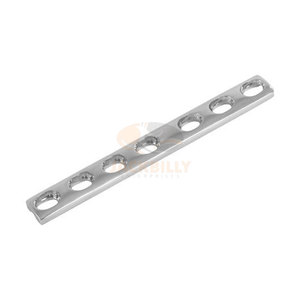
- Titanium Alloy (Ti-6Al-4V ELI - ASTM F136 / ISO 5832-3): Extra Low Interstitial titanium grade offering an exceptional strength-to-weight ratio, low elastic modulus closer to human cortical bone, high fatigue resistance, and superior osteoconductive capabilities. Essential for trauma plates, pedicle screws, intramedullary nails, and CMF implants.
- Polyetheretherketone (PEEK-OPTIMA / ASTM F2026): An unreinforced radiolucent thermoplastic that matches the modulus of elasticity of cancellous and subchondral bone. Crucial for interbody fusion cages (ACDF, TLIF, XLIF) and spinal reconstruction, permitting artifact-free radiographic evaluation via X-ray and CT imaging.
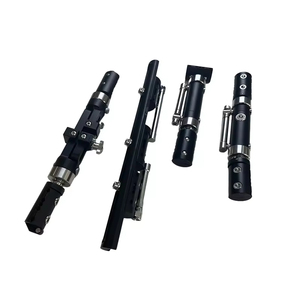
- Medical Grade Stainless Steel (316LVM - ASTM F138 / ISO 5832-1): Vacuum arc remelted (VAR) stainless steel exhibiting high ductility and yield strength, ideal for temporary fracture fixation devices, external fixation pins, and heavy-duty veterinary surgical instruments.
Table 1: Biomechanical & Metallurgical Comparison of Primary Implant Materials
| Material Standard | Tensile Strength (MPa) | Yield Strength (MPa) | Elastic Modulus (GPa) | Primary Clinical Indications |
|---|---|---|---|---|
| Ti-6Al-4V ELI (ASTM F136) | ≥ 860 | ≥ 790 | 110 - 114 | Locking Plates, Pedicle Screws, IM Nails, CMF Plates |
| Implants PEEK (ASTM F2026) | 90 - 100 | 85 - 95 | 3.5 - 4.1 | Interbody Fusion Cages, Expandable Corpectomy Devices |
| 316LVM Steel (ASTM F138) | ≥ 860 | ≥ 690 | 190 - 200 | External Fixators, K-Wires, Veterinary Trauma Plates |
| Commercially Pure Ti (ASTM F67) | 240 - 550 | 170 - 485 | 100 - 105 | Cranial Mesh, Maxillofacial Micro-plates, HA Base Substrates |
2. Modern CNC Machining & Surface Modification Workflows
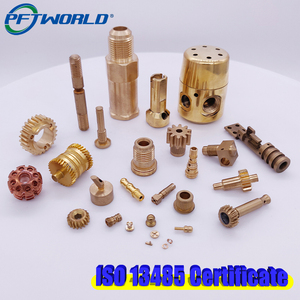
Transforming raw bar stock into micro-contoured, anatomically shaped implants requires high-precision multi-axis Swiss-type lathes, 5-axis CNC machining centers, and automated wire EDM systems. Tolerances for locking thread profiles, polyaxial screw heads, and cannulated shafts must routinely meet sub-micron thresholds (±0.005 mm).
Equally critical is surface modification. Surface roughness ($Ra$) directly impacts cell adhesion, bone-implant contact (BIC), and bacterial colonization rates:
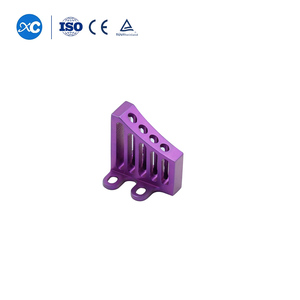
- Type II & Type III Anodization: Type II anodization increases wear resistance and reduces friction in sliding titanium interfaces (e.g., screw-plate locking mechanisms). Type III color anodization provides rapid color coding for surgical sizing clarity.
- Grit Blasting & Plasma Sprayed HA Coatings: Micro-rough surfaces created via titanium plasma spraying or Hydroxyapatite (HA) deposition accelerate osteoblast proliferation, promoting immediate mechanical stability and secondary biological fixation.
- Electropolishing & Passivation: Chemical passivation (ASTM F86) removes free iron particulates from machined surfaces, establishing a dense passive chromium or titanium oxide protective film that prevents metal ion leaching in vivo.
Why Leading Global Orthopedic Brands Partner with Trauhui Medical
Based in Changzhou, China’s premier orthopedic industrial hub, Trauhui Medical Co., Ltd combines over 15 years of continuous manufacturing experience with extensive global export infrastructure.
Massive Manufacturing Scale
Operating a modernized 30,000+ m² production base housing over 150 advanced machining centers, supporting an annual capacity exceeding 350,000 pieces to seamlessly fulfill high-volume international tenders.
Full Regulatory Compliance
Certified under ISO 13485 QMS, with comprehensive CE Markings and FDA 510(k) clearances. Complete Technical Documentation Files (TDF) are provided for rapid market registration in 30+ countries.
Complete OEM/ODM Customization
Dedicated R&D team of 30+ engineers capable of converting custom surgeon ideas or CAD concepts into validated prototypes, production tooling, and custom private-label packaging.
Rapid Delivery & Stock Assurance
Large safety inventories maintained for standard spine, trauma, and veterinary lines, guaranteeing delivery within 15 days to eliminate hospital supply chain disruptions.
Matching Instrument Engineering
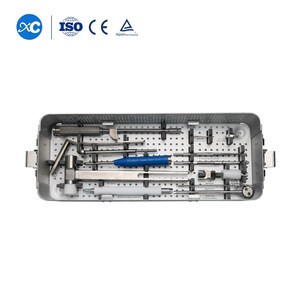
Custom surgical instrument design and manufacturing to complement implant sets, ensuring ergonomic balance, tactile control, and long-term autoclavable durability.
Lifetime Technical Support
Extensive support including distributor product training, surgeon workshop kits, hospital visit assistance, and rapid response technical customer care.
Future Sourcing & Technology Trends in Orthopedic Manufacturing
Navigating the next decade of orthopedic procurement requires an understanding of emerging technological innovations, shifting regulatory burdens, and evolving global supply chain strategies.
Trend 1: Additive Manufacturing & 3D Porous Titanium Structures
Traditional solid titanium implants rely heavily on post-machining surface sprays to achieve bone ingrowth. Direct Metal Laser Sintering (DMLS) and Electron Beam Melting (EBM) allow for the creation of 3D printed cages and implants with engineered trabecular pore sizes (300–600 microns) and 60–80% porosity. This mimicry of human cancellous bone significantly reduces stress shielding and accelerates early osseointegration.
Trend 2: Supply Chain Resilience & Hybrid Sourcing Models
Device brand owners are moving away from single-source domestic vendors toward dual-sourcing strategy. Partnering with certified offshore hubs like Changzhou provides cost efficiencies without sacrificing quality. High-volume baseline components (e.g., standard cortical screws, locking plates) are manufactured offshore while critical custom components receive local final finishing.
Trend 3: PEEK & Bioresorbable Composite Innovations
While standard PEEK remains the gold standard for spine fusion cages, carbon-reinforced PEEK (CFR-PEEK) and bioresorbable magnesium-based alloys are gaining rapid market share in osteosynthetic fixations. CFR-PEEK offers superior fatigue strength while matching the modulus of cortical bone, presenting new opportunities for advanced trauma and oncology implants.
Trend 4: Stringent Regulatory Harmonization (EU MDR & MDSAP)
The transition from MDD to EU MDR has drastically increased post-market clinical follow-up (PMCF) requirements and device traceability (UDI system integration). OEM suppliers must now maintain fully transparent, audit-ready Technical Master Files containing comprehensive biomechanical testing data (ASTM F2077, ASTM F543, ISO 7206).
Frequently Asked Questions for Medical Device Procurement & OEM Partners
Detailed answers addressing critical regulatory, technical, and supply chain queries encountered by OEM/ODM buyers.
What certifications and regulatory documentation support Trauhui Medical implants?
What is the complete workflow and lead time for custom OEM/ODM implant development?
- Design & DFM Analysis (1–2 weeks): Review of 3D CAD files, material selection, and Design for Manufacturability feedback.
- Prototyping & FEA (2–3 weeks): Rapid CNC machining of physical prototypes and Finite Element Analysis for fatigue strength.
- Tooling & Verification (3–4 weeks): Development of custom fixtures, inspection gauges, and initial sample inspection (FAIR).
- Pre-Production Validation (2 weeks): Execution of IQ/OQ/PQ protocols, cleaning validation, and mechanical testing.
- Mass Production & Private Labeling: Cleanroom packaging, laser marking (UDI barcodes), and delivery. Standard turnaround for full custom OEM projects ranges from 8 to 12 weeks depending on complexity.
What raw material grades and batch traceability standards are utilized?
What mechanical fatigue testing standards do your orthopedic implants undergo?
- Spinal Implants: ASTM F2077 (Static and Dynamic Interbody Fusion Devices), ASTM F1717 (Spinal Implant Constructs in a Vertebrectomy Model), and ASTM F2267 (Subsidence Testing).
- Trauma Plates & Screws: ASTM F382 (Metallic Bone Plates), ASTM F543 (Metallic Medical Bone Screws - Torsional, Axial Insertion, and Pull-out Force).
- Intramedullary Nails: ASTM F1264 (Intramedullary Fixation Devices).
What cleanroom and packaging options are available for private-label clients?
1. Non-Sterile Bulk Packaging: Implants are ultrasonically cleaned, passivated, protective-wrapped, and boxed for client-side cleaning and sterilization.
2. Sterile Ready-to-Use Packaging: Implants are processed inside our ISO Class 7 (Class 10,000) cleanroom, sealed in double Tyvek® blisters or pouches complying with ISO 11607, and subjected to validated Gamma Irradiation or Ethylene Oxide (EO) sterilization with a 5-year shelf-life stability guarantee.
What are your Minimum Order Quantities (MOQ) for standard lines vs OEM projects?
Partner with a World-Class Orthopedic Implant Manufacturer
Whether expanding your regional distribution catalog, building a custom private-label spine/trauma line, or optimizing contract manufacturing costs, our engineering team is ready to support your market growth.