Featured Orthopaedic Implant Systems & OEM Components
Explore our certified product portfolio engineered for trauma, spinal, locking plate, and veterinary surgical applications.
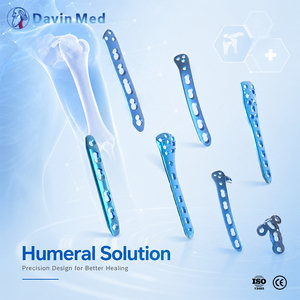
Factory Price Orthopedic Humeral Plate And Screw System OEM ODM Surgical Implants
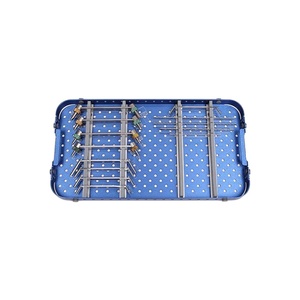
Orthopedic Implants Manufacturer in China 1.5/2.0/2.4/2.7/3.5mm Veterinary Orthopedic Instrument Kit
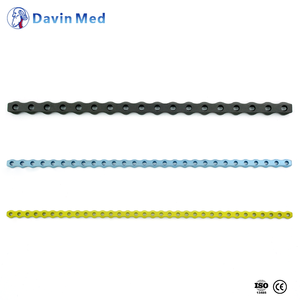
Veterinary ALPS Locking Bone Plate Titanium Orthopedic Implant For Pet Dog/Cat Fracture Surgery 1.6-4.0mm Sizes CE Certified
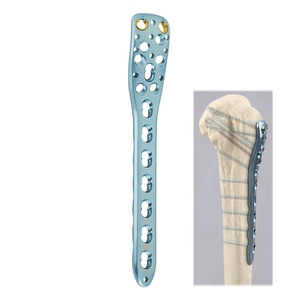
Variable Angle Neck Of Humerus Locking Bone Plate Titanium Orthopedic Trauma Implants
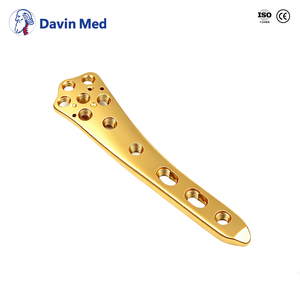
Davin Med Distal Humerus Lateral Locking Plate Titanium Orthopedic Bone Plate Trauma Implant CE ISO13485 OEM ODM Manufacturer
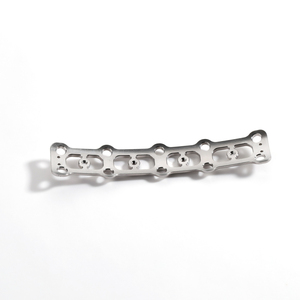
Tantium Alloy Bone CNC Machining Stud High Quality Orthopaedics Department Use 3D CNC Part Manufacture Implant Plate
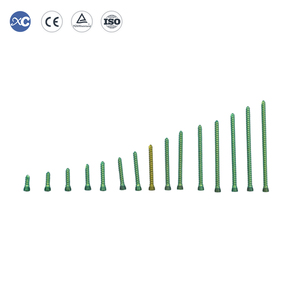
Veterinary Orthopedic Implant 1.5mm AO Locking Screw Orthopedic Implant for Surgical Purposes Orthopedic Bone Screws
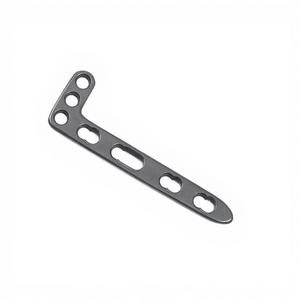
Orthopedic Implant Trauma Distal Posterior Radius Locking Plate III Mini Plate for Hand Surgery Hengchee/OEM/ODM
1. Executive Summary & The Paradigm Shift in Orthopaedic Contract Manufacturing
The global market for orthopaedic implants and specialized surgical instrumentation is undergoing a rapid evolution. Driven by an aging population, rising clinical preferences for minimally invasive surgical (MIS) techniques, and an surging demand for high-tier veterinary orthopedics, healthcare providers and brand distributors face mounting pressures to supply high-performance, defect-free implant systems while controlling acquisition costs. In this complex ecosystem, partnering with a certified OEM/ODM orthopaedic implants manufacturer has transitioned from a pure cost-reduction strategy to a core competitive requirement for medical device organizations globally.
Modern contract manufacturing of medical devices requires far more than generic CNC machining capabilities. It demands deep metallurgical expertise in biomedical-grade materials (such as ISO 5832-3 Titanium Grade 5 Ti-6Al-4V ELI, PEEK OPTIMA, and 316L Stainless Steel), strict adherence to internationally harmonized quality management systems (QMS ISO 13485:2016), and comprehensive regulatory technical files supporting CE marking (under EU MDR 2017/745) and US FDA 510(k) clearances. This whitepaper analyzes the engineering standards, material choices, product validation protocols, and global market trends essential for medical device brand owners, OEM purchasing managers, and surgical distributors seeking reliable manufacturing partners.
Core Industry Directive: Strategic procurement in orthopaedic device manufacturing demands single-source accountability—integrating CAD engineering, finite element analysis (FEA), high-precision 5-axis Swiss CNC turning, surface modification, cleanroom double-pouch packaging, and full lot-traceability under one unified ISO 13485 audit trail.
2. Biomedical Metallurgical Engineering & High-Precision Manufacturing Operations
Surgical implants installed into human or animal anatomy operate under continuous biomechanical fatigue stress, fluid exposure, and multi-axial loading forces. Consequently, material selection and structural processing define clinical longevity and implant safety. Premium OEM/ODM orthopaedic implants factories utilize rigorous raw-material validation processes before any machining commences.
Biomedical Alloy Selection & Microstructural Integrity
- Titanium Ti-6Al-4V ELI (ASTM F136 / ISO 5832-3): The primary material for trauma locking bone plates, pedicle screws, and veterinary ALPS systems. The "Extra Low Interstitial" (ELI) grade minimizes oxygen and nitrogen inclusions, significantly elevating fracture toughness and structural fatigue resistance under cyclic gait loads.
- Polyetheretherketone (PEEK OPTIMA): Used extensively in spinal interbody fusion cages (ACDF, TLIF, XLIF). PEEK features a modulus of elasticity closely matching human trabecular bone, mitigating stress-shielding effects while maintaining radiolucency for postoperative radiographical assessment.
- Surgical-Grade Stainless Steel (316L / ASTM F138): Selected for robust temporary internal fixation, k-wires, intramedullary nails, and reusable surgical instrumentation where high yield strength and economic balance are required.
Advanced Machining & Surface Treatment Technologies
Precision execution relies on automated, multi-axis manufacturing hardware. Leading manufacturing hubs utilize Citizen and Star Swiss-type automatic lathes alongside 5-axis high-speed CNC milling centers, maintaining manufacturing tolerances as tight as ±0.005mm. Thread profiles for locking bone screws are machined with optical tool-wear sensors to eliminate micro-burrs and thread galling risks.
Surface modification plays an equally vital role in biological performance. Advanced factories execute controlled Type II Anodization to improve wear resistance and fatigue life, and Type III Color Anodization for visual dimension coding in surgical trays. For permanent osseointegration, additive manufacturing (SLM/EBM 3D printing) creates biomimetic trabecular titanium surfaces with interconnected porosity (60-80% pore volume, 300-500µm pore sizes) that accelerate osteoblast infiltration.
3. Enterprise Infrastructure & Quality Management Strengths
Headquartered in Changzhou, China—the world-renowned industrial cluster for orthopaedic device manufacturing—our integrated facilities provide global partners with unparalleled manufacturing scale and technical rigor.
Self-Owned Manufacturing Base
Spanning over 30,000 m² of modern industrial plant with 30+ dedicated production lines and 150+ sets of high-precision CNC machines, ensuring total internal control over production scheduling, quality control, and unit production costs.
Full International Certifications
Operating strictly under an ISO 13485 quality management system. Product systems hold CE certificates and FDA 510(k) clearances, supplied with comprehensive Technical Files for fast local regulatory submissions.
Turnkey Custom OEM/ODM Engineering
Backed by a dedicated R&D engineering team of 30+ specialists capable of transforming technical drawings or custom clinical concepts into finished implants, matching surgical kits, and private-label packaging.
Rapid Dispatch & Stock Buffer
We maintain large standing reserves of standard trauma, spinal, and veterinary systems, enabling swift 15-day delivery fulfillment for regular order volumes to minimize supply chain disruptions.
Global Footprint Across 30+ Countries
Trusted by hospital networks, national tender buyers, and private brand partners across Europe, South America, the Middle East, and Southeast Asia with extensive international export experience.
4. Technical Workflow: From Concept to Clinical Application in Custom OEM/ODM Contracting
Executing a successful contract manufacturing project for orthopaedic devices requires a structured, multi-phase engineering protocol to ensure biomechanical performance and regulatory compliance. Below is the standardized workflow executed in our Changzhou facility:
Phase 1: Design for Manufacturability (DFMA) & FEA Simulation
Our biomedical design team reviews client CAD files to optimize tool paths, eliminate stress concentrations, and verify structural safety via 3D Finite Element Analysis (FEA). FEA modeling simulates physiological static and dynamic load scenarios—such as cyclic bending moments on distal humerus locking plates or axial pullout forces on pedicle screw threads—prior to physical prototyping.
Phase 2: Precision Prototyping & Dimensional Inspection
Prototype samples are machined using dedicated short-run Swiss CNC lathes. Quality engineers perform 100% optical coordinate measurement machine (CMM) verification, thread pitch inspection via shadowgraph optical comparators, and surface roughness (Ra) profiling to ensure exact conformity to blueprint tolerances.
Phase 3: Mechanical & Biomechanical Validation
Finished implant assemblies undergo standardized mechanical testing in accordance with international protocols:
- ASTM F543: Standard specification and test methods for metallic medical bone screws (axial pullout strength, insertion torque, and torsional yield strength).
- ASTM F1717: Static and fatigue testing evaluation of spinal implant constructs in a vertebrectomy model.
- ISO 14801: Dynamic fatigue testing for dental and mini-plate surgical implant systems under wet environment conditions.
Phase 4: Cleanroom Processing & Packaging Validation
Following multi-stage automated ultrasonic solvent degreasing and passivation, implants enter an ISO Class 7 (Class 100,000) cleanroom environment. Products are double-sealed in medical-grade Tyvek pouches compatible with Gamma radiation or Ethylene Oxide (EtO) sterilization, accompanied by bioburden monitoring and seal-integrity validation data.
5. Strategic Sourcing & Technology Trends in Orthopaedic Implants (2025–2030)
Procurement directors and commercial directors must align their supply chain strategies with technology advancements shaping the global orthopaedic market over the next decade:
Trend 1: Dominance of Variable-Angle Locking Technology
Conventional fixed-angle locking plate systems are increasingly giving way to Variable-Angle (VA) locking mechanisms. Systems like the Cottey-MD Variable Angle Locking Plate System allow surgeons to trajectory-steer bone screws within a 30-degree conical envelope. This flexibility enables targeted screw placement into articular fragments while securing high construct stability in osteoporotic bone.
Trend 2: Rapid Professionalization of Veterinary Orthopaedics
The veterinary healthcare sector is experiencing unprecedented growth. Modern veterinary surgeons demand human-grade implant quality for companion animals. Specialized implant ranges—such as the Lovan Animal Plate System and Veterinary ALPS Locking Bone Plates (ranging from mini 1.5mm/2.0mm to 3.5mm/4.0mm sizes)—utilize Grade 5 Titanium to provide low-profile, contoured stabilization for complex canine and feline fracture repairs.
Trend 3: Expansion of Additive-Manufactured 3D Titanium Cages
Porous 3D printed titanium cages are rapidly capturing market share from traditional solid PEEK cages in interbody fusion (ACDF, TLIF, XLIF). Additive manufacturing allows for customized pore geometry, lower structural stiffness (reducing stress shielding), and enhanced friction coefficients that improve primary fixation stability without requiring aggressive serrated teeth designs.
Trend 4: Supply Chain De-risking & Dual-Source OEM Contracting
Geopolitical shifts and regulatory tightenings under EU MDR have compelled international medical distributors to diversify their supply sources. Partnering with established Chinese manufacturers possessing ISO 13485 certification, direct factory ownership, and proven regulatory technical documentation enables global buyers to de-risk inventory shortages and maintain healthy gross margins.
6. Frequently Asked Questions (FAQ) for Procurement Managers
Technical and operational answers to common questions regarding regulatory files, factory capabilities, and custom OEM projects.
Our manufacturing facility operates under an ISO 13485 certified quality management system audited by TÜV. Our core product lines—including spinal fixation systems, trauma intramedullary nails, locking plates, and CMF systems—hold CE certificates and FDA 510(k) clearances. We provide distributors with comprehensive technical documentation (STED format), material certificates of analysis (CoA), biocompatibility test reports (ISO 10993 series), and sterilization validation files to support rapid product registration with local health authorities worldwide.
For standard catalog products maintained in standing inventory (e.g., standard distal humerus plates, veterinary ALPS plates, locking bone screws), order dispatch is typically completed within 15 working days. For custom OEM/ODM projects requiring design modification, tooling setup, and sample prototyping, design validation typically spans 3 to 6 weeks, followed by commercial batch manufacturing tailored to order volume and packaging specifications.
Quality control is embedded at every phase of our manufacturing process. We enforce 100% raw material spectroscopic verification upon arrival. Machining parameters are governed by statistical process control (SPC), with automated CMM inspections, optical projection measuring for screw thread contours, and surface roughness profiling. Every finished batch undergoes mechanical sample testing and final bioburden checks. Full material heat-lot traceability is maintained throughout the production history record (DHR).
Yes. A complete orthopaedic system requires intuitive, durable surgical instrumentation. Our R&D engineering team designs and manufactures matching surgical instrument sets—including ergonomic silicon-handled quick-coupling screwdrivers, drill guides, bending pliers, reamers, and anodized aluminum sterilization trays—custom-tailored to your specific implant dimensions and surgeon preferences.
We offer flexible MOQ structures designed to accommodate both established global brands and growing regional medical distributors. Private-label OEM services include custom laser marking (logo, part numbers, lot codes, UDI barcoding), custom anodization color schemes, customized instruction for use (IFU) printing, and validated sterile cleanroom pouch packaging or protective non-sterile box packaging.
Our veterinary implant ranges—including the Lovan Animal Plate System and 1.5mm to 4.0mm AO locking screw series—are manufactured on the exact same multi-axis CNC machines, using the exact same biomedical-grade Titanium Alloy (Ti-6Al-4V ELI) and ISO 13485 quality control standards as our human trauma implant systems. This guarantees superior strength, biological inertia, and anatomical fit for veterinary orthopedic surgeons.
Request Full Product Catalogs & Technical Dossiers
Partner with a certified, reliable OEM/ODM orthopaedic implants manufacturer. Contact our engineering and commercial support team today for factory-direct price quotes, product technical files, or custom design consultations.
Get Catalog