Featured Orthopedic Implants & Systems
Explore our CE and ISO 13485 certified implant systems engineered with implant-grade Titanium (Ti-6Al-4V ELI), PEEK-OPTIMA, and 316LVM Stainless Steel for global healthcare distributors and hospital tenders.
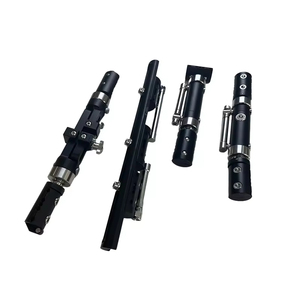
Tibial & Femur External Fixator System External Fixation Orthopedic Implant
Heavy-duty modular external fixation frame designed for high-energy long bone fracture stabilization and limb reconstruction.
Get Catalog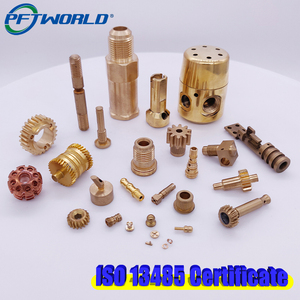
ISO 13485 Certified OEM Custom CNC Machined PEEK & Titanium Components
Precision 5-axis CNC micro-machining for custom spinal cages, joint prostheses, and surgical instrumentation.
Get Catalog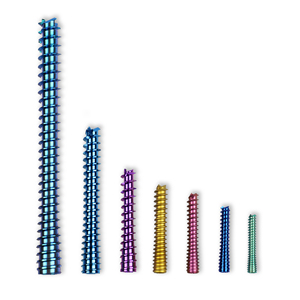
Titanium Headless Cannulated Compression Screws Trauma Implant System
Self-tapping headless compression screws engineered for intra-articular fracture fixation and scaphoid osteotomies.
Get Catalog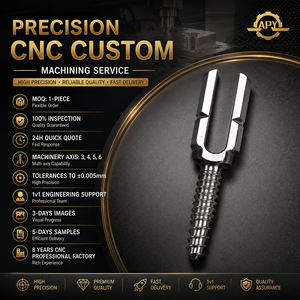
ISO 13485 5-Axis CNC Machined Spinal Pedicle Screw System
High-fatigue polyaxial pedicle screws manufactured under 5-axis precision machining for complex spinal fusion procedures.
Get Catalog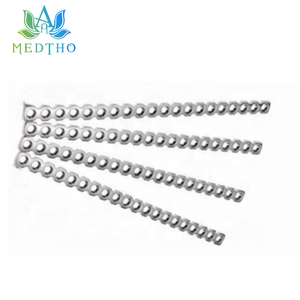
Veterinary Surgical Orthopedic Straight Reconstruction Plate System
Stainless steel & Titanium veterinary plates (1.5/2.0/2.4/2.7/3.5mm) optimized for canine and feline orthopedic trauma.
Get Catalog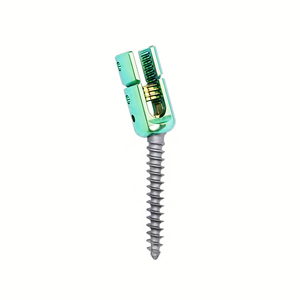
6.0 Polyaxial Reduction Spine Screw Fixation System Titanium
Extended tab reduction pedicle screws designed for spondylolisthesis reduction and scoliosis deformity correction.
Get Catalog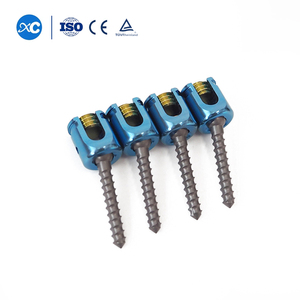
Veterinary Polyaxial Spine Pedicle Screw Titanium Fixation System
Miniature spinal stabilization screws for veterinary neurological procedures and thoracolumbar instability management.
Get Catalog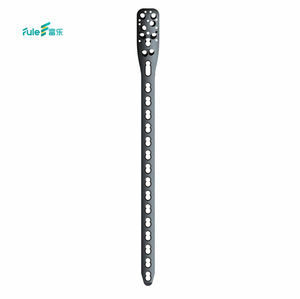
CE Marked Titanium Anatomic Femoral 4.5 Limited Contact Wide Plate System
Limited-contact dynamic compression plates preventing periosteal vascular damage during complex femoral shaft reconstruction.
Get CatalogBiomechanical Integrity & Metallurgy in OEM/ODM Orthopedic Device Manufacturing
In modern clinical orthopedics, surgical success relies fundamentally on the mechanical behavior, biocompatibility, and fatigue resistance of implanted materials. As a tier-1 contract manufacturer and global exporter, our facility operates strictly at the intersection of advanced metallurgical engineering, precision micromachining, and stringent regulatory compliance.
When procurement managers evaluate OEM/ODM orthopedic implants for sale, evaluating the material properties against human cortical bone mechanics is paramount. The primary objective of internal fixation—whether utilizing spinal pedicle screws, intramedullary nails, or periarticular locking plates—is to achieve immediate mechanical stability while preserving micro-vascularity to foster rapid osseointegration.
Raw Biomaterial Selection Standards
We source certified medical-grade raw materials exclusively from validated global suppliers, accompanied by complete Heat Traceability Certificates (MTRs) and Chemical Composition Reports:
- ASTM F136 / ISO 5832-3 Titanium Grade 5 (Ti-6Al-4V ELI): Yielding an ultimate tensile strength exceeding 860 MPa and a fatigue limit engineered for long-term load bearing in spine and trauma procedures. The Extra Low Interstitial (ELI) grade ensures maximized toughness and micro-crack resistance.
- PEEK-OPTIMA (Polyetheretherketone): Exhibiting an elastic modulus of ~3.6 GPa, perfectly mimicking natural human cancellous bone. This avoids the stress shielding phenomenon commonly observed with overly rigid metallic spacers in spinal interbody fusion (ACDF, TLIF, XLIF).
- ASTM F138 / ISO 5832-1 316LVM Stainless Steel: Vacuum Arc Remelted (VAR) medical steel providing maximum resistance to pitting and crevice corrosion, optimal for temporary fixation constructs and veterinary plates.
| Biomaterial Benchmark | Elastic Modulus (GPa) | Tensile Strength (MPa) | Fatigue Strength (Cycles) | Primary Clinical Indication |
|---|---|---|---|---|
| Ti-6Al-4V ELI (ASTM F136) | 110 - 114 | ≥ 860 | > 10,000,000 (ASTM F1717) | Pedicle Screws, Trauma Plates, Nails |
| PEEK-OPTIMA Natural | 3.6 - 4.0 | 100 - 110 | High Cyclic Creep Resistance | Interbody Fusion Cages (TLIF/ACDF) |
| 3D Printed Porous Ti (Trabecular) | 2.5 - 5.0 (Porous) | 350 - 450 (Structure) | Accelerated Osseointegration | 3D Porous Cages, Revision Implants |
| 316LVM Stainless Steel | 190 - 200 | ≥ 890 | High Shear & Impact Resistance | Veterinary Reconstruction, Fixators |
5-Axis Precision Machining & Surface Engineering
Inside our 30,000 m² high-tech manufacturing plant in Changzhou, China.
5-Axis Swiss-Type Machining
Utilizing high-precision Swiss-type CNC centers (Citizen, Star, DMG Mori), we maintain manufacturing tolerances within ±0.005mm. Crucial for complex thread geometries on polyaxial pedicle screws and variable-angle locking mechanisms.
Surface Topology & Anodization
State-of-the-art Type II Titanium Anodization and Micro-Arc Oxidation (MAO) create hard, non-reflective, biostable oxide layers that resist micro-fretting and prevent heavy metal ion leeching post-implantation.
Class 100,000 Cleanroom Packaging
Automated multi-stage ultrasonic washing followed by assembly and double-blister Tyvek thermal sealing inside an ISO Class 8 (Class 100,000) cleanroom, fully ready for Gamma or ETO sterilization.
Emerging Market Trends in Global Orthopedic Sourcing & OEM Manufacturing
As regulatory scrutiny tightens worldwide under the EU MDR 2017/745 and US FDA 510(k) auditing standards, hospital networks and medical device brands are rapidly restructuring their procurement strategies. Key trends reshaping the global supply chain include:
1. Rise of Additive Manufacturing (3D Porous Titanium)
Traditional solid metal cages are being superseded by 3D printed trabecular titanium constructs. Electron Beam Melting (EBM) allows fully interconnected 60-70% porosity, mimicking natural cancellous architecture for rapid bone in-growth without bone graft harvesting.
2. Turnkey Regulatory File Bundling
Global buyers no longer look for simple component machining. Leading OEMs expect comprehensive technical documentation—including Biocompatibility (ISO 10993), Mechanical Fatigue (ASTM F1717/F2077), and Packaging Validation (ISO 11607)—to accelerate market entry.
3. Variable-Angle Locking Mechanics in Trauma
Monoaxial locking plates are giving way to variable-angle (VA) locking systems (±15° trajectory freedom). This enables surgeons to target specific fragment blocks in complex intra-articular fractures around the distal radius, proximal humerus, and distal femur.
4. Supply Chain Consolidation & Rapid Lead Times
To mitigate geopolitical risks and inventory holding costs, distributors favor vertically integrated factories capable of maintaining buffer stock, offering short 15-day dispatch times for standard systems, and single-source accountability.
Frequently Asked Sourcing & OEM Questions
Detailed technical and operational answers for qualified medical device distributors and purchasing executives.
What quality certifications and regulatory registrations back your orthopedic implant systems?
Our manufacturing facilities operate under a fully audited ISO 13485:2016 Quality Management System. Our main product series (Spine, Trauma, CMF) hold CE marks under European directives/MDR standards and select FDA 510(k) clearances. Complete Technical Files (STED format), Device Master Records (DMR), and material certificates are supplied to facilitate fast local health authority registration in over 30 countries.
How does your facility handle custom OEM/ODM development projects from drawing to production?
We maintain a dedicated in-house R&D department comprised of 30+ biomechanical engineers. Upon receiving your 2D/3D CAD models or sample specifications, we perform FEA (Finite Element Analysis) stress modeling, rapid prototype machining, and biomechanical validation (ASTM F1717/F2077). We oversee custom tooling, private-label laser marking, custom surgical instrument tray configuration, and final validated packaging.
What are the standard lead times for regular stock vs. customized OEM orders?
For standard catalog products across our Spine, Trauma, CMF, and Veterinary portfolios, we maintain substantial safety stock in our warehouse, allowing dispatch within 15 calendar days. For custom OEM/ODM orders requiring dedicated raw material procurement and custom CNC tooling, standard lead times range between 30 and 45 days, depending on project scale and validation requirements.
What testing procedures are performed on finished pedicle screws, locking plates, and cages?
Every batch undergoes rigorous quality inspection. Geometric accuracy is verified using 3D Optical Coordinate Measuring Machines (CMM). Dynamic fatigue testing (up to 10 million cycles under ASTM F1717/F2077), axial pull-out strength testing (ASTM F543 for bone screws), and torsional stiffness evaluations are systematically conducted to guarantee intra-operative and post-operative structural stability.
Can buyers conduct on-site facility audits in Changzhou, China?
Yes, we welcome technical audits from hospital procurement committees, regulatory bodies, and global distribution partners. Our factory at No. 2 Longqing Road, Wujin Hi-tech Zone, Changzhou, Jiangsu, China, is open for complete inspection of our 5-axis CNC workshops, physical/chemical laboratories, cleanrooms, and warehouse storage facilities.