1. Technical Evaluation Matrix: Sourcing from Top Certified Orthopedic Implant Exporters
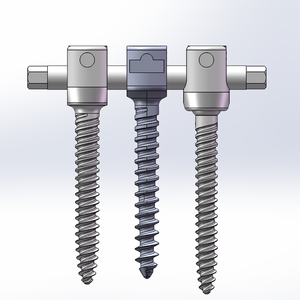
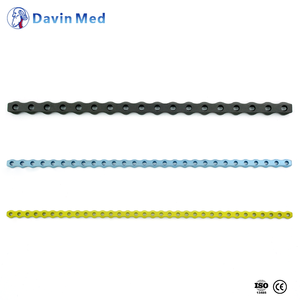
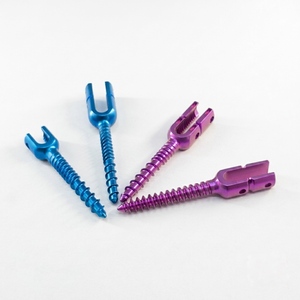
When procurement managers, hospital networks, and medical device distributors evaluate top orthopedic implant exporters, reliance on price points alone introduces unacceptable clinical and financial risks. Orthopedic implants—ranging from spinal fusion cages and pedicle screw systems to intra-medullary nails and locking bone plates—operate under extreme dynamic biomechanical stresses within the human body.
A certified orthopedic implant manufacturer must demonstrate total metallurgical control, sub-micron machining precision, and rigorous regulatory compliance. The table below highlights the core technical benchmarks distinguishing tier-1 certified exporters (such as Trauhui Medical) from generic trading channels:
| Evaluation Parameter |
Certified OEM Manufacturer (e.g., Trauhui Medical) |
Generic Exporters / Trading Houses |
| Quality Management System |
✓ ISO 13485:2016 certified by TÜV Rheinland / Nando accredited notified bodies. |
Uncertified or reliant on basic ISO 9001 non-medical QMS. |
| Material Traceability |
100% Raw Material MTR compliance (Titanium Grade 5 Ti-6Al-4V ELI / PEEK-OPTIMA) with lot tracking. |
Limited batch traceability; inconsistent raw material certificates. |
| Machining Infrastructure |
5-Axis Swiss CNC precision milling centers (150+ sets) with inline optical CMM validation. |
Outsourced machining with standard 3-axis lathes and manual finishing. |
| Mechanical Fatigue Testing |
In-house fatigue testing rigs compliant with ASTM F1717 (Spine) & ASTM F382 (Bone Plates). |
No dynamic fatigue validation; relying on static tensile approximations. |
| Regulatory Technical File |
Full CE MDR (EU 2017/745), US FDA 510(k), and STED documentation ready for instant market entry. |
Incomplete technical files delaying regional MOH registrations. |
| Sterile & Cleanroom Packaging |
Class 7 cleanroom pouching, anodization, and double-blister barrier sealing. |
Standard bulk packaging; non-validated cleanroom protocols. |
2. Enterprise Manufacturing Ecosystem & Quality Engineering
Founded in 2009 in Changzhou—widely recognized as China's "Silicon Valley of Orthopedic Devices"—Trauhui Medical has established itself as an authoritative global manufacturer. Investing over RMB 200 million, Trauhui operates a fully integrated manufacturing infrastructure capable of delivering complete spinal systems, trauma fixation plates, craniomaxillofacial (CMF) implants, and specialized veterinary orthopedics.
End-to-End Precision Manufacturing Workflow
To eliminate micro-defects and guarantee high bio-performance, certified implant production follows a strict 5-stage engineering workflow:
01
CAD & FEA Modeling
Finite Element Analysis simulates biomechanical load distribution under severe dynamic fatigue limits.
02
5-Axis Swiss Milling
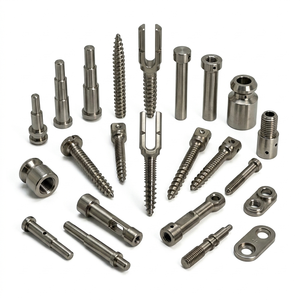
High-speed CNC machinery carves complex thread geometries and anatomical plate contours within ±0.005mm tolerances.
03
Anodization & Coating
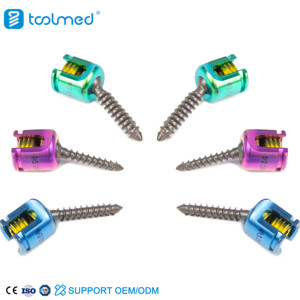
Type II electrochemical anodization forms a dense passivation layer, enhancing corrosion resistance and color-coded sizing.
04
Cleanroom Washing
Ultrasonic multi-stage detergent washing removes residual oils prior to Class 7 cleanroom packaging.
05
CMM & Batch QA
3D Coordinate Measuring Machines verify geometric accuracy before final release and lot certification.
3. Future Procurement Trends in Global Orthopedic Device Sourcing
As healthcare systems worldwide adapt to aging demographics, rising surgical volumes, and tightening fiscal budgets, orthopedic procurement strategies are undergoing four major structural shifts:
A. Rapid Adoption of 3D Printed Porous Titanium (Additive Manufacturing)
Traditional machined PEEK cages are increasingly giving way to 3D-printed titanium interbody fusion cages featuring biomimetic trabecular structures. By offering porosity levels between 60% to 80% and pore sizes matched to native human cancellous bone (approx. 400–600 microns), additive-manufactured titanium accelerates vascularization and osseointegration. Global buyers are prioritizing manufacturers with certified electron beam melting (EBM) and selective laser melting (SLM) production capabilities.
B. Dynamic Motion-Preserving Implants Replacing Rigid Fusion
While rigid pedicle screw constructs and static ACDF cages remain hospital staples, surgeon demand is tilting toward motion-preserving implants. Devices such as artificial cervical intervertebral discs (e.g., Trauhui Coahard System) preserve natural segment kinematics, reducing adjacent segment degeneration (ASD). Exporters offering both motion-preservation and traditional fusion portfolios provide distributors with a strong competitive edge in hospital tenders.
C. Miniaturized Veterinary Orthopedic Locking Systems
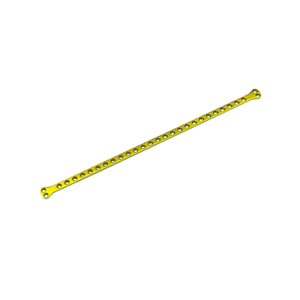
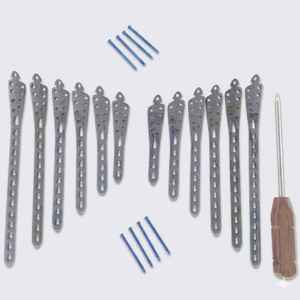
The global companion animal health sector is experiencing unprecedented growth. Veterinary orthopedic surgeons now demand human-grade locking plate technology—specifically micro-locking plates ranging from 1.1mm to 4.0mm (such as the ALPS and Cuttable Double T Plate systems). Forward-thinking exporters are leveraging human implant machining technology to manufacture dedicated veterinary trauma lines at scalable price points.
D. Supply Chain Consolidation & Regulatory Alignment (EU MDR Transition)
The enforcement of the European Union Medical Device Regulation (EU MDR 2017/745) has raised compliance barriers globally. Distributors are actively consolidating their vendor lists, choosing to partner directly with high-capacity original equipment manufacturers (OEMs) that possess complete technical documentation, validated biocompatibility testing (ISO 10993), and stable raw material supply chains.
4. Industry Development Trends & Material Science Innovations
The evolution of orthopedic implants is fundamentally tied to breakthroughs in biomaterials science and surface functionalization:
- Advanced Titanium Alloys (Ti-6Al-4V ELI): Titanium Extra Low Interstitial (ELI) grade remains the gold standard for load-bearing spine and fracture implants due to its high strength-to-weight ratio, low elastic modulus relative to cortical bone, and superior biological inertia.
- Bioactive Surface Coatings: Plasma-sprayed Hydroxyapatite (HA) and nanostructured TiO2 surface treatments foster direct bone-to-implant contact, drastically reducing healing timelines and mechanical loosening risks.
- Carbon-Fiber-Reinforced PEEK (CFR-PEEK): In complex tumor and trauma cases, radiolucent CFR-PEEK plates allow unimpeded CT and MRI artifact-free imaging during post-operative patient monitoring.
- Biodegradable Magnesium Alloys: Research into bioabsorbable metallic magnesium implants promises to revolutionize pediatric orthopedics and temporary fracture fixation, eliminating the need for secondary hardware removal procedures.