Precision Orthopedic Implants & Surgical Instruments
Explore high-precision spinal systems, trauma fixation plates, craniomaxillofacial implants, and surgical power tools engineered in ISO Class 7 cleanrooms and verified by CMM inspection.
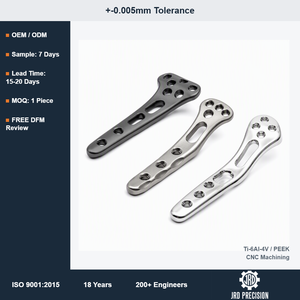
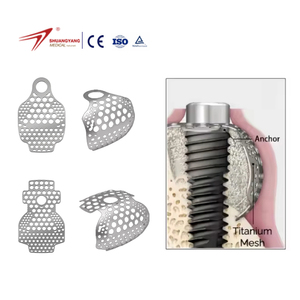
The Evolution of China's Orthopedic Manufacturing Ecosystem
Over the past decade, the global medical device supply chain has undergone a profound paradigm shift. Hospital procurement directors, medical device brand owners, and international distributors are increasingly focusing their sourcing strategies on specialized industrial hubs in China—most notably Changzhou, Jiangsu Province, widely recognized as China's primary cluster for orthopedic device manufacturing.
Historically relied upon primarily for low-complexity instrumentation, leading Chinese orthopedic implant manufacturers have matured into advanced contract development and manufacturing organizations (CDMO) and OEM partners. Driven by multi-million dollar capital investments in Swiss-type automatic lathes, 5-axis CNC machining centers (such as DMG MORI and Haas), high-precision CMM inspection systems, and ISO Class 7 cleanrooms, companies like Trauhui Medical Co., Ltd (founded in 2009 with over RMB 200 million total investment) now manufacture Class II and Class III implants that rival Tier-1 Western medical technology brands in precision, biocompatibility, and fatigue resistance.
This industry whitepaper explores the critical technical parameters, metallurgical standards, cleanroom controls, and regulatory frameworks that hospital buyers and global distributors must evaluate when partnering with China's leading orthopedic factories.
Global Regulatory Compliance
Full adherence to ISO 13485:2016 Quality Management Systems, accompanied by EU CE Mark certification and US FDA 510(k) clearances for seamless registration in international healthcare markets.
±0.005mm 5-Axis CNC Milling
Ultra-precision machining of Ti6Al4V ELI titanium alloy and PEEK implants, enabling intricate polyaxial screw heads, anatomical locking plates, and custom geometries.
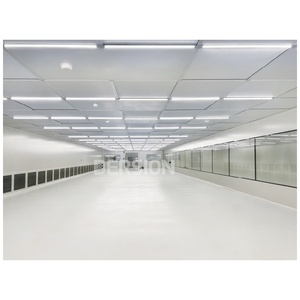
ISO Class 7 Cleanroom Control
State-of-the-art washing, ultrasonic cleaning, bioburden testing, and primary sterile packaging conducted inside validated ISO Class 7 (Class 10,000) cleanroom environments.
Biocompatible Metallurgy & Precision Manufacturing Standards
The structural integrity and biological safety of orthopedic implants depend strictly on metallurgical purity, precise dimensional tolerances, and controlled surface topology. Top Chinese factories utilize strictly audited raw material suppliers conforming to international standards:
Core Raw Material & Metallurgical Standards
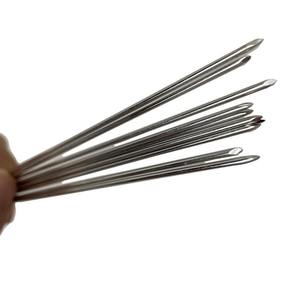
Medical Titanium Alloys (ASTM F136 / ISO 5832-3): Ti6Al4V ELI (Extra Low Interstitial) grade titanium provides high fatigue strength, excellent strength-to-weight ratio, and exceptional osseointegration capability. Ideal for pedicle screws, intramedullary nails, and bone plates.
Implante-Grade PEEK (Polyether Ether Ketone - ASTM F2026): Radiolucent biomaterial matching the modulus of elasticity of human cortical bone, preventing stress shielding in interbody fusion cages (ACDF, TLIF, XLIF).
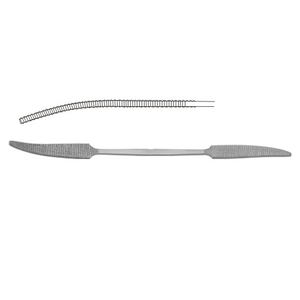
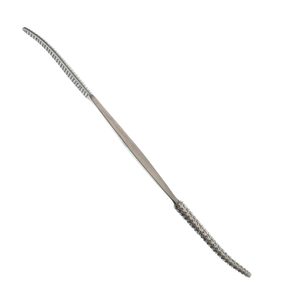
Implant Stainless Steel (ASTM F138 / ISO 5832-1 316LVM): High-purity vacuum arc remelted stainless steel offering maximum corrosion resistance and ductility for surgical wires, bone files, and temporary fixation devices.
Beyond material composition, manufacturing execution dictates clinical outcomes. Advanced factories implement 5-Axis Simultaneous Milling and CNC Swiss-turning to process complex anatomical geometries without needing multi-setup re-clamping, eliminating cumulative position error. Automated Coordinate Measuring Machines (CMM) and optical comparators verify thread pitch, locking mechanism tapers, and hole dimensions to tolerances within ±0.005mm.
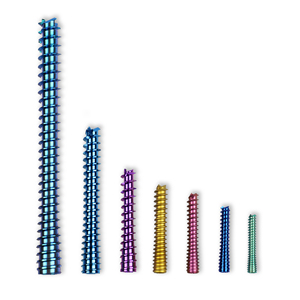
Surface treatment protocols further enhance implant longevity. Anodization (Type II and Type III) provides color-coded sizing identification while forming a dense titanium oxide passivation layer. Advanced micro-arc oxidation and Hydroxyapatite (HA) plasma spraying coatings are deployed on joint and spinal cage surfaces to accelerate bone cell attachment (osteoblast proliferation).
| Evaluation Parameter | China Top Factory (e.g. Trauhui) | Standard OEM Manufacturer | Clinical Impact / Sourcing Advantage |
|---|---|---|---|
| Quality Management System | ISO 13485:2016 + CE + FDA 510(k) | ISO 9001 or Basic ISO 13485 | Seamless registration in EU, US, LATAM, and Asia markets. |
| Machining Precision | ±0.005mm (5-Axis CNC & Swiss Lathes) | ±0.02mm (3-Axis / 4-Axis CNC) | Prevents screw stripping, secures locking mechanism stability. |
| Packaging & Environment | ISO Class 7 Cleanroom Washing & Pack | Standard Assembly Room | Minimal endotoxin risk and bioburden control compliance. |
| Standard Lead Time | 15 Days (Large Finished Stock) | 45 - 60 Days | Reduces inventory holding costs for international distributors. |
| OEM / ODM Customization | In-house R&D (30+ Engineers) | Outsourced Engineering | Fast prototyping from CAD drawings to validated samples. |
Future Sourcing & Procurement Trends in Orthopedic Manufacturing
Global procurement teams navigating orthopedic implant supply chains must anticipate several macro trends reshaping manufacturing standards over the coming decade:
1. 3D Printed Porous Implants
Additive manufacturing using Electron Beam Melting (EBM) and Selective Laser Sintering (SLS) enables the mass production of 3D printed titanium cages with biomimetic trabecular structures, replacing traditional solid PEEK cages.
2. EU MDR Rigor & Documentation
Transitioning from MDD to EU MDR (Regulation EU 2017/745) demands extensive clinical evaluation reports (CER) and rigorous PMCF data. Buyers require manufacturers with established regulatory affairs teams capable of supplying full technical files.
3. Volume-Based Procurement (VBP)
Global healthcare cost rationalization and centralization policies (such as China's VBP) are driving manufacturers to optimize raw material yields and automated production lines, giving export buyers access to world-class quality at highly competitive unit costs.
4. Patient-Specific Customization
Advancements in 3D CT reconstruction algorithms allow top manufacturers to deliver patient-specific implants (PSI) for complex bone tumor resections, revision joint arthroplasty, and craniomaxillofacial reconstruction within accelerated turn-around windows.
Why Partner with Trauhui Medical Co., Ltd
Trauhui Medical Co., Ltd stands at the forefront of China's medical device industry. Dedicated exclusively to orthopedic implants and matching instruments since 2013, Trauhui Medical provides distributors and private-label partners with an integrated development-to-delivery platform:
Comprehensive Spine & Trauma Lines: Complete portfolio spanning cervical disc replacement, ACDF, TLIF, and XLIF interbody cages, 3D printed porous cages, kyphoplasty systems, telescopic corpectomy cages, intramedullary nails (femoral, tibial, humeral), variable-angle locking compression plates, external fixators, and CMF plating systems.
Global Footprint & Technical Backing: Headquartered in Changzhou Wujin High-Tech Zone, Trauhui Medical has expanded its international footprint through strategic acquisitions—including a professional orthopedic manufacturing plant in Hungary and overseas subsidiary entities. Products are exported to over 30 countries across Europe, South America, the Middle East, and Southeast Asia.
Speed to Market: Maintaining large-scale safety stock of standard implant configurations enables a standard delivery lead time of just 15 days, giving distributors a distinct competitive advantage over competitors bound by multi-month factory queues.
Orthopedic Implant Sourcing & Manufacturing FAQ
Clear answers to key regulatory, metallurgical, cleanroom, and order execution questions asked by international buyers.
Q1: Which international quality certifications do Trauhui Medical orthopedic implants hold?
Trauhui Medical operates under a certified ISO 13485:2016 Quality Management System. Core spinal, trauma, and CMF product lines carry European CE Mark certification and US FDA 510(k) clearances. Complete technical documentation files (STED) are available to qualified distributors to support local Ministry of Health and regulatory registrations.
Q2: What materials are used in your orthopedic implant manufacturing?
We source medical-grade implant materials conforming strictly to international standards: Titanium Alloy Ti6Al4V ELI (ASTM F136 / ISO 5832-3), Implant Grade PEEK (ASTM F2026), High-Purity Stainless Steel 316LVM (ASTM F138), and UHMWPE for joint interfaces. Material Test Reports (MTR) and Certificates of Analysis (CoA) are provided with every production lot.
Q3: Does Trauhui Medical offer OEM, ODM, and custom private-label services?
Yes. Our in-house R&D team consists of more than 30 dedicated design and biomedical engineers equipped with 3D CAD modeling, finite element analysis (FEA), and rapid prototyping capabilities. We handle custom projects from initial drawing review and biomechanical testing to customized laser marking (UDI compliance) and private-label cleanroom packaging.
Q4: What is the cleanroom classification and sterilization protocol?
Primary cleaning, ultrasonic rinsing with WFI (Water for Injection) grade water, inspection, and primary pouch sealing are conducted inside an audited ISO Class 7 (Class 10,000) cleanroom. Implants are supplied in protective double-pouch sterile barrier packaging ready for Ethylene Oxide (EO) or Gamma irradiation sterilization according to customer requirements.
Q5: What are the typical lead times for regular stock orders versus custom OEM orders?
For standard catalogue systems (including spine cages, intramedullary nails, and locking plates), standard lead time is within 15 days due to our substantial finished inventory. OEM/ODM custom orders requiring new tooling or design validation are scheduled individually, typically taking 30 to 60 days from sample approval.
Q6: Where is the factory located, and can global buyers perform on-site quality audits?
Our modern 30,000m² manufacturing facility is located at No. 2 Longqing Road, Wujin Hi-tech Zone, Changzhou, Jiangsu Province, China. We welcome hospital procurement committees, OEM brand owners, and regulatory auditors to perform on-site facility audits of our CNC workshops, cleanrooms, CMM testing labs, and quality control departments.
Partner with China's Premier Orthopedic Implant Manufacturer
Need complete product catalogs, technical documentation files, or custom OEM manufacturing quotes for your market?