Featured Orthopedic Implants & Surgical Instrumentation
CE and ISO 13485 certified surgical systems engineered for spinal reconstruction, trauma fixation, and specialized orthopedic procedures.
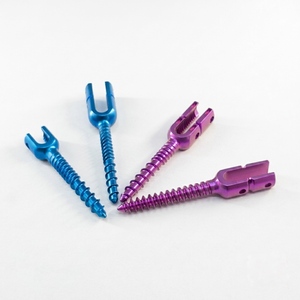
Anodized Titanium Monoaxial Pedicle Screw Orthopedic Implants Surgery Spine 6.0MM Reduction Screw For Hospital Use
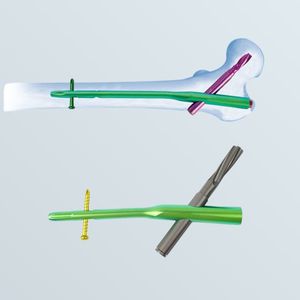
Premium Pfna Intramedullary Nail Wholesale Orthopedic Implant for Femur Intertrochanteric Bone Fracture
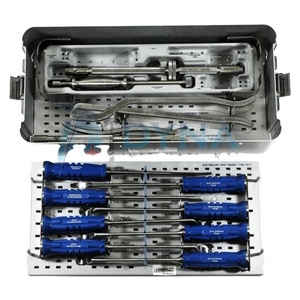
Smith & Nephew Renovation Implant Removal Kit Orthopedic Instruments
Medical Device CNC Machining | Orthopedic Implants & Surgical Instruments
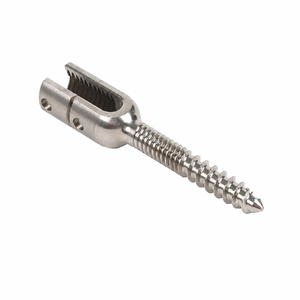
Titanium Pedicle Screw CNC Machining Service Spinal Orthopedic Bone Screw Custom Precision OEM Parts
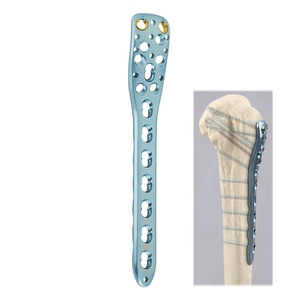
Variable Angle Neck Of Humerus Locking Bone Plate Titanium Orthopedic Trauma Implants
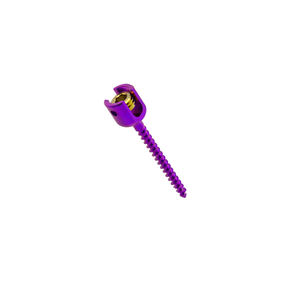
Factory Direct Orthopedic Implant Monoaxial Pedicle Screw For Spinal Fixation Fusion Surgery Titanium 5.5/6.0 ISO CE Certified
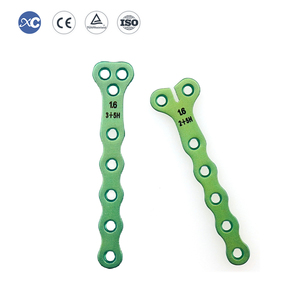
Medical Veterinary Orthopedic Trauma Implants Factory Direct 1.6mm T Type Locking Plate
1. Industry Overview: The Strategic Advantage of Sourcing Orthopedic Implants from China
The global orthopedic devices market is undergoing a structural realignment. Healthcare providers, hospital networks, and medical device distributors face mounting pressures to balance severe budget constraints with stringent clinical outcomes. In this macroeconomic climate, China has emerged as the global epicenter for precision orthopedic manufacturing, transitioning from low-cost component production to advanced, research-driven implant systems.
At the center of this industrial evolution is the Changzhou Hi-Tech Zone in Jiangsu Province—widely recognized as China's premier orthopedic manufacturing hub. Manufacturers based in this specialized industrial ecosystem, such as Trauhui Medical Co., Ltd. (founded in 2009 with total assets exceeding RMB 200 million), leverage concentrated raw material supply chains, specialized metallurgy institutes, and highly skilled biomechanical engineering talent.
Unlike secondary suppliers that rely on subcontracted manufacturing, leading China orthopedic implant manufacturers operate self-owned, fully integrated production complexes. By unifying micro-machining, cleanroom ultrasonic washing, surface anodization, and laboratory fatigue testing under one ISO 13485-certified roof, tier-one factories eliminate supply chain latency, guarantee lot-to-lot traceability, and reduce landed costs by 30% to 45% compared to Western original equipment manufacturers (OEMs).
2. Technological Trends Reshaping Orthopedic Implant Manufacturing
The development trajectory of surgical implants is defined by material innovation, bio-integration, and anatomical personalization. Leading Chinese orthopedic suppliers are investing heavily in next-generation manufacturing modalities that directly elevate clinical success rates:
Additive Manufacturing & 3D Porous Titanium
Electron Beam Melting (EBM) and Direct Metal Laser Sintering (DMLS) enable the fabrication of trabecular titanium cages with biomimetic porosity (60-70% pore ratio, 300-500µm pore size). This mimics natural cancellous bone, significantly promoting early osseointegration and reducing stress shielding in spinal interbody fusion.
Advanced Electrochemical Anodization
Type II hard anodization and electrochemical color coding on Ti-6Al-4V ELI surfaces impart structural wear resistance, lower coefficient of friction, and prevent galling during pedicle screw insertion. Color-coded sizing simplifies intraoperative identification for surgical surgical teams.
Polyaxial Variable Angle Locking Systems
Modern trauma bone plates incorporate combi-holes and polyaxial locking mechanisms, allowing surgeons to direct screws up to 15 degrees off-axis in any direction. This offers crucial fixation flexibility in complex periarticular and osteoporotic bone fractures.
Furthermore, radiolucent materials such as carbon-reinforced PEEK (Polyetheretherketone) are rapidly replacing traditional metals in oncological and complex spinal surgeries, allowing clear post-operative artifact-free imaging under CT and MRI modalities.
3. Technical Matrix: Material Specifications & International Standards
To assist clinical procurement managers and biomedical engineers in evaluation, the following matrix outlines the standardized metallurgical, biological, and testing criteria strictly adhered to by leading Chinese factories:
| Product Line | Primary Material Grade | International Standard Compliance | Mechanical & Fatigue Testing | Primary Surgical Indication |
|---|---|---|---|---|
| Pedicle Screw Systems | Titanium Alloy Ti-6Al-4V ELI | ISO 5832-3 / ASTM F136 | ASTM F1717 (Static & Dynamic Bending) | Thoracolumbar Fixation, Spinal Fusion |
| Intramedullary Nails (PFNA/Tibia) | Titanium Ti-6Al-4V / Stainless Steel 316L | ISO 5832-1 / ASTM F138 | ASTM F1264 (Static Torsion & Bending Fatigue) | Femoral & Tibial Shaft Fractures |
| Locking Bone Plates | Pure Titanium Gr. 4 / Ti-6Al-4V | ISO 5832-2 / ASTM F67 | ASTM F382 (Four-Point Bending Fatigue) | Trauma Reconstruction, Periarticular Fixation |
| Interbody Fusion Cages | PEEK-OPTIMA / 3D Porous Titanium | ASTM F2026 / ISO 13782 | ASTM F2077 (Axial Compression & Shear) | ACDF, TLIF, PLIF, XLIF Spinal Procedures |
| Veterinary Locking Plates | Medical Grade Titanium / Stainless Steel | ISO 13485 Certified Line | In-house Biomechanical Stress Validation | Canine & Small Animal Orthopedics |
4. Strategic Sourcing Trends for 2025–2030: Sourcing from Qualified Suppliers
The global distribution paradigm for medical devices has shifted from traditional off-the-shelf catalog purchasing to deep strategic OEM/ODM integration. International distributors seeking to maintain competitive margins while complying with evolving regional regulations must evaluate prospective Chinese manufacturing partners across five critical vectors:
1. Regulatory Documentation & Technical Files
Modern distributors cannot afford import delays due to non-compliance. Top China suppliers provide comprehensive Technical Documentation Files (TDF) matching EU MDR (2017/745) requirements and US FDA 510(k) clearances, complete with ISO 10993 biocompatibility test reports and double-cleanroom packaging validation.
2. Rapid Lead Times & Buffer Inventory
Supply chain shocks have made lead-time predictability paramount. Leading vendors like Trauhui Medical maintain expansive safety stock of standard spinal pedicle screws, cages, and trauma nails, guaranteeing order dispatch within 15 working days for standard catalog items.
3. Turnkey OEM / Private-Label Customization
Building a proprietary brand requires flexible manufacturing partners. Premier factories provide dedicated R&D engineering support, transforming 2D concept drawings into 3D prototypes, custom laser marking, and specialized sterilization-ready blister packaging.
5. The Enterprise Advantage: Quality Assurance & Factory Capability
Evaluating an orthopedic implant factory requires inspecting its equipment density and quality control protocols. Trauhui Medical exemplifies high-tier Chinese orthopedic manufacturing capabilities through state-of-the-art infrastructure:
Advanced Machine Fleet: Production lines feature over 150 high-precision units, including DMG MORI 5-axis CNC machining centers, Citizen Swiss-type automatic lathes, and high-speed thread whirling machines capable of holding tolerances within micro-levels (±0.005mm).
Cleanroom & Environment: Final cleaning, primary packaging, and double-blister sealing occur inside ISO Class 7 (Class 10,000) cleanrooms operating under strict microbiological control, meeting international pyrogen and bioburden standards.
In-House Inspection Laboratory: Every production batch undergoes coordinate measuring machine (CMM) dimensional checks, surface roughness profilometry, hardness testing, and axial pull-out force validation before batch release.
6. Frequently Asked Questions (Procurement FAQ)
Essential questions addressed to support medical device buyers, regulatory officers, and orthopedic distributors during supplier evaluation:
Which international quality certifications do top Chinese orthopedic manufacturers hold?
Leading China manufacturers hold ISO 13485:2016 Quality Management System certification certified by recognized notified bodies (such as TÜV SÜD or TÜV Rheinland). Product lines are CE marked under EU Directive 93/42/EEC or EU MDR 2017/745, and select key systems hold US FDA 510(k) clearances. Full registration dossiers, test reports, and certificate copies are provided to support distributor registration in local health ministries.
What is the standard order lead time for orthopedic implants and matching instruments?
Standard inventory items (such as standard pedicle screws, locking plates, and intramedullary nails) are typically dispatched within 15 days of order confirmation. For custom OEM/ODM projects or private-label instrument sets, lead times range from 30 to 60 days depending on blueprint validation, prototyping, and custom tooling requirements.
How do factories ensure compatible instrument trays for specific implant systems?
Implant and instrument kits are engineered simultaneously as integrated procedural systems. Surgical instrument kits—including benders, drivers, reamers, and retractors—are machined from surgical stainless steel and anodized aluminum, fitted inside autoclavable, custom-molded silicone-supported sterilization trays.
Can Chinese orthopedic implant suppliers support custom OEM or contract manufacturing?
Yes. OEM and ODM contract manufacturing is a core specialization. In-house engineering teams assist partners with CAD/CAM engineering, FEA (Finite Element Analysis), custom surface treatment selection, customized laser marking, and retail-ready private-label packaging.
What raw materials are used in manufacturing spinal and trauma implants?
Only certified medical-grade metals and polymers are used, accompanied by complete mill test certificates. These include Titanium Alloy Grade 5 (Ti-6Al-4V ELI conforming to ASTM F136 / ISO 5832-3), Commercially Pure Titanium (Grades 2 and 4 conforming to ASTM F67), Implant-grade Stainless Steel (316L conforming to ASTM F138 / ISO 5832-1), and PEEK-OPTIMA (conforming to ASTM F2026).
How can overseas buyers conduct factory audits or quality inspections?
Procurement teams are welcome to visit manufacturing sites in Changzhou, China, to conduct on-site facility audits, inspect 5-axis CNC workshops, cleanrooms, and testing facilities. Alternatively, third-party inspection firms (e.g., SGS, TÜV, Intertek) or remote video audits can be scheduled prior to shipment release.
Ready to Elevate Your Orthopedic Product Line?
Connect directly with our engineering and regulatory experts to request product technical files, sample kits, or customized OEM quotes.
Get Catalog