Featured Orthopaedic Implant Systems
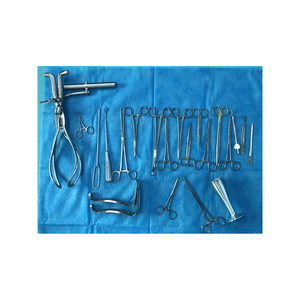
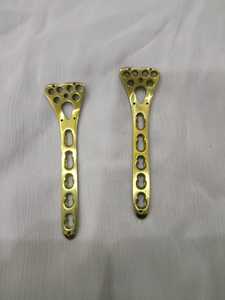
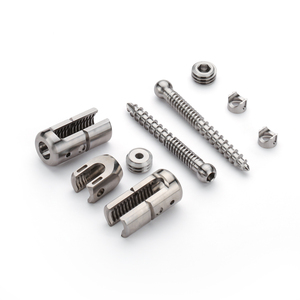
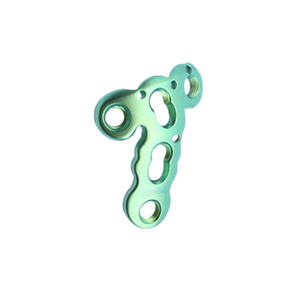
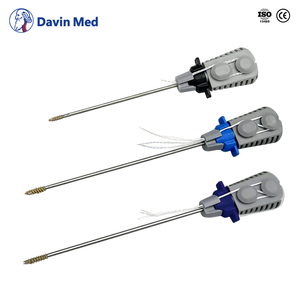
Explore our state-of-the-art precision implants for trauma, spinal, and reconstructive procedures. Engineered to strict international standards for biomechanical reliability and osseointegration.
Enterprise Infrastructure & Manufacturing Advantages in China
Selecting a certified orthopaedic implant supplier in China requires a comprehensive audit of manufacturing infrastructure, metallurgic purity, quality management systems (QMS), and international regulatory compliance. Headquartered in Changzhou, Jiangsu Province—recognized globally as China's premier hub for medical device precision engineering—our facility represents the pinnacle of modern orthopaedic device manufacturing.
1. Precision Machining Infrastructure & Cleanroom Assembly
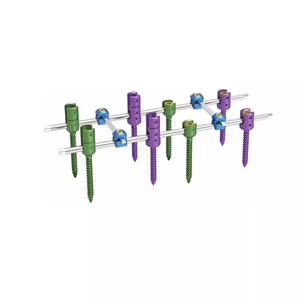
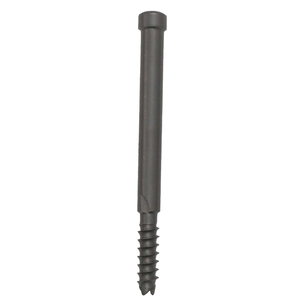
Our manufacturing cluster features over 150 sets of advanced high-precision Swiss-type CNC automatic lathes, 5-axis machining centers (including DMG Mori and Citizen lines), optical profile grinders, and wire EDM machinery. This infrastructure guarantees sub-micron tolerance control across high-volume production of complex geometry implants such as polyaxial pedicle screws, locking compression plates, and intramedullary nails.
- ISO 13485 QMS Compliance: Certified quality control frameworks governing raw material receipt to final packaged product release.
- Class 100,000 Cleanroom Operations: Controlled packaging and ultrasonic washing environments preventing endotoxin contamination and particulate accumulation.
- Raw Material Traceability: Exclusive utilization of implant-grade Titanium Alloy (Ti-6Al-4V ELI per ASTM F136), Unfilled PEEK (per ASTM F2026), and Ultra-High Molecular Weight Polyethylene (UHMWPE). Every batch is accompanied by 3.1 Mill Test Certificates.
2. Comprehensive OEM/ODM Engineering & Customization Lifecycle
To support global hospital tenders and private-label distributors, our in-house R&D team consisting of over 30 biomedical engineers provides full-cycle OEM/ODM development. From initial CAD modeling and Finite Element Analysis (FEA) to rapid prototyping, mechanical testing, and regulatory STED dossier compilation, we minimize time-to-market for specialized surgical kits.
| OEM Stage | Engineering Output | Quality Verification Standard |
|---|---|---|
| Conceptual & CAD Design | Biomechanical 3D Models & Tolerancing | ISO 14971 Risk Management Analysis |
| FEA Simulation | Stress Distribution & Fatigue Thresholds | ASTM F1717 / ASTM F543 Criteria |
| Prototype Fabrication | Physical Machining & Functional Testing | Optical CMM Sub-micron Inspection |
| Regulatory Submission | Technical Files & Validation Reports | CE Marking, FDA 510(k) Submission Dossiers |
Orthopaedic Implant Industry Development Trends
Analysis of emerging technological paradigms reshaping joint reconstruction, trauma stabilization, and spinal fusion surgery over the next decade.
Additive Manufacturing & Porous Titanium Cages
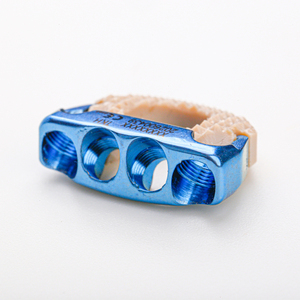
Selective Laser Melting (SLM) and Electron Beam Melting (EBM) 3D printing technologies allow the creation of trabecular-like porous structures. These porous architectures match the elastic modulus of cancellous bone, significantly reducing stress shielding and accelerating early osseointegration in interbody fusion cages.
Advanced Surface Modifications
Modern clinical demands have pushed implant chemistry beyond smooth metal surfaces. Nanostructured Titanium Oxide (TiO2) coatings, hydroxyapatite (HA) plasma spraying, and antimicrobial silver-ion/copper coatings are increasingly deployed to hinder bacterial adhesion, minimize peri-implant infection rates, and stimulate osteoblast differentiation.
Radiolucent PEEK & Composite Polymers
Polyetheretherketone (PEEK) implants integrated with carbon-fiber reinforcement are gaining clinical favor in arthroscopy and oncology procedures. Carbon-PEEK provides radiolucency for clear post-operative imaging (CT/MRI artifact minimization) while maintaining mechanical strength comparable to metal alloys.
Future Procurement & Strategic Sourcing Trends for Hospital Networks
As global healthcare systems face escalating economic pressures and expanding surgical volumes, procurement strategies among orthopaedic distributors, private hospital groups, and GPOs (Group Purchasing Organizations) are undergoing structural shifts.
1. Shift Towards Value-Based Procurement (VBP) and Integrated Supply Chains
Procurement agencies are moving away from evaluating unit prices in isolation. Modern VBP models evaluate the total cost of care, incorporating implant revision rates, surgical kit usability, and supplier reliability. Suppliers in China with complete vertically integrated supply chains—from titanium bar stock forging to final sterile packaging—provide lower Total Cost of Ownership (TCO) without sacrificing surgical performance.
2. De-risking via Dual-Sourcing and OEM Contract Manufacturing
Global supply chain disruptions have prompted multinational medical device brands to establish secondary manufacturing hubs. Partnering with top-tier Chinese factories for standard trauma plates, pedicle screws, and instrument sets enables international brands to maintain safety stock levels while mitigating localized regional manufacturing bottlenecks.
3. Strict Regulatory Dossier Integration (MDR & FDA Compliance)
The implementation of the EU Medical Device Regulation (EU MDR 2017/745) and heightened FDA 510(k) post-market surveillance demands rigorous clinical evaluation reports (CER) and risk management documentation from OEM suppliers. Procurement teams now explicitly select China manufacturers capable of supplying complete technical files, biocompatibility testing (ISO 10993), and dynamic fatigue validation data.
Frequently Asked Procurement Questions
Technical, operational, and regulatory clarifications for procurement directors, surgical distributors, and OEM brand owners.
Our orthopaedic implant systems and matching surgical instruments are manufactured under a TÜV-audited ISO 13485 Quality Management System. Selected product portfolios hold CE marking under EU regulations and FDA 510(k) clearances. Complete technical files (STED), biocompatibility reports (ISO 10993), and fatigue test certificates are provided to support distributor registration in local health authorities.
We exclusively utilize premium medical-grade raw materials sourced from certified global suppliers: Titanium Alloy (Ti-6Al-4V ELI conforming to ASTM F136/ISO 5832-3), Commercially Pure Titanium (CP-Ti per ASTM F67), Medical-Grade PEEK (per ASTM F2026), and Surgical Stainless Steel (316LVM per ASTM F138). Metallurgical Mill Test Reports (MTR) are attached to every manufacturing batch.
Standard catalog items (such as standard pedicle screws, locking compression plates, and intramedullary nails) are maintained in safety buffer inventory, allowing shipment dispatch within 15 days. For customized OEM/ODM projects or high-volume hospital tender orders, production lead times typically range between 30 to 45 days depending on tooling complexity and surface treatment specifications.
Yes. We provide complete end-to-end contract packaging solutions including custom laser-marking of catalog numbers and UDI barcodes directly on implants, custom-designed sterilization containers (anodized aluminum or PPSU), inner Tyvec pouch sealing, and retail box printing aligned with your corporate brand identity.
Our on-site mechanical testing laboratory conducts rigorous static and dynamic fatigue testing adhering to international standards such as ASTM F1717 (Spinal Implant Assemblies), ASTM F543 (Metallic Medical Bone Screws), and ISO 12189. Implants undergo multi-million cycle dynamic loading evaluations to guarantee zero catastrophic structural failures under clinical physiological stress.
Our manufacturing complex is located at No.2 Longqing Road, Wujin Hi-tech Zone, Changzhou, Jiangsu, China. We invite international distributor purchasing teams, hospital procurement officers, and third-party auditors (such as SGS or TÜV) to inspect our CNC workshops, cleanrooms, and testing labs in person.
Ready to Elevate Your Orthopaedic Supply Chain?
Connect with our senior engineering and business development team to request technical catalogs, sample evaluation kits, or detailed quotation dossiers for your target market.