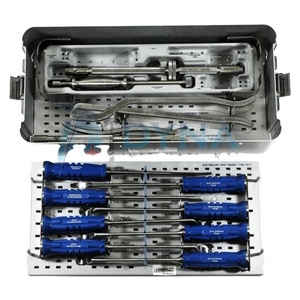
Revision Orthopedics
Every batch manufactured by Trauhui Medical is dispatched with a verified Certificate of Analysis (CoA), documenting raw material mill heat numbers, chemical composition spectroscopy, mechanical dynamic fatigue testing, and ISO 11607 sterility assurance.
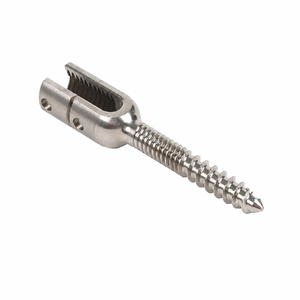
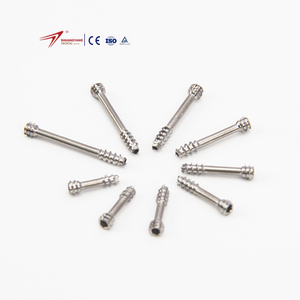
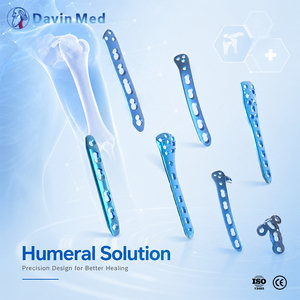
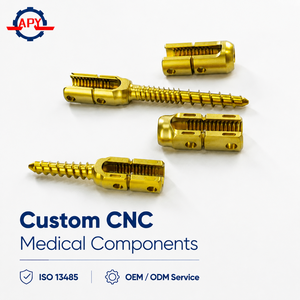
In the highly regulated orthopedic medical device sector, a Certificate of Analysis (CoA) is not merely a formality—it is the foundational document that links raw titanium bar stocks and PEEK polymers to clinical bio-safety and long-term mechanical survival.
When global medical device distributors, hospital procurement boards, and orthopedic OEM brands source titanium screws, intramedullary nails, or interbody fusion cages from China, verifying the authenticity of the Certificate of Analysis is the critical line of defense against material failure, aseptic loosening, and stress shielding.
At Trauhui Medical, every raw material shipment undergoes rigorous spectral, mechanical, and bio-burden verification before entering our multi-axis CNC machining lines in Changzhou. Our CoAs provide full backward traceability to the original ingot heat number.
A compliant Certificate of Analysis issued by a top-tier Chinese manufacturer must explicitly detail:
Trauhui Medical archives all physical test specimens and digital device master records (DMR) for 15+ years to guarantee zero-gap regulatory compliance during hospital or FDA/MDR audits.
The table below highlights the physical and mechanical baseline values required on a certified Certificate of Analysis for medical-grade implantable alloys manufactured in China:
| Material Alloy Specification | Standard Specification | Tensile Strength (UTS, MPa) | Yield Strength (0.2%, MPa) | Elongation (%) | Critical CoA Verification Parameter |
|---|---|---|---|---|---|
| Ti-6Al-4V ELI (Grade 23) | ASTM F136 / ISO 5832-3 | ≥ 860 MPa | ≥ 795 MPa | ≥ 10% | Oxygen ≤ 0.13% Extra Low Interstitial |
| Unalloyed Titanium (Grade 4) | ASTM F67 / ISO 5832-2 | ≥ 550 MPa | ≥ 483 MPa | ≥ 15% | Bend Ductility High Biocompatibility |
| Stainless Steel 316L VM | ASTM F138 / ISO 5832-1 | ≥ 860 MPa (Cold Worked) | ≥ 690 MPa | ≥ 12% | Pitting Resistance Carbon ≤ 0.030% |
| PEEK Polymer (Optima) | ASTM F2026 | ≥ 90 MPa | ≥ 85 MPa | ≥ 5% | Radiolucency Viscosity & Ash Content |
| Cobalt-Chromium (Co-Cr-Mo) | ASTM F75 / ASTM F1537 | ≥ 897 MPa | ≥ 517 MPa | ≥ 20% | Wear Resistance Nickel Content ≤ 0.5% |
As the global orthopedic device market shifts toward digital traceability, additive manufacturing, and strict regulatory enforcement under EU MDR 2017/745, purchasing directors must align with suppliers capable of providing technical depth beyond basic price competition.
The rapid transition from solid machined PEEK cages to 3D-printed additive titanium (trabecular structures) requires specialized Certificates of Analysis covering raw titanium powder particle size distribution (ASTM F3001), laser sintering density, and micro-pore interconnectivity. Trauhui Medical leads China in validated additive manufacturing workflows.
Global distributors can no longer accept unverified factory test sheets. Modern procurement demands complete Technical Documentation Files (TDF) containing dynamic fatigue reports (ISO 14801, ASTM F543), chemical characterization (ISO 10993-18), and batch-level sterile barrier validation (ISO 11607).
Leading Chinese suppliers are replacing manual caliper measurement with automated non-contact optical Coordinate Measuring Machines (CMM). Trauhui Medical conducts 100% thread pitch and tulip housing concentricity inspection, delivering electronic inspection certificates with every batch.
Procurement teams are prioritizing suppliers with integrated ERP system tracking. By scanning the laser-etched matrix or lot code on a Trauhui pedicle screw or locking plate, hospital networks can retrieve the original chemical Certificate of Analysis and sterilization log instantly.
Type II hard anodization and electrochemical color coding are now standard for spinal system pedicle screws and trauma plates. Buyers require CoAs to confirm oxide layer uniformity, anti-galling properties, and zero cytotoxicity during long-term implantation.
Rather than sourcing plates, screws, and surgical instruments separately, distributors prefer turn-key surgical sets. Trauhui Medical provides fully integrated systems—complete with branded packaging, user manuals, custom surgical trays, and unified master CoAs.
To mitigate regulatory liability and clinical risk, procurement managers should apply this rigorous 5-step audit checklist when assessing prospective medical device suppliers in China.
Ensure the supplier’s Certificate of Analysis matches the raw material melt mill certificate from an certified titanium producer (e.g., Baoji Titanium / Carpenter Technology). Verify heat numbers line up line-by-line.
Confirm static torque, pull-out strength (ASTM F543), and dynamic bending fatigue ($10^6$ cycles without fracture under ISO 14801 or ASTM F1717) are validated by accredited third-party labs (e.g., TÜV, SGS).
Sterile-packaged implants must include bacterial endotoxin test results (<20 EU/device per USP <85>) and bioburden validation (ISO 11737) inside Class 100,000 / ISO Class 7 cleanrooms.
Check that the CoA certifies chemical passivation according to ASTM F86 (citric or nitric acid treatment) to prevent free-iron contamination and ensure maximum corrosion resistance in human tissue.
A CoA is only valid if issued under an audited ISO 13485 Quality Management System. Request TÜV SÜD or accredited registrar certificates directly to prevent fraudulent self-declarations.
Our regulatory compliance engineers provide sample Certificates of Analysis for evaluation.
Trauhui Medical Compliance Guarantee: Every batch shipped from our Changzhou facility includes physical Mill Test Certificates, mechanical inspection logs, dimensional CMM evaluation sheets, and ISO 13485 signed Certificates of Analysis ready for national health authority submission.
Founded in 2009 in Changzhou—the heart of China's medical device manufacturing hub—Trauhui Medical Co., Ltd has invested over RMB 200 million into building a world-class orthopedic device research, manufacturing, and quality control facility.
Trauhui Medical partners with leading international orthopedic distributors, hospital chains, and private-label medical device brands across 30+ countries. Our modular manufacturing infrastructure accommodates rapid prototyping through volume mass production.
Product Categories Manufactured:
Detailed technical answers to common questions asked by medical device procurement officers, regulatory managers, and hospital buyers.
A compliant Certificate of Analysis for titanium orthopedic implants (Ti-6Al-4V ELI per ASTM F136) must detail both chemical element percentages (Aluminum 5.5–6.5%, Vanadium 3.5–4.5%, Iron ≤0.25%, Oxygen ≤0.13%, Carbon ≤0.08%, Nitrogen ≤0.05%, Hydrogen ≤0.0125%) and mechanical properties: Ultimate Tensile Strength (UTS ≥860 MPa), 0.2% Offset Yield Strength (≥795 MPa), Percentage Elongation (≥10%), and Area Reduction. It must also list the ingot melt heat number and confirm compliance with microstructural grain size standards (ASTM E112).
Trauhui Medical operates under a fully certified ISO 13485 Quality Management System audited by TÜV SÜD. Our core spinal, trauma, and craniomaxillofacial product lines hold CE Mark clearance under European regulations and FDA 510(k) clearances in the United States, alongside national registrations in over 30 countries across South America, the Middle East, Southeast Asia, and Europe.
We enforce a 100% closed-loop Device Master Record (DMR) protocol. Every raw titanium bar or PEEK rod received at our Changzhou factory is assigned a unique internal material batch identifier linked directly to the supplier's raw Mill Test Certificate (MTC). This code follows the part through multi-axis CNC machining, ultrasonic cleaning, passivation, anodization, inspection, and sterile barrier packaging, allowing complete backward and forward traceability.
In addition to batch-specific chemical CoAs, Trauhui Medical provides comprehensive Type Testing and Design Verification reports. This includes dynamic fatigue testing carried out up to 5,000,000 or 10,000,000 cycles without failure according to ISO 14801 (dental/spinal constructs), ASTM F1717 (spinal implant constructs in a vertebrectomy model), and ASTM F543 (bone screw axial pull-out and torsional yield torque tests).
Yes. Our dedicated OEM/ODM engineering division offers complete private-label services. We can customize implant geometry, laser-etch client logos and UDI barcodes directly onto components, design customized sterilizable instrument trays, and issue private-label Certificates of Analysis formatted to meet your target market's specific regulatory registry requirements.
For standard inventory items across our spine and trauma catalogs, order dispatch occurs within 15 business days. For customized OEM/ODM production runs or high-volume private label orders, typical manufacturing lead times range between 30 and 45 days. Minimum order quantities are flexible depending on component complexity and material stock availability.
Connect with Trauhui Medical's technical product specialists to receive our complete orthopedic product catalog, technical file dossiers, raw material test templates, and direct factory quotation.