Featured Certified Orthopedic Implants & Instrument Systems
Precision-engineered titanium alloy, stainless steel, and PEEK orthopedic implants produced under full lot-traceability QMS.
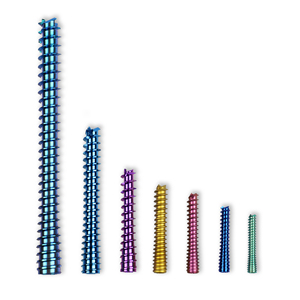
CANWELL Titanium Headless Cannulated Compression Screws Orthopedic Trauma Implant System CE Certified
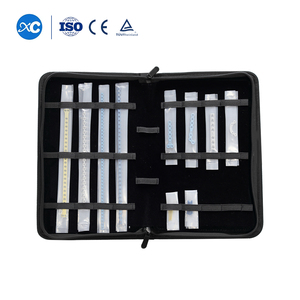
High Quality XC Medico Pet Orthopedic Implant AO/Stem System Sample Pack Stainless Steel Ti CE Certified Class III Model
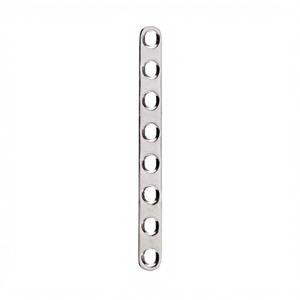
Stainless Steel Phillips Bone Plates High Quality Veterinary Bone Implants Orthopedic Implants CE ISO Approved
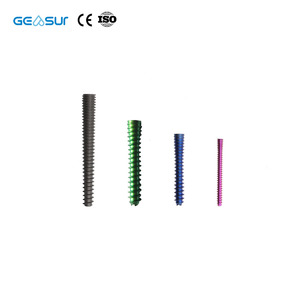
Geasure CE ISO Certified Class III Titanium Alloy Headless Compression Cannulated Screw-Orthopedic Implant for Orthopedic
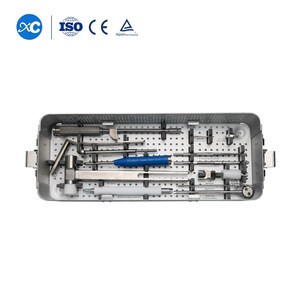
Veterinary a Type Total Hip System Surgical Instrument Orthopedic Implant Tools 1#~5# Biocompatible Durable Quality Guaranteed
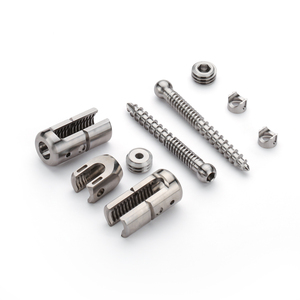
JZC High-quality Orthopedic Spinal Implant Posterior Thoracolumbar Nailing and Rod Fixation System Titanium Alloy
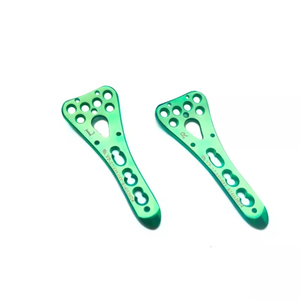
High Quality Variable Angle Volar Titanium Plate Orthopedic Veterinary Surgical Implant CE ISO Approved Titanium bone plates
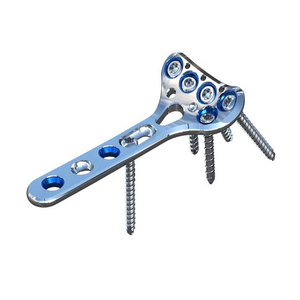
Medical Instruments Bone Surgical Kit Orthopedic Implants High Quality Orthopedic Surgical Spine Implants
The Evolution of China’s Orthopedic Manufacturing: Why Quality Management Systems (QMS) Drive Global Sourcing Decisions
In the global orthopedic medical device sector, the focus of international distributors, procurement directors, and hospital networks has fundamentally shifted. While cost-efficiencies initially positioned China as a primary manufacturing hub, modern procurement strategies prioritize uncompromising Quality Management Systems (QMS), compliance with ISO 13485:2016, EU Medical Device Regulation (MDR 2017/745), and US FDA 21 CFR Part 820 quality system regulations.
As a leading China orthopedic implant quality management system supplier & exporter, enterprise growth is built on bridging high-precision metallurgical engineering with rigorous clinical risk management. Modern orthopedic implants—ranging from posterior thoracolumbar spinal pedicle screw fixation systems to variable angle volar locking plates and custom 3D-printed porous titanium interbody cages—demand structural integrity, flawless fatigue strength, and biocompatibility. Achieving these parameters requires an end-to-end quality ecosystem across raw material validation, 5-axis Swiss-type CNC machining, cleanroom packaging, and lot-by-lot mechanical verification.
Anatomy of a Class III Medical Device Quality System in Chinese Manufacturing
True information gain in orthopedic device manufacturing stems from understanding the precise control mechanisms governing implant safety, dimensional tolerance, and surface passivation.
1. Metallurgical & Raw Material Assurance
Every production run begins with accredited raw materials. We strictly utilize Medical Grade 5 ELI Titanium (Ti-6Al-4V ELI / ASTM F136), High-Grade Implant PEEK (PEEK-OPTIMA / ASTM F2026), and 316LVM Surgical Stainless Steel (ASTM F138). Each batch undergoes spectrographic chemical analysis, ultrasonic flaw detection, and tensile verification before CNC entry.
2. 5-Axis CNC & Micron-Level Tolerances
Utilizing ultra-precision Swiss Tornos and Star 5-axis CNC turning-milling centers, screw thread profiles,cannulated lumens, and anatomical plate contours are machined within tolerances of ±0.005mm. This prevents stress concentrations and micro-motion after surgical implantation.
3. Surface Modification & Passivation
Surface treatments include Type II Electrochemical Anodization (color-coded sizing for trauma plates and pedicle screws), citric acid passivation (ASTM A967), and micro-bead blasting to optimize fatigue strength, wear resistance, and osseointegration capabilities.
| QMS Audit Layer | International Standard | Execution & Verification Protocol | Risk Mitigation Outcome |
|---|---|---|---|
| Material Traceability | ISO 5832-3 / ASTM F136 | 100% Heat-lot spectral analysis & 3D micro-CT scanning | Eliminates structural inclusions & alloy degradation |
| Dimensional Inspection | ISO 2768-mK / ISO 1101 | Hexagon CMM & Keyence Automated Optical Profilometry | Guarantees 100% inter-changeability of instruments & screws |
| Fatigue & Biomechanics | ASTM F543 / ASTM F1717 | Dynamic axial compression & torsional fatigue testing (5 million cycles) | Prevents in-vivo implant breakage under physiological loading |
| Cleanroom Bioburden | ISO 14644-1 Class 8 | Multi-stage ultrasonic degreasing, TOC validation & bioburden counts | Ensures non-pyrogenic status prior to terminal sterilization |
Spinal, Trauma, CMF, and Veterinary Implant System Architecture
A granular overview of the surgical implant systems manufactured within our ISO 13485 certified production environment.
Thoracolumbar & Cervical Spinal Fixation Systems
Our spinal portfolio encompasses posterior thoracolumbar pedicle screw systems, mono-axial and poly-axial screws, cross-links, spinal rods, and interbody fusion cages (TLIF, ACDF, XLIF, and 3D Printed Titanium Cages). Designed to maintain structural stability, preserve lordosis, and foster rapid osseointegration.
- Poly-Axial Pedicle Screws: 60° angle friction fit friction head design for smoother rod introduction.
- Interbody Fusion Cages: Manufactured from radiolucent PEEK Optima or porous additive-manufactured 3D Titanium featuring macro-porosity (500–700 µm) matching human cancellous bone.
- Kyphoplasty Systems: High-pressure balloon catheters and bone cement delivery instruments for osteoporotic compression fractures.
Trauma Plating & Intramedullary Nailing Systems
Covering complex long bone and periarticular fracture fixation, our trauma systems feature anatomical locking compression plates (LCP), variable angle (VA) volar plates, cannulated headless screws, and intramedullary nails (PFNA, Tibial, Femoral, Humeral).
- Variable Angle Volar Plates: 2.4mm / 2.7mm locking constructs allowing ±15° screw angling for precise distal radius articular reconstruction.
- Intramedullary Nails: Helical blade and interlocking screw designs engineered for rapid minimally invasive insertion and fracture stabilization.
- Circular External Fixation: Ring fixators and carbon fiber struts for complex open fractures and limb lengthening procedures.
Craniomaxillofacial (CMF) Fixation
Low-profile micro and mini plating systems tailored for trauma reconstruction, orthognathic surgery, and cranial defect repair. Ultra-thin titanium profiles minimize soft-tissue irritation while providing precise anatomical fixation.
- Plate Thickness: 0.6mm to 1.5mm profiles with self-tapping emergency screw options.
- Malleability: Optimized titanium ductility allowing contouring without compromise to structural fatigue limits.
Veterinary Orthopedic Implants & Instruments
Specialized veterinary trauma and reconstructive systems, including TPLO (Tibial Plateau Leveling Osteotomy) plates, micro-locking plates, and total hip replacement systems designed specifically for canine and feline clinical applications.
- Biocompatibility & Ergonomics: Premium stainless steel and titanium implants adapted for animal anatomy.
- Complete Surgical Kits: Dedicated color-coded surgical toolkits for effortless veterinary OR workflows.
Future Procurement Trends & Development Vectors in Orthopedic Manufacturing
What procurement officers and medical device brand owners must prepare for over the next decade.
1. Shift Toward 3D Additive Manufacturing
Traditional solid titanium cages are rapidly giving way to porous additive-manufactured 3D titanium implants created via Selective Laser Melting (SLM). These scaffolds emulate human bone trabecular structures, lowering elastic modulus to mitigate stress shielding and eliminate the need for secondary autograft harvesting.
2. EU MDR & Regulatory Tightening
The sunsetting of MDD in favor of EU MDR 2017/745 requires significantly more rigorous Clinical Evaluation Reports (CER), post-market surveillance (PMS), and Unique Device Identification (UDI) compliance. Sourcing partners must choose suppliers with pre-existing, fully audited technical documentation files.
3. Supply Chain De-risking & OEM Customization
Global distributors are reducing reliance on single-geography suppliers by establishing strategic OEM/ODM partnerships in China that offer complete private-label capabilities, customized instrument tray designs, and stable 15-day stock replenishment guarantees.
Looking for a Certified OEM/ODM Manufacturing Partner in China?
Gain direct access to our full product portfolio, technical documentation, material certifications, and custom engineering capabilities.
Get CatalogWhy Trauhui Medical is the Preferred China Orthopedic Implant Partner
Integrating 15+ years of orthopedic engineering with a robust global export infrastructure.
Self-Owned Modern Manufacturing Base
Located in Changzhou’s high-tech zone—the heart of China's medical device cluster—our facility spans over 30,000 square meters equipped with 150+ high-precision CNC machining centers and testing instruments.
In-House R&D & Prototyping
Backed by 30+ specialized biomedical engineers, we handle the full product cycle from initial CAD/CAM concept design and finite element analysis (FEA) to rapid prototyping, physical testing, and mass production.
Rapid Lead Time & Inventory Holding
We maintain extensive safety stock for standard spinal and trauma inventory, enabling average order turnaround times of 15 days, drastically minimizing supply chain disruption for global distributors.
Full Distributor Registration Support
We provide turnkey regulatory support, offering comprehensive Technical Files (STED), ISO 13485 certificates, CE documentation, and test reports required for quick MOH/FDA registration in your target country.
Frequently Asked Sourcing & Quality Control Questions
Detailed technical and commercial answers for medical device buyers, regulatory officers, and distributors.
Which international certifications do your orthopedic implants and QMS hold?
Our manufacturing facility operates strictly under an audited ISO 13485:2016 Quality Management System. Our key product lines—including spinal pedicle screw systems, interbody fusion cages, trauma locking plates, cannulated screws, and intramedullary nails—hold CE certifications and FDA 510(k) clearances. Full technical dossiers (STED) and certificate copies are provided to qualified distributors to support local health authority registration.
What material verification processes are conducted for raw titanium and PEEK?
We source raw materials exclusively from certified international suppliers (Ti-6Al-4V ELI per ASTM F136 and PEEK-OPTIMA per ASTM F2026). Every incoming lot undergoes chemical composition verification via spectrographic analysis, mechanical tensile strength testing, and ultrasonic internal flaw detection. Material Test Reports (MTR) with full heat-lot traceability are archived and provided with every shipment.
Can Trauhui Medical support custom OEM / ODM private-label projects?
Yes. We offer complete OEM and ODM services for global medical device brand owners. Our dedicated 30+ person R&D team can customize implant geometry, thread pitch, surface treatments, color anodization, and surgical instrument tray layouts based on your CAD drawings or physical samples. We also provide customized laser marking, sterile packaging, and branded box design.
What is the standard lead time for regular vs. OEM customized orders?
For standard catalog items (such as standard trauma plates, pedicle screws, and spinal cages), we maintain continuous buffer stock, allowing delivery within 15 calendar days. For custom OEM/ODM orders requiring new tooling, process validation, or private label packaging, typical lead times range from 30 to 45 days depending on project complexity.
How do you ensure cleaning, bioburden, and cleanroom safety prior to packaging?
All finished implants undergo multi-stage automated ultrasonic cleaning utilizing purified water systems to remove all machining oils and particulate matter. Final packaging is performed inside an ISO Class 8 (Class 100,000) cleanroom environment. Bioburden, endotoxins (LAL test), and total organic carbon (TOC) levels are routinely validated according to ISO 11737 standards.
What mechanical fatigue testing is performed on your spinal and trauma systems?
Our implants undergo rigorous biomechanical testing in accordance with international consensus standards: ASTM F1717 for spinal implant constructs, ASTM F543 for metallic medical bone screws, and ASTM F382 for metallic bone plates. Dynamic fatigue tests are conducted up to 5,000,000 cycles to guarantee structural integrity under physiological cyclic loading.
Do you supply matching surgical instrument sets with implant systems?
Yes. We engineer and manufacture matching, high-precision surgical instrument kits for all our implant lines. Instruments are fabricated from surgical stainless steel (such as 17-4PH and 420) and lightweight aluminum alloy graphic containers. Ergonomic handles, depth gauges, taps, screwdrivers, and benders are designed for maximum OR durability and intuitive surgical handling.
Can prospective distributors visit and audit the Changzhou manufacturing facility?
We welcome quality assurance teams, regulatory auditors, and commercial directors to audit our factory in Changzhou, Jiangsu, China. During a facility tour, you can inspect our 5-axis CNC workshops, CMM quality control laboratories, surface treatment lines, cleanroom packaging facilities, and central warehouse.
What are the key differences between your 3D printed titanium cages and traditional PEEK cages?
PEEK cages offer excellent radiolucency for post-operative imaging and an elastic modulus close to cortical bone. However, 3D printed porous titanium cages feature an interconnected trabecular structure with 500–700 µm pore size that actively promotes bony ingrowth (osseointegration) directly into the implant body, establishing faster bio-fixation without relying solely on bone graft material.
What is your policy on minimum order quantities (MOQ) for international buyers?
To support new distributors and regional market entry, we offer flexible MOQ structures. Standard catalog evaluation samples and trial orders can be dispatched in small quantities. For private-label OEM orders involving customized packaging, MOQ is negotiated based on batch production runs and laser-marking requirements.
Elevate Your Orthopedic Product Portfolio with China’s Premier QMS Manufacturer
Join 100+ global distributors and medical device brand owners who rely on Trauhui Medical for certified precision implants, stable delivery lead times, and comprehensive technical support.