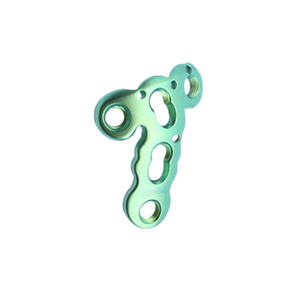
Davin Med Titanium Proximal Humeral Locking Compression Plate
Class III anatomically contoured trauma plate featuring multi-directional locking technology for proximal humerus fracture reconstruction.
Get CatalogPrecision-engineered class III medical implants and specialized surgical instrument sets manufactured under ISO 13485 and audited terminal sterilization validation protocols.
Class III anatomically contoured trauma plate featuring multi-directional locking technology for proximal humerus fracture reconstruction.
Get Catalog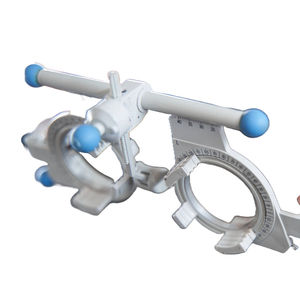
Custom fabrication of implantable titanium alloys, CoCr, and PEEK medical hardware under ISO 13485 cleanroom machining standards.
Get Catalog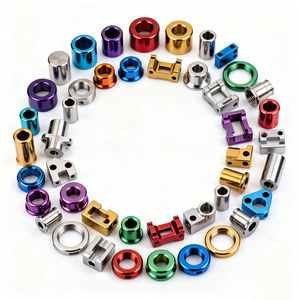
5-axis high-speed CNC milling and Swiss lathe turning for complex stainless steel and titanium joint replacement hardware.
Get Catalog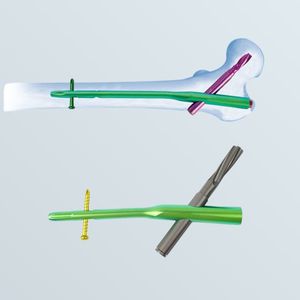
Cannulated trochanteric nail with helical lag blade mechanism optimized for osteoporotic intertrochanteric hip fracture fixation.
Get Catalog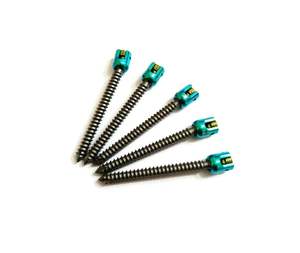
CE-certified spinal stabilization and bone fixation set designed for veterinary orthopedic surgery and complex animal spinal correction.
Get Catalog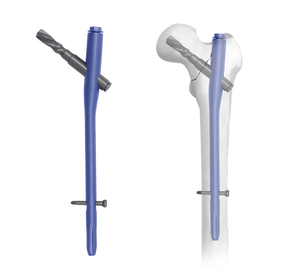
Titanium alloy (Ti-6Al-4V ELI) intramedullary implant engineered to mitigate stress shielding in distal and proximal femoral shaft trauma.
Get Catalog
Tibial Tuberosity Advancement (TTA) titanium cages with additive porous structures to promote rapid osteointegration in canine CCL surgery.
Get Catalog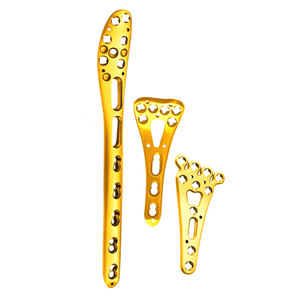
Medical grade 316L stainless steel plates, cortex screws, and ergonomic manual instrumentation sets for general fracture fixation.
Get CatalogIn global medical device procurement, orthopedic implants—ranging from titanium interbody spinal cages and intramedullary femoral nails to complex 3D-printed porous hip cups—are categorized as critical Class III medical devices. The biological safety and clinical efficacy of these implantable devices depend fundamentally on terminal sterilization validation, sterile packaging integrity (ISO 11607), and meticulous bioburden control throughout the manufacturing lifecycle.
Regulatory Compliance Insight: Both the European Union Medical Device Regulation (EU MDR 2017/745) and US FDA 21 CFR Part 820 mandate that orthopedic implant suppliers maintain a comprehensive Sterilization Validation Master File (SVMF). China's leading OEM factories, centered in Changzhou’s medical technology cluster, now integrate international standards including ISO 11137 (Radiation Sterilization), ISO 11135 (Ethylene Oxide), and ISO 17665 (Moist Heat) directly into their Design History Files (DHF).
For any medical device intended to contact compromised vascular systems or bone tissue, terminal sterilization must achieve a Sterility Assurance Level (SAL) of 10⁻⁶. This probability mathematically guarantees that no more than one viable microorganism survives in a population of one million sterilized units. Achieving SAL 10⁻⁶ requires rigorous microbiological characterization, including:
Selecting the appropriate sterilization modality depends heavily on material composition, complex internal geometries (e.g., porous additive-manufactured lattices vs. solid machined stainless steel), and packaging configurations. Below is a comparative validation matrix used by leading Chinese orthopedic suppliers:
| Sterilization Modality | Primary ISO Standard | Target Materials & Applications | Key Technical Considerations | EO / Radiation Residual Limits |
|---|---|---|---|---|
| Gamma Irradiation (Cobalt-60) | ISO 11137-1 / -2 (VDmax, Method 1) | Titanium alloys (Ti6Al4V), CoCr, UHMWPE liners, pre-packaged sterile blisters | High penetration power; material color shift risk; potential polymer chain scission in UHMWPE requiring crosslinking protocols. | N/A (No chemical residuals; dose validated between 25 kGy to 40 kGy) |
| Ethylene Oxide (EtO / EO) | ISO 11135 / ISO 10993-7 | Complex assembly trauma sets, PEEK spinal cages, temperature-sensitive polymer-metal hybrids | Requires breathable sterile barrier (Tyvek®); extended degassing cycles necessary to remove toxic gas residuals. | EO residual < 4.0 mg/device; ECH residual < 9.0 mg/device (per ISO 10993-7) |
| Electron Beam (E-Beam) | ISO 11137-1 / -3 | High-volume bone screws, trauma plates, rapid-turnaround standardized components | Faster processing time and lower oxidative degradation than Gamma; limited penetration depth requiring low-density packaging. | N/A (Dosimetry mapping required for maximum/minimum dose ratio) |
| Moist Heat / Autoclave | ISO 17665-1 | Reusable surgical instrument sets, delivery trays, trial implants | Excellent thermal compatibility for stainless steel (17-4PH, 316L); unsuitable for sterile single-use implants due to corrosion/packaging moisture. | N/A (Requires dry-cycle validation to prevent moisture condensation) |
Sterilization validation is meaningless if the sterile packaging barrier is compromised during storage, transit, or handling. Top China factories utilize ISO Class 7 (Class 10,000) cleanrooms for final ultrasonic cleaning, assembly, and primary pouch sealing.
Automated multi-stage ultrasonic de-greasing, acid passivation (ASTM A967), and pure water rinsing (microbial count < 10 CFU/100mL).
Double Tyvek® pouching or thermoformed PETG rigid blisters sealed in positive-pressure cleanroom environments.
ASTM F88 peel testing to confirm seal integrity and mechanical peel strength consistency across batch lots.
ASTM F1929 dye penetration testing and ASTM F2096 gross leak bubble testing to verify zero micro-channel leaks.
ASTM F1980 accelerated aging protocols at 55°C to substantiate 3-year and 5-year shelf-life stability claims.
Combining 15+ years of orthopedic design innovation, state-of-the-art Swiss CNC machining, and comprehensive sterility assurance for global distribution.
Operating under audited Quality Management Systems with full device master files (DMF) ready to support distributor product registration across EU, Latin America, Southeast Asia, and Middle East regulatory bodies.
Equipped with over 150 sets of advanced CNC machining centers, Swiss-type automatic lathes, and wire EDM machinery capable of maintaining sub-micron tolerances on complex bone plate and spinal implant geometries.
Integrated manufacturing and cleanroom packaging allow standard trauma and spine systems to be dispatched within 15 days, minimizing supply chain disruptions for surgical device distributors.
As the global orthopedic market shifts toward personalized implants, 3D printing, and bioactive surface coatings, traditional sterilization methodologies are undergoing significant technological evolution. B2B buyers and OEM partners must adapt to several emerging trends:
3D-printed titanium implants (featuring Trabecular Structure lattices for bone ingrowth) introduce severe sterilization validation challenges. Microscopic un-sintered titanium powder particles and trapped organic cutting fluids deep within porous structures cannot be cleaned via standard washing. Leading China suppliers are adopting Supercritical Carbon Dioxide (scCO₂) cleaning combined with validated low-dose Gamma irradiation to guarantee complete solvent extraction and internal core sterility.
Due to tightening global environmental restrictions on EtO gas emissions (such as US EPA NESHAP standards), contract sterilization facilities in China are validating VHP and Nitrogen Dioxide (NO₂) low-temperature sterilization processes. VHP offers non-toxic byproduct profiles (water vapor and oxygen) while maintaining excellent material compatibility for sensitive PEEK, bioresorbable PLA/PCL polymers, and electronic smart implants.
Traditional sterilization release relies on 7-to-14-day biological indicator (BI) incubation. Advanced orthopedic factories are migrating toward Parametric Release supported by calibrated physical sensors (temperature, pressure, gas concentration, radiation dose mapping). This transition shortens batch release cycles from weeks to hours while providing immutable digital traceability records required for MDR regulatory audits.
Key technical and regulatory guidance for orthopedic device buyers, quality managers, and international distributors.
Validation follows ISO 11137 (for radiation) or ISO 11135 (for EtO). Factories conduct bioburden testing (ISO 17665 / ISO 11737) on multiple product lots to establish baseline contamination levels. Fractional exposure cycles (half-cycles) using resistant spore BIs (e.g., Bacillus atrophaeus) are performed to prove total lethality, followed by full-dose verification to establish an SAL of 10⁻⁶ with documented safety margins.
Non-sterile implants are delivered clean and packaged in protective barrier bags; hospitals must sterilize them in steam autoclaves prior to surgery using validated Instructions for Use (IFU per ISO 17664). Pre-sterilized implants are double-pouched in ISO Class 7 cleanrooms, subjected to terminal Gamma or EtO sterilization, and shipped ready-to-open in the operating theater with a validated 5-year shelf life.
A standard regulatory technical dossier includes: Initial Bioburden Characterization Reports, Dose Mapping Audits (ISO 11137), Biological Indicator Certificate of Analysis, EO Residual Test Reports (ISO 10993-7), Bacterial Endotoxin / Pyrogen Test Validation (LAL), Packaging Integrity Reports (ISO 11607 seal strength, dye penetration, bubble test), and Accelerated Aging Stability Data (ASTM F1980).
Our dedicated R&D and QA engineering teams assist OEM clients from initial CAD drawings to final sterile barrier design. We offer custom thermoformed PETG blister trays, private label Tyvek® lid printing, customer-specific barcode/UDI branding, and turn-key validation report creation to accelerate your local regulatory submission.
Yes. We welcome quality assurance managers, regulatory affairs auditors, and distribution partners to audit our 30,000 m² plant, ISO Class 7 cleanrooms, CNC machining centers, and physical/microbiology testing laboratories in Changzhou, Jiangsu Province, China.