High-Demand Orthopedic Implant Systems for Global Distributors
Featured clinical-grade spine, trauma, joint, and veterinary fixation solutions manufactured with 5-axis CNC precision and ISO 13485 certification.
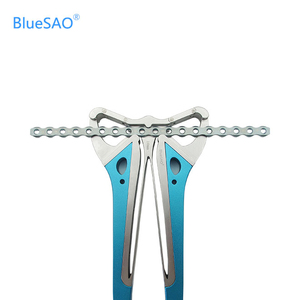
Bluesao Veterinary Bone Implants Titanium Orthopedic Implants
High-strength titanium alloy bone plates and screws engineered specifically for small animal orthopedic reconstructive surgery.
Get Catalog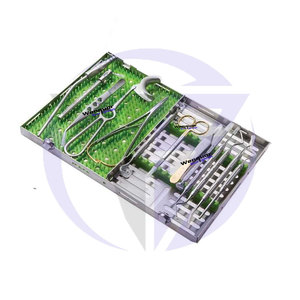
High Grade 13 Pcs Manual Dental & Orthopedic Surgical Set
CE-marked stainless steel ergonomic instrument tray set designed for precise surgical preparation and implant placement.
Get Catalog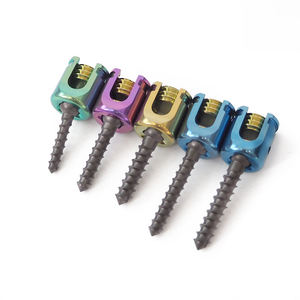
Polyaxial Spine Pedicle Screw Titanium Implant System
Top-loading polyaxial spinal fixation pedicle screws delivering dynamic angulation freedom and superior pullout resistance.
Get Catalog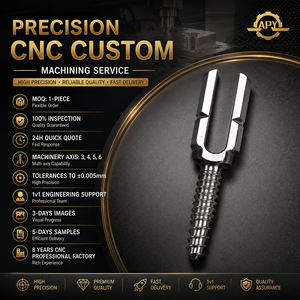
ISO 13485 CNC Machined Spinal Fixation Pedicle Screws
Medical grade Ti-6Al-4V ELI titanium spinal screws custom-machined via 5-axis Swiss CNC equipment for perfect thread geometry.
Get Catalog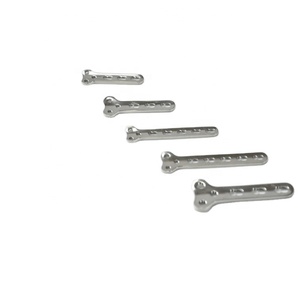
1.5mm T-Plate Veterinary Orthopedic Plate & Screw System
Ultra-low profile anatomical T-plates engineered for distal radius, tibia, and osteotomy reconstruction in small pets.
Get Catalog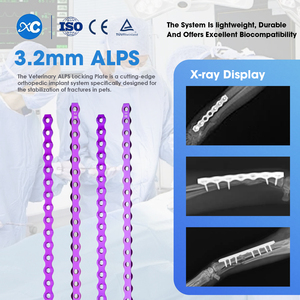
3.2mm ALPS Titanium Trauma Reconstruction System
Advanced locking plate technology featuring biological contouring and reduced periosteal contact for accelerated bone healing.
Get Catalog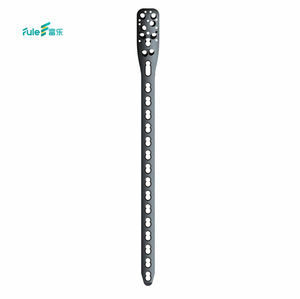
Titanium Femoral 4.5 Limited Contact Wide Locking Plate
CE-marked wide anatomical trauma plates featuring limited contact design to preserve vascular supply in shaft fractures.
Get Catalog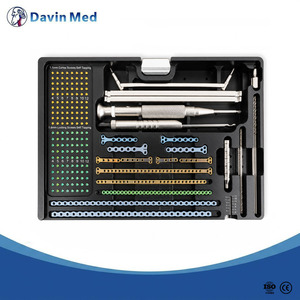
ALPS Mini Titanium Locking Plate System (1.1/1.6mm)
Precision micro locking plate kit complete with color-coded screws and modular surgical sterilization box.
Get CatalogEvaluating China’s Orthopedic Manufacturing Ecosystem: A Strategic Blueprint for International Distributors
The global market for orthopedic implants—spanning spinal fusion devices, trauma fixation plates, intramedullary nails, and craniomaxillofacial (CMF) systems—is undergoing a structural realignment. Healthcare systems worldwide face dual pressures: escalating surgical volumes driven by aging demographics and aggressive cost-containment mandates imposed by national health authorities and insurance providers.
The Changzhou Orthopedic Industrial Cluster Advantage
China has transitioned from a low-cost contract manufacturing hub to a high-precision medical device power house. Headquartered in Changzhou, Jiangsu Province—recognized globally as the epicenter of China’s orthopedic device cluster—leading manufacturers operate state-of-the-art facilities equipped with imported multi-axis Swiss CNC machining centers, German optical measuring systems, and ISO Class 7 cleanrooms.
For global B2B medical distributors, partnering directly with a tier-1 OEM/ODM supplier in Changzhou eliminates multi-tier intermediary markups while maintaining compliance with stringent international regulatory frameworks including ISO 13485:2016, EU CE Marking (MDR 2017/745), and US FDA 510(k) clearances.
Why Leading Global Distributors Choose Our Manufacturing Framework
From metallurgical raw material qualification to automated bio-burden testing, our integrated production methodology ensures batch-to-batch repeatability and absolute clinical trust.
Ti-6Al-4V ELI Metallurgy
We exclusively utilize implant-grade ASTM F136 Titanium Alloy (Extra Low Interstitial) and ISO 5832-3 compliant stock. This guarantees maximum tensile yield strength (>860 MPa), optimal fatigue resistance, and superior biocompatibility for long-term osseointegration.
5 & 6-Axis CNC Precision
Complex anatomical profiles—such as variable-angle locking holes, cannulated pedicle screws, and complex helical intramedullary nails—are single-pass machined on high-speed Swiss CNC lathes, eliminating micro-burrs and tolerance stack-up.
Complete Dossier (STED) Support
We provide full Technical Files adhering to Summary Technical Documentation (STED) standards. This includes mechanical fatigue test reports (ASTM F1717, ASTM F543), biocompatibility studies (ISO 10993), and full sterilization validation data to expedite local registration.
Orthopedic Implant Material & Engineering Comparison Matrix
Rigorous engineering metrics defining our standard product lines available for distributor procurement and private labeling.
| Implant Category | Material Specification | Surface Treatment | Biomechanical Standard | Clinical Applications |
|---|---|---|---|---|
| Spinal Pedicle Screw System | Ti-6Al-4V ELI (ASTM F136) | Type II Anodization (Color Coded) | ASTM F1717 / ISO 12189 | Degenerative disc disease, spondylolisthesis, spinal trauma, scoliosis correction. |
| Interbody Fusion Cages (TLIF/ACDF) | PEEK Optima LT1 / 3D Printed Ti | Porous Trabecular Micro-Structure | ASTM F2077 / ASTM F2267 | Anterior & transforaminal lumbar/cervical interbody fusion. |
| Variable Angle Locking Plates | Commercially Pure Ti (Gr 4) / Ti-6Al-4V | Electropolished / Micro-arc Anodized | ASTM F382 / ISO 9585 | Complex periarticular fractures, osteotomies, non-union trauma. |
| Intramedullary Nailing (PFNA/Tibia) | Ti-6Al-4V ELI Alloy | Shot-peened Surface Hardening | ASTM F1264 / ISO 15028 | Intertrochanteric fractures, femoral shaft & tibial diaphysis fractures. |
| Veterinary ALPS Locking System | Medical Grade Titanium / 316L Stainless | Biocontour Anodized Coating | ISO 5832-1 / ISO 5832-3 | Small animal fracture repair, TPLO, deformative correction in veterinary clinics. |
Strategic Sourcing Directions in Orthopedic Supply Chain (2025–2030)
In-depth market intelligence analyzing macro-economic shifts, manufacturing innovations, and regulatory evolutions transforming B2B medical trade.
Additive Manufacturing & 3D-Printed Trabecular Lattices
Traditional machined PEEK cages are rapidly losing market share to 3D-printed titanium implants possessing biomimetic porous lattices. Electron Beam Melting (EBM) and Direct Metal Laser Sintering (DMLS) technologies allow manufacturers to produce implants with interconnected pore sizes ranging between 300 to 500 microns and porosities over 70%.
Distributor Takeaway: Sourcing 3D-printed interbody cages with low modulus elasticity matching native cancellous bone reduces stress shielding and eliminates the need for expensive bone graft substitutes, giving distributors a powerful competitive edge in hospital tenders.
Supply Chain Consolidation & Direct OEM Strategic Alliances
The traditional multi-tier distribution layer—where brand owners outsource to regional jobbers—is collapsing due to shrinking hospital reimbursement margins. Forward-thinking distributors are establishing direct OEM/ODM private-label contracts with certified Chinese direct manufacturers.
Distributor Takeaway: Partnering directly with factories that maintain safety stock inventories delivers 15-day order turnaround times for standard trauma systems, reducing working capital requirements while increasing gross margins by 35% to 50%.
Regulatory Harmonization Under EU MDR & Stringent Post-Market Surveillance (PMS)
The transition from the Medical Device Directive (MDD) to Medical Device Regulation (MDR 2017/745) in Europe has forced hundreds of small manufacturers out of the market due to elevated clinical evidence requirements. Only financially robust suppliers capable of executing extensive Post-Market Clinical Follow-up (PMCF) studies can sustain compliance.
Distributor Takeaway: Qualifying suppliers with validated ISO 13485 quality systems and complete clinical evaluation reports safeguards distributors against unexpected certificate suspensions or market recalls, preserving tender continuity.
Frequently Asked Questions by Global Procurement Teams
Detailed answers covering regulatory documentation, custom OEM prototyping, quality assurance, and international trade logistics.
Which certifications do your orthopedic implants hold, and can they support local market registration?
Our orthopedic implants and matching surgical instrument sets are manufactured under a TÜV-audited ISO 13485:2016 quality management system. Key product lines hold full CE marking under EU regulations and FDA 510(k) clearances. To support distributor registration in regional ministry of health databases (such as ANVISA in Brazil, SFDA in Saudi Arabia, or COFEPRIS in Mexico), we provide comprehensive Technical Files including raw material mill certificates, mechanical fatigue test reports, biological evaluation dossiers (ISO 10993), and sterile pack shelf-life validation data.
What are the minimum order quantities (MOQs) and lead times for OEM/ODM private-label manufacturing?
For standard catalog items (such as standard locking plates, pedicle screws, and intramedullary nails), we maintain extensive safety stocks, enabling dispatch within 7 to 15 business days with flexible minimum order requirements. For customized OEM/ODM projects requiring bespoke CAD geometry, specialized laser marking, or custom sterile blister packaging, initial prototype samples are typically delivered within 30 days following engineering sign-off, with full production batches completed within 45 days.
How do you ensure batch-to-batch quality consistency and dimensional tolerance for titanium bone screws?
Quality control is embedded into every stage of production. All raw material titanium rods undergo 100% ultrasonic flaw detection and chemical composition spectrographic analysis. Machining is conducted on high-precision 5-axis Swiss CNC lathes with optical in-line gauging. Finished components pass through automated Coordinate Measuring Machines (CMM) and optical profile projectors to ensure thread pitch tolerances within ±0.005mm. Furthermore, dedicated quality engineers perform destructive torque testing and pull-out force validation per ASTM F543 guidelines on every manufacturing lot.
Do you provide matching surgical instrument trays for your implant systems?
Yes. Every orthopedic implant system—whether spinal pedicle screw systems, variable-angle trauma plates, or veterinary micro-plating sets—is supplied alongside a fully dedicated, ergonomically designed surgical instrument kit. Instruments are manufactured from surgical-grade stainless steel (17-4PH, 420 Stainless) and lightweight anodized aluminum cases designed to withstand repeated autoclave steam sterilization cycles (134°C). Custom graphic layout trays featuring laser-etched component outlines can also be developed for private-label clients.
What is the difference between Grade 5 Titanium (Ti-6Al-4V ELI) and Grade 4 Titanium in trauma plate applications?
Grade 5 Titanium (Ti-6Al-4V ELI) is an alloyed material offering exceptionally high tensile strength (minimum 860 MPa) and superior fatigue limit, making it the preferred choice for heavy load-bearing applications such as spinal rods, pedicle screws, intramedullary nails, and high-load femoral locking plates. Commercially Pure Grade 4 Titanium (CP Ti) offers slightly lower tensile strength (around 550 MPa) but superior ductility and contourability, making it ideal for reconstructive trauma plates and CMF systems that require precise intraoperative anatomical bending by the surgeon.
How are sterile versus non-sterile implants packaged for international shipping?
Non-sterile implants are individually cleaned in multi-stage ultrasonic bath systems, sealed in protective medical-grade poly bags with protective silicone caps, and boxed with full lot traceability barcoding. Sterile implants are processed inside our ISO Class 7 (Class 10,000) cleanroom, double-sealed in Tyvek® blister pouches, and sterilized via Gamma Irradiation or Ethylene Oxide (EtO) with a validated 5-year shelf life under ISO 11607 standards. All international shipments are reinforced in heavy-duty export corrugated cartons and wood-reinforced pallets to prevent transit damage.