Traceable Orthopedic Systems & Implants
Precision-engineered trauma, veterinary, and spinal implant sets fully serialized for global regulatory compliance
Executive Summary: The Strategic Value of Orthopedic Traceability
The global orthopedic medical device sector is undergoing a profound paradigm shift driven by stringent regulatory frameworks, including the European Union Medical Device Regulation (EU MDR 2017/745), US FDA Unique Device Identification (UDI) mandates, and NMPA regulations in China. In modern trauma, spine, and craniomaxillofacial (CMF) surgical applications, traceability is no longer merely a post-market compliance check; it is a foundational pillar of clinical safety, supply chain resilience, and product quality assurance.
China has emerged as a globally recognized manufacturing hub for high-precision orthopedic implants and instruments. Advanced manufacturing clusters—most notably centered in Changzhou, Jiangsu Province—have integrated sophisticated multi-axis CNC machining, additive manufacturing (3D printing), and end-to-end digital tracking systems. Leading Chinese OEM/ODM suppliers now offer international hospital chains, OEM distributors, and brand owners complete traceability from raw material ingot certification down to single-screw surgical deployment.
Defining Full-Lifecycle Traceability in Medical Device Manufacturing
Full-lifecycle traceability in orthopedic implant manufacturing requires a seamless continuous link across four distinct operational phases:
1. Raw Material Metallurgy Verification: Tracking medical-grade raw materials (e.g., Titanium Alloy Ti-6Al-4V ELI conforming to ASTM F136, Pure Titanium Grade 2/4 per ASTM F67, Ultra-High-Molecular-Weight Polyethylene UHMWPE, and PEEK). Every raw bar stock is tied to mill test certificates detailing chemical composition, tensile strength, and ultrasonic flaw detection results.
2. Precision Machining & In-Process Inspection: Utilizing 5-axis Swiss-type lathe centers and high-speed CNC milling workstations. Each batch undergoes coordinate measuring machine (CMM) dimensional verification, with optical inspection records permanently tied to the batch work order.
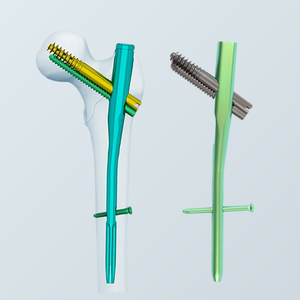
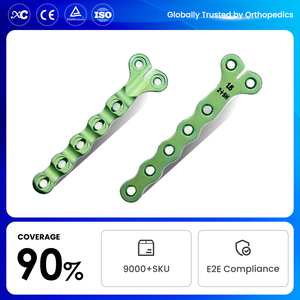
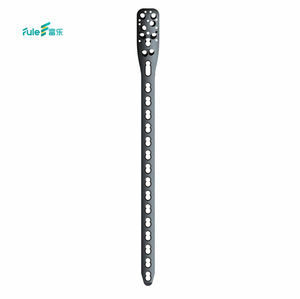
3. Fiber Laser Direct Part Marking (DPM): Etching indelible, micro-scale GS1-compliant 2D DataMatrix codes, lot numbers, and catalog identifiers onto non-critical load surfaces of trauma plates, intramedullary nails, spinal fusion cages, and veterinary bone screws.
4. Sterile Packaging & Distribution Log Tracking: Class 100,000 (ISO Class 8) cleanroom packaging under ISO 11607 validation standards, matching primary blister packaging identifiers with secondary carton UDI labels for instant global recall capability and inventory tracking.
Global Procurement Trends: Sourcing Orthopedic Implants from China (2025–2030)
As healthcare systems demand greater cost efficiency without compromising clinical performance, global procurement teams are altering how they qualify orthopedic manufacturers in China. Sourcing managers have moved beyond evaluating unit prices; they now perform rigorous audit-driven assessments of engineering agility, traceability infrastructure, and regulatory documentation completeness.
1. Migration to Direct-Factory ODM/OEM Engineering Alliances
Distributors and medical device brand owners are increasingly bypassing third-party trading intermediaries to establish direct co-development partnerships with tier-1 Chinese manufacturers. Tier-1 facilities equipped with internal R&D teams enable rapid prototyping of specialized trauma locking plate sets, customized anatomical curvature nails, and veterinary implant kits within accelerated timelines. Direct factory collaboration guarantees direct access to master device history records (DHR) and device master files (DMF) required for market registration.
2. Universal Adoption of Digital Quality Portals
The standard procurement process now incorporates digital quality transparency. Overseas buyers demand cloud-accessible quality portals where lot-specific inspection reports, spectrographic material sheets, dynamic fatigue test graphs, and sterilization certificates can be retrieved in real time. Chinese suppliers who invest in enterprise resource planning (ERP) systems directly linked to laser-marking stations provide an unprecedented level of supply chain visibility.
3. Veterinary Orthopedics Experiencing High Growth
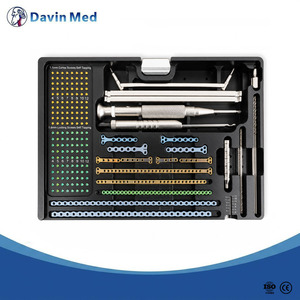
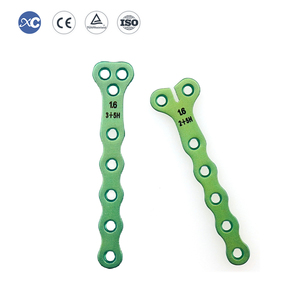
The global veterinary orthopedics market has seen accelerated growth, creating sustained demand for dedicated small-animal fracture fixation systems. Systems such as the ALPS Mini Titanium Locking Plate & Screw System (1.1mm/1.6mm) and specialized veterinary T-type bone plates require the same micro-machining precision and titanium biocompatibility standards as human implants. Leading Chinese suppliers are leading this trend by creating dual-capability manufacturing units configured for both human surgical implants and high-grade veterinary trauma kits.
Technological Advancement & Manufacturing Trends
The technological evolution of orthopedic implants focuses on improving biomechanical integration, reducing stress shielding, and facilitating minimally invasive surgery (MIS). Chinese manufacturing capabilities have advanced to keep pace with these worldwide biomechanical developments.
Additive Manufacturing & 3D Printed Titanium Cages
Direct Metal Laser Sintering (DMLS) and Electron Beam Melting (EBM) technologies allow the production of porous titanium spinal interbody fusion cages (TLIF, ACDF, XLIF) featuring biomimetic trabecular structures. These porous architectures mimic human cancellous bone, achieving optimal elastic modulus to mitigate stress shielding while accelerating osteointegration. Manufacturing traceability for 3D printed implants extends to powder batch re-use tracking, laser power calibration logs, and post-build hot isostatic pressing (HIP) thermal cycle records.
Variable Angle Locking Mechanisms & Micro-Precision Plating
Trauma reconstruction has evolved from rigid monoaxial locking plates to variable angle (VA) locking systems. Implants such as the Cottey-MD Variable Angle Locking Plate System allow surgeons to angle locking screws within a 30-degree cone to target periarticular fracture fragments accurately. Machining these complex threads requires high-precision multi-axis Swiss CNC turning centers and custom-ground carbide tooling, coupled with automated optical sorting to verify thread pitch consistency across thousands of production units.
Biomechanical Fatigue Testing Protocols
To assure long-term mechanical survival under physiological cyclic loading, leading manufacturers execute dynamic fatigue testing according to rigorous international standards:
- ISO 14801 / ASTM F2077: Axial, torsional, and compression-shear fatigue testing of spinal cages and dental/maxillofacial constructs over 5,000,000 cycles.
- ASTM F1264 / ASTM F382: Four-point bending fatigue evaluation of intramedullary nails and metallic bone plates to characterize endurance limits and deformation thresholds.
Manufacturer Profile & Enterprise Strengths: Trauhui Medical
Founded in 2009 and headquartered in Changzhou, Jiangsu Province—renowned as the heart of China’s medical device industrial cluster—Trauhui Medical Co., Ltd has established itself as an authoritative manufacturer of orthopedic implants and surgical instruments. Operating a modern manufacturing footprint exceeding 30,000 square meters, Trauhui Medical integrates product design, raw material metallurgy verification, multi-axis machining, surface treatment, cleanroom packaging, and global regulatory support.
State-of-the-Art Production Facility
Over 150 sets of modern manufacturing and testing equipment, including Japanese Citizen Swiss CNC lathes and German DMG MORI 5-axis machining centers, maintaining an annual production capacity exceeding 350,000 pieces.
Dedicated R&D Engineering Team
30+ senior biomedical engineers focused on spine, trauma, CMF, and veterinary hardware customization. Capable of driving complex OEM/ODM projects from initial CAD drawings to validated finished sterile kits.
Global Certification Portfolio
Full QMS governance certified under ISO 13485, with product lines holding CE certificates and FDA 510(k) clearances. Comprehensive technical documentation provided to facilitate distributor registration worldwide.
Rapid Stocking & 15-Day Lead Time
Maintains extensive finished goods inventory of standard intramedullary nails, locking plates, external fixators, and spinal cages. Regular volume orders are processed and dispatched within 15 calendar days.
International Infrastructure
Strategic expansion includes a dedicated subsidiary in Hong Kong and an international production facility in Hungary, enhancing logistics efficiency, clinical support, and European market reach.
Comprehensive Distributor Support
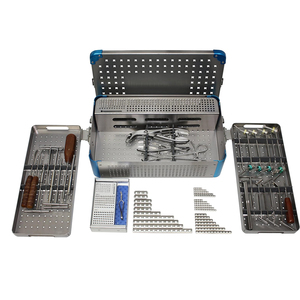
Offers end-to-end distributor assistance, including surgical instrument tray configuration, surgeon education programs, tender support files, and responsive post-market feedback resolution.
Frequently Asked Questions (FAQ) for Orthopedic Sourcing
Key compliance, quality control, and procurement inquiries addressed for global healthcare buyers and distributors.