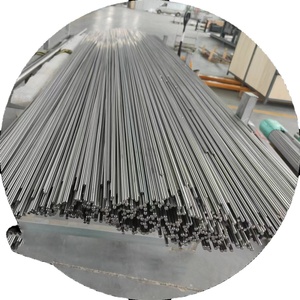
Titanium Bar Grade 5 ELI Orthopedic & Dental Surgical Bar Stock
- Standard: ASTM F136 / ISO 5832-3
- Diameters: 3mm, 4mm, 5mm (Customizable)
- Application: Spinal Rods & Dental Implants
Directly manufactured under ISO 13485 QMS and CE/FDA 510(k) specifications. Optimized for international distributors, OEM brand owners, and hospital networks.
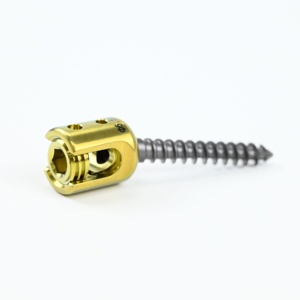
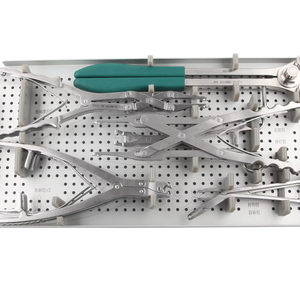
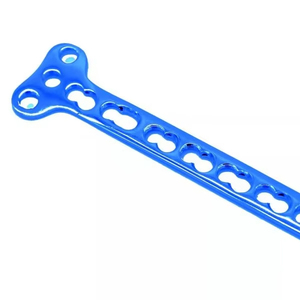
Integrating advanced metallurgical engineering, precision CNC micro-machining, and rigorous ISO 13485 cleanroom validation to deliver clinical excellence globally.
Founded in 2009 in Changzhou, Jiangsu Province—universally recognized as the heart of China's orthopedic medical device manufacturing cluster—our enterprise has established an integrated industrial backbone for spine, trauma, craniomaxillofacial (CMF), and veterinary fixation systems. Operating from a state-of-the-art 30,000 m² facility with over RMB 200 million invested in capital equipment, we control every single phase of the production lifecycle. By maintaining full in-house authority over raw material verification, 5-axis Swiss CNC precision machining, automated surface functionalization, cleanroom primary packaging, and mechanical testing, we offer global partners unprecedented consistency and structural reliability.
Our facility houses over 150 sets of premier manufacturing and testing machinery, including multi-axis Japanese Tsugami Swiss-type lathes, German DMG MORI 5-axis milling centers, Hexagon coordinate measuring machines (CMM), and optical non-contact inspection systems. This technology stack enables us to achieve dimensional tolerances as fine as ±0.005mm, ensuring seamless inter-operability between surgical implants and matching instrumentation sets.
Analysis of material science advancements, surface modifications, and additive manufacturing shaping the next decade of reconstructive surgery.
The global shift toward 3D-printed selective laser melting (SLM) and electron beam melting (EBM) titanium cages is replacing traditional solid PEEK and machined titanium options. Porous trabecular structures (60-80% porosity) match the elastic modulus of human cancellous bone (1.5-3.0 GPa), eliminating stress shielding while enabling rapid bony osseointegration across interbody spaces.
Modern trauma and spinal implants utilize Type II anodic oxidation, Micro-Arc Oxidation (MAO), and vacuum plasma spraying of Hydroxyapatite (HA). These sub-micron surface treatments drastically increase fatigue resistance under cyclic dynamic loading (tested per ASTM F1717 and ISO 14801), while creating bio-active interfaces that suppress bacterial adhesion and enhance bone-to-implant contact (BIC).
The standard material baseline has evolved to Ti-6Al-4V ELI (Extra Low Interstitial, ASTM F136), offering superior ductility and fracture toughness over standard Grade 5 titanium. Concurrently, bioresorbable magnesium alloys and high-performance carbon-reinforced PEEK composites are securing market share in pediatric trauma, CMF reconstruction, and radiolucent tumor surgeries.
To ensure high performance in demanding surgical environments, bulk-manufactured implants undergo rigorous static and dynamic fatigue evaluation. Mechanical performance validation is performed in accordance with international consensus standards:
Key economic, regulatory, and supply chain shifts reshaping how global medical device distributors source bulk orthopedic hardware.
The global market for orthopedic implants is moving away from basic transactional purchasing toward strategic OEM/ODM engineering integration. International procurement directors no longer evaluate Chinese exporters solely on unit price per kilogram or per screw. Instead, the focus has shifted toward **Total Cost of Ownership (TCO)**, supply chain transparency, cleanroom packaging capabilities, and full technical file support.
Distributors are consolidating suppliers by preferring factories that offer complete white-label services—including custom laser-marking, patient-specific color anodization, sterile blister pouching, and market-ready branded outer packaging.
Post-pandemic supply chain vulnerabilities have driven distributors toward Chinese manufacturers maintaining extensive raw material stocks (ASTM F136 bars, 316L sheets) and modular buffer inventory. Standard orders can now be dispatched within 15 calendar days.
With tighter global regulations (such as EU MDR 2017/745 and updated Latin American ANVISA/COFEPRIS requirements), factories providing complete STED documentation, biological evaluation reports (ISO 10993), and clinical evaluation reports (CER) hold a distinct competitive edge.
Furthermore, China’s domestic Volume-Based Procurement (VBP) policy has driven tier-one domestic manufacturers to scale production facilities to unprecedented levels. This massive industrial scale lowers unit production overhead while enforcing rigid quality controls. Overseas buyers directly benefit from this enhanced efficiency, securing premium medical devices at sustainable margin structures.
Addressing the technical, regulatory, and logistics queries raised by international procurement managers prior to qualifying factory vendors.
Our orthopedic implants and surgical instruments are manufactured in facilities operating strictly under an ISO 13485:2016 Quality Management System. Core product lines hold CE marks (under Directive 93/42/EEC transitioning to EU MDR 2017/745 compliance) and US FDA 510(k) market clearances. Qualified distributors are provided with complete Technical Dossiers (STED format), material test certificates (MTR showing heat-lot traceability), cytotoxicity reports (ISO 10993), and sterilization validation files (ISO 11137 for Gamma and ISO 11135 for EO sterilization).
We strictly utilize certified medical-grade raw materials sourced from audited global metallurgists. Metallic implants utilize Titanium Alloy Ti-6Al-4V ELI (Grade 5 ELI, conforming to ASTM F136 / ISO 5832-3), Unalloyed Commercially Pure Titanium (Grades 2 and 4, per ASTM F67), and Implant-Grade Stainless Steel 316L (ASTM F138 / ISO 5832-1). Non-metallic interbody cages are machined or molded using natural PEEK-OPTIMA® (Invibio) or titanium-coated PEEK composites.
Yes. Our in-house R&D team consists of over 30 specialized biomechanical engineers capable of executing custom project workflows. We take your project from initial CAD models or clinical concepts through FEA stress simulation, rapid prototyping, mechanical fatigue testing, custom tooling, and final private-label production. Laser etching of product codes, lot numbers, custom logos, and custom-designed sterilizable instrument aluminum trays are standard OEM options.
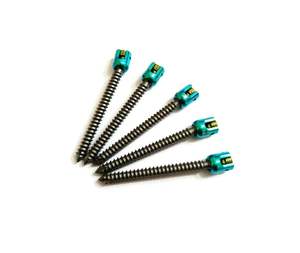
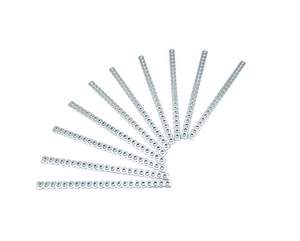
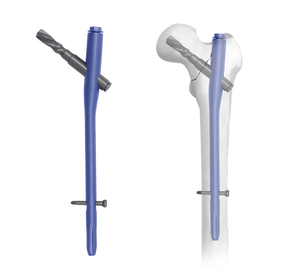
For standard catalog items (such as standard pedicle screws, locking trauma plates, intramedullary nails, and veterinary DCP plates), we maintain large buffer inventory, allowing shipment within 10 to 15 business days. Flexible MOQs are available for initial registration batches and trial distributor orders. Custom OEM/ODM projects or specialized surface treatments typically require 30 to 45 days, depending on tooling requirements and validation steps.
Non-sterile products are cleaned in automated ultrasonic multi-stage wash lines, packed in protective double-layer PE bags with desiccant, and grouped in shock-resistant protective boxes. Sterile implants are packaged in ISO Class 7 cleanrooms using medical-grade Tyvek® blister trays heat-sealed under monitored parameters. Sterile barrier packaging undergoes bubble-leak testing (ASTM F2096), dye-penetration testing (ASTM F1929), and accelerated aging shelf-life validation (ASTM F1980).
Absolutely. We actively partner with regional distributors to secure national healthcare tenders and hospital group supply contracts. We provide LOA (Letter of Authorization), Free Sale Certificates (FSC), legalised regulatory documentation, and factory audit access. Territorial exclusivity agreements can be negotiated based on annual purchase volume commitments and market penetration targets.
Connect directly with our engineering and export team to request complete technical catalogs, raw material certifications, factory audit schedules, or customized OEM quotes.
Contact Us