Featured Orthopedic OEM Systems
High-precision spinal fixation, arthroscopy anchors, trauma nails, external fixators, and veterinary surgical solutions custom-manufactured for global distributors and OEM brand owners.
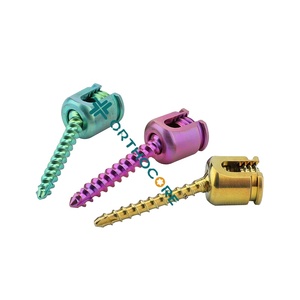
Orthopedic Implants for Large Animals Veterinary Spinal Screw
Heavy-duty titanium pedicle screws specifically engineered for equine and large animal spinal stabilization and deformity correction.
Inquire Now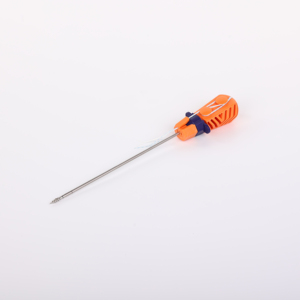
CE Factory Price Suture Anchor 5.5 Titanium Alloy Anchor
Pre-threaded 5.5mm Ti-6Al-4V suture anchor with ergonomic disposable driver handle for rotator cuff repair and arthroscopy.
Inquire Now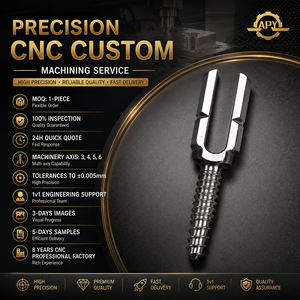
ISO 13485 CNC Machined Pedicle Screw System
5-axis CNC Swiss-lathe machined polyaxial and monoaxial bone screws providing optimum pull-out strength and torque retention.
Inquire Now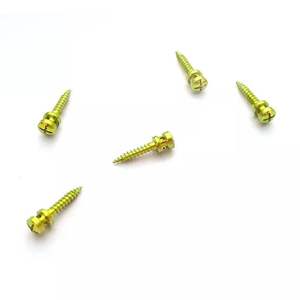
Premium Manual Titanium Veterinary Implant System
Precision intermaxillary surgical instrument set paired with ultra-low profile titanium mini-plates for small animal osteotomy.
Inquire Now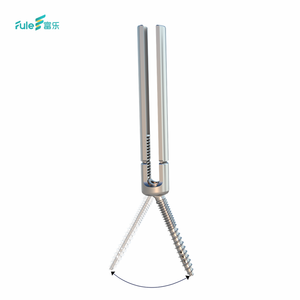
Kirschner Wire Olive External Fixator System
High-tensile surgical stainless steel K-wires with integral stopper olives designed for limb reconstruction and tensioned ring fixators.
Inquire Now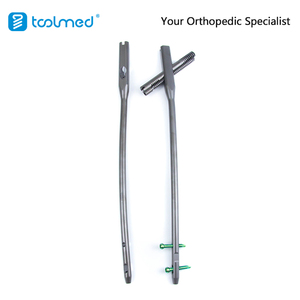
INTERTAN Titanium Proximal Femoral Intramedullary Nail
Integrated dual-screw intertrochanteric intramedullary nail preventing rotation and intraoperative linear compression failure.
Inquire Now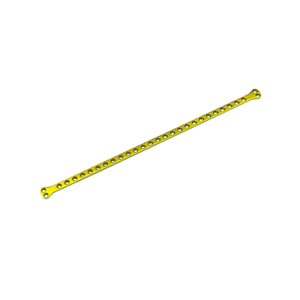
Veterinary Double T Cuttable Titanium Plate System
Modular 1.1mm to 2.4mm cuttable titanium plates providing multi-planar contouring flexibility for complex canine fracture care.
Inquire Now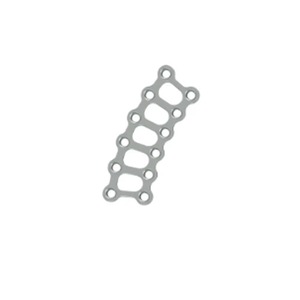
Full-Line Contract Manufacturing & Private Label Supply
Turnkey OEM/ODM solutions covering raw material sourcing, 5-axis machining, cleanroom packaging, and regulatory file creation.
Inquire NowExecutive Summary: The Evolution of China’s Orthopedic OEM Ecosystem
The global orthopedic implant market is undergoing a structural transformation. Procurement teams, healthcare hospital networks, and international medical device brands are rapidly transitioning from traditional regional supply chains toward centralized, high-precision manufacturing hubs in China. Historically viewed primarily as a cost-efficient sourcing destination, China has matured into an advanced technological powerhouse capable of fulfilling stringent global regulatory standards, including EU MDR (EU 2017/745), US FDA 510(k) clearances, and ISO 13485 Quality Management Systems.
At the center of this industrial cluster is Changzhou, Jiangsu Province—widely recognized as the "Silicon Valley of Orthopedics" in China. Housing modern precision machining ecosystems, certified metallurgy laboratories, and cleanroom packaging facilities, Changzhou enables manufacturers like Trauhui Medical Co., Ltd. to offer unmatched Information Gain and operational transparency across the entire contract manufacturing lifecycle.
Metallurgical Rigor
Exclusive utilization of implant-grade Titanium Alloy (Ti-6Al-4V ELI / ASTM F136), PEEK-OPTIMA®, and 316LVM Stainless Steel with complete mill test certificates.
5-Axis Swiss Machining
Sub-micron tolerance execution (+/- 0.005mm) across complex geometries such as polyaxial pedicle screw heads and locking plate thread holes.
Full Regulatory Support
Complete Technical File preparation in STED format, ISO 10993 biocompatibility testing, and mechanical fatigue validation data according to ASTM F543/F1717.
Trauhui Medical: Institutional Capabilities & Quality Controls
Founded in 2009 in the Wujin Hi-tech Zone of Changzhou, Trauhui Medical Co., Ltd. has grown into a premier specialized contract manufacturer of orthopedic implants and surgical instruments. Through continuous capital investment exceeding RMB 200 million, strategic international acquisitions (including dedicated manufacturing footprints in Europe), and an unyielding commitment to clinical safety, Trauhui Medical serves as a trusted partner for medical brands across 30+ countries.
In-House Manufacturing Excellence
Unlike trading intermediaries, Trauhui controls 100% of the manufacturing chain within its self-owned facility. Our machining park features state-of-the-art 5-axis CNC machining centers, Citizen Swiss automatic lathes, wire EDM machinery, and automated surface treatment lines (type II/III titanium anodizing, electrochemical polishing, and laser etching).
- Class 100,000 (ISO Class 7) primary cleanroom packaging lines.
- Coordinate Measuring Machines (CMM) with optical scanning up to 0.5 μm resolution.
- Integrated ERP/MES tracking system guaranteeing 100% batch-level material traceability.
Turnkey OEM/ODM Engineering Lifecycle
Our 30-member internal R&D engineering department partners with global medical brand owners to convert napkin sketches or legacy CAD models into commercially viable, mass-produced implant systems with optimal mechanical fatigue strength.
- Finite Element Analysis (FEA) to evaluate fatigue stress under ISO/ASTM norms.
- Rapid prototyping and 3D titanium lattice additive manufacturing capabilities.
- Private-label OEM branding, customized tray layout design, and sterile pouch packaging.
Key Technological Trends Reshaping Orthopedic Manufacturing
Strategic buyers evaluating an OEM partner must look beyond present capabilities to assess how effectively a manufacturer adapts to next-generation surgical technologies. Trauhui Medical actively integrates four core technological trends into its OEM roadmap:
1. Additive Manufacturing (3D Porous Titanium)
Direct metal laser sintering (DMLS) and electron beam melting (EBM) allow the fabrication of interconnected biomimetic porous titanium structures. These 3D printed interbody cages emulate trabecular bone modulus (reducing stress shielding) while significantly promoting osteointegration without requiring biological bone graft extenders.
2. Surface Modification & Anti-Bacterial Coatings
Post-machining surface treatments are evolving beyond aesthetics. Micro-arc oxidation (MAO), hydroxyapatite (HA) plasma spraying, and silver-ion/copper-doped antibacterial nano-coatings are actively applied to minimize peri-implant infection risks and dramatically improve early-stage fixation stability.
3. Minimally Invasive (MIS) Navigation Compatibility
Modern trauma nails and pedicle screw instrumentation must interface seamlessly with robot-assisted surgery and real-time intraoperative navigation. OEM manufacturers are required to hold tighter geometric tolerances on cannulated drills, radiolucent carbon fiber insertion arms, and optical tracker connectors.
4. Expansion into Specialized Veterinary Orthopedics
Driven by rising global veterinary healthcare spending, human-grade manufacturing protocols are rapidly transferring to veterinary orthopedic systems. Cuttable micro-plates, TPLO/TTA knee reconstruction hardware, and specialized large-animal spinal screws represent high-growth OEM segments.
Future Sourcing Trends: Managing Regulatory & Supply Chain Risks
As global medical device purchasing moves toward centralized tendering and inventory optimization, medical procurement officers face distinct strategic challenges. Navigating regulatory friction and total cost of ownership (TCO) requires a systematic evaluation framework when auditing a Chinese OEM manufacturer.
Dual-Sourcing & Resiliency
International distributors are actively pairing European/US high-cost production with verified Chinese OEM suppliers. Maintaining dual-sourced product families buffers against localized supply disruptions while preserving gross margin integrity.
Total Cost of Ownership (TCO)
Evaluating an OEM partner based solely on unit piece price is an outdated approach. Strategic buyers factor in tooling amortizations, scrap/return rates, shipping lead times, and regulatory dossier support when calculating true landed cost.
Regulatory Data Portability
With national health authorities (e.g., ANVISA in Brazil, SFDA in Saudi Arabia, MoH in Mexico) demanding complete raw data validation, choosing an OEM supplier with pre-existing CE and ISO 13485 test data cuts market entry timelines by up to 60%.
Frequently Asked Questions (FAQ)
Technical, operational, and regulatory clarifications for distributors and OEM brand owners.
Which international quality certifications do Trauhui Medical products carry?
Trauhui Medical operates under a full TÜV-certified ISO 13485 Quality Management System. Our core spinal, trauma, and instrument systems hold CE Marking under EU medical device regulations and US FDA 510(k) clearances. Full certification audit reports, material safety data sheets (MSDS), and biocompatibility documentation (ISO 10993) are made available to qualified distributors to support rapid local health authority registrations.
Does Trauhui Medical support complete custom OEM/ODM development?
Yes. Our dedicated 30-engineer R&D department manages the entire OEM/ODM pipeline. We assist partners from initial 2D/3D CAD modeling, FEA mechanical simulation, and prototype rapid-machining, through to mechanical fatigue validation (ASTM F543/F1717), private-label laser marking, custom anodization coloring, and sterile blister packaging design.
What are the standard lead times for regular stock vs. custom OEM orders?
For standard high-demand systems (such as standard pedicle screws, intramedullary nails, and locking plates), Trauhui maintains extensive finished and semi-finished buffer stock, enabling dispatch within 15 business days. Custom OEM projects or private-label modifications are scheduled based on drawing approval and tooling setup, typically delivering within 30 to 45 days.
How does Trauhui guarantee raw material quality and mechanical consistency?
We source 100% of our raw metallic bars and sheets from globally certified tier-1 titanium and steel suppliers. Every incoming lot undergoes chemical composition spectrum analysis, grain size examination, and tensile strength testing. Certificate of Analysis (CoA) documentation is archived for 15 years to guarantee complete batch-level traceabilities.
Can international buyers visit and audit the Changzhou manufacturing plant?
Absolutely. We encourage distributor procurement teams, biomedical engineers, and third-party audit agencies to visit our headquarters at No. 2 Longqing Road, Wujin Hi-tech Zone, Changzhou, Jiangsu, China. We also provide remote live video audits of our 5-axis CNC workshops and ISO Class 7 cleanrooms for overseas partners.
How is Intellectual Property (IP) protected during OEM co-development?
Trauhui executes strict legally binding Non-Disclosure Agreements (NDAs) prior to receiving proprietary client CAD files or clinical patents. All project data is stored on encrypted internal servers with restricted physical access controls. Custom tooling and specialized molds created for OEM clients remain the exclusive property of the client.