Featured Orthopedic Implant Systems
Precision-engineered spinal, trauma, maxillofacial, and veterinary implants manufactured under ISO 13485 quality systems with CE and FDA 510(k) clearances.
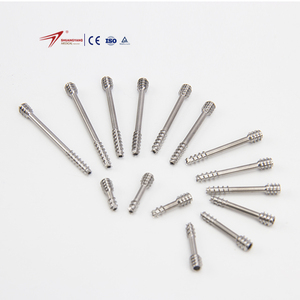
Compression Headless Cannulated Screw System
Engineered for scaphoid, osteochondral, and small bone intra-articular fracture osteosynthesis with variable thread pitch compression.
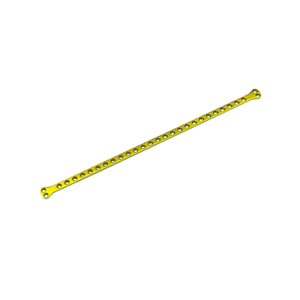
Veterinary Double-T Cuttable Titanium Plate
Versatile cuttable reconstruction plate system optimized for small animal orthopedic trauma and osteotomy procedures.
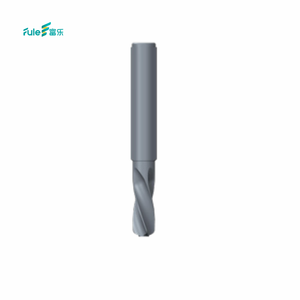
PFNA Proximal Femoral Intramedullary Nail System
Class III high-stability trochanteric fracture fixation nail featuring helical blade compression for osteoporotic bone.
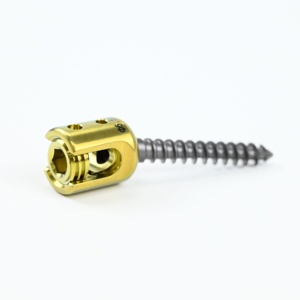
Polyaxial Reduction Pedicle Screw System
High-torque neurosurgical pedicle screws designed for spondylolisthesis reduction, thoracolumbar trauma, and spinal fusion.
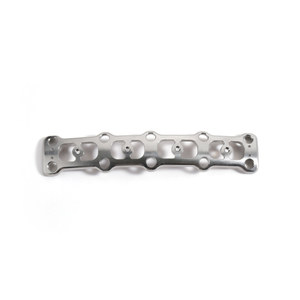
Micro 5-Axis CNC Titanium Implant Components
Custom OEM micro-machined titanium alloy studs and implants manufactured with sub-micron geometric tolerances.
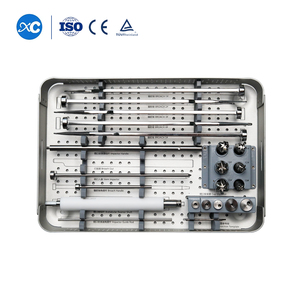
Mini Double Action Veterinary Hip Joint System
Complete canine total hip replacement prosthesis system engineered for micro and small animal dysplasia treatment.
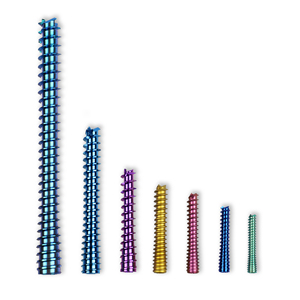
Titanium Headless Cannulated Trauma Screw System
Self-drilling, self-tapping headless compression screws optimized for minimally invasive articular fracture management.
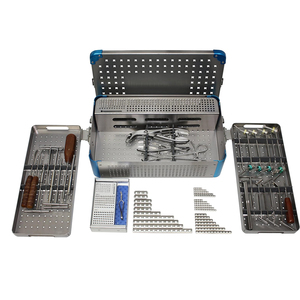
Anatomical Locking Plate & Screw Instrument Set
Comprehensive orthopedic trauma plating kit including variable angle locking plates and ergonomic surgical instruments.
1. Industry Overview: China’s Role in Global Private Label Orthopedic Manufacturing
The global orthopedic implants market is undergoing a structural transformation. Medical device brand owners, regional distributors, and hospital networks are increasingly seeking out direct procurement partnerships with established China private label orthopedic implants factories and suppliers. Driven by rapid advancements in multi-axis CNC micro-machining, additive manufacturing (3D printing), and rigorous regulatory harmonization, qualified Chinese contract manufacturers have transitioned from low-cost component suppliers into full-service OEM/ODM strategic partners.
Central to this manufacturing ecosystem is Changzhou, located in Jiangsu Province. Long recognized as China's premier "home of orthopedics," Changzhou houses complete localized supply chains covering medical-grade raw material refining (ASTM F136 Ti-6Al-4V ELI, ASTM F138 316L Stainless Steel, and PEEK-OPTIMA), precision machining, surface treatment laboratories, cleanroom packaging, and international regulatory compliance testing. OEM partners leveraging this specialized hub benefit from lower landed costs, reduced R&D cycle times, and robust supply chain resilience.
2. Technical Excellence & Engineering Capabilities of Top Private Label Suppliers
To meet the strict technical thresholds established by international surgical authorities and regulatory bodies like the US FDA and European Competent Authorities, elite Chinese medical device manufacturers operate dedicated research facilities and high-precision machine shops. A credible private label supplier must possess deep competence in several advanced engineering domains:
2.1 Multi-Axis Micro CNC Precision Machining
Orthopedic implants—such as polyaxial pedicle screws, cannulated compression screws, and intramedullary locking nails—require sub-micron dimensional tolerances and intricate geometric profiling. Top factories deploy 5-axis Swiss-type automatic CNC lathes (e.g., Citizen, Star, Tsugami) and 5-axis machining centers (Mori Seiki, Haas) running under clean oil lubrication. This guarantees absolute consistency across high-volume production batches while eliminating micro-burrs and stress-concentration zones.
2.2 Advanced Metallurgical & Polymer Material Standards
Material integrity forms the bedrock of surgical success. Leading factories maintain strict material verification protocols utilizing optical emission spectrometers and mechanical testing rigs. Primary implant alloys include:
- Ti-6Al-4V ELI (ASTM F136 / ISO 5832-3): High-strength, extra-low-interstitial titanium alloy offering superior biocompatibility, high fatigue strength, and low elastic modulus to minimize stress shielding.
- 316LVM Stainless Steel (ASTM F138 / ISO 5832-1): Vacuum-arc remelted surgical stainless steel utilized in trauma plating and temporary fracture fixation devices requiring ultra-high yield strength.
- PEEK-OPTIMA (Polyetheretherketone): Radiolucent polymer matching the modulus of human cortical bone, ideal for interbody fusion cages (ACDF, TLIF, XLIF) and posterior cervical stabilization.
2.3 Surface Modification Technologies for Osseointegration
Bio-functionalization of implant surfaces accelerates bone cell attachment and long-term implant fixation. Leading Chinese factories offer specialized surface processing capabilities:
- Micro-Arc Oxidation (MAO) & Anodization: Type II and Type III anodization to form bioactive, corrosion-resistant titanium oxide films with distinct color-coding for surgical sizing efficiency.
- Plasma-Sprayed Hydroxyapatite (HA) Coatings: Osteoconductive ceramic layers deposited on joint prostheses and porous titanium surfaces to encourage active osteoblast proliferation.
- Grit Blasting & Acid Etching (SLA): Controlled micro-roughness surface treatments optimizing contact osteogenesis for spinal cages and dental/CMF screws.
3. Major Product Categories in Contract Orthopedic Manufacturing
A high-capacity private label partner provides a full spectrum of surgical implant portfolios along with matching ergonomic instrument trays:
3.1 Trauma Fixation Systems
Trauma products constitute the highest volume category in orthopedic procurement. Top suppliers manufacture complete ranges including:
- Intramedullary Nail Systems: PFNA (Proximal Femoral Nail Antirotation), tibial, humeral, and retrograde distal femoral nails equipped with dynamic locking screw options.
- Variable Angle Locking Plates: Anatomically pre-contoured volar plates, distal radius plates, proximal humerus plates, and lateral tibia plates with multi-directional screw angle freedom (±15°).
- Cannulated & Compression Screws: Headless Herbert screws, lag screws, and percutaneous compression screws designed with self-drilling and self-tapping flutes.
3.2 Spine Surgery & Interbody Fusion Systems
Spinal surgery demands uncompromising precision. Standard OEM product portfolios encompass posterior thoracolumbar pedicle screw systems (monoaxial, polyaxial, reduction, and cannulated screws), anterior cervical plates, and interbody fusion cages (ACDF, TLIF, PLIF, XLIF) manufactured in PEEK or 3D-printed porous titanium.
3.3 Craniomaxillofacial (CMF) & Special Surgery
Ultra-low-profile plating systems for micro-mandibular, midface reconstruction, and cranial fixation. Manufactured in pure titanium (Grades 1-4) to facilitate manual bending while retaining rigid internal fixation strength.
3.4 Veterinary Orthopedic Implants
Driven by rising global pet care expenditure, veterinary orthopedics represents a rapidly expanding segment. Private label manufacturers supply specialized cuttable plates (T-plates, double-T plates), TPLO (Tibial Plateau Leveling Osteotomy) plates, micro locking systems (1.5mm to 2.7mm), and mini total hip replacement systems engineered specifically for canine and feline anatomical profiles.
Future Technology & Procurement Trends
Key technological shifts and supply chain dynamics reshaping the global orthopedic B2B sector over the next decade.
3D Printing & Additive Manufacturing
Direct Metal Laser Sintering (DMLS) and Electron Beam Melting (EBM) enable mass production of trabecular porous titanium cages with biomimetic pore sizes (300–600 μm), significantly improving bony ingrowth and reducing fusion failure rates.
Value-Based Procurement (VBP)
Global healthcare systems are driving cost containment. Private label contracts with verified Chinese factories allow distributors to achieve 30%–50% cost reductions without sacrificing mechanical safety or clinical outcomes.
Sterile-Pack Ready Implants
Transitioning from bulk non-sterile shipments to individually packaged, Gamma-irradiated or EtO sterile blister packs meeting ISO 11607 standards, lowering hospital sterilization costs and infection risks.
4. E-E-A-T Sourcing Framework: How to Evaluate a China Private Label Factory
In accordance with Google's Search Quality Rater Guidelines regarding Experience, Expertise, Authoritativeness, and Trustworthiness (E-E-A-T), medical device procurement executives must audit potential manufacturing partners across key operational pillars:
4.1 Quality Management Systems & Regulatory Documentation
A reliable factory must operate a fully certified ISO 13485:2016 quality management system covering design, manufacturing, cleanroom packaging, and final dispatch. Furthermore, buyers should confirm that technical files (Design History File - DHF, Summary Technical Documentation - STED) are available to support market registration via US FDA 510(k), EU MDR (2017/745), ANVISA (Brazil), or local health ministry filings.
4.2 Cleanroom Environment & Bioburden Control
Primary packaging and clean cleaning of implants must occur inside certified ISO Class 7 (Class 10,000) or ISO Class 8 (Class 100,000) cleanrooms equipped with HEPA filtration, positive pressure controls, and automated bioburden/endotoxin testing protocols conforming to ISO 11737.
4.3 Mechanical Testing & FEA Validation Laboratories
Before launching a private label system, designs must undergo rigorous Finite Element Analysis (FEA) and physical fatigue testing in compliance with ASTM and ISO standards:
- ASTM F2077 / F2267: Static and dynamic axial compression, shear, and subsidence testing for spinal interbody fusion devices.
- ASTM F1717: Static and fatigue bending testing for spinal pedicle screw constructs in a spinal reconstruction model.
- ASTM F543: Axial pullout strength, insertion torque, and torsional yield testing for metallic medical bone screws.
5. Enterprise Spotlight: Trauhui Medical Co., Ltd.
As a leading example of China’s high-precision medical device sector, Trauhui Medical Co., Ltd. (headquartered at No.2 Longqing Road, Wujin Hi-tech Zone, Changzhou, Jiangsu, China) has dedicated itself exclusively to orthopedic implant and instrument manufacturing since 2013, following its founding in 2009.
Representing a total investment exceeding RMB 200 million, Trauhui Medical operates a modern plant spanning over 30,000 m² equipped with 150+ sets of international-grade high-precision production and testing machinery. Supported by a dedicated R&D team of over 30 specialized biomechanical engineers, the company maintains an annual production capacity exceeding 350,000 pieces across spine, trauma, craniomaxillofacial, and veterinary product lines.
Trauhui Medical’s global strategic footprint includes the acquisition of a Hong Kong corporate entity and a specialized orthopedic manufacturing base in Hungary, reinforcing its ability to serve partners in over 30 countries. Holding full CE, FDA 510(k), and TÜV-certified ISO 13485 credentials, Trauhui provides comprehensive turnkey OEM/ODM solutions—ranging from initial CAD design, FEA simulation, prototyping, and mechanical validation to cleanroom sterile packaging and localized registration dossier support.
Frequently Asked Questions (FAQ)
Essential answers for medical device buyers, regulatory consultants, and supply chain managers.
Which international certifications do China private label implants hold? +
Qualified Chinese private label factories like Trauhui Medical hold TÜV-certified ISO 13485:2016 quality management system approvals, CE Mark certifications (EU MDR / MDD), and US FDA 510(k) clearances for core spinal and trauma lines. Full technical documentation (STED/DHF) and biocompatibility reports (ISO 10993) are provided to facilitate regional registration.
What is the typical turnaround lead time for OEM and private label orders? +
Standard orthopedic systems held in buffer inventory typically ship within 15 business days. For customized OEM/ODM projects requiring custom CNC tooling, prototype mechanical testing, and private label packaging, full delivery cycles generally range from 45 to 75 days depending on design complexity.
Can factories supply matching surgical instrument sets for custom implants? +
Yes. A complete orthopedic solution requires dedicated surgical instrumentation. Chinese contract manufacturers produce matching ergonomic instrument trays (benders, reamers, inserters, taps, drills) housed in anodized aluminum or PPSU sterilizing cases, tailored to the specific dimensions of the private label implant line.
What raw materials are used, and is full metallurgical traceability guaranteed? +
Implants are manufactured exclusively using certified medical-grade raw materials including Ti-6Al-4V ELI titanium alloy (ASTM F136), 316LVM stainless steel (ASTM F138), and PEEK-OPTIMA. Every production batch includes mill test certificates (MTC), raw material heat numbers, and 100% lot-number traceability from raw bar stock to finished product.
What are the minimum order quantities (MOQ) for private label branding? +
MOQ requirements vary by item complexity. Standard catalog items with custom laser marking typically start at low MOQs (50–100 units per size). Completely custom OEM implant designs requiring specialized CNC programming and mold fabrication usually require higher volume commitments or initial R&D tooling cost coverage.
Can international buyers conduct on-site factory and cleanroom audits? +
Yes. Prospective distributors, hospital procurement teams, and OEM brand owners are highly encouraged to perform on-site quality audits of the manufacturing facility, CNC workshops, testing labs, and ISO Class 7/8 cleanrooms. Remote video audits and virtual facility tours are also available.
Partner with a Leading China Private Label Orthopedic Factory
Access our complete product catalog, request high-resolution technical drawings, or discuss your private label OEM/ODM project with our senior engineering team.
Contact Us