Precision UDI-Marked Orthopedic Implants & Instruments
Engineered with medical-grade titanium alloy and implant-grade stainless steel. Every medical device features micro-laser etched GS1 DataMatrix code verification for seamless EUDAMED and FDA GUDID compliance.
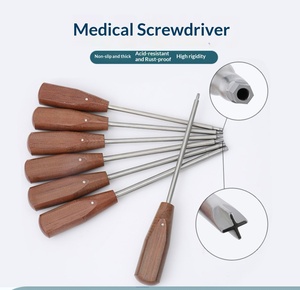
Medical Screwdriver Flat-Head / Cross / Plum / Hex Hollow Ø2.5-3.5mm
German stainless steel construction with high-torque anti-strip tip geometry and laser-etched UDI serial numbers for sterilization tracking.
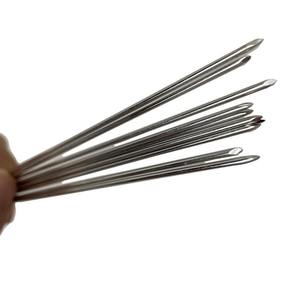
Premium Stainless Steel Kirschner Wire (K-Wire) Implant Set
Ultra-smooth 316LVM implant steel featuring trocar sharp diamond tips, exact diameter tolerances, and laser batch UDI identification.
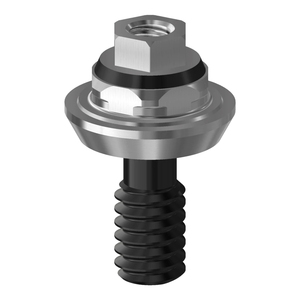
Titanium Healing Abutment & Scan Post Restoration Components
Precision-machined Grade 5 Ti-6Al-4V ELI internal hex connection platforms with color-anodized height markers and UDI DataMatrix.
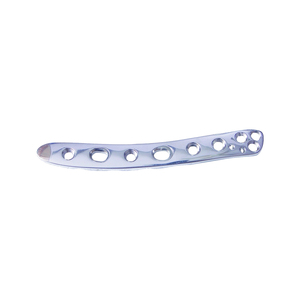
CE Certified Lightweight Stainless Steel Orthopedic Locking Implants
Anatomically contoured periarticular fracture fixation plates featuring low-profile profile design and non-glare micro-passivated UDI markings.
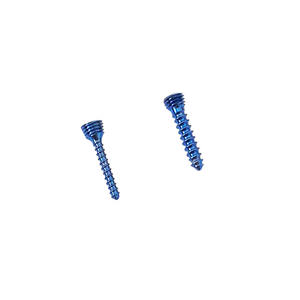
2.0mm Titanium Locking Screw for Veterinary Orthopedic Surgery
Self-tapping T8 drive locking bone screw manufactured under strict pitch tolerances, fitted with micro-dot laser UDI code on screw head.
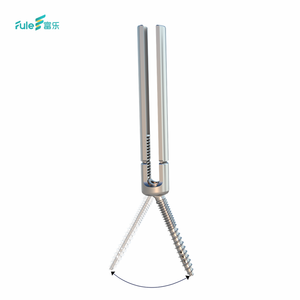
Kirschner Wire Olive Ring External Fixation Fixator System
High-rigidity limb reconstruction olive tensioning wire and circular ring fixator set engineered for complex fracture reduction and deformity correction.
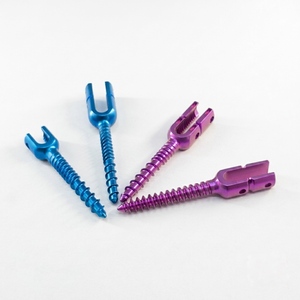
Anodized Titanium 6.0mm Monoaxial Pedicle Screw System
Dual-lead thread lumbar pedicle reduction screw for rapid bone insertion, featuring dark anodized titanium coating and laser-etched UDI tulip codes.
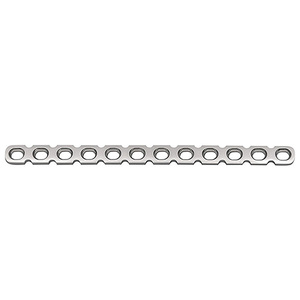
Veterinary Pet Orthopedic 2.0 Straight Reconstruction Plate
Ductile titanium straight contouring plate designed for small animal bone plating, complete with continuous laser segment UDI markings.
Leading China Orthopedic Implants Exporter
Combining cutting-edge Swiss-type CNC precision machining with international compliance systems to power medical device brands and hospital tenders worldwide.
Self-Owned Manufacturing Base
Located in Changzhou, China's core orthopedic cluster, our 30,000m² facility operates over 150 sets of advanced 5-axis CNC machining centers, guaranteeing absolute cost efficiency and rigid lead time control.
Full Regulatory Certification
Manufactured under a certified ISO 13485 Quality Management System. Products comply fully with EU CE MDR (2017/745) requirements and US FDA 510(k) clearances with complete technical files ready for registration.
Sub-Micron Laser UDI Marking
In-house MOPA fiber laser Direct Part Marking (DPM) technology delivers non-destructive GS1 DataMatrix barcodes on titanium and stainless steel without compromising surface passive film or corrosion resistance.
Complete OEM / ODM Customization
Over 30 dedicated R&D bio-engineers manage custom implant design, finite element analysis (FEA), rapid prototyping, clinical trial support, and private-label packaging solutions tailored to your market specifications.
Industry Whitepaper: The Evolution of UDI Direct Part Marking (DPM) in Medical Implant Manufacturing
Unique Device Identification (UDI) has transitioned from a regulatory mandate to a cornerstone of modern healthcare supply chain integrity and patient safety. Global health authorities—including the US Food and Drug Administration (FDA GUDID), the European Medicines Agency (EU EUDAMED under MDR 2017/745), and China's National Medical Products Administration (NMPA)—require direct part marking (DPM) on reusable surgical instruments and permanent metallic implants. For global orthopedic distributors, procuring implants from a factory with verified UDI DPM capability is no longer optional; it is a critical prerequisite for market access.
Key Insight: Direct Part Marking on surgical implants must maintain structural integrity, zero cytotoxicity, and high contrast scanning readability after undergoing 100+ standard autoclave steam sterilization cycles (134°C at 2.1 bar).
1. Laser Metallurgy: Preserving Passivation on Titanium & Stainless Alloys
Applying GS1 DataMatrix 2D barcodes to Grade 5 Titanium (Ti-6Al-4V ELI) and 316LVM Stainless Steel requires exact thermal control. Traditional continuous-wave (CW) laser engraving causes thermal micro-cracks and alters the oxide layer, exposing raw metal ions to physiological fluids and inducing corrosion in vivo. At Trauhui Medical, we utilize high-frequency MOPA (Master Oscillator Power Amplifier) picosecond laser systems.
By modulating pulse durations down to nanosecond and picosecond scales, heat-affected zones (HAZ) are minimized. The laser selectively thickens the natural titanium dioxide (TiO₂) passive layer to create dark, non-reflective optical contrast through oxide interference rather than ablation. This ensures that pedicle screws, locking plates, and intramedullary nails achieve Grade A or B verification under ISO/IEC 15415 standards without compromising fatigue strength or biocompatibility.
2. UDI Data Structure & Global Database Synchronization
Every UDI code applied at our Changzhou manufacturing complex consists of two distinct components integrated into a unified GS1 DataMatrix code structure:
- UDI-DI (Device Identifier): A static, universal code identifying the specific implant model, titanium grade, diameter/length specification, and manufacturer GTIN (Global Trade Item Number).
- UDI-PI (Production Identifier): Dynamic variable data encoding the specific manufacturing batch number, lot number, manufacturing date, and expiration date (where applicable for pre-sterilized packaging).
Our automated optical inspection (AOI) systems scan and validate every laser-etched UDI code prior to cleanroom washing (ISO Class 7 cleanrooms) and final double-blister packaging, guaranteeing 100% compliance with international hospital EHR (Electronic Health Record) scanning infrastructure.
3. Biomechanical Quality Assurance & Biocompatibility Testing
Beyond optical UDI verification, implant long-term safety depends on rigorous mechanical testing. Our in-house testing lab subjects all spinal pedicle screws, interbody fusion cages (ACDF, TLIF, XLIF), and variable-angle locking plates to static and dynamic fatigue loading tests according to international standards:
- ASTM F1717: Static and dynamic fatigue testing for spinal implant assemblies in a vertebrectomy model.
- ASTM F543: Axial pull-out strength, insertion torque, and torsional yield strength testing for medical metallic bone screws.
- ISO 14801: Dynamic fatigue testing for dental implants and customized abutment systems under worst-case loading angles.
Future Sourcing Trends: Orthopedic Implants Sourcing (2025–2030)
As healthcare systems tighten budget allocations while raising quality expectations, the global supply chain for orthopedic implants is undergoing a structural transformation. Procurement managers and distribution executives must align with manufacturers that offer technologically advanced, cost-effective OEM platforms. Here are the core trends shaping global orthopedic procurement over the next five years:
1. 3D-Printed Porous Titanium Cages
Solid PEEK cages are rapidly losing market share to 3D-printed additive-manufactured titanium fusion cages. Electron Beam Melting (EBM) and Direct Metal Laser Sintering (DMLS) allow factories to build porous lattice structures resembling natural trabecular bone (60-80% porosity, 300-600µm pore size). This promotes direct bony ingrowth (osteointegration) and reduces stress shielding.
2. Full Regulatory Data Integration
Distributors are moving away from factories that cannot supply comprehensive technical documentation. Procurement agreements now require immediate access to ISO 10993 cytotoxicity reports, cleanroom bioburden validation, full material traceability mill certificates (ASTM F136 / ISO 5832-3), and pre-indexed UDI-DI files for rapid submission to regional regulatory bodies.
3. Supply Chain Resilience & Agile OEM
Geopolitical shifts and hospital stock-outs have highlighted the need for agile manufacturing partners. Leading Chinese OEMs like Trauhui Medical maintain buffer stocks of standardized implant blanks and modular surgical instrument trays. This enables rapid delivery within 15 days for standard orders and fast-turnaround OEM private-label production cycles.
Frequently Asked Questions for Global Distributors
Technical, regulatory, and commercial answers for hospital buyers, regulatory specialists, and orthopedic distributors.
What certifications do Trauhui Medical orthopedic implants carry?
All product lines are manufactured under an ISO 13485 certified quality management system. Our primary spinal, trauma, CMF, and veterinary lines hold European CE certification (MDR compliant) and US FDA 510(k) clearances. Certificate copies and full technical dossiers (STED) are available to authorized distribution partners.
How do you guarantee that UDI laser codes remain readable after autoclaving?
We utilize MOPA fiber laser Direct Part Marking (DPM) technology operating at controlled picosecond pulse rates. This alters the titanium oxide surface optical thickness without burning the base alloy. Every batch undergoes 100-cycle accelerated autoclave validation and ISO/IEC 15415 optical scan grading to guarantee lifetime readability in hospital cleanrooms.
Do you offer OEM private labeling and custom product development?
Yes. Our dedicated R&D engineering team handles private-label branding, customized plate geometries, custom screw pitch configurations, and specialized instrument tray design. We provide end-to-end support from initial 3D CAD modeling and finite element analysis (FEA) to prototype testing, packaging, and regulatory filing support.
What are the raw material standards used for your implants?
We exclusively source raw medical-grade materials from certified suppliers with complete heat-lot traceability. Titanium implants are fabricated from Ti-6Al-4V ELI (Grade 23) conforming to ASTM F136 / ISO 5832-3. Stainless steel implants and K-wires are manufactured from implant-grade 316LVM conforming to ASTM F138 / ISO 5832-1.
What is your typical production lead time and minimum order quantity (MOQ)?
For standard systems in our catalog (such as proximal femoral nails, pedicle screws, and locking plate sets), regular inventory orders are dispatched within 15 business days. For customized OEM/ODM projects, lead times range from 30 to 45 days depending on tooling and validation requirements. Flexible MOQs are available for new market distributors.
Where is your factory located, and can our auditing team visit the facilities?
Our headquarters and production complex are located at No.2 Longqing Road, Wujin Hi-tech Zone, Changzhou City, Jiangsu Province, China. We welcome hospital procurement boards, regulatory inspectors, and distributor engineering teams to conduct on-site facility audits of our CNC workshops, testing labs, and ISO Class 7 cleanrooms.
Request Full Product Catalog & UDI Compliance Files
Connect directly with our senior orthopedic engineering team. Get instant access to our comprehensive system catalogs, OEM private-label pricing, and regulatory registration technical dossiers.