Featured Orthopedic Implant Systems & Components
Precision-engineered medical-grade devices produced under cleanroom ISO 13485 standards for global hospital networks and surgical distributors.
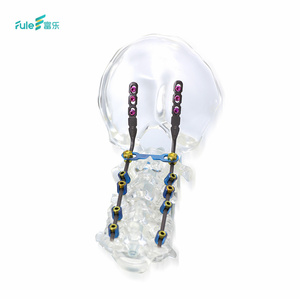
Titanium Orthopedic Implant CFS ZJX Posterior Cervical Fixation System
- Material: Ti-6Al-4V ELI (Grade 5)
- Certification: CE, ISO 13485
- Dual-thread polyaxial screws
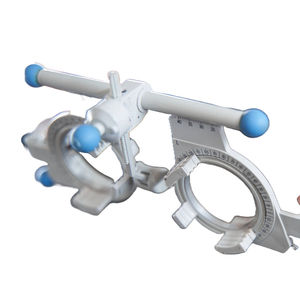
Contract Manufacturing for Clinical Device Hardware Components
- Custom Swiss CNC turning
- Tolerances within ±0.003mm
- Medical grade passivation
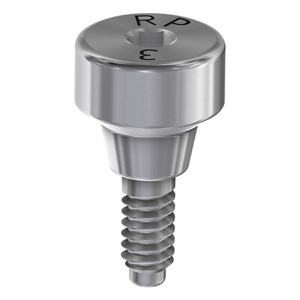
Multi-Unit Abutment Conical Connection Internal Hex Implant System
- High-grade titanium alloy
- Prosthetic component precision
- Compatible multi-system design
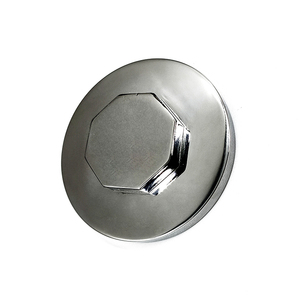
Medical Device CNC Machining for Implants & Surgical Kits
- 5-Axis DMG MORI CNC milling
- Complete instrument assembly
- Surface HA coating & anodizing
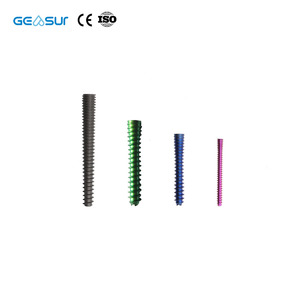
Class III Titanium Headless Compression Cannulated Screw System
- Class III Medical Device certified
- Cannulated self-tapping thread
- High torsional fatigue strength
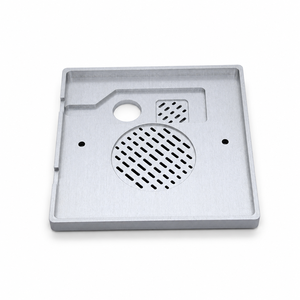
Multi-Axis CNC Machining for Custom Complex Orthopedic Components
- Tailored prototype to volume
- Rigid CMM dimensional checks
- Ultra-clean ultrasonic wash
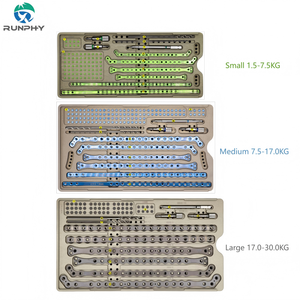
Small Veterinary Orthopedic Locking Plate & Screw System (ALPS)
- Anatomically contoured plates
- Canine & feline reconstruction
- High fracture stability design
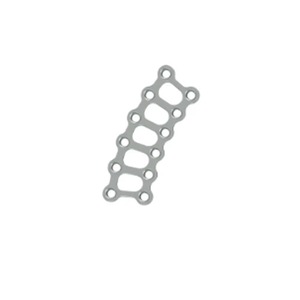
Wholesale Export-Grade Trauma & Reconstructive Surgical Implants
- Complete anatomical plate sets
- Variable angle locking technology
- Global market registration kits
The Landscape of Orthopedic Implant Manufacturing in China
The global orthopedic devices market, valued at over USD 54 Billion, is undergoing a profound structural shift. Medical device distributors, OEM brand owners, and hospital procurement organizations are increasingly turning to China as a core hub for contract manufacturing and finished product sourcing. China's emergence as a dominant force in orthopedic implant fabrication is underpinned by mature industrial ecosystems, rapid technological adoption, and significant capital investments in cleanroom infrastructure and multi-axis CNC machining centers.
Historically viewed primarily as a cost-effective manufacturing center for standard hardware, leading Chinese factories located in orthopedic centers like Changzhou, Jiangsu Province have transitioned into high-tier technology centers. Modern Chinese manufacturers now produce Class III high-risk implantable devices—including complex pedicle screw systems, trabecular 3D-printed titanium fusion cages, variable-angle locking plates, and custom maxillofacial solutions—that comply fully with European CE MDR (Regulation EU 2017/745), US FDA 510(k), and international ISO 13485 quality management frameworks.
For international buyers, achieving a competitive advantage requires understanding how top-tier Chinese manufacturers manage supply chain transparency, bio-compatible material sourcing (such as medical-grade ASTM F136 Ti-6Al-4V ELI and PEEK-Optima), mechanical validation testing, and turnkey regulatory support.
Trauhui Medical: Technical Architecture & OEM Excellence
Founded in 2009 in Changzhou—widely recognized as China's orthopedic manufacturing capital—Trauhui Medical Co., Ltd represents the apex of modern Chinese medical engineering. Spanning over 30,000 square meters of production and R&D space, Trauhui Medical has invested more than RMB 200 Million to construct a world-class manufacturing facility optimized for orthopedic implant systems and precision surgical instrumentation.
Advanced Machining Fleet
Houses over 150 sets of advanced manufacturing and testing equipment, including Swiss-type precision CNC lathes, 5-axis machining centers (DMG MORI, Citizen), and ultra-precise wire EDM systems capable of achieving tight tolerances down to ±0.003mm.
ISO 13485 & Cleanroom QC
Operates under an audited ISO 13485 Quality Management System featuring 100,000-class (ISO Class 7) cleanroom packaging environments. Every manufacturing batch undergoes 100% CMM dimensional verification and mechanical fatigue validation.
Turnkey OEM/ODM Co-Development
Supported by a dedicated R&D engineering team of 30+ specialists. Trauhui offers complete co-development services: from Finite Element Analysis (FEA) computer simulations and rapid titanium prototyping to technical documentation files for global market clearance.
Through strategic international expansion—including the acquisition of a European orthopedic facility in Hungary—Trauhui Medical bridges Western quality standards with China's manufacturing agility. Holding large inventory buffers of standard spine, trauma, CMF, and veterinary systems allows standard order dispatch within 15 days, drastically mitigating stock-out risks for global healthcare providers.
Comparative Evaluation: Tier-1 Chinese Factories vs. Global Competitors
To assist procurement managers in supplier audit evaluations, the matrix below details key operational capabilities across premier Chinese manufacturers (e.g., Trauhui Medical), mid-tier domestic suppliers, and traditional Western OEMs.
| Evaluation Criterion | Tier-1 Chinese Manufacturers (Trauhui) | Mid-Tier Domestic Suppliers | Traditional Western OEMs |
|---|---|---|---|
| Raw Material Traceability | 100% Certified Titanium Grade 5 ELI / PEEK with lot melt certificates | Standard titanium alloys; variable lot traceability | Certified high-grade alloys; full mill traceability |
| Machining Precision | ±0.003 mm to ±0.005 mm (5-Axis Swiss CNC) | ±0.01 mm to ±0.02 mm (3-Axis CNC) | ±0.003 mm to ±0.005 mm (5-Axis Swiss CNC) |
| Cleanroom & Packaging | 100,000-Class (ISO Class 7) Cleanroom / ETO Sterile Tyvek Packaging | Basic clean environments; unsterile bulk shipping | ISO Class 7/8 Cleanroom; full sterile barrier packaging |
| Regulatory Technical Files | Full STED Dossiers (CE MDR, FDA 510k, ISO 13485) | Basic domestic certificates; limited global registration support | Complete global dossier clearing (FDA, CE, PMDA) |
| Standard Order Lead Time | 15 Days (VMI Stocking Programs Available) | 30 – 45 Days | 60 – 90 Days |
| Cost Optimization Factor | 35% – 55% Lower Landed Cost vs. Western Brands | 50% – 75% Lower Landed Cost (Higher Quality Risk) | Baseline Reference Cost (Premium Margin) |
Future Procurement & Sourcing Trends (2025–2030)
Navigating global healthcare sourcing demands foresight into regulatory shifts, clinical demands, and supply chain disruptions. Professional procurement officers should prepare for four structural trends defining the next decade of orthopedic implant purchasing:
1. Rapid Adoption of 3D-Printed Porous Titanium Structures
Solid PEEK and smooth titanium implants are increasingly being superseded by 3D-printed porous titanium scaffolds (trabecular bone structures). Additive manufacturing allows for interconnected pore sizes (300–600 microns) that mimic native human cancellous bone, dramatically accelerating osseointegration and lowering elastic modulus to prevent stress shielding. Forward-thinking buyers are prioritizing suppliers with in-house Electron Beam Melting (EBM) and Direct Metal Laser Sintering (DMLS) capacity.
2. Turnkey Regulatory Support as a Sourcing Prerequisite
With the stringent enforcement of the EU Medical Device Regulation (MDR 2017/745) and heightened post-market surveillance globally, distributors can no longer afford suppliers who only deliver hardware without comprehensive clinical data. Future contract win rates will heavily favor Chinese factories that supply complete STED dossiers, biological evaluation reports (ISO 10993), mechanical fatigue test data (ASTM F2077/F543), and active regulatory assistance.
3. Hybrid Material Matrices (Carbon-PEEK & HA Coatings)
Spinal fusion and trauma osteosynthesis are shifting toward radiolucent carbon-reinforced PEEK matrices and advanced surface modifications. Hydroxyapatite (HA) plasma spraying and electrochemical anodization coatings are becoming standard expectations to improve cell adhesion while enabling clear artifact-free post-operative MRI and CT imaging evaluation.
4. Vendor-Managed Inventory (VMI) & Supply Chain Resilience
Geopolitical turbulence and shipping delays have forced hospital procurement boards to seek direct factory agreements with integrated VMI stocking programs. Top Chinese manufacturers offering regional warehousing, pre-assembled sterile procedure kits, and guaranteed 15-day inventory replenishment will capture significant market share from slow-moving traditional distributors.
Manufacturing Tech Trends in Orthopedic Engineering
The convergence of precision robotics, bio-material science, and digital surgical planning is transforming how implants are engineered and fabricated:
Swiss-Type 5-Axis Micro Machining
Fabricating micro-cranial plates, small animal veterinary systems (ALPS), and complex polyaxial pedicle screw heads requires continuous 5-axis Swiss CNC milling. This tech eliminates secondary setup errors, maintaining sub-micron coaxiality.
Minimally Invasive Surgery (MIS) Integration
Implant hardware is increasingly co-designed alongside specialized MIS delivery instruments. Percutaneous pedicle screw fixation, expandable corpectomy cages, and cannulated headless compression screws reduce soft-tissue disruption and surgical incision sizes.
Automated Laser UDI & Digital Traceability
Mandatory Unique Device Identification (UDI) laser marking ensures every individual pedicle screw, plate, or cage carries a micro-scannable matrix code, enabling full digital tracking from raw ingot melt lot to surgical deployment.
Frequently Asked Questions (FAQ) for B2B Sourcing
Essential guidance for hospital procurement officers, medical device distributors, and OEM buyers auditing Chinese orthopedic suppliers.
Which international quality certifications do leading Chinese orthopedic implant manufacturers hold?
Premier manufacturers like Trauhui Medical hold full ISO 13485 Quality Management System certification (audited by accredited notified bodies such as TÜV Rheinland), European CE marking certificates (under MDD/MDR), and US FDA 510(k) clearances. Certificate copies, technical dossiers (STED format), and device master files (DMF) are readily available to qualified distributors to support national health authority registrations.
How is raw material quality verified for titanium and PEEK orthopedic implants?
Top-tier factories source exclusively medical-grade raw materials—such as Titanium Grade 5 ELI (ASTM F136 / ISO 5832-3), Titanium Grade 2 (unalloyed), and genuine PEEK-Optima (Invibio). Every raw bar stock shipment is accompanied by Mill Test Certificates (MTC) detailing chemical composition and mechanical tensile limits. Additionally, independent third-party laboratory tests (spectrometry, metallography) are conducted prior to machining clearance.
What is the typical lead time for standard wholesale orders vs. custom OEM projects?
For standard catalogue systems (spine pedicle screw sets, trauma locking plates, cannulated screws), high-capacity manufacturers maintain large finished buffer stocks, allowing order fulfillment and dispatch within 15 days. For custom OEM/ODM projects (custom implant geometry, private-label instrument tray laser marking, custom packaging), timelines range from 45 to 75 days depending on tooling complexity, FEA validation, and prototyping iterations.
Can Chinese orthopedic suppliers provide contract manufacturing for surgical instruments?
Yes. Factories with complete precision machining infrastructure manufacture matching surgical instrument kits alongside implant systems. This includes drill bits, tap sleeves, torque-limiting screwdrivers, plate benders, rod manipulators, and ergonomic retractor systems crafted from surgical stainless steel (17-4PH, 420, 316L) and aluminum alloys with hard-anodized color coding.
How do factories handle intellectual property (IP) protection during contract OEM projects?
Reputable OEM manufacturers enforce strict IP protection frameworks. Non-Disclosure Agreements (NDAs) are executed prior to reviewing CAD drawings or technical specs. Custom tooling dies, CNC G-code programs, and proprietary product designs remain the exclusive property of the client, safeguarded by isolated server storage and restricted cleanroom assembly zones.
What packaging and sterilization options are available for export?
Products are supplied in two primary conditions: 1) Non-sterile bulk packaging in protective double PE bags with desiccant for distributor-side processing; or 2) Pre-sterilized, final consumer packaging utilizing thermoformed blister trays sealed with Tyvek lids under ISO Class 7 cleanroom conditions, validated for Ethylene Oxide (ETO) or Gamma Ray sterilization with 5-year shelf-life stability data.
What support is available to hospital groups and distributors for market registration?
Distributors receive full registration packages including Certificates of Free Sale (CFS), ISO 13485 & CE certificates, biological evaluation reports (ISO 10993), packaging stability data, sterilization validation reports, and step-by-step Surgical Technique Manuals (STMs) translated into target languages.
Is it possible to visit and audit the manufacturing facility in Changzhou, China?
Yes. Procurement directors, quality auditors, and commercial partners are encouraged to schedule on-site facility visits. Virtual live video audits are also available to review live 5-axis CNC machining, CMM inspection, cleanroom packaging operations, and physical warehouse inventory.
Request Product Catalogs & Technical Dossiers
Connect directly with Trauhui Medical's OEM engineering team. Download complete technical catalogs, request factory audit documentation, or inquire about custom manufacturing capabilities for your market.