Premier Surgical Implant Systems & Instruments
Explore our medical-grade titanium and stainless steel orthopedic solutions trusted by surgeons, hospitals, and medical distributors across 30+ countries.
Navigating the Global Orthopedic Implant Supply Chain: An Executive Report
The global orthopedic implants market is experiencing an unprecedented structural transformation driven by an aging global demographic, accelerating procedural volumes in trauma and spinal fusion, and heightened clinical demand for bio-harmonious materials. As hospital procurement boards and international surgical device distributors re-evaluate their supply chains, sourcing from verified, high-precision original equipment manufacturers (OEMs) has transitioned from a cost-efficiency strategy to a core business resilience imperative.
Clinical & Structural Demands in Modern Trauma
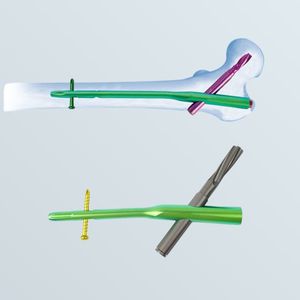
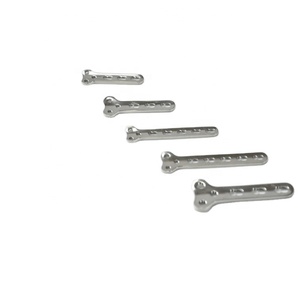
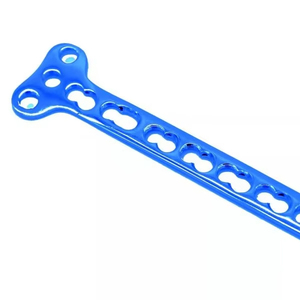
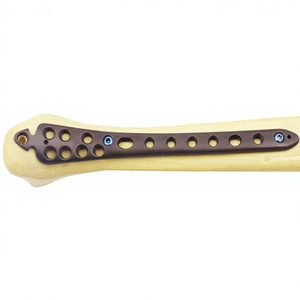
Trauma surgical interventions, particularly internal fixation of proximal femoral fractures, distal tibial osteotomies, and complex periarticular fractures, demand flawless mechanical fatigue strength. Implants such as the Proximal Femoral Nail Antirotation (PFNA) system and variable-angle locking plates must provide rigid anatomical stabilization while resisting multi-axial rotational and shear stresses. Advanced 5- and 6-axis precision CNC machining ensures sub-micron tolerances, eliminating surface stress concentration zones that cause fatigue failure under physiological loads.
Spine, CMF & Digital Workflow Integration
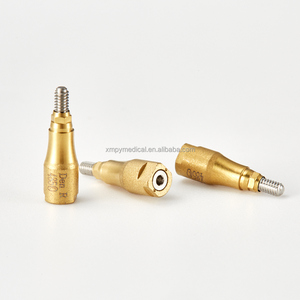
In spinal arthrodesis and craniomaxillofacial (CMF) reconstruction, the industry is rapidly transitioning toward minimally invasive surgical (MIS) instruments and digitally guided restorative post systems. The integration of high-accuracy scan bodies into digital workflows allows pre-operative surgical simulation and custom anatomical plate bending. Concurrently, 3D-printed porous titanium cages (PEEK alternatives) featuring diamond lattice micro-structures are setting new benchmarks for bone in-growth and osseointegration.
Why Global Healthcare Distributors & OEM Partners Trust Our Manufacturing Hub
Headquartered in Changzhou, Jiangsu Province—recognized globally as China’s premier orthopedic device manufacturing cluster—our facility combines state-of-the-art European machining technology with rigorous ISO 13485 quality control protocols.
Complete Regulatory Dossiers
Our entire orthopedic product line—spanning spinal pedicle screws, intramedullary nails, trauma plates, and CMF fixation systems—is backed by CE certifications, FDA 510(k) clearances, and ISO 13485 Quality Management System compliance, simplifying registration in localized health authorities.
Full OEM & ODM Turnkey Capability
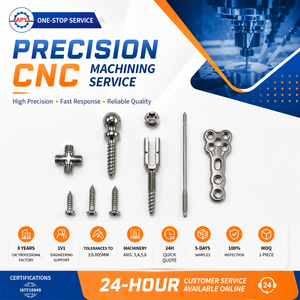
Driven by an in-house engineering squad of 30+ R&D specialists, we turn conceptual blueprints and CAD models into sterile, private-label ready implants. Custom 5- and 6-axis precision machining guarantees fast prototyping and rapid volume scaling.
Rapid 15-Day Lead Times
By maintaining centralized buffer stocks of medical-grade Titanium Alloy (Ti6Al4V ELI) and Stainless Steel raw materials alongside automated manufacturing lines, standard system orders ship within 15 days, drastically mitigating hospital stock-out risks.
Future Sourcing & Engineering Trends in Orthopedic Manufacturing (2025–2030)
Procurement directors and orthopedic brand managers must align their long-term supply chain strategies with major technological breakthroughs shaping surgical outcomes. The following five paradigms define the future of orthopedic device exporter selection:
| Technology Sector | Traditional Approach | Next-Generation Paradigm | Procurement Advantage |
|---|---|---|---|
| Additive Manufacturing | Machined PEEK & Solid Titanium | 3D-Printed Porous Titanium Lattices | Accelerated bone in-growth, reduced stress shielding. |
| Digital Workflow Integration | Manual intraoperative sizing | Optical Scan Bodies & CAD/CAM Aligners | Sub-millimeter prosthetic precision, reduced surgical time. |
| Surgical Specialty Expansion | Human-only product lines | Veterinary Specific Implants (1.5mm–3.5mm) | High-margin diversification for medical distributors. |
| Surface Finishing Tech | Standard Anodization | Anti-microbial & Hydroxyapatite Nanocoatings | Lower infection rates, superior tissue integration. |
| Quality Control Auditing | Batch sampling inspection | 100% Optical CMM & Laser Scanning | Zero-defect delivery for critical pedicle & trauma screws. |
1. Additive Manufacturing and Biomimetic Porosity
Selective Laser Melting (SLM) and Electron Beam Melting (EBM) technologies have disrupted the traditional spinal fusion market. By producing interbody cages with interconnected micropores (porosity levels between 60% and 80%), these implants mimic native cancellous bone architecture. This leads to early vascularization and direct osteoblast attachment, significantly outperforming non-porous PEEK alternatives in clinical fusion rates.
2. Expanding into High-Growth Veterinary Orthopedics
The global veterinary healthcare market is experiencing explosive demand for human-grade surgical solutions. Companion animal orthopedic surgeries—including tibial plateau leveling osteotomy (TPLO), T-plate fracture fixations, and micro-pedicle screw placements—now require the exact same biocompatibility and precision tolerance as human implants. Suppliers capable of offering dual-capability manufacturing (Human & Veterinary lines like the Lovan Animal Plate System) provide distributors with unprecedented cross-market leverage.
Orthopedic Implants Procurement & Verification Checklist
When selecting a top orthopedic implant manufacturer and exporter, hospital procurement teams and global buyers must execute rigorous supplier audits. Use the following operational evaluation criteria during your vendor qualification phase:
1. Raw Material Metallurgy & Certification
Ensure that all titanium raw materials conform strictly to ASTM F136 / ISO 5832-3 (Ti-6Al-4V ELI - Extra Low Interstitial) specifications. Stainless steel components must adhere to ISO 5832-1 or ASTM F138 (316L Implant Grade). Request raw material mill test reports (MTR) with chemical analysis and mechanical tensile testing for every production heat code.
2. Precision Machining & Surface Integrity
Verify that the factory operates Swiss-type automatic lathes and 5-axis CNC machining centers (such as Star, Tornos, or Citizen). Examine surface roughness values (Ra). Trauma plates and locking screws require pristine anodization to prevent metallic ion release and corrosion post-implantation.
3. Biomechanical Fatigue Testing
Implants must undergo rigorous dynamic load testing per international standards (e.g., ASTM F2077 for interbody fusion devices, ASTM F1717 for spinal construct assemblies, and ASTM F382 for metallic bone plates). Validate that your OEM partner maintains in-house mechanical testing rigs or partners with accredited third-party labs.
4. Packaging & Cleanroom Environment
Final cleaning, assembly, and primary packaging must take place inside a Class 100,000 (ISO Class 8) cleanroom environment. Ensure availability of double-sterile blister pouch options with ISO 11607 validation for immediate operating room deployment.
Frequently Asked Questions (FAQ) for Global Buyers
Answers to key questions asked by hospital procurement boards, orthopedic device distributors, and private-label OEM buyers.
Which international quality certifications do your orthopedic implants hold?
Our complete line of spine, trauma, CMF, and veterinary orthopedic implants is manufactured under a certified ISO 13485 Quality Management System. Selected primary product lines hold full CE marking and FDA 510(k) clearances. We provide comprehensive Technical Files (STED), CE Certificates, and Declaration of Conformity documents to assist regional partners in local medical device registration.
What are the capabilities for customized OEM/ODM orthopedic manufacturing?
We provide full turnkey OEM and ODM engineering services. Our R&D team can accept 2D technical drawings, 3D CAD step files, or physical reverse-engineering samples. We assist in design optimization for manufacturability (DFM), rapid prototype fabrication, dynamic mechanical testing, custom laser etching, and customized sterile/non-sterile blister packaging.
What is the standard lead time for wholesale and private-label orders?
For standard catalog inventory (including popular PFNA intramedullary nails, pedicle screw systems, and standard locking plates), dispatch occurs within 15 working days. For custom OEM projects or private-label bulk orders requiring specialized surface treatments and packaging, lead times typically range from 30 to 45 days based on design validation complexity.
What raw materials are utilized in your implant production?
We strictly utilize medical-grade raw materials sourced from audited global suppliers. Our titanium products use Grade 5 Ti-6Al-4V ELI (ASTM F136 / ISO 5832-3). Stainless steel instruments and plates utilize high-grade 316L (ASTM F138). Interbody fusion cages are available in pure PEEK (Optima) or 3D-printed porous titanium.
How do you support regional distributors entering hospital tender bids?
We empower our exclusive regional distributors by providing full tender documentation packs, authorized letters of representation, competitive tiered pricing structures, product samples for surgical evaluation, and clinical training modules for hospital sales personnel.
Can prospective international buyers visit and audit your manufacturing plant?
Yes, we welcome physical plant audits from international distributor delegations, hospital procurement boards, and third-party regulatory inspectors. Located in the Wujin Hi-tech Zone, Changzhou, Jiangsu, China, our 30,000m² facility features transparent inspection corridors covering our CNC workshops, testing labs, and ISO Class 8 cleanrooms.
Partner with a Premier Global Orthopedic Implants Exporter
Elevate your surgical product portfolio with CE, FDA 510(k), and ISO 13485 certified precision implants. Request product catalogs, technical specs, or custom OEM quotations today.